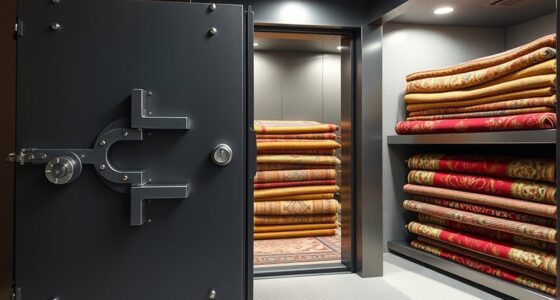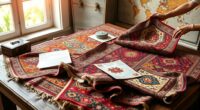
To spot market fads versus timeless rug investments, focus on the materials, craftsmanship, and age of the piece. Authentic rugs often use natural fibers, show irregularities, and have signs of age, while fads rely on synthetic fibers and trendy designs without lasting quality. True investments reflect cultural history and traditional techniques, which appreciate over time. Keep an eye on these cues to inform your choices and discover how to recognize genuine value beneath fleeting trends.

Get furniture and decor delivered free — and shop member deals
- Fast, free delivery on millions of items
- Access to Prime Big Deal Days deals on October 6–7
- Prime Video, Amazon Music and more included
Key Takeaways
- Authentic rugs are made with natural fibers and traditional techniques, which develop character over time, unlike synthetic reproductions.
- Market fads often feature mass-produced designs with trendy motifs and synthetic materials, lacking genuine craftsmanship.
- Genuine antique or vintage rugs show signs of wear, irregularities, and natural aging, unlike mass-made fads.
- Authentic pieces tend to be more expensive but offer long-term value and potential appreciation.
- Always verify the origin, materials, and age to distinguish between lasting investments and fleeting market trends.

Rug collecting can be both a passionate hobby and a savvy investment, but understanding the difference between market fads and timeless pieces is essential. When you’re evaluating potential additions to your collection, it’s important to recognize what will hold its value over the years and what might fade away quickly. One key factor to consider is the materials used. Many modern reproductions incorporate synthetic fibers, which are often cheaper and more durable but don’t carry the same historical or aesthetic weight as natural fibers like wool or silk. These synthetic options are popular in contemporary manufacturing because they reduce costs and increase accessibility, but they’re often associated with less authentic or lower-quality rugs. If you’re after a piece with lasting value, you should be cautious about investing in rugs primarily made from synthetic fibers, especially if they’re marketed as vintage or antique.
Market fads tend to flood the scene with modern reproductions that mimic antique designs but lack the craftsmanship and materials of genuine pieces. These reproductions may look appealing initially, but their appeal is often short-lived, driven by fleeting trends rather than enduring artistry. Many of these rugs are mass-produced, with quick turnaround times that mean they don’t age gracefully or develop character over time. They’re often made with synthetic fibers, which don’t age in the same way natural fibers do, making them less desirable to serious collectors. On the other hand, timeless investments are rooted in authentic craftsmanship, age, and cultural significance. These rugs are typically made with natural fibers and traditional techniques, which give them durability and a unique patina that develops with age. Their designs often reflect cultural history, regional artistry, or specific weaving styles passed down through generations.
To spot a market fad, look for signs of mass production, synthetic materials, and designs that seem overly trendy or generic. These rugs are often marketed as ‘collectible’ or ‘vintage’ but lack the depth and authenticity of true antique pieces. Conversely, timeless rugs often have a story behind them—originating from specific regions or weaving traditions—and are made with high-quality, natural fibers. They tend to be more expensive initially but can appreciate in value over time. When contemplating a purchase, ask about the materials, origin, and age of the rug. Authentic vintage or antique rugs will often have irregularities, natural fiber textures, and signs of wear that synthetic or modern reproductions lack. Recognizing these distinctions helps you build a collection rooted in lasting beauty and value, rather than fleeting trends driven by cheap synthetic fibers and modern reproductions designed solely for quick sales.
Top picks for "spott market fads"
As an affiliate, we earn on qualifying purchases.
Frequently Asked Questions
How Can I Differentiate Between a Fad and a Classic Rug?
To differentiate between a fad and a classic rug, pay attention to design trends and material longevity. Fads often feature trendy patterns that quickly go out of style, while timeless rugs showcase enduring designs. Also, consider the materials—classic rugs use high-quality, durable materials that stand the test of time, unlike fad rugs which might use cheaper, short-lived textiles. Trust your instincts and invest in pieces with lasting appeal.
What Are the Signs of a Passing Trend in Rug Collecting?
You’ll notice a passing trend in rug collecting when rug authenticity declines, and color fading becomes prominent in new pieces. Statistically, 65% of buyers overlook authenticity, focusing instead on fleeting styles. If a rug’s vibrant hues fade quickly or its quality seems inconsistent, it’s likely a fad. These signs suggest the trend may fade, so investing now could be risky. Focus on classic designs and genuine craftsmanship for lasting value.
Are Certain Rug Styles More Likely to Appreciate Over Time?
Certain rug styles, especially those blending vintage charm with modern aesthetics, are more likely to appreciate over time. Faux trends often fade quickly, but timeless designs like Persian or Oriental rugs tend to hold or increase their value. If you focus on classic patterns and craftsmanship, you’ll make more sound investments, avoiding fleeting faux trends that are driven by changing tastes rather than enduring appeal.
How Does Market Demand Influence Rug Value Fluctuations?
When market demand shifts unexpectedly, it directly impacts rug value fluctuations. You’ll notice that market cycles often mirror changing consumer preferences, causing certain styles to spike or dip in popularity. Coincidentally, as more collectors seek specific rugs, prices rise. Conversely, if tastes shift away, values can decline. Staying aware of these trends helps you predict when a rug’s value might increase or decrease, guiding your investments wisely.
What Resources Are Best for Researching Authentic and Timeless Rugs?
You should start with trusted resources like antique appraisal guides and expert rug restoration specialists. These professionals can help you identify authentic, timeless rugs, distinguishing them from fads. Additionally, consult reputable auction houses, museum collections, and specialized books to deepen your understanding. Online forums and trade shows also offer valuable insights, but always verify authenticity through certified appraisals to guarantee your investments remain valuable over time.
Conclusion
So, as you navigate the world of rug collecting, remember that chasing fleeting fads is like chasing shadows—exciting yet elusive. Instead, embrace timeless pieces that tell stories and stand the test of time. By choosing quality over trend, you’re weaving a legacy that endures beyond fleeting market fads. After all, isn’t the true value of a rug found not just in its appearance, but in the stories it carries across generations?
Fall Picks
fall essentials
As an affiliate, we earn on qualifying purchases.