
TL;DR
Interior designers are using radiator tables as a way to add a useful surface to narrow hallways and small rooms without adding a bulky piece of furniture. Examples include a marble-topped landing console, a children’s-room dressing surface and a simple entryway shelf; their suitability depends on careful design around heat flow and nearby objects.
An interior-design feature presents radiator tables as a space-saving alternative to bulky radiator covers, showing how designers have added display and dressing surfaces above radiators in narrow hallways and small rooms. The projects illustrate a design option rather than a tested product comparison, and one designer specifically described planning for heat circulation and protection for artwork.

Get furniture and decor delivered free with Prime
- Fast, free delivery on millions of items
- Prime Video, Amazon Music and more included
- Member-only deals all year
In a half-landing project, designer Alex Keith of Otta Design wanted to create a focal point near a bedroom without using a traditional radiator cover. The design paired a marble-topped surface with open wooden legs, leaving space for heat to escape. Keith said the marble worktop acted as a buffer between the radiator and a painting hung above it. The feature does not provide temperature measurements or evidence about how much the table affected heating performance.
For a child’s bedroom, designer Laura Stephens used a radiator table as a future dressing area in a room with little space for another piece of furniture. Stephens said the surface was designed at 250 millimetres deep to fit a lamp and was mounted on sturdy brackets to support storage items and the lamp base. Decorative details, including rope edging and a motif, were chosen to suit the room.
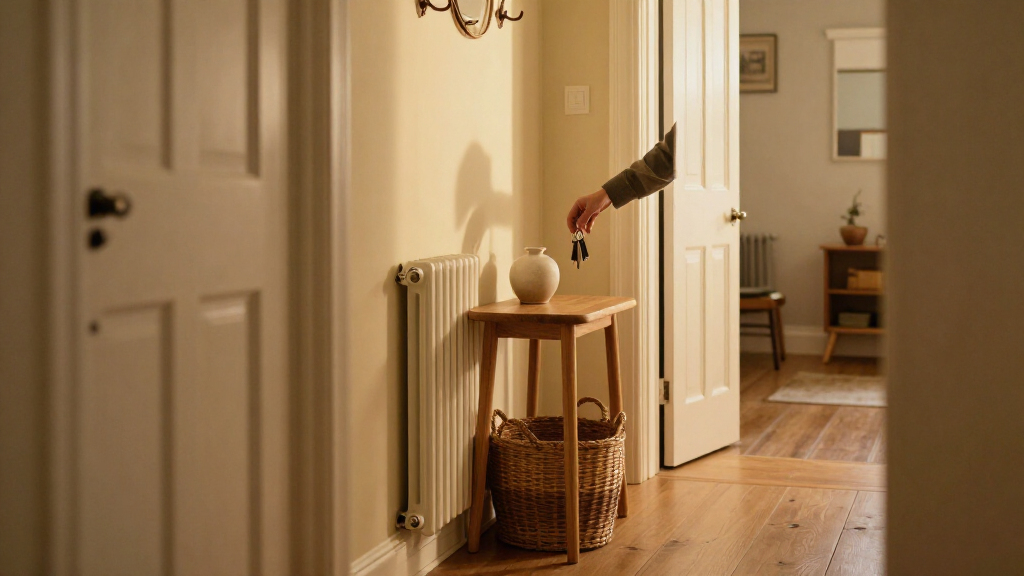
A third example, by Charlotte Simpson of Lotte Studio, uses a simple radiator shelf in a narrow entryway. Simpson said it provided a useful surface without taking up floor space. The source material describes three projects, although it refers to four examples; it does not include a fourth project’s details.
Could a Radiator Table Make a Small Hallway More Beautiful?
A slim surface above a radiator can add room for display or storage while keeping the floor clear. Its practicality depends on the room, radiator and installation.
Three ways to use the space
The examples turn the area above a radiator into a useful surface without adding bulky floor furniture.
Display near artwork
Alex Keith’s marble-topped console used open wooden legs and a marble surface beneath a painting.
A future dressing spot
Laura Stephens planned a 250 mm deep surface for a lamp and later use as a dressing area.
A slim place to set things
Charlotte Simpson’s shelf adds a useful surface in a narrow entryway without taking floor space.
What to check before adding one
The feature offers design inspiration, not general installation specifications.
Check radiator dimensions and available wall space.
One designer described open legs, but the feature gives no general performance evidence.
Confirm the mounting can support intended items such as a lamp or storage.
What the feature leaves unanswered
Readers cannot judge performance or installation fit from the examples alone.
| Question | What is provided |
|---|---|
| Heating performance | No temperature or efficiency measurements |
| Installation | No general clearance or mounting specifications |
| Product comparison | Design examples, not a tested comparison |
| Full set of examples | Three projects described; a fourth is mentioned without details |
A Surface Without More Floor Furniture
The designs address a familiar constraint in small homes: residents may want somewhere to put a lamp, keys or decorative objects, but a freestanding console can obstruct a narrow route. A surface above a radiator can use space that would otherwise remain difficult to furnish, while leaving the floor clear.
The examples also show that a radiator table can be designed for more than display. In Stephens’ project, it was intended to serve as a dressing area as the child grew older. That kind of flexibility may make a slim built-in or wall-supported surface useful where a room’s needs change, though the feature does not establish how well the designs work in everyday use or across different radiator types.
Heat management remains a practical consideration. Keith’s account describes open legs and a marble buffer in relation to a nearby painting, but it is not a general safety or performance assessment. Readers should treat the installations as design examples, not proof that any material, clearance or mounting method will suit every radiator.
Products Worth Considering

LG 55-Inch QNED73B Mini LED 4K Smart TV (2026)

Shark Pet Cordless Stick Vacuum, Up to 40-Minute Runtime, Lightweight, IX141

Levoit Core 600S-P Smart Air Purifier for Large Rooms
As an affiliate, we earn on qualifying purchases.
Three Projects, Three Uses
The feature contrasts radiator tables with traditional radiator covers, which it says can reduce effectiveness or draw more attention to the radiator. Those are broad design claims in the source, not findings supported by comparative measurements. The proposed table form is generally a slim shelf above the radiator, sometimes supported by legs or brackets.
The three documented projects apply that idea differently: a marble-topped landing console designed around artwork, a bedroom surface planned for dressing and storage, and a simple entryway shelf intended to avoid crowding. The article names materials, dimensions and design intentions in some cases, but does not provide full installation specifications, costs or details about radiator output.
“We wanted to create a focal point on the half landing outside her bedroom but didn’t want a traditional radiator cover.”
— Alex Keith, Otta Design
Performance and Installation Details Missing
The feature does not report whether the projects changed room temperatures, heating efficiency or energy use. It also gives no general guidance on safe clearances, suitable materials for different radiator temperatures, bracket load limits or installation requirements. Keith’s description applies to one design and should not be treated as a universal specification.
The source refers to four favorite examples but provides details for only three. It does not identify the missing example or explain whether the article was shortened. The publication date is also absent from the supplied material, so the timing of the feature cannot be established.
Check Fit Before Adding a Shelf
Anyone considering a radiator table would need to check the dimensions of the radiator and the available wall space, along with how the installation could affect heat flow. Mounting strength matters if the surface will hold a lamp or stored items, as in Stephens’ project. The feature offers examples, not a step-by-step installation guide or product recommendation.
The next useful information for readers would be project specifications and performance evidence, including clearances, mounting details and any measured effect on heating. Until those details are available, the designs are best understood as space-saving inspiration whose practicality depends on the individual room and radiator.
Key Questions
What is a radiator table?
It is a shelf or slim console positioned above a radiator, sometimes supported by legs or wall brackets, that creates a display or storage surface without adding a full-size piece of floor furniture.
Can a radiator table reduce heat circulation?
The feature does not include testing that answers this for radiator tables generally. One designer said an open wooden-leg design allowed heat to escape, but that is a description of one project, not a performance guarantee for other designs.
What can a radiator table be used for?
The examples use radiator tables for display, a lamp and light storage, and as a planned dressing surface. The load and uses depend on the surface and its supports; the feature does not provide general weight limits.
How many projects are described in the feature?
The supplied material describes three projects: a marble-topped landing console, a child’s-bedroom dressing surface and an entryway shelf. It mentions four examples but does not provide details for a fourth.
Source: livingetc.com