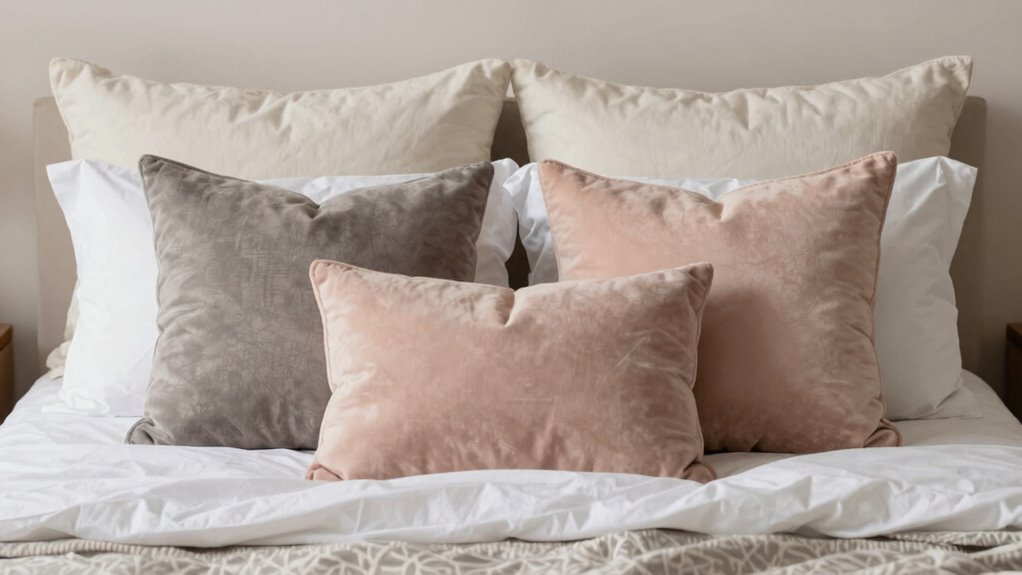

To layer pillows for support without creating a mess, start by placing supportive pillows at the back of the bed, ensuring they’re easy to access. Layer decorative pillows in front, leaning slightly for a cozy look, but keep the total number limited to avoid clutter. Proper placement makes it simple to remove or adjust pillows for sleeping while maintaining a tidy, stylish appearance. If you want practical tips to perfect your setup, you’ll find helpful guidance ahead.
Key Takeaways
- Place supportive pillows at the back of the bed for easy access and proper support.
- Layer decorative pillows in front, leaning slightly to create a cozy, organized look.
- Limit decorative pillows to a few well-chosen pieces to prevent clutter.
- Ensure pillows are arranged so they can be easily removed or adjusted for sleep.
- Maintain a balanced setup that combines comfort and style without overcrowding the bed.

Have you ever wondered how to achieve ideal support and comfort while sleeping? The secret lies in expertly layering your pillows without turning your bed into a cluttered mess. It’s all about balancing function and style, especially when it comes to decorative pillow combinations. Use decorative pillows to complement your bedding’s color scheme and overall aesthetic. These pillows should be arranged in a way that they’re easily removable for sleeping—think of them as accents rather than permanent fixtures. To avoid a styled-bed mess, limit the number of decorative pillows to a few well-chosen pieces. Placing them neatly in front of your supportive pillows creates a layered effect that’s visually appealing but not overwhelming. When stacking your pillows, ensure they don’t block your access to the bed or make it difficult to get in and out. Keep the supportive pillows at the back, with decorative ones layered in front, leaning slightly for a cozy vibe. This arrangement allows you to easily remove or adjust decorative pillows as needed, especially when you’re ready for sleep or lounging. Proper pillow placement can also help maintain a tidy and inviting look. Understanding the importance of bed organization can enhance the overall aesthetic and functionality of your sleeping space. Additionally, incorporating pillow quality into your selection can improve both comfort and durability over time. Being mindful of pillow safety is especially important for those with health concerns or special needs. Remember, the goal is to craft a setup that looks intentional and stylish, but also prioritizes your comfort and sleeping posture improvements. Ultimately, the art of layering pillows is about balance—pairing supportive, functional pillows with attractive decorative ones in a way that keeps your bed looking sleek. With thoughtful selection and arrangement, you can enjoy both a stylish bed and optimal support, making your nightly routine more comfortable and visually pleasing.
supportive bed pillows for sleeping
As an affiliate, we earn on qualifying purchases.
As an affiliate, we earn on qualifying purchases.
Frequently Asked Questions
What Types of Pillows Provide the Best Support for Sleeping?
For the best support while sleeping, choose pillows with memory foam or latex pillow material, as they contour to your head and neck, offering superior comfort. Avoid overly decorative accents that can compromise support. Keep pillows simple and functional, layering with supportive options at the back to maintain a tidy, supportive arrangement. This way, you get the comfort you need without sacrificing a clean, organized look.
How Often Should I Rotate or Change My Pillows?
You should rotate or change your pillows every 1 to 2 years to maintain proper support and hygiene. For example, if you notice your pillow’s material, like memory foam, losing shape or developing odors, it’s time for a replacement. Regularly switching pillows helps improve sleep hygiene, preventing allergens and dust buildup. Maintaining a schedule guarantees you wake up refreshed and supported, avoiding discomfort from worn-out pillow materials.
Can You Layer Pillows for Back or Neck Pain Relief?
Yes, you can layer pillows for back or neck pain relief while keeping decorative accents in mind. Start with a firm, supportive pillow at the bottom, then add medium and soft pillows for comfort. To maintain your pillows, regularly fluff and rotate them to prevent sagging. Use decorative accents sparingly on top to avoid a cluttered look, and keep your layering neat for both support and aesthetic appeal.
What Is the Ideal Pillow Height for Different Sleeping Positions?
The ideal pillow height varies by sleeping position. For back sleepers, choose a medium-loft pillow with moderate firmness to support your neck while maintaining sleep temperature. Side sleepers need a higher, firmer pillow to fill the space between your head and shoulder. Stomach sleepers prefer a lower, softer pillow to prevent neck strain and keep your sleep temperature comfortable. Adjust pillow firmness and height based on your comfort to promote restful sleep.
How Do I Prevent Pillows From Slipping Out of Place?
To prevent pillows from slipping out of place, start with a sturdy pillowcase that fits snugly. For decorative pillow arrangements, use pillow shams with zipper closures or envelope styles to keep them secure. Regular pillowcase maintenance, like washing and replacing worn covers, helps maintain grip. Additionally, consider using non-slip pads or grippers underneath pillows, which can hold them in place without damaging your bedding or causing a styled-bed mess.
Conclusion
Now that you know how to layer pillows for support without creating a mess, imagine waking up each morning feeling perfectly refreshed and supported, your bed both stylish and functional. But here’s the secret: the real magic happens when you tweak your pillow arrangement just right—once you find that perfect balance, you’ll wonder how you ever slept without it. Are you ready to transform your space and experience the difference? The next step is yours.