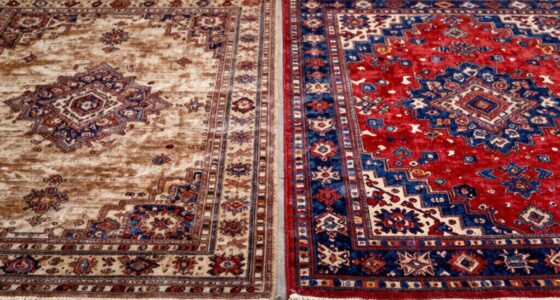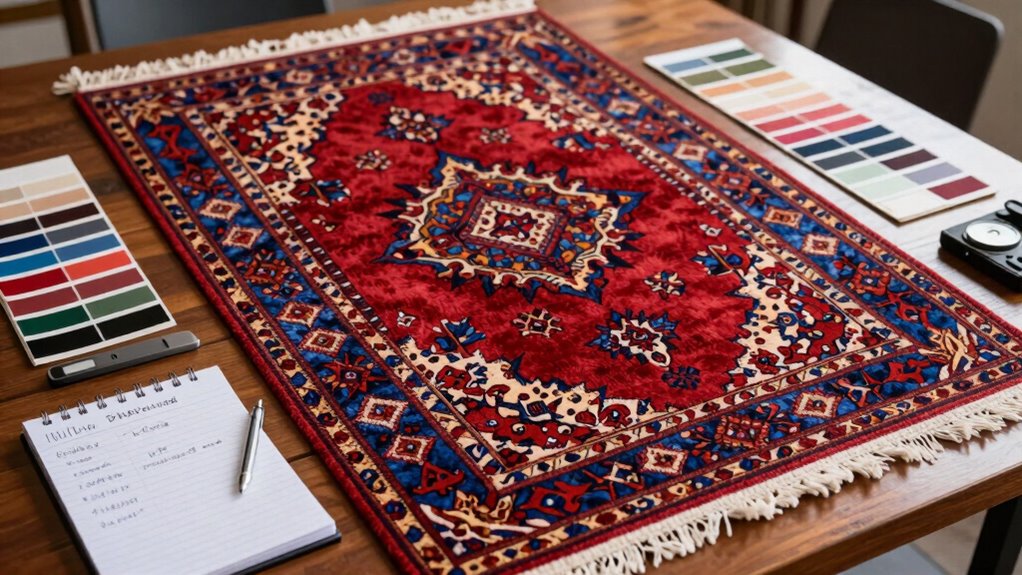

To build a personal rug evaluation rubric, start by identifying key factors like material quality, design, craftsmanship, size, and cost. Assign clear criteria and rating categories such as excellent, good, fair, or poor for each aspect. Consider the durability, feel, and how the pattern fits your decor style. Be objective and compare options methodically. If you continue exploring, you’ll discover how to customize your rubric for the best rug choices.
Open a free Amazon Business account
Business pricing, bulk buying and tax-exempt orders.
As an affiliate, we earn on qualifying purchases.
Key Takeaways
- Define specific evaluation criteria based on material quality, design, craftsmanship, size, and colorfastness.
- Assign clear rating categories (e.g., excellent, good, fair, poor) for each criterion for consistency.
- Incorporate personal preferences and room decor considerations to tailor the rubric.
- Use comparative analysis to objectively assess and prioritize each rug’s features and value.
- Regularly review and refine the rubric based on experience and evolving standards.
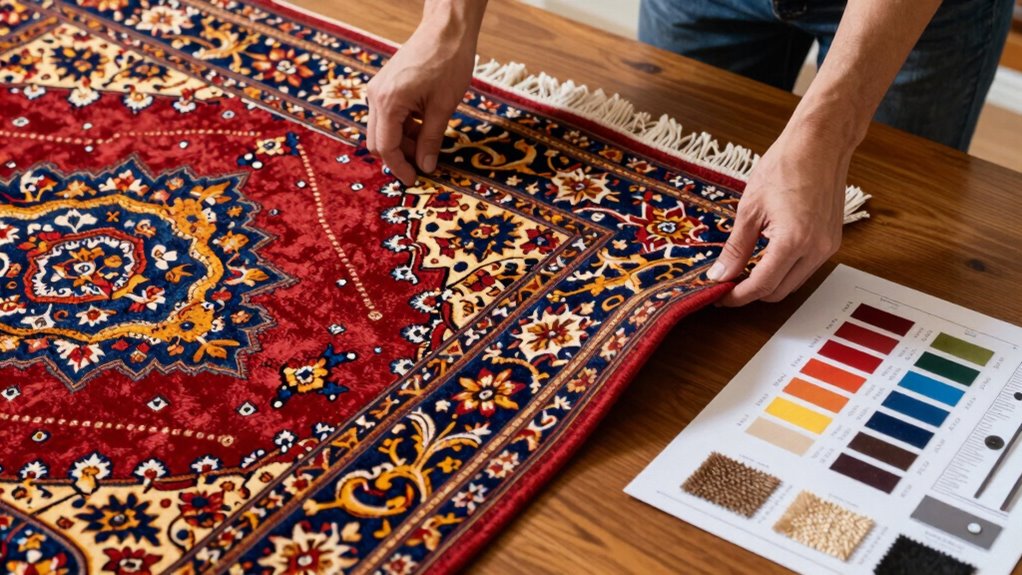
Creating a personal rubric for evaluating rugs helps you assess their quality and style with clarity and confidence. When building this rubric, you want to focus on key aspects that align with your taste and needs. One of the most important factors is material quality. You should consider the fibers used, their durability, and how they feel underfoot. High-quality materials like wool, silk, or cotton often promise longevity and a plush texture, so you’ll want to rate rugs based on the type of fiber, its softness, resilience, and ease of maintenance. For example, wool rugs tend to be durable and stain-resistant, making them ideal for high-traffic areas, while silk rugs might rate higher for their luxurious sheen and intricate detailing but lower for durability.
Evaluating rug quality involves considering fibers, durability, feel, and maintenance for confident choices.
Design patterns are equally essential in your evaluation. Think about the style and visual appeal of each rug—do the patterns resonate with your decor? Are they traditional, modern, geometric, or floral? You should develop a scale that measures how well the design aligns with your aesthetic preferences and the overall theme of your space. Consider the intricacy of the pattern, its symmetry, and how it complements or contrasts with other elements in the room. For instance, bold, contemporary patterns might rate highly if you prefer a modern look, whereas subtle, classic motifs could be better suited if you lean toward timeless elegance.
In addition to material quality and design, your rubric should include other criteria such as craftsmanship, size, colorfastness, and price. For craftsmanship, look at the finishing details, knot density, and weaving techniques—these indicate the rug’s overall build and longevity. Size should match your space, so include measurements and proportions in your evaluation. Colorfastness measures how well the rug retains its hues over time, especially if exposed to sunlight or frequent cleaning. Price is also a practical consideration—your rubric can help you determine whether the rug’s quality justifies its cost. Understanding the fiber quality can also guide you in choosing rugs that balance durability and aesthetic appeal, ensuring your investment stands the test of time. Additionally, being aware of manufacturing techniques can help you distinguish handmade from machine-made rugs, which often impacts both quality and value. Incorporating knowledge about rug construction can further refine your evaluation process, providing insights into the rug’s overall craftsmanship. To make your rubric effective, assign clear, consistent ratings or categories—such as excellent, good, fair, or poor—to each criterion. This structured approach enables you to compare rugs objectively and make informed choices. Over time, refining your rubric based on your experiences will help you develop an intuitive sense of what makes a rug truly worth investing in, ensuring your selections always reflect your personal style and practical needs.
As an affiliate, we earn on qualifying purchases.
Frequently Asked Questions
What Materials Are Best for Creating a Rug Evaluation Rubric?
You should use durable materials like laminated paper or sturdy cardstock for creating your rug evaluation rubric to guarantee longevity. Incorporate clear sections for fiber quality, checking for durability and texture, and assess color consistency by including swatches or color charts. Using these materials helps you easily mark and update evaluations, while the organized layout ensures you systematically compare rugs based on fiber quality and color uniformity, making your assessment precise and efficient.
How Often Should I Update My Rug Evaluation Rubric?
You should update your rug evaluation rubric annually, especially since 60% of buyers consider color patterns and material durability vital. As trends change and new materials emerge, your criteria need to reflect these shifts. Regular updates guarantee you accurately assess rug quality, keeping your evaluations relevant. So, set a yearly reminder to review and adjust your rubric, making sure it captures the latest insights on color patterns and material durability.
Can I Customize the Rubric for Different Types of Rugs?
Yes, you can customize your rubric for different rug categories. Customization options allow you to adjust criteria based on the specific qualities of each rug type, like wool, silk, or synthetic. For example, you might emphasize pile height for shaggy rugs or colorfastness for dye-sensitive pieces. Tailoring your rubric guarantees you accurately evaluate each rug’s unique features, making your assessments more precise and relevant.
How Do I Ensure Objectivity in My Personal Evaluation?
To guarantee objectivity in your evaluation, recognize and minimize subjectivity bias by focusing on measurable criteria like knot density, colorfastness, and material quality. Be aware of your personal preferences that might skew your judgment and consciously set aside emotional reactions. Compare rugs using consistent standards, seek input from others when possible, and prioritize facts over feelings. This approach helps you make fair, balanced evaluations, reducing personal bias and subjectivity.
Are There Any Digital Tools to Help Build a Rug Rubric?
A stitch in time saves nine, and digital tools can greatly streamline your rug evaluation process. You can use apps or software like Google Sheets, Excel, or specialized rug evaluation tools to create customized rubrics. These digital tools allow you to systematically rate aspects such as quality, pattern, color, and condition. They guarantee consistency, save time, and make your evaluation more objective and organized, transforming a complex task into a straightforward one.
Conclusion
Building your own rug evaluation rubric isn’t just about setting standards; it’s about discovering what truly appeals to your eye and comfort. As you fine-tune your criteria, you might find yourself unexpectedly appreciating details you once overlooked—like the subtle sheen of fibers or the way a pattern feels underfoot. It’s almost like your taste evolves right alongside your skills. In the end, your personalized rubric becomes a reflection of your unique style, guiding you to perfect your rug choices with confidence.
Flea & tick season Picks
flea and tick prevention
As an affiliate, we earn on qualifying purchases.