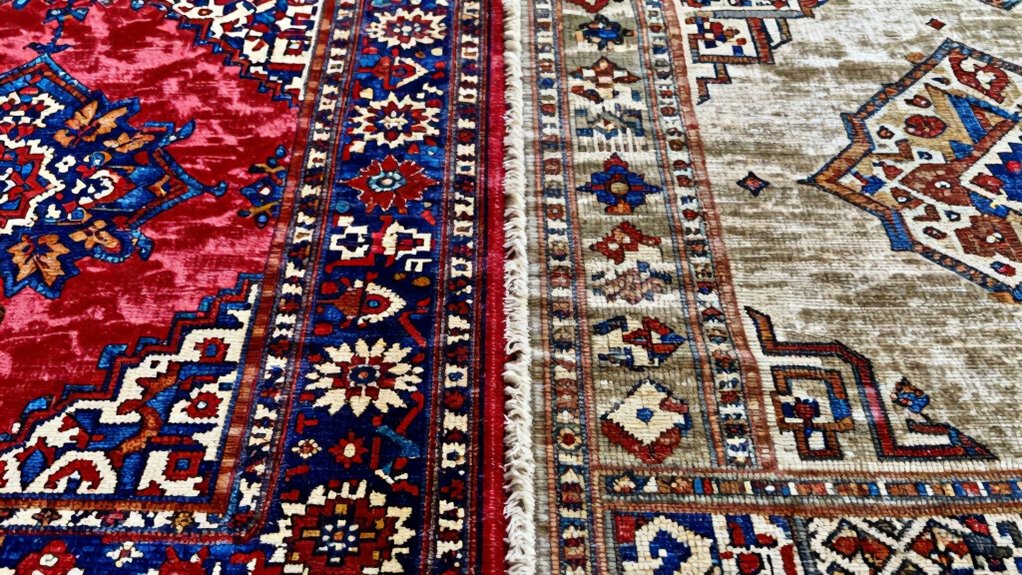

Decorative rugs are chosen for their vibrant colors, patterns, and ability to add warmth and style to a space. They are often mass-produced, affordable, and easy to replace, making them ideal for quick decor updates. In contrast, collectible rugs are valued for their craftsmanship, rarity, and historical significance. They reflect cultural traditions and tell a story beyond their appearance. If you keep exploring, you’ll discover how to spot the qualities that make each type unique.
Key Takeaways
- Decorative rugs prioritize visual appeal, vibrant colors, and affordability, making them easy to replace and suitable for everyday decor.
- Collectible rugs are handcrafted, rare, and culturally significant, valued for craftsmanship, provenance, and historical importance.
- Decorative rugs are mass-produced, designed for accessibility and temporary use, unlike collectible rugs which are often unique and artisanal.
- Collectible rugs tell a story through their origins, craftsmanship, and cultural context, enhancing their value and appeal as artifacts.
- The main difference lies in purpose: decorative rugs enhance aesthetics temporarily, while collectible rugs serve as meaningful investments or heirlooms.
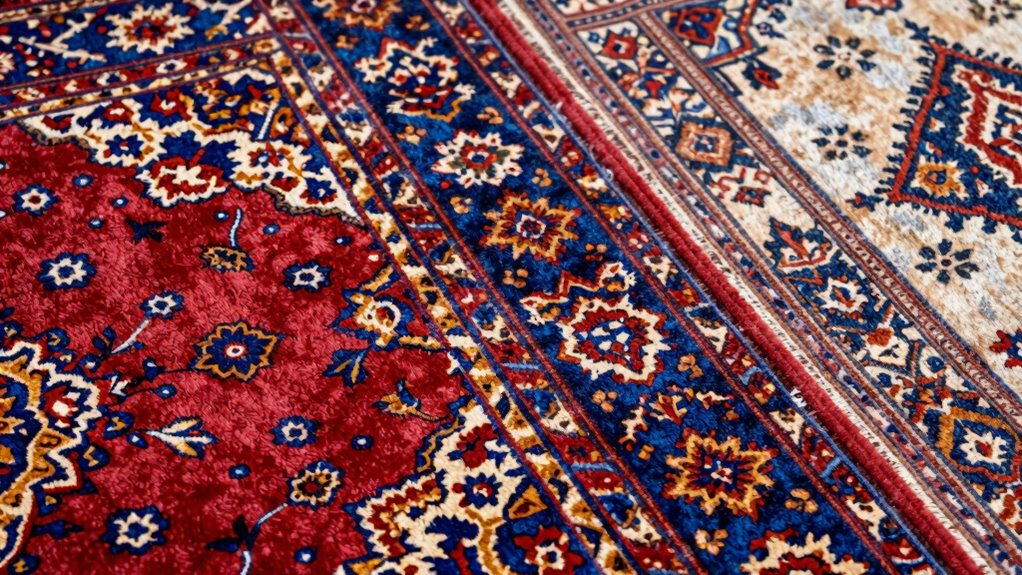
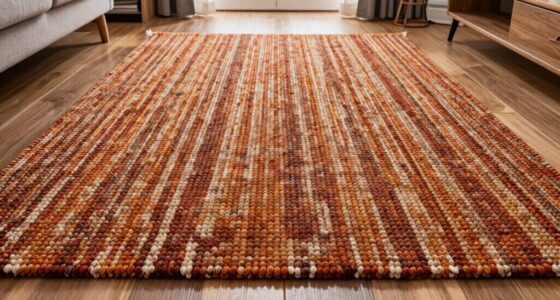
When choosing a rug for your space, understanding the difference between decorative and collectible pieces can help you make an informed decision. Decorative rugs are primarily selected for their visual appeal and ability to complement your interior design. They often feature vibrant colors, patterns, and textures that add warmth and style to a room. These rugs are crafted with the intent of enhancing your decor, and their value typically lies in their aesthetic qualities rather than their rarity or history. They are usually mass-produced or made with standard techniques, allowing for affordability and easy replacement if needed.
Decorative rugs enhance your space with vibrant colors and patterns, offering style and easy replacement.
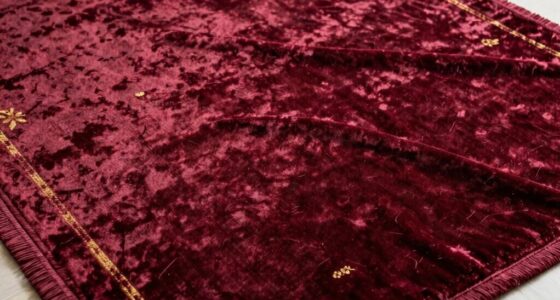
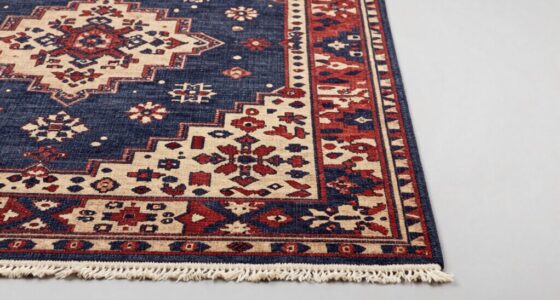
On the other hand, collectible rugs carry a different kind of appeal. These pieces are valued not just for their beauty but for their rarity, history, and craftsmanship. When you look at a collectible rug, you’re often examining a piece that has been handmade with exceptional craftsmanship—each knot and weave reflecting a high level of skill. Handmade craftsmanship is crucial here because it ensures the rug’s uniqueness and quality, making it more than just a decorative item. Many collectible rugs also hold significant historical importance, representing a specific era, region, or cultural tradition. This historical significance can dramatically increase the value of a rug, especially if it’s a rare or antique piece with provenance. Additionally, handmade craftsmanship is essential to understanding a rug’s value, as it distinguishes collectible pieces from mass-produced ones. Recognizing the authenticity of craftsmanship can greatly influence the appreciation and valuation of collectible rugs. Furthermore, understanding the cultural context of a rug can deepen your appreciation for its artistry and significance.
If you’re considering investing in a rug, understanding these qualities can help you decide what aligns with your goals. Decorative rugs are perfect if you want to refresh a space or add a splash of color without a long-term commitment. They’re often easier to replace and less costly, making them ideal for everyday use or temporary decor. Moreover, the importance of provenance can also impact a rug’s value, especially for collectors seeking authenticity and history. Collectible rugs, however, require a bit more knowledge and appreciation. They’re valuable not only for their appearance but also for their story and craftsmanship. Owning a collectible rug means holding a piece of history—an artifact that reflects the artistry and traditions of a particular time and place. Recognizing these qualities can also help you better assess the potential investment value of a rug, especially if you’re interested in the antique or art market.
While decorative rugs can enhance your home’s aesthetic effortlessly, collectible rugs offer a deeper connection to craftsmanship and history. If you’re passionate about investing in artful pieces that tell a story, you’ll find collectible rugs especially rewarding. But if your priority is style and versatility, a well-chosen decorative rug might be all you need. Ultimately, understanding these differences allows you to select a rug that fits your taste, budget, and appreciation for craftsmanship and history.

HowExpert Guide to Rug Collecting: The 39-Day System to Learn How to Identify, Evaluate, and Collect Antique, Vintage, and Modern Rugs with Long-Term Value
As an affiliate, we earn on qualifying purchases.
As an affiliate, we earn on qualifying purchases.
Frequently Asked Questions
How Do I Determine a Rug’s Age Accurately?
To determine a rug’s age accurately, examine vintage patterns and look for signs like dye fading, which indicates age. You should also check the rug’s materials, knots, and construction techniques, comparing them to known historical styles. Additionally, consult an expert for authentication. By focusing on these details, you can estimate the rug’s age more precisely and understand its historical value and uniqueness.
Can Decorative Rugs Become Valuable Over Time?
Like a fine wine, decorative rugs can become more valuable with time, especially if they undergo expert antique restoration. Their worth increases when their artistic craftsmanship is preserved or enhanced, attracting collectors and enthusiasts. While initially intended for decoration, these rugs can gain historical significance and unique charm, making them prized pieces. Proper care and appreciation can turn a decorative rug into a treasured collectible over the years.
What Maintenance Is Required for Collectible Rugs?
To keep your collectible rug in top shape, you need proper maintenance. Regular cleaning techniques like gentle vacuuming without a beater bar help prevent dust buildup, while occasional professional cleaning preserves its value. Storage tips include rolling the rug with acid-free paper, avoiding direct sunlight, and keeping it in a cool, dry place. These steps protect delicate fibers and maintain its condition, ensuring it remains a valuable piece over time.
Are Synthetic Fibers Ever Considered Collectible?
Synthetic fibers can be considered collectible when they showcase unique qualities or historical significance, much like a rare gem among common stones. You might find collectible synthetic rugs made with artificial dyes or innovative fiber blends that stand out. These pieces often reflect craftsmanship or era-specific styles, making them valuable to collectors. So, yes, synthetic fibers can be collectible if they possess distinctive features or a story worth telling.
How Does Provenance Affect a Rug’s Value?
Provenance greatly affects a rug’s value because it provides authenticity verification and confirms its history. When you have detailed provenance documentation, it assures buyers of its origin, age, and authenticity, boosting its worth. Without clear provenance, a rug’s value drops, as collectors question its legitimacy. So, always seek verified provenance to guarantee your rug holds its true value, especially if you plan to sell or display it prominently.
Conclusion
Ultimately, understanding the difference between decorative and collectible rugs is like choosing between a vibrant painting and a rare masterpiece. Decorative rugs add color and personality to your space, while collectible rugs are investments that grow richer with time. By recognizing their unique qualities, you can curate a collection that’s both beautiful and meaningful. Think of your rug choices as planting seeds—each one has the potential to blossom into a cherished heirloom or a treasured accent.