

To prevent trapped humidity and haze in your display case, make certain all gaps and joints are properly sealed with weatherstripping or silicone. Use moisture-resistant materials like tempered glass or acrylic, and maintain stable indoor humidity levels between 40-50%. Incorporate good ventilation with vents or fans, and add desiccants to absorb excess moisture. Regular cleaning and inspections help catch issues early. Keep these tips in mind to maintain clear, haze-free displays—more insights await if you continue on.
Key Takeaways
- Ensure all edges and openings are properly sealed with weatherstripping or silicone to prevent moisture entry.
- Use moisture-resistant materials like acrylic, tempered glass, and sealed wood finishes for construction.
- Maintain stable indoor humidity levels between 40-50% using dehumidifiers and hygrometers.
- Incorporate effective ventilation by placing vents at appropriate locations and using airflow fans to reduce humidity buildup.
- Regularly inspect, clean, and replace seals, and monitor interior conditions to detect and address moisture or haze early.
What Causes Humidity and Fogging in Your Display Cases?

Humidity and fogging in your display cases often occur when moisture from the surrounding environment enters or condenses inside the enclosure. The materials used for your display case play a vital role in this process. Some materials, like glass or certain plastics, are more prone to allowing humidity transfer if they lack proper sealing. Without effective humidity barriers, moisture can seep through gaps or porous surfaces, leading to condensation on the inside surfaces. Poorly sealed joints or inadequate design can also contribute to this issue. To prevent fogging, it’s essential to choose display case materials that resist moisture penetration and ensure they are properly sealed. Additionally, incorporating moisture-resistant materials can significantly improve the case’s ability to maintain a stable internal environment, reducing the chance of internal condensation and keeping your display clear.
Which Materials Help Keep Your Display Case Dry?
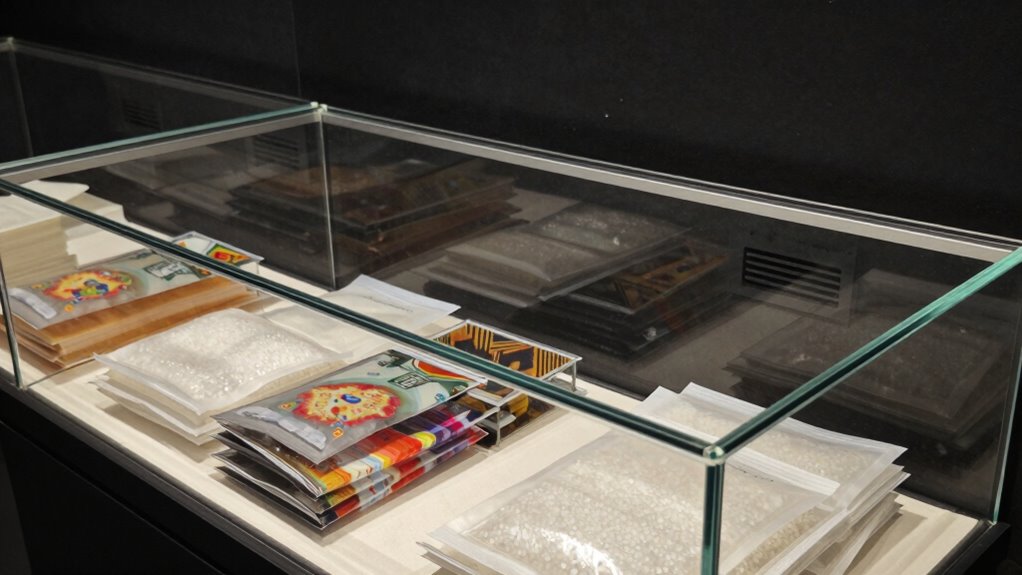
Choosing the right materials for your display case is essential to keeping it dry. Look for options with high material durability, resistant to moisture and temperature changes, to prevent warping and mold growth. Acrylic and tempered glass are excellent choices because they’re sturdy, easy to clean, and don’t absorb humidity. Wood can be attractive but may require sealed finishes to improve its moisture resistance. Metal frames, especially aluminum, offer strength and longevity, helping maintain a dry environment. Besides durability, consider aesthetic appeal—select materials that complement your display’s style without compromising functionality. Combining durable, moisture-resistant materials with an attractive design ensures your display case remains clear, haze-free, and dry over time. This balance helps protect your items and preserves the overall visual appeal. For long-term performance, proper ventilation considerations are crucial in preventing trapped humidity and haze inside the case.
How to Ventilate Your Display Space to Reduce Moisture
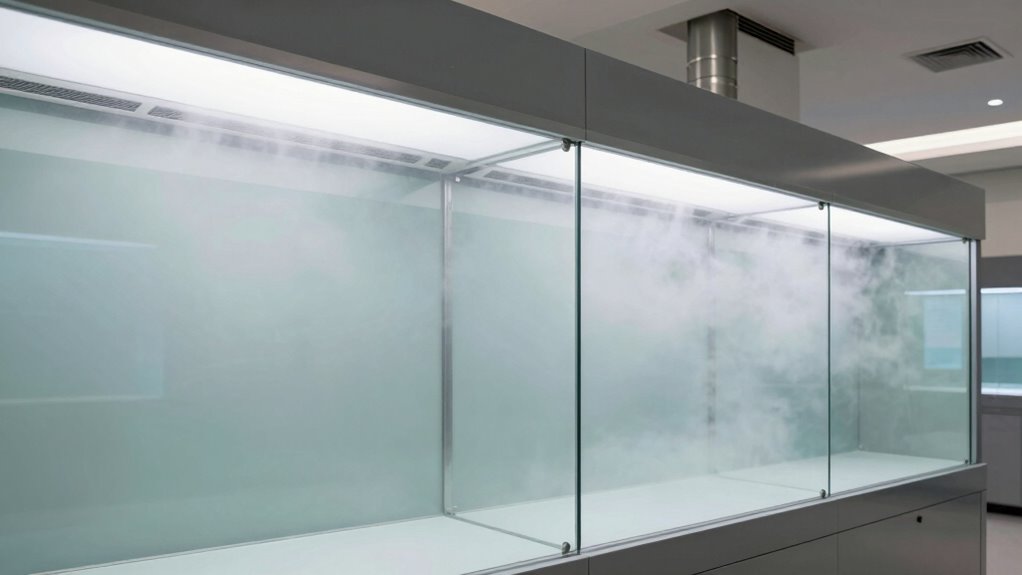
To keep moisture levels in check, you need to focus on proper vent placement so air circulates effectively. Installing ventilation fans can help remove excess humidity, but you should also regularly check airflow to spot any issues. Keeping these elements in balance guarantees your display space stays dry and preservation-friendly. Incorporating smart appliances that monitor and regulate humidity can further optimize the environment for your display cases.
Proper Vent Placement
Proper vent placement is vital for maintaining a dry and stable environment inside your display case. Good ventilation design ensures that moisture doesn’t accumulate, preventing haze. Position vents strategically to promote airflow optimization, which helps remove excess humidity effectively. Typically, vents should be placed near the bottom to draw in drier air and near the top to exhaust moist air. Adjustments depend on case size and internal conditions. Consider the following table for ideal placement:
| Vent Location | Purpose | Airflow Direction |
|---|---|---|
| Bottom | Intake of dry air | Upward |
| Top | Exhaust of humid air | Outward |
| Side Panels | Circulate interior air | Lateral movement |
| Back Panel | Enhance overall flow | Circulates evenly |
Correct vent placement is essential to balance airflow and prevent trapped moisture. Proper ventilation design is key to maintaining a clear display case, especially in environments prone to humidity fluctuations.
Use of Ventilation Fans
Installing ventilation fans in your display case enhances airflow beyond passive vent placement, actively reducing moisture buildup. These fans improve airflow enhancement by circulating air more effectively, helping to prevent trapped humidity that causes haze. Proper ventilation ensures moisture doesn’t accumulate on surfaces or within the display, maintaining a clear view of your items. By actively controlling humidity levels, ventilation fans create a more stable environment, minimizing the risk of mold or mildew. Make sure to position the fans strategically to maximize airflow and avoid dead zones. Regularly monitor the operation of your fans to ensure they’re working efficiently. Using ventilation fans is a proactive step toward maintaining ideal humidity control, preserving both the clarity of your display case and the integrity of its contents. Understanding airflow is key to effectively managing humidity in enclosed spaces.
Regular Airflow Checks
Regular airflow checks are essential for maintaining a moisture-free display environment. By routinely inspecting your ventilation system, you ensure proper airflow maintenance, which helps prevent trapped humidity. Consistent airflow promotes humidity regulation, reducing the risk of haze and moisture buildup inside your display case. Check that vents are unobstructed and functioning correctly, and listen for any unusual noises that indicate issues. If airflow slows or stops, adjust or clean the vents promptly. Good ventilation keeps fresh air circulating, discouraging excess moisture from settling on your items. Regularly monitoring your airflow system allows you to catch problems early, maintaining ideal conditions and protecting your display from humidity-related damage. Proper ventilation maintenance is a simple yet effective step in preserving the clarity and quality of your display case.
How Silica Gel and Desiccants Control Humidity in Display Cases
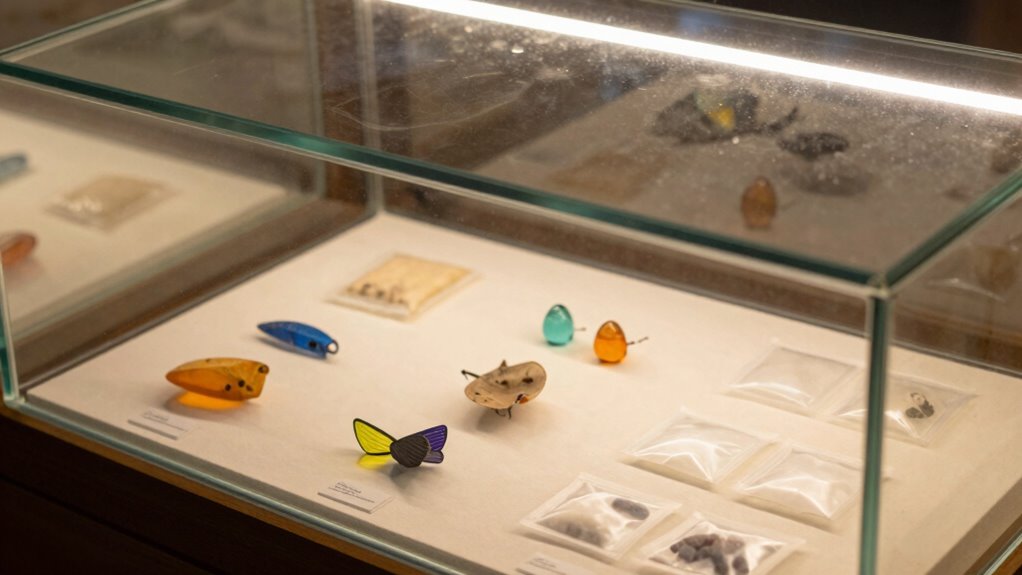
Silica gel and desiccants are effective tools for controlling humidity inside display cases, but their absorption efficiency depends on proper use. You need to make sure they are placed correctly to maximize their moisture-absorbing capabilities. Understanding how to position these materials helps protect your display and preserve its contents. Proper placement can also prevent issues like moisture buildup, which can lead to trapped humidity and haze.
Silica Gel Absorption Efficiency
Understanding how silica gel and other desiccants control humidity inside display cases is essential for preserving valuable artifacts. Silica gel’s absorption efficiency depends on its porosity and surface area, allowing it to trap moisture effectively. When silica gel absorbs humidity, it undergoes a desiccant color change, signaling when it’s saturated. To maintain ideal performance, you need to periodically perform silica gel reactivation—drying it out so it can continue absorbing moisture. Proper reactivation involves heating silica gel to release trapped water vapor, restoring its absorption capacity. Monitoring the desiccant’s color change helps you determine when reactivation is necessary, ensuring your display case remains dry and free of trapped humidity. This proactive approach keeps artifacts safe from haze and deterioration caused by excess moisture. Additionally, choosing the right type of desiccant based on humidity levels can optimize protection for your display items.
Proper Desiccant Placement
Proper placement of desiccants inside a display case is essential for effectively controlling humidity and protecting your artifacts. To optimize humidity control, position desiccants where air circulation is strongest, such as near vents or open areas, ensuring even distribution throughout the case. Avoid placing desiccants directly against fragile items or glass surfaces, as this can cause condensation or moisture buildup. Instead, use breathable pouches or containers to hold silica gel or other desiccants, allowing moisture absorption without direct contact. Regularly check and replace or recharge desiccants to maintain their effectiveness. Proper desiccant placement prevents trapped humidity, reduces haze, and keeps your display environment stable. Using breathable containers allows for better moisture absorption and prevents direct contact that could damage delicate items. Consistent humidity control through strategic desiccant positioning safeguards your collection and enhances visual clarity.
Sealing Your Display Case to Block Humidity Ingress

To effectively prevent humidity from entering your display case, sealing it properly is essential. Start with sealing techniques that ensure a tight fit around all edges and openings. Use high-quality weatherstripping or silicone sealant on seams, corners, and gaps to create effective moisture barriers. Inspect the case regularly for cracks or worn seals, replacing or resealing as needed. Avoid leaving any openings or vents unsealed, as these can serve as entry points for moisture. Proper sealing not only keeps humidity out but also maintains a stable environment for your display items. Focus on airtight seals and moisture barriers that are durable and resistant to temperature fluctuations, ensuring long-lasting protection against trapped humidity and haze. Incorporating Free Floating design principles can also help minimize trapped moisture by allowing air circulation within the case, reducing the risk of haze formation.
How to Maintain a Stable Indoor Climate for Your Display Items

To keep your display items in top condition, you need to regulate the indoor humidity and prevent fluctuations. Using climate control devices, like humidifiers or dehumidifiers, helps maintain consistent conditions. Regularly monitoring your environment ensures you catch any changes early and keep your display case stable.
Controlling Indoor Humidity
Have you ever noticed how fluctuations in humidity can damage delicate display items? Maintaining stable indoor humidity levels is essential to prevent warping, cracking, or mold growth. Use a hygrometer to monitor humidity consistently and aim for 40-50%, depending on your items. Controlling humidity not only protects your treasures but also supports UV protection, reducing fading caused by light exposure. Proper humidity levels also enhance the aesthetic appeal of your display, keeping items looking vibrant and well-preserved. Avoid drastic changes in temperature and humidity, which can cause condensation or haze inside the case. By maintaining a steady environment, you help ensure your display items stay in pristine condition, preserving their beauty and value over time.
Using Climate Control Devices
Maintaining a stable indoor climate for your display items is vital, and climate control devices play an essential role in achieving this consistency. These devices help regulate humidity control and prevent fluctuations that can damage delicate display case materials. Proper climate control ensures your items stay clear of haze and trapped moisture, preserving their beauty and value. Investing in reliable humidifiers, dehumidifiers, or climate controllers can make a significant difference. Consider how your display case materials respond to environmental changes—some materials are more sensitive than others. Use the following table to visualize the importance of tailored climate control:
| Material Type | Ideal Humidity Range | Recommended Device |
|---|---|---|
| Glass | 40-50% | Humidity control system |
| Wood | 40-55% | Dehumidifier |
| Plastics | 30-60% | Climate controller |
| Metal | 35-55% | Humidity monitor |
Monitoring Environment Regularly
Regularly monitoring the environment around your display cases is essential to keep the climate stable and protect your items. Use a reliable hygrometer and thermometer to check humidity and temperature levels frequently. Keep an eye on lighting placement, ensuring lights don’t emit excess heat or UV rays that could damage your display and cause haze. Adjust lighting as needed to maintain consistent illumination without creating hot spots. Consistent monitoring helps you detect fluctuations early, allowing you to make adjustments before humidity or temperature issues develop. This vigilance not only preserves the integrity of your items but also enhances display aesthetics by preventing glare, fading, or trapped moisture. Regular checks empower you to maintain a controlled environment, ensuring your display remains pristine and visually appealing.
Common Mistakes That Cause Fogging in Display Cases
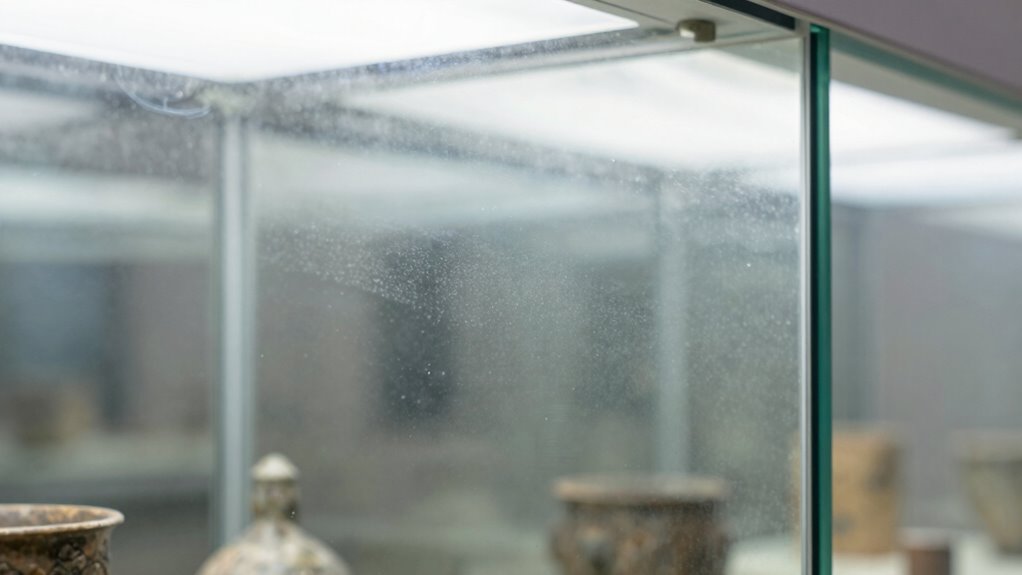
One common mistake that leads to fogging in display cases is improper sealing or inadequate ventilation. When your case isn’t sealed properly, moisture gets trapped inside, creating the perfect environment for fogging. Poor ventilation allows humidity to build up, especially if you don’t monitor environmental conditions regularly. Additionally, neglecting regular display case cleaning can leave dust and moisture on surfaces, which contributes to haze. Lighting effects can also play a role—using overly intense or heat-emitting lights raises internal temperatures, causing condensation. To avoid this, ensure your display case is well-sealed, ventilated, and cleaned frequently. Use appropriate lighting that doesn’t generate excess heat, and keep humidity levels in check to prevent fogging and maintain a clear view of your exhibits.
How to Clean and Inspect Your Display Case to Prevent Moisture Buildup
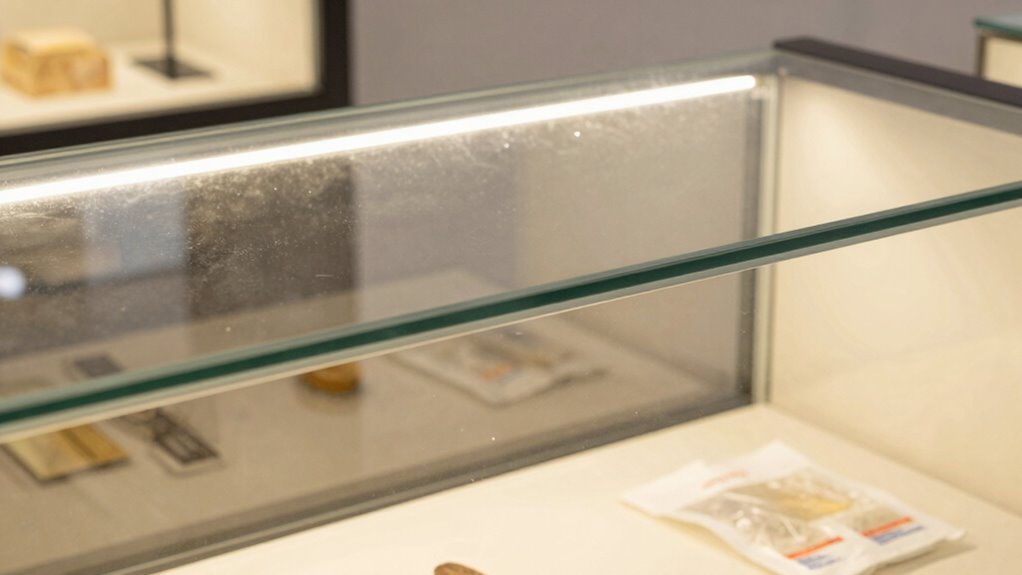
Keeping your display case clean and inspecting it regularly are essential steps to prevent moisture buildup. Use proper cleaning techniques, such as wiping down surfaces with a soft cloth and a mild cleaner to remove dust, dirt, and any residue that could trap moisture. Pay special attention to corners and seals, ensuring they stay intact and free of debris. Inspection tips include checking for signs of condensation, mold, or haze on the glass and seals. Look for any cracks or gaps that could allow humidity to enter. Regularly opening the case and examining its interior helps you spot potential issues early. By maintaining cleanliness and performing routine inspections, you reduce the risk of trapped humidity and haze, keeping your display pristine.
Why Is My Display Case Still Foggy, and How Can I Fix It?
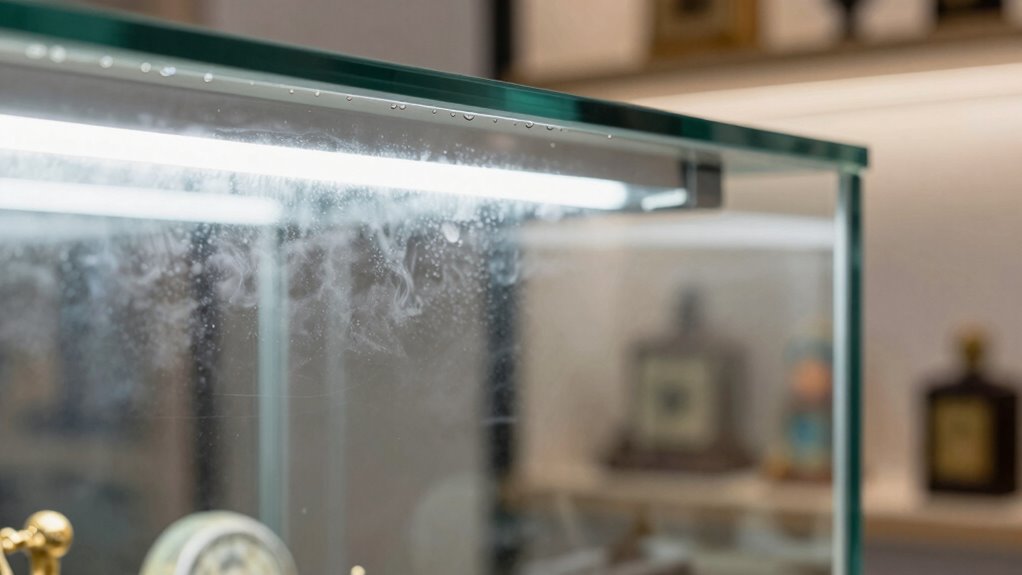
If your display case remains foggy despite cleaning, the issue likely stems from trapped moisture inside the glass or seals. This moisture can’t escape, causing persistent haze. To fix this, check for any leaks or gaps in the seals and reseal if needed. Removing excess humidity may also require placing silica gel packets or dehumidifiers inside the case. When adjusting your display arrangement, avoid overcrowding, which can block airflow and trap moisture. Additionally, consider upgrading to decorative lighting that produces less heat, reducing condensation risks. Proper lighting helps highlight your items without contributing to humidity issues. Regularly inspecting and maintaining your display case ensures moisture doesn’t build up again, keeping the glass clear and your display looking its best.
Best Practices to Keep Your Display Case Clear and Haze-Free Long-Term
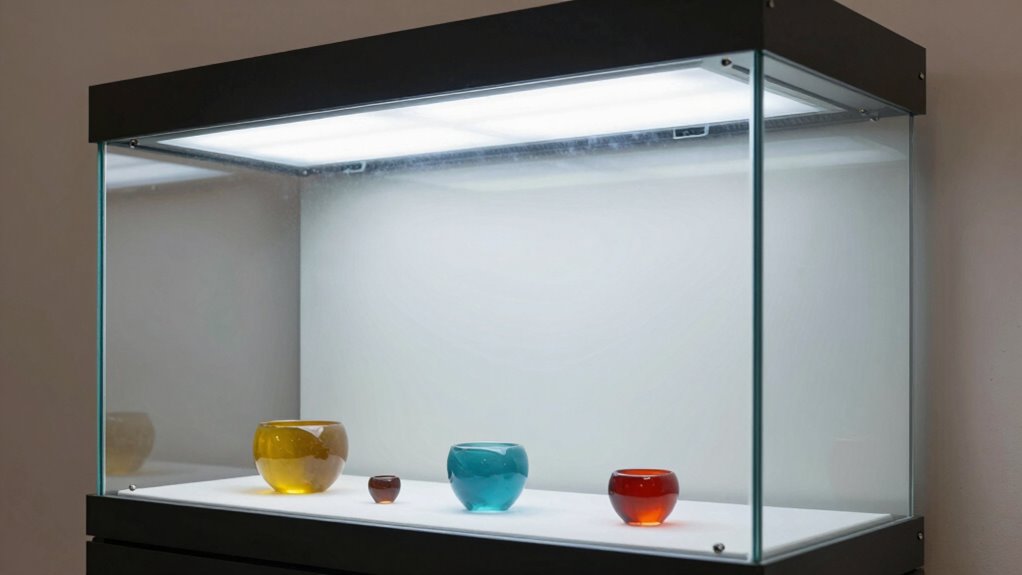
To maintain a clear and haze-free display case over the long term, you should establish regular inspection and maintenance routines. Check for condensation, dust buildup, and signs of fogging, especially around lighting effects that can generate heat. Use proper cleaning techniques to preserve the aesthetic design without scratching surfaces. Adjust lighting to prevent excessive heat, which can cause trapped humidity. Keep the environment stable by controlling temperature and humidity levels. Consider using silica gel packs or dehumidifiers inside the case.
| Inspection Tasks | Maintenance Tips | Key Focus |
|---|---|---|
| Check for condensation | Clean glass gently | Lighting effects, clarity |
| Inspect seals and vents | Replace worn seals | Prevent trapped humidity |
| Monitor humidity levels | Use dehumidifiers if needed | Long-term haze prevention |
| Clean surfaces regularly | Avoid harsh chemicals | Aesthetic appeal |
| Adjust lighting settings | Use LED lights | Minimize heat, optimize design |
Frequently Asked Questions
Can Temperature Fluctuations Cause Humidity Issues in Display Cases?
Yes, temperature fluctuations can cause humidity issues in display cases. When temperatures change, it affects humidity regulation, leading to trapped moisture or haze. You should maintain consistent temperature control to prevent these problems. Using a reliable humidity control system helps regulate moisture levels, ensuring your display cases stay clear and free of trapped humidity. Proper temperature and humidity management protect your items and keep your display looking its best.
What Are the Best Types of Lighting to Prevent Fogging?
You should choose LED lighting with built-in UV protection to prevent fogging in your display cases. LED lights emit minimal heat, which helps avoid humidity buildup and fogging issues. Additionally, UV protection preserves your items by blocking harmful rays that can cause fading or deterioration. By selecting LED lights with UV filters, you guarantee your display stays clear and your items remain in pristine condition.
How Often Should I Replace Desiccants in My Display Case?
Think of your desiccants as the silent guardians of clarity. You should substitute them when the humidity indicator strips show high moisture levels, typically every 3 to 6 months, depending on humidity conditions. Keep an eye on the desiccant lifespan and use humidity indicator strips regularly to monitor effectiveness. This proactive approach ensures your display stays clear, free of haze, and preserves your items’ pristine appearance.
Are There Specific Cleaning Products Recommended for Display Cases?
You should use gentle cleaning solutions specifically designed for display cases, avoiding harsh chemicals that can damage surfaces. Recommended products include glass cleaners like ammonia-free formulas or mild soap mixed with water. Always test any cleaning solution on a small area first. Regularly dust and wipe down your display case with a soft cloth to prevent haze and trapped humidity, ensuring your items stay clear and well-preserved.
How Does Outdoor Weather Affect Indoor Display Case Humidity Levels?
Think of your display case like a sailboat; outdoor weather, especially outdoor air quality and humidity, can influence its condition. When outdoor air is humid or polluted, it seeps indoors through gaps, raising humidity levels inside your case. Proper indoor ventilation helps balance this, preventing trapped moisture and haze. Keeping windows closed during high outdoor humidity and using dehumidifiers guarantees your display stays clear and preserved.
Conclusion
Now that you understand the causes and solutions for trapped humidity and fogging, you’re better equipped to maintain a clear display. But beware—small oversights can quickly undo your efforts. Will your next step be sealing every crack, or perhaps reconsidering your ventilation approach? The key lies in consistent vigilance. Keep a close eye, and your display will remain pristine longer than you ever imagined—just don’t let your guard down at the wrong moment.