
To protect your art from UV damage, you can choose UV-filtering frames, acrylic glass, or window films. UV-filtering frames block harmful rays and keep colors vibrant, while acrylic glass offers lightweight, impact-resistant protection with high UV absorption. Window films are easy to install on large glass surfaces and cost-effective. Each option has its strengths; understanding them helps you select the best for your preservation needs. Discover more to keep your artwork lasting longer.
Key Takeaways
- UV-filtering frames, acrylic glass, and window films effectively block harmful UV rays, preventing artwork fading and deterioration.
- Acrylic offers high UV absorption, clarity, impact resistance, and lightweight protection for art displays.
- UV window films provide flexible, cost-effective UV protection for large glass surfaces without altering appearance.
- Proper installation, handling, and regular maintenance are essential to ensure long-lasting UV protection for art.
- Selecting the right UV protection method depends on display environment, durability needs, and preservation goals.
Why UV Rays Damage Art and How to Protect It
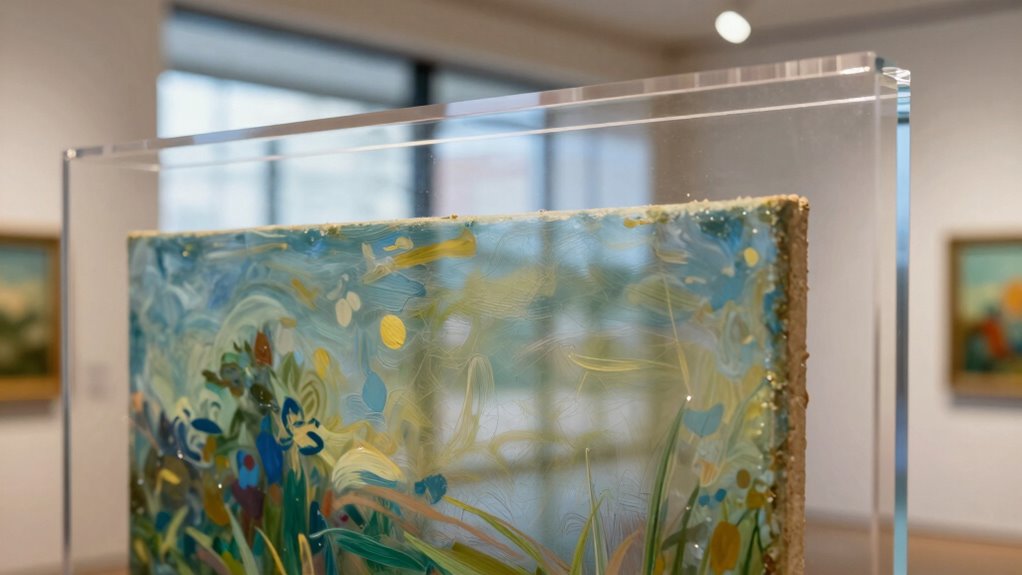
Ultraviolet (UV) rays can cause significant damage to artworks by breaking down their chemical bonds, leading to fading, discoloration, and deterioration over time. This UV damage accelerates the degradation of pigments, dyes, and other materials, making artworks lose their original vibrancy. As someone invested in art conservation, you understand the importance of protecting your pieces from UV exposure. Without proper safeguards, UV rays can cause irreversible harm, diminishing both aesthetic value and historical significance. By understanding how UV rays affect art, you can take proactive steps to shield your collection. Implementing protective measures helps preserve artworks for future generations and maintains their visual integrity. Ultimately, minimizing UV damage is essential to guarantee long-term preservation and appreciation. Incorporating energy-efficient cloud servers into your conservation efforts can also enhance data management and security for digital archives of artworks.
How UV-Filtering Glass Frames Safeguard Your Artwork

UV-filtering glass frames prevent your artwork from fading over time by blocking harmful rays. They protect your pieces from UV damage, ensuring colors stay vibrant and true. With these frames, you can confidently preserve your art’s original beauty for years to come. Proper safe installation practices help maximize their effectiveness and longevity.
Protects Against Fading
Because light exposure can cause artwork colors to fade over time, investing in glass frames that block harmful rays is essential. UV damage accelerates fading, diminishing the vibrancy and integrity of your art. UV-filtering glass acts as a barrier, reducing the amount of harmful ultraviolet rays that reach your artwork. This protection is crucial for art preservation, ensuring that colors stay vivid and details remain sharp for years to come. By choosing the right UV-protective glass, you minimize the risk of fading caused by sunlight or indoor lighting. Protecting against UV damage is a key step in extending the lifespan of your artwork, maintaining its original beauty, and preserving its value over time. UV-filtering glass is an effective way to safeguard your pieces from harmful rays while maintaining clarity and color accuracy.
Blocks Harmful Rays
UV-filtering glass frames act as a protective shield, blocking the harmful rays that can otherwise penetrate and damage your artwork. These specialized frames provide essential UV protection, preventing ultraviolet rays from reaching the surface of your art. By filtering out these damaging rays, the frames help guarantee your artwork remains intact over time. They reduce the risk of fading, discoloration, and deterioration caused by exposure to sunlight. This form of art preservation is indispensable for maintaining the original appearance and value of your pieces. When you choose UV-filtering glass, you’re actively safeguarding your investment, giving your art a longer lifespan. Overall, these frames serve as a critical barrier, ensuring your artwork remains vibrant and protected from the unseen but destructive effects of UV radiation. Additionally, selecting the right UV protection level can further enhance the longevity of your artwork.
Preserves Color Integrity
To maintain your artwork’s vibrant colors over time, it’s essential to protect it from the harmful effects of light exposure. UV-filtering glass frames play a vital role in preserving color integrity by blocking ultraviolet rays that cause color fading and material degradation. Without proper protection, your artwork is vulnerable to dulling and deterioration. Implementing protective measures like UV filtering can help safeguard against Free Floating issues that impact the longevity of your artwork.
Why Acrylic Glass Is a Smart Choice for UV-Resistant Displays
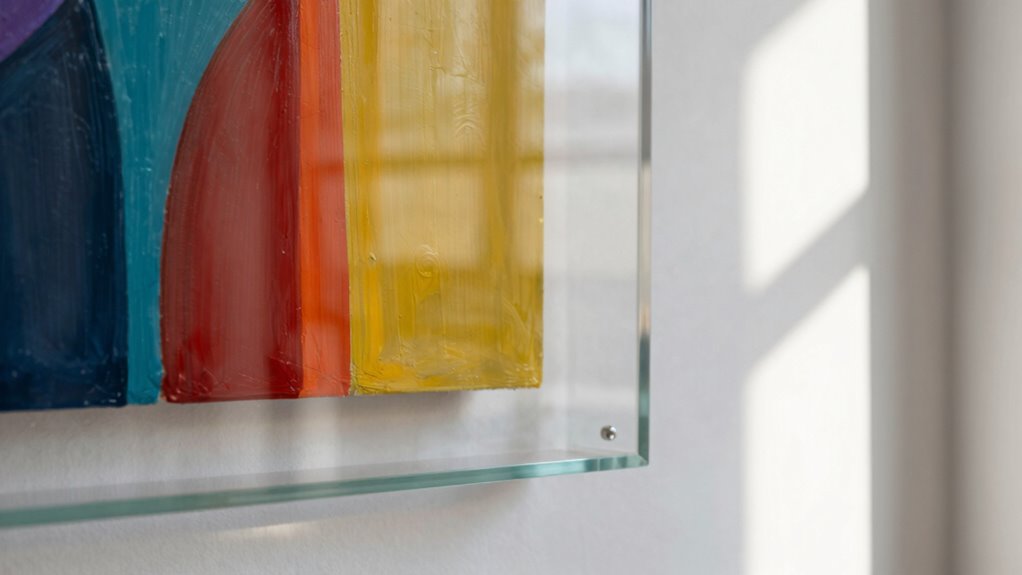
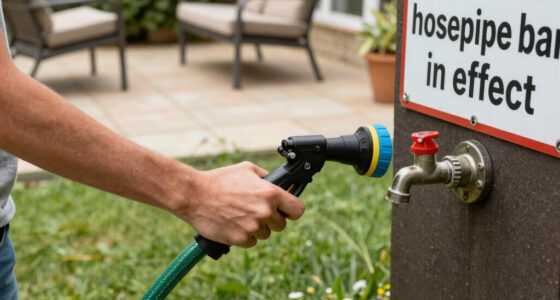
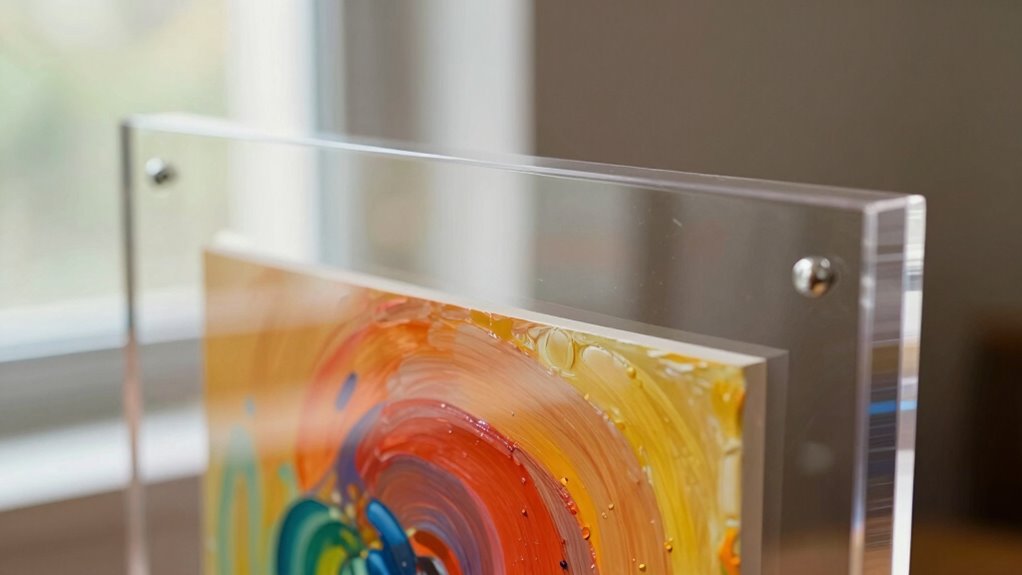
Acrylic glass stands out as a smart choice for UV-resistant displays because it offers superior clarity and durability. Its high UV absorption capacity helps block harmful ultraviolet rays that can damage artwork over time, making it an effective shield for your pieces. Additionally, acrylic durability guarantees the material resists scratches, impacts, and yellowing, maintaining its transparency and protective qualities for years. Unlike glass, acrylic is lightweight and less prone to shattering, providing added safety and ease of handling. Its ability to combine clear visibility with strong UV protection makes it ideal for display cases and frames. By choosing acrylic glass, you ensure your art remains vibrant and protected against UV-induced deterioration, prolonging its beauty and value. Proper UV protection in display materials is essential for preserving the integrity of delicate artwork over the long term.
How to Pick the Best UV-Blocking Window Films for Art Protection
When choosing UV-blocking window films, it’s important to consider how effectively they filter out harmful rays. You also need to guarantee the film won’t alter how your artwork looks or damage it over time. By focusing on these factors, you can select a film that provides optimal protection without compromising your art’s appearance. Additionally, selecting a film with long-lasting UV protection ensures your artwork remains protected over the years.
UV Filter Effectiveness
How can you guarantee your window film effectively blocks harmful UV rays while still allowing visibility? The key is choosing high-quality UV filter materials designed to absorb or reflect UV radiation without compromising clarity. Look for films with proven UV filter effectiveness, typically rated to block 99% or more of UV rays. Proper UV filter installation ensures these films perform at their best, avoiding gaps or bubbles that reduce effectiveness. To assess UV filter effectiveness, consider:
- The film’s UV rejection percentage
- The type and durability of UV filter materials used
- Whether professional UV filter installation has been performed for maximum coverage
- The durability of UV filters, which ensures long-term protection against UV degradation
Compatibility With Art
Choosing a UV-filtering window film that protects artwork requires careful consideration of its compatibility with the art environment. Not all films offer the same level of UV protection without affecting visibility or color accuracy. Look for films designed specifically for art preservation, which balance UV blocking with minimal glare and distortion. Guarantee the film’s clarity won’t alter how your artwork appears or compromise its aesthetic. Consider the film’s transparency, color neutrality, and durability to prevent any negative impact on display quality. Compatibility also means selecting a film that’s suitable for your window type and installation environment. By choosing the right UV protection, you safeguard your art’s longevity while maintaining its visual integrity. Ensuring the film’s spectral properties align with the needs of your artwork helps preserve both its appearance and value. This careful matching supports both preservation and the viewing experience.
Comparing UV-Filtering Frames, Acrylic Glass, and Window Films: Which Is Best?
Determining the most effective method for UV protection depends on your specific needs and display environment. Each option—UV-filtering frames, acrylic glass, or window films—has strengths and limitations. UV filtering coatings can be applied to various materials, enhancing protection regardless of glass or plastic. When comparing glass versus plastic, glass usually offers better clarity and durability but can be heavier and more fragile. Acrylic glass is lightweight and shatter-resistant, making it ideal for safer display environments. Window films are flexible and easy to retrofit, providing an affordable UV barrier. Consider these factors:
Choosing the right UV protection depends on your display needs and environment.
- UV filtering coatings’ effectiveness varies based on material and application.
- Glass offers superior optical clarity but may transmit more UV without coatings.
- Plastic options, like acrylic, are lightweight but may scratch more easily.
- The market for UV protection solutions continues to expand as demand for art preservation grows.
Tips for Installing UV Protection Products Without Harming Your Art

Installing UV protection products requires careful attention to prevent any damage to your artwork. First, assess your lighting conditions; avoid bright, direct sunlight during installation, as it can cause heat buildup or warping. When applying UV filters or films, use proper framing techniques to ensure even coverage without pressing too hard, which could damage the surface. Handle materials with clean gloves to prevent fingerprints or debris from getting trapped. Always work in a dust-free environment and double-check measurements before mounting. If you’re installing acrylic or glass, use gentle tools and avoid excessive pressure. Taking your time and following best framing techniques helps guarantee your art remains pristine while benefiting from effective UV protection.
How to Maintain and Replace UV Filters for Long-Term Art Preservation
To guarantee your art remains protected over time, regular maintenance and timely replacement of UV filters are essential. Start by inspecting your filters for dust, scratches, or discoloration. Use gentle cleaning techniques, such as soft microfiber cloths and mild cleaners, to remove dirt without damaging the filter surface. When storing filters not in use, choose appropriate storage solutions—acid-free containers kept in a cool, dry place—to prevent warping or deterioration. Replace UV filters if they show signs of damage or after several years, as their effectiveness diminishes over time. Regularly cleaning and properly storing your filters ensures they continue to block harmful UV rays, preserving your artwork’s vibrancy and longevity.
Frequently Asked Questions
Can UV Protection Methods Affect the Color Accuracy of Artwork?
Yes, UV protection methods can affect the color fidelity of your artwork because some materials, like certain acrylics or films, may alter how colors appear due to their inherent properties. If you’re concerned about material sensitivity, choose UV protection options specifically designed to minimize color shifts. Properly selected UV filters help preserve your art’s original hues without compromising its visual quality over time.
Are There Specific UV Filters Suitable for Different Types of Art Materials?
Think of UV filters as the secret sauce that shields your artwork’s soul. Yes, there are specialized UV filters tailored for different art materials, ensuring each piece gets the protection it needs. These filters are designed with material compatibility in mind, so they won’t fog up or distort colors. By choosing the right UV filter, you preserve your art’s vibrancy while safeguarding it from harmful rays.
How Do UV Protection Options Impact the Resale Value of Artwork?
UV protection options can boost your artwork’s resale value by preserving its condition and enhancing its longevity. When you incorporate UV filters or acrylics designed for art conservation, you demonstrate a commitment to maintaining the piece’s integrity, which appeals to collectors and investors. This proactive approach not only safeguards your investment but also signals quality, making your artwork more attractive in the resale market and potentially increasing its value.
What Are the Long-Term Maintenance Costs of Different UV Protection Solutions?
You might think all UV protection options cost the same long-term, but a cost comparison shows durability factors matter. Frames with UV glass often require minimal upkeep, while acrylic needs occasional cleaning and replacement if scratched. Window films tend to have moderate maintenance, mainly cleaning and checking for film deterioration. Over time, acrylic can incur higher costs due to replacement needs, whereas well-maintained UV glass or films offer lower long-term expenses.
Do UV Filters Block Visible Light and Alter How Art Is Viewed?
UV filters are designed to block ultraviolet light, but their transparency varies. Some filters may slightly reduce visible light transmission, affecting how you see the artwork. Generally, high-quality UV filters minimize light transmission effects, allowing you to view art with minimal alteration. However, lower-quality filters can cause a noticeable dimming or color shift, so choose filters carefully to preserve the artwork’s true appearance and avoid significant visual changes.
Conclusion
To keep your artwork looking its best for generations, choose the right UV protection—whether frames, acrylic, or window films. Regularly check and replace your filters to guarantee continued defense against harmful rays. Remember, even in this modern age, a good eye for preservation is timeless. Think of it as your personal Renaissance—preserving your masterpieces through careful, proactive care. Protect your art today, and it will reward you with beauty long after the last brushstroke.