Choosing the right-sized air purifier saves money and improves air quality by ensuring it can efficiently handle your room’s size and pollution levels. To do this, you need to understand the CADR rating—higher numbers mean faster purification. Measure your space accurately and match its volume to the correct CADR for 4-6 air exchanges per hour. If you want to avoid costly mistakes and get the best results, keep learning how to optimize your purifier’s size and performance.
Key Takeaways
- Measure your room’s dimensions to calculate volume and determine the ideal CADR for 4-6 air exchanges per hour.
- Match the air purifier’s CADR rating closely to your room size to ensure efficient pollutant removal and energy use.
- Avoid oversizing, which causes unnecessary energy consumption, noise, and faster filter wear, increasing long-term costs.
- Use the CADR math to select a unit that balances air quality needs with maintenance and operational expenses.
- Regularly clean or replace filters to maintain optimal performance and maximize cost savings over the purifier’s lifespan.

KNKA Air Purifier for Home Bedroom Large Room Up to 1,695 Ft² in 1 Hr, HEPA Sleep Mode Air Cleaner with Washable Pre-Filter, AHAM VERIFIDE, AQI Display, Pet Mode for Pets, Dust, Pollen, APH4000
- AHAM Certified for Reliable Performance: High CADR for Smoke, Dust, Pollen
- Powerful Airflow Design: Maximizes circulation for fast purification
- Covers Large Areas: Purifies up to 1695 ft² efficiently
As an affiliate, we earn on qualifying purchases.
As an affiliate, we earn on qualifying purchases.
Why Proper Air Purifier Sizing Matters for Your Indoor Air Quality
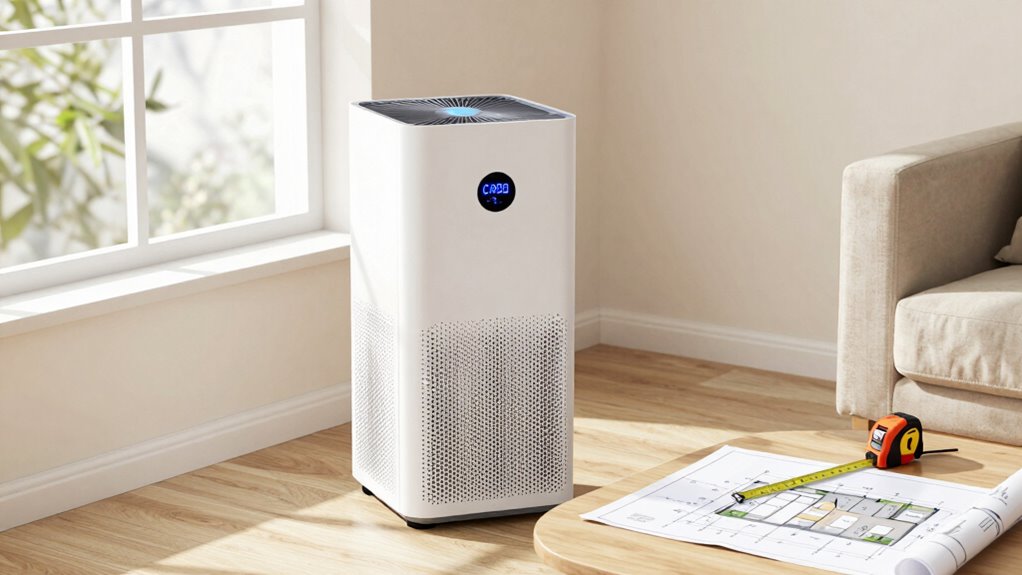
Properly sizing your air purifier is essential because an undersized unit won’t effectively clean the air in your space, while an oversized one can be inefficient and waste energy. When selecting an air purifier, consider your room dimensions to guarantee it can handle the space appropriately. A unit that’s too small won’t improve your air quality considerably, leaving pollutants lingering. Conversely, an oversized purifier might run continuously at low speeds, wasting power and not operating efficiently. Accurate sizing helps you achieve ideal air quality by removing airborne particles effectively. Understanding CADR ratings can help you compare units and select the most appropriate size. By matching your air purifier to your room size, you’ll enjoy fresher, healthier indoor air without unnecessary energy consumption or noise. Proper sizing is key to maximizing your air purifier’s performance and benefits.
What Is CADR and Why Do You Need to Know About It?
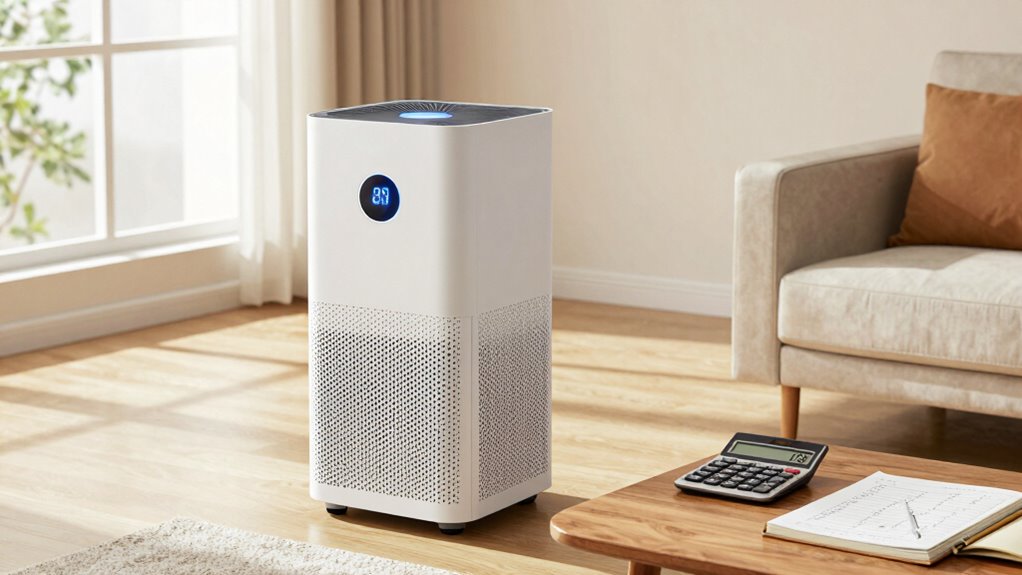
Understanding CADR, or Clean Air Delivery Rate, is essential because it measures how effectively an air purifier can remove airborne pollutants. A higher CADR means better air quality, helping you breathe easier and feel healthier. It also impacts energy efficiency; devices with the right CADR use power more effectively, saving you money. When choosing an air purifier, knowing its CADR ensures you’re selecting one suited to your room size and pollution levels. Proper ventilation considerations, such as air exchange rate, also play a crucial role in maintaining optimal indoor air quality.
How to Measure Your Room to Find the Right Size for an Air Purifier
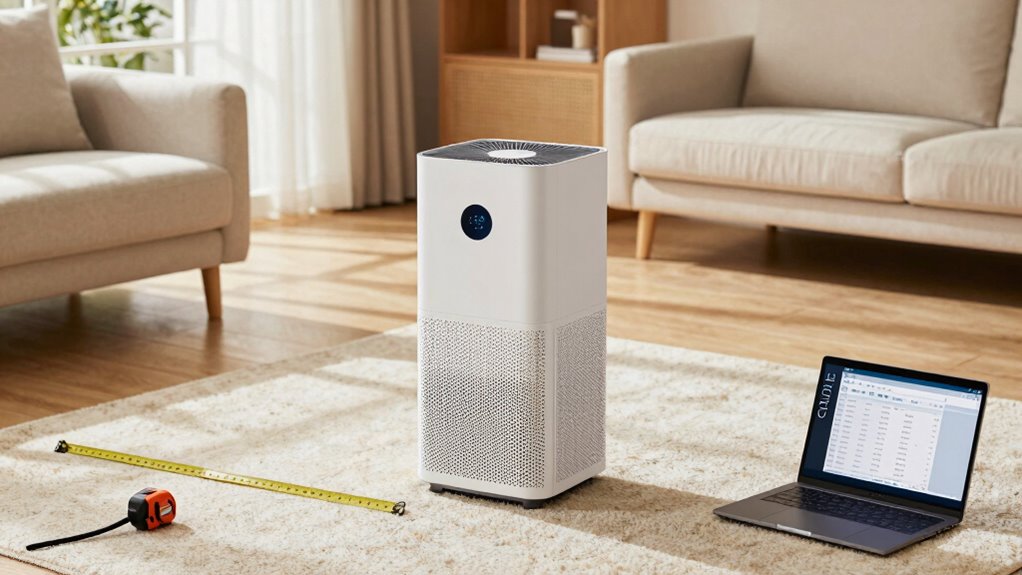
To find the right air purifier, start by measuring your room’s length, width, and height. Use these measurements to calculate the total square footage and volume. Then, determine the needed Clean Air Delivery Rate (CADR) to guarantee effective air cleaning. Additionally, consider air quality factors such as common pollutants and allergens in your environment, which can influence the appropriate CADR for your space.
Measure Your Room Size
Before choosing an air purifier, you need to accurately measure your room size. This guarantees you select a device with the right capacity, avoiding wasted money on oversized units or ineffective smaller models. Measure the length and width of your room in feet or meters, then multiply to find the total square footage. Keep in mind that decorative filters can add style but may impact noise levels, so choosing a purifier suited for your space is key.
| Room Size (sq ft) | Suitable CADR Range |
|---|---|
| Small (up to 150) | 50-100 |
| Medium (151-300) | 100-200 |
| Large (301-500) | 200-300 |
| Very Large (>500) | 300+ |
| Noise Concerns | Choose quieter models |
Calculate Required CADR
Finding the right air purifier starts with calculating the Clean Air Delivery Rate (CADR) you need, which depends on your room’s size. To determine this, measure your room’s length, width, and height accurately. Then, multiply these dimensions to find the total volume in cubic feet or meters. For excellent air quality, aim for a CADR that can clean the entire volume multiple times per hour—generally 4-6 times. Keep in mind, choosing a device with a higher CADR can improve air quality faster but may require more frequent device maintenance. Regularly cleaning or replacing filters ensures your purifier runs efficiently, maintaining good air quality without unnecessary expenses. Precise measurements and appropriate CADR calculations save you money and keep your indoor air healthy. Additionally, understanding Gold IRA Markets can help diversify your investments and secure your financial future.
How to Calculate the Correct CADR for Your Room and Needs
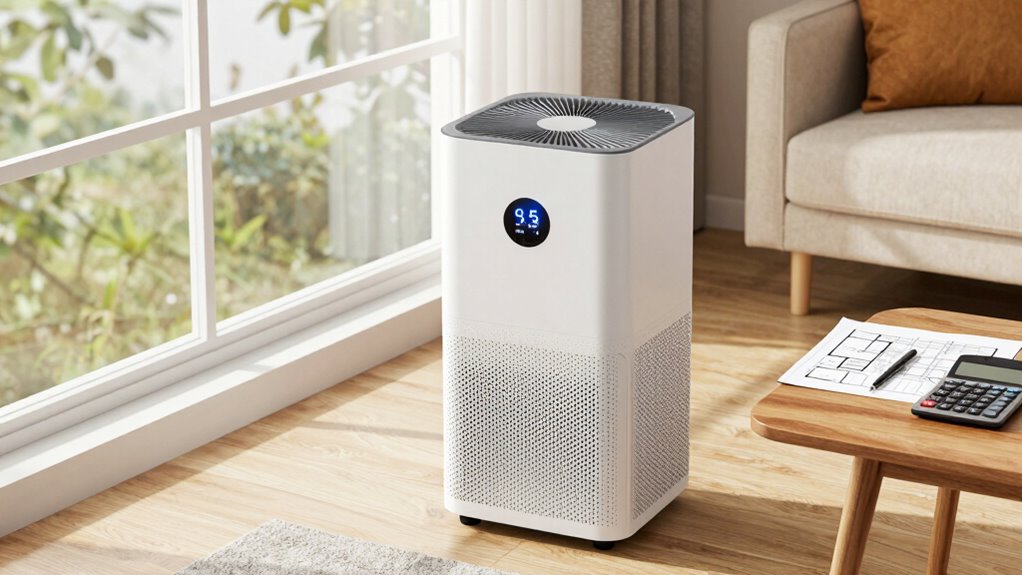
To select the right air purifier, you need to determine your room size and understand what CADR ratings signify. Matching the purifier’s CADR to your specific needs guarantees effective air cleaning. Let’s explore how to accurately calculate the correct CADR for your space. Understanding CADR ratings helps ensure you choose an air purifier that effectively matches your room’s air quality requirements.
Determine Room Size
How do you determine the right room size for an air purifier? Start by measuring your room’s dimensions—length, width, and height. These measurements help you calculate the total volume, usually in cubic feet or meters. Knowing your room size is essential because it directly influences the air quality you can achieve with an air purifier. Larger rooms need units with higher CADR ratings to effectively improve air quality. Be precise with your measurements; even small errors can lead to choosing an underpowered or overpowered unit. Once you have the room’s volume, you can match it to an air purifier’s recommended coverage area. This ensures you pick a device that efficiently cleans the air without wasting money on unnecessary power. Additionally, understanding all waterparks nearby can help you plan family-friendly activities around your air quality improvement efforts.
Understand CADR Ratings
Understanding CADR ratings helps you choose an air purifier that matches your room’s size and air quality needs. CADR, or Clean Air Delivery Rate, measures how quickly an air purifier filters the air of specific pollutants like dust, smoke, and pollen. To find the right model, look for CADR numbers that align with your room’s size—higher CADR means faster air cleaning. Keep in mind that filter maintenance impacts overall air quality; a well-maintained filter guarantees consistent performance. When evaluating CADR ratings, consider your air quality concerns and how often you’re willing to replace or clean filters. Properly matching CADR ratings to your needs ensures effective, cost-efficient air purification. This understanding allows you to select an efficient purifier, saving money while maintaining healthy indoor air.
Match Needs Precisely
Calculating the right CADR for your room guarantees your air purifier works effectively without squandering energy or money. Many air quality myths suggest bigger is always better, but that’s not true—overpowered units waste energy and may cause noise issues. Conversely, some air purifier myths claim smaller units are enough, which isn’t accurate for larger spaces. To match your needs precisely, measure your room’s size and consider your specific concerns, like allergies or smoke. Use the recommended CADR guidelines to select a purifier that matches your space. This ensures ideal air cleaning without overspending or underperforming. Accurate sizing dispels air quality myths by focusing on your actual needs, giving you clean air efficiently and cost-effectively. Understanding CADR helps you make smarter choices tailored to your environment.
Matching CADR to Your Air Quality Goals and Pollution Levels
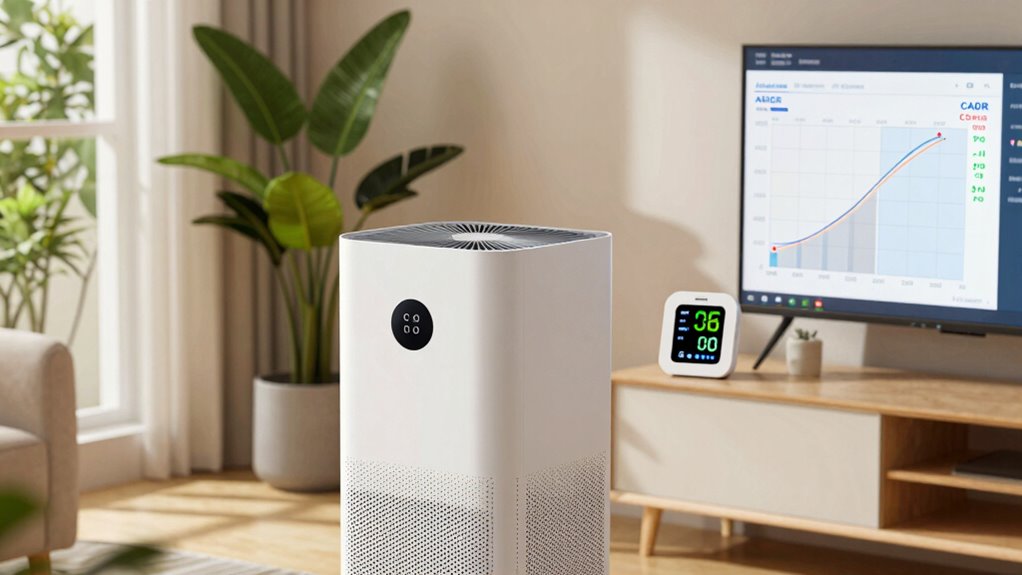
Choosing the right CADR (Clean Air Delivery Rate) depends on your specific air quality goals and the pollution levels in your environment. To meet air quality standards, you need a CADR that effectively reduces pollutants to safe levels. If pollution levels are high, select an air purifier with a higher CADR to ensure faster filtration. Consider your ventilation requirements—if your space has limited airflow, a more powerful unit is necessary to compensate. For lower pollution environments, a modest CADR may suffice, saving you money without compromising air quality. Matching CADR to your environment prevents over- or under-purifying, helping you achieve your goals efficiently. Accurate sizing ensures your space stays healthy without unnecessary energy use or expense. Understanding air quality standards can further help tailor your choice to meet regulatory requirements and health recommendations.
Key Factors Beyond CADR to Consider When Choosing an Air Purifier
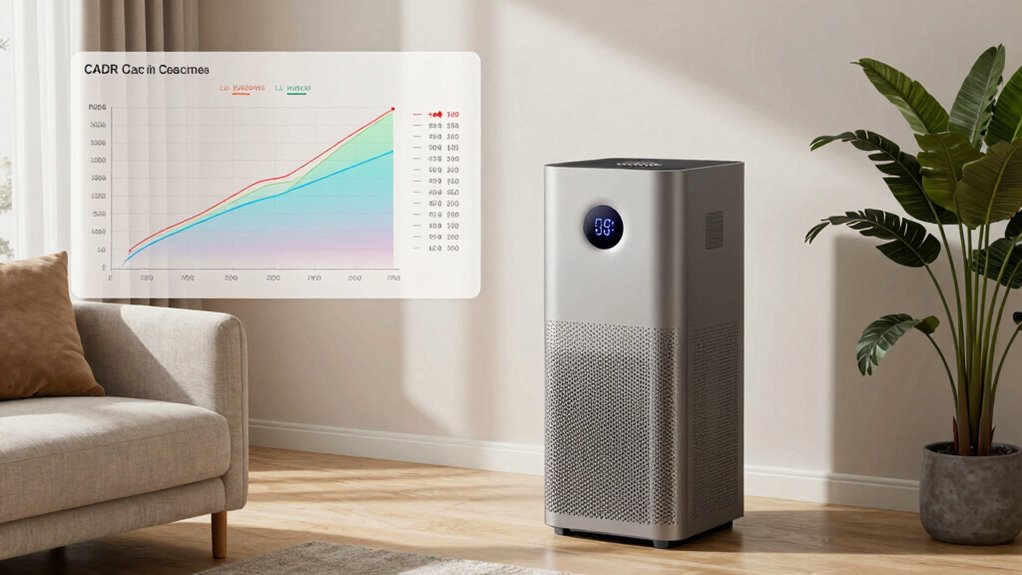
While CADR is a crucial factor, other features can considerably impact your air purifier’s effectiveness and convenience. One key aspect is the air purifier filters—look for HEPA filters for allergens and VOC filters for odors. Additionally, consider noise levels—a quieter unit lets you run it overnight without disruption.
| Feature | Why It Matters | Tips |
|---|---|---|
| Air purifier filters | Determines what pollutants are removed | Choose HEPA and activated carbon filters |
| Noise levels | Affects comfort during operation | Check decibel ratings, opt for quiet models |
| Filter lifespan | Impacts maintenance frequency | Look for longer-lasting filters |
| Ease of use | Influences everyday convenience | Simple controls and maintenance |
| Energy efficiency | Affects ongoing costs | Select ENERGY STAR-rated models |
Common Sizing Mistakes and How to Avoid Them
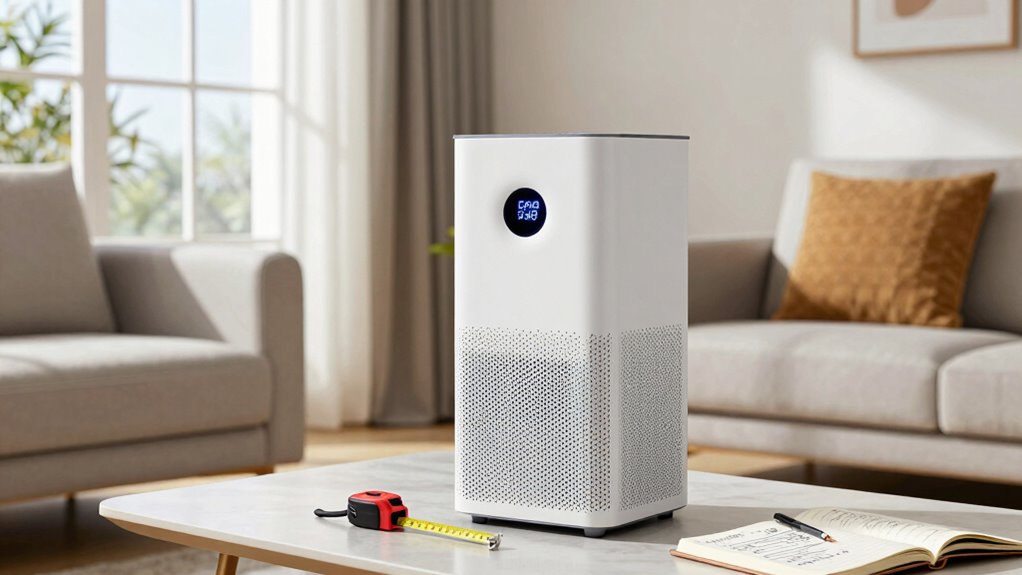
One common sizing mistake is selecting an air purifier that’s too small for the space, which leaves pollutants lingering and reduces overall effectiveness. When this happens, you might find yourself constantly adjusting filter maintenance or running the purifier longer, increasing costs and wear. Additionally, undersized units often operate at higher speeds to compensate, which can boost noise levels and disturb your comfort. To avoid this, accurately measure your room and choose a purifier with the appropriate CADR rating. Proper sizing ensures the device runs efficiently, minimizes filter replacements, and maintains quieter operation. Remember, an air purifier that’s too small can waste energy and money, while one that’s correctly sized provides better air quality with less hassle. Proper sizing is essential for ideal performance and longevity. Utilizing energy-efficient models can further reduce operational costs and environmental impact.
How Oversized or Undersized Air Purifiers Impact Your Wallet and Air
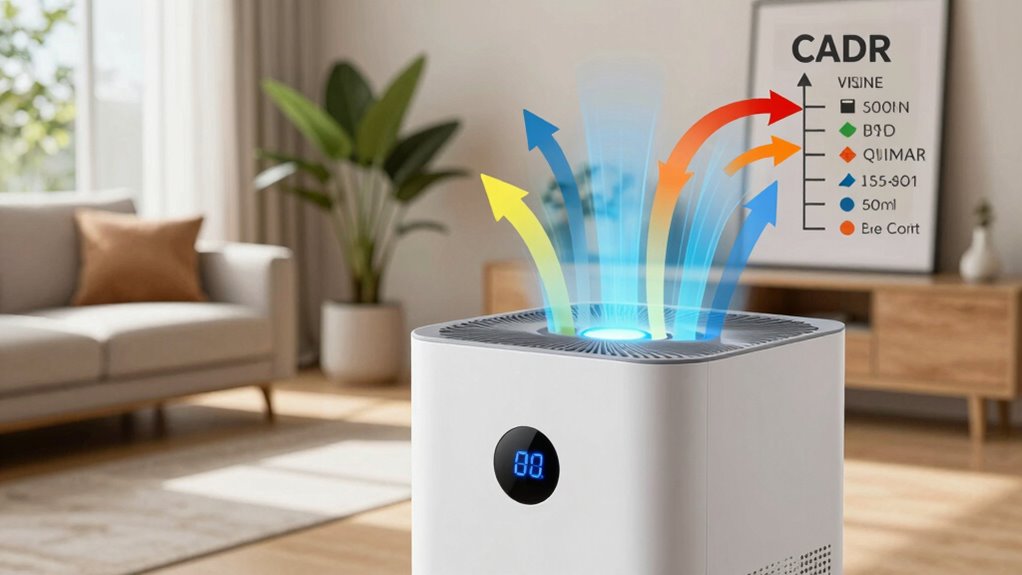
An air purifier that’s too large or too small for your space can quickly drain your wallet and undermine your air quality goals. If it’s oversized, it may run unnecessarily often, increasing energy costs and wearing down the device faster, leading to higher maintenance expenses. Conversely, an undersized unit struggles to filter the air effectively, leaving pollutants lingering and compromising your air quality. You might think it saves money initially, but it’ll likely require replacement or upgrades sooner than expected. Improper sizing can also mean more frequent device maintenance, which adds to ongoing costs. Ultimately, choosing the right size ensures efficient operation, better air quality, and lower long-term costs, helping you avoid the pitfalls of overspending or sacrificing air cleanliness.
Tips for Choosing the Most Cost-Effective, Properly Sized Air Purifier
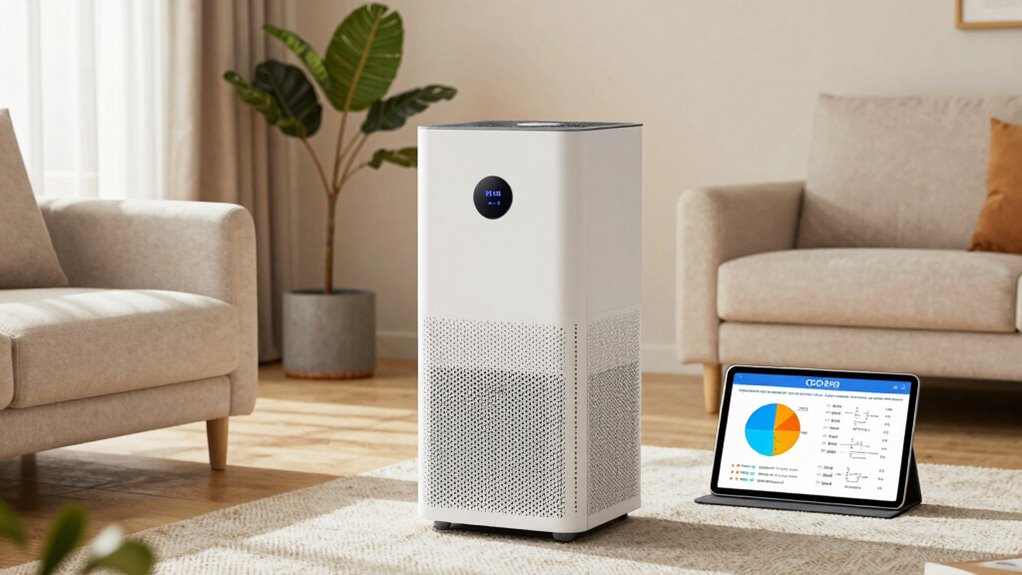
Choosing the right-sized air purifier starts with understanding your space and air quality needs. To do this, determine the room’s size and how often air exchange should occur to keep pollutants at bay. Look for an air purifier with a Clean Air Delivery Rate (CADR) that matches your room’s square footage and desired air exchange rate. Avoid oversizing, which wastes energy, or undersizing, which won’t improve air quality effectively. Focus on models that provide appropriate airflow and filtration for your space. Keep in mind that properly sized units operate more efficiently, saving you money in the long run. By matching the purifier’s capacity to your room’s needs, you’ll ensure cleaner air without unnecessary expense.
Frequently Asked Questions
How Often Should I Replace or Clean My Air Purifier Filters?
You should replace or clean your air purifier filters based on the filter lifespan and your maintenance schedule. Typically, pre-filters need monthly cleaning, while HEPA filters last around 6-12 months. Check your device’s manual for specific recommendations. Regular maintenance keeps your purifier running efficiently, improves air quality, and can save you money by extending filter life. Stay proactive with your schedule to guarantee peak performance.
Can an Air Purifier Be Too Powerful for Small Spaces?
An air purifier can be too powerful for small spaces like a loud thunderstorm. If your device’s capacity is too high, it may produce excessive noise levels, making it uncomfortable to stay in. You might also find it cycling on and off frequently, which isn’t energy-efficient. To avoid this, choose a purifier with an appropriate CADR for your room size, ensuring quiet operation and effective air cleaning without overwhelming your space.
What Are Signs My Air Purifier Is Undersized or Oversized?
You’ll notice your air purifier is undersized if it struggles to clear odors or dust, requiring frequent filter maintenance and running constantly. Conversely, if it’s oversized, it may produce excessive noise levels and cycle on and off too often. Pay attention to these signs, and modify accordingly. Proper sizing ensures efficient air cleaning, minimizes noise, and reduces filter replacement frequency, saving you money and maintaining a healthier environment.
How Does Room Layout Affect Air Purifier Effectiveness?
Room layout impacts your air purifier’s effectiveness by influencing airflow patterns. If furniture blocks vents or airflow paths, the purifier can struggle to circulate clean air evenly. To maximize performance, place your purifier where airflow isn’t hindered, ideally in open spaces or central locations. Avoid corners or behind large furniture, which can create dead zones. Proper furniture placement and unobstructed airflow ensure your purifier cleans the air efficiently.
Are There Specific Features That Improve Cost Efficiency?
Yes, look for air purifiers with energy-efficient motors and adjustable fan speeds to save on electricity costs. Features like smart sensors help optimize operation, reducing unnecessary energy use. Additionally, choose models with high-quality filters that have longer lifespans, which lowers replacement expenses. These features guarantee your purifier runs effectively without draining your budget, giving you cleaner air and better cost efficiency over time.
Conclusion
Choosing the right-sized air purifier saves you money and keeps your indoor air clean. For example, if you pick a purifier too small for a large living room, it’ll struggle to clean the air effectively, wasting energy and your cash. Conversely, an oversized unit might run unnecessarily, costing more without added benefits. By applying the CADR math, you make sure your investment is both effective and budget-friendly—making your home healthier and your wallet happier.