Many rug shampoos and cleaning myths can silently damage your wool rug if you’re not careful. Harsh chemicals, improper dilution, and overwetting can weaken fibers, cause dye bleeding, or lead to misshapen rugs. Using the wrong products might seem effective but can harm delicate wool fibers over time. To keep your rug safe, understanding proper cleaning methods and choosing gentle, wool-specific products is essential. Continue on to discover how to protect your investment effectively.

Get furniture and decor delivered free with Prime
- Fast, free delivery on millions of items
- Prime Video, Amazon Music and more included
- Member-only deals all year
Key Takeaways
- Using harsh, chemical-laden shampoos can weaken wool fibers and cause dye bleeding, damaging the rug’s appearance.
- Over-washing or improper shampoo application distorts wool fibers, leading to misshapen, fuzzy, or frayed rugs over time.
- Believing that frequent washing preserves color can be false; gentle, infrequent cleaning maintains vibrancy and fiber integrity.
- Assuming all shampoos are safe for wool ignores the importance of pH-balanced, wool-specific cleaning products.
- Relying on commercial shampoos instead of natural, eco-friendly solutions risks fiber damage and reduces rug longevity.
Are Rug Shampoos Safe for Wool Rugs?
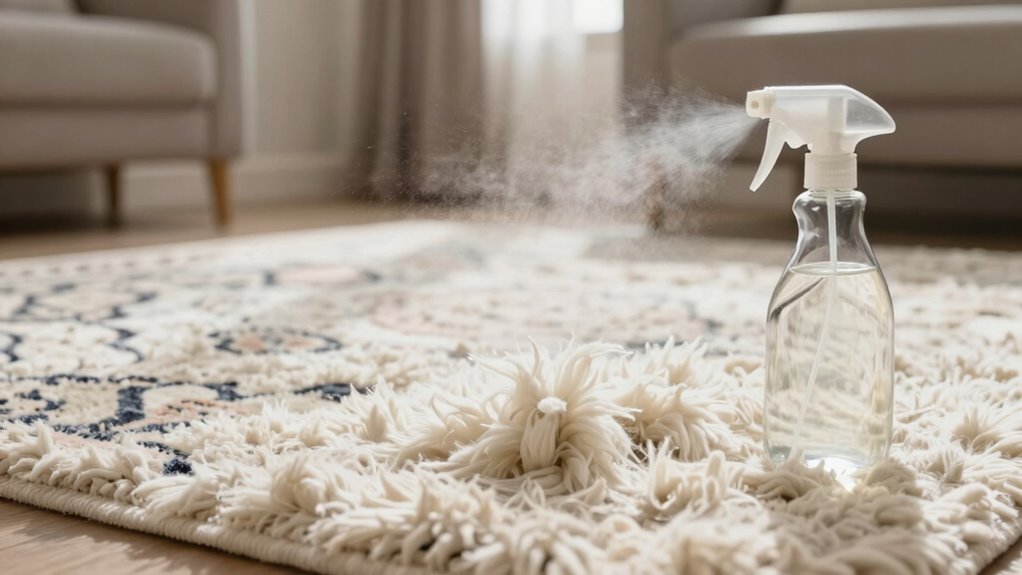
Many people wonder if rug shampoos are safe for wool rugs, and the answer depends on the product you choose. Some shampoos contain harsh chemicals that can cause dye bleeding, leading to color loss or uneven patches. Wool fibers are sensitive and can easily become distorted if the shampoo is too harsh or improperly applied. Fiber distortion may result in a misshapen rug or a fuzzy appearance over time. To protect your wool rug, always opt for gentle, pH-balanced shampoos designed specifically for delicate fibers. Test a small, hidden area first to check for dye bleeding or fiber damage. Using the right product and technique ensures your wool rug stays vibrant and maintains its texture without risking fiber distortion. Additionally, understanding proper cleaning techniques can help prevent damage and prolong the life of your wool rug.
Common Myths About Cleaning Wool Rugs

There are several misconceptions about cleaning wool rugs that can lead to improper care. One common myth is that harsh chemicals won’t affect the fiber texture or dye stability. In reality, strong cleaners can damage the wool’s delicate fibers, causing them to become brittle or frayed. Many believe that frequent washing strips the rug’s color, but proper cleaning preserves dye stability when done correctly. Another myth suggests wool rugs don’t need professional cleaning, yet neglecting expert care can weaken fibers and fade dyes over time. Understanding that wool’s fiber texture can be compromised by improper cleaning methods is essential. Using gentle, suitable cleaning solutions helps maintain both the rug’s softness and vibrant appearance, ensuring your wool rug stays beautiful and durable for years. Additionally, knowing ventilation considerations can help prevent mold or odor buildup after cleaning.
How Can I Tell If My Wool Rug Is Damaged?
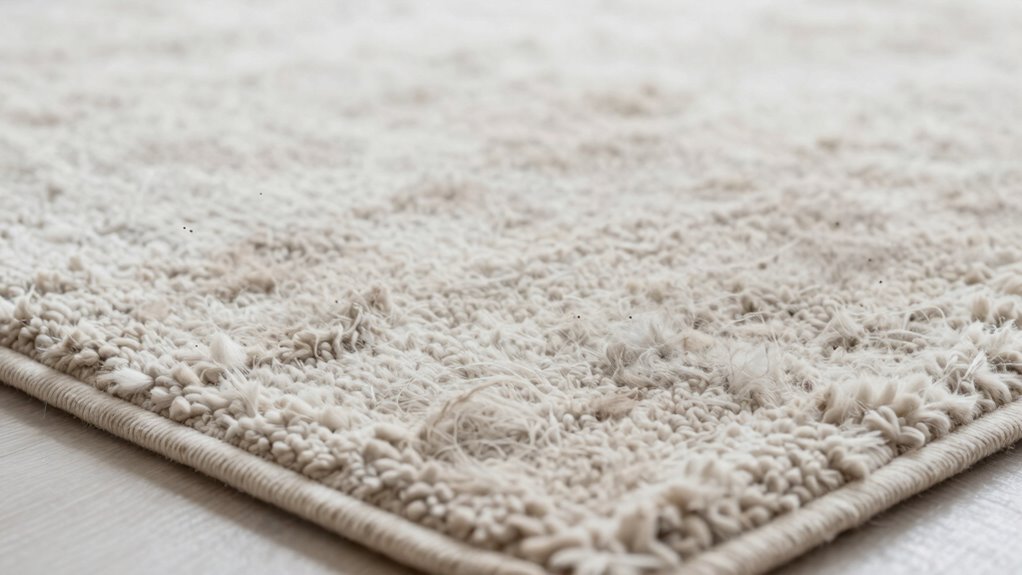
Knowing how to identify damage in your wool rug is essential for maintaining its beauty and longevity. Look for signs like fiber deterioration, which causes the fibers to feel rough or uneven, and color fading, especially in high-traffic areas. These issues indicate your rug is compromised and needs attention. To help you assess, consider this quick guide:
| Issue | What to Look For | Impact |
|---|---|---|
| Fiber Deterioration | Frayed fibers, thinning patches | Weakens rug’s structure |
| Color Fading | Uneven or dull patches | Affects visual appeal |
| Surface Damage | Pilling, worn spots | Reduces rug’s lifespan |
Regular inspection helps you catch damage early, preserving your wool rug’s beauty. Additionally, understanding European cloud innovation can inspire sustainable solutions for maintaining your home textiles.
What Are Safe Methods to Clean Wool Rugs?

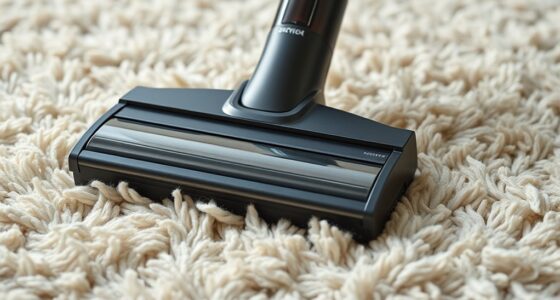
Cleaning wool rugs safely requires using gentle methods that protect their fibers. Eco-friendly methods and DIY solutions are effective and safe options. First, vacuum regularly to remove loose dirt without damaging the fibers. Second, spot clean with a mixture of mild, natural soap and cold water—diluted vinegar or castile soap work well. Third, for deeper cleaning, sprinkle baking soda, let it sit, then vacuum to freshen and lift dirt. Fourth, for stubborn stains, gently blot with a cloth dampened in diluted eco-friendly solutions, avoiding excessive moisture. These methods preserve your rug’s integrity while being kind to the environment. Avoid harsh chemicals or machine cleaning, which can weaken wool fibers. Stick to gentle, eco-conscious techniques for safe, effective cleaning. Understanding fiber protection is key to maintaining your wool rug’s longevity.
Which Products Are Best for Wool Rug Care?
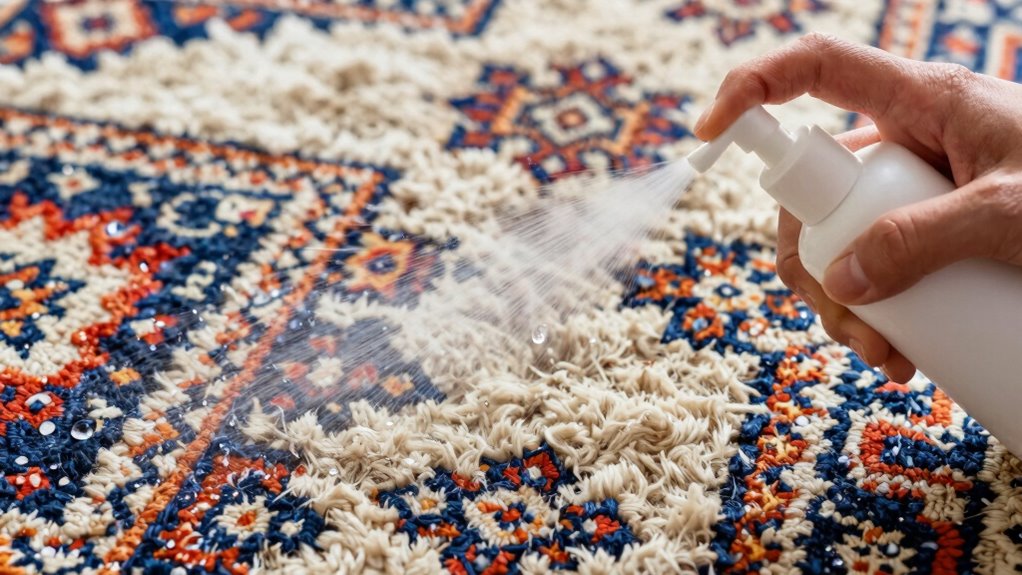
Choosing the right products is key to keeping your wool rug looking its best. Use gentle cleaning solutions and wool-safe detergents to prevent damage. Remember to follow proper drying techniques to preserve the rug’s softness and longevity. Additionally, understanding safe cleaning methods can help avoid common mistakes that harm wool fibers.
Gentle Cleaning Solutions
When selecting a gentle cleaning solution for your wool rug, it is essential to opt for products that are specifically formulated to protect delicate fibers. Natural remedies and DIY solutions can be effective options if used correctly. For example, you might try:
- Diluted white vinegar mixed with water to neutralize odors gently.
- A mild, wool-safe detergent designed for delicate fibers.
- Baking soda sprinkled for stain absorption before vacuuming.
- Homemade solutions using a few drops of dish soap in water for spot cleaning.
Furthermore, understanding the importance of Free Floating in maintaining the natural structure of wool fibers can help inform the best cleaning practices. Always test any DIY or natural remedy on a small hidden area first. These options help clean your rug without risking damage, maintaining its softness and longevity. Remember, gentle is key when caring for wool fibers.
Wool-Safe Detergents
Selecting the right detergent for your wool rug can make all the difference in preserving its soft texture and vibrant appearance. Wool-safe detergents are specially formulated to avoid fiber deterioration caused by harsh chemicals. Using the wrong product can trigger chemical reactions that weaken fibers, reducing durability and luster. Look for detergents labeled as pH-neutral and free of alkalis or enzymes that harm wool. Additionally, opting for user-friendly interfaces and gentle formulations ensures your cleaning process remains hassle-free and effective. Choosing the right product protects your rug’s integrity and prolongs its beauty.
Proper Drying Techniques
Proper drying techniques are essential to prevent mold, mildew, and fiber damage after cleaning your wool rug. Effective moisture control guarantees your rug dries thoroughly without harm. Here are key drying techniques to follow:
- Use fans or air movers to circulate air evenly across the rug.
- Open windows and doors to promote natural airflow and ventilation.
- Avoid direct sunlight, which can fade fibers, but ensure good airflow.
- Elevate the rug slightly on dry supports to prevent trapped moisture from the floor.
- Monitoring the contrast ratio during drying can help assess the depth of black levels and overall image quality, ensuring the rug’s appearance remains vibrant and true to color.
Alternatives to Shampooing Wool Rugs Safely
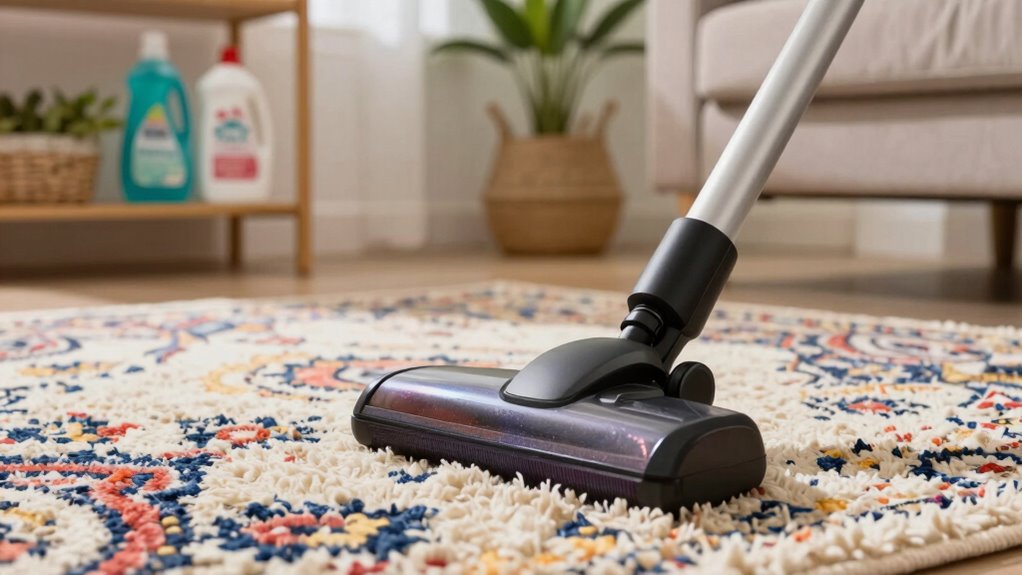
You can keep your wool rug clean without full shampooing by focusing on gentle spot cleaning for small stains. Using natural cleaners helps protect the fibers and maintain your rug’s health. Regular vacuuming also removes dirt and dust, reducing the need for more invasive cleaning methods. Additionally, being aware of crypto pump patterns can help you avoid market pitfalls if you’re considering related investments.
Gentle Spot Cleaning
Ever wondered how to handle small stains on your wool rug without risking damage? Gentle spot cleaning is your best bet. First, act quickly to prevent dye bleeding or permanent staining. Second, gently blot the stain with a clean, damp cloth—avoid rubbing, which can harm fibers. Third, use a mild, wool-safe cleaner to target the spot without affecting the rug’s stain resistance. Fourth, rinse with a clean, damp cloth and blot dry to remove any residue. This approach minimizes the risk of dye bleeding, preserves the rug’s natural stain resistance, and prevents fiber damage. Remember, harsh chemicals or excessive moisture can weaken wool’s structure, so always choose gentle methods for small spots. Proper spot cleaning keeps your rug looking fresh without the need for full shampooing. Choosing reliable cleaning methods helps maintain your wool rug’s longevity and appearance.
Use Natural Cleaners
When choosing to clean your wool rug, natural cleaners offer a safe and effective alternative to harsh shampoos. Eco-friendly options, like vinegar and baking soda, can tackle stains without damaging fibers. DIY remedies are simple and affordable; for example, a mixture of mild dish soap and water can do the job without introducing chemicals. You can also create a natural deodorizer with just baking soda sprinkled on the rug, then vacuumed after a few hours. These eco-friendly options help preserve the integrity of your wool while minimizing environmental impact. Using natural cleaners guarantees your rug stays fresh and clean without the risks associated with commercial shampoos. Plus, they’re safe for your family and pets, making them a smart choice for regular maintenance.
Regular Vacuuming Benefits
Regular vacuuming is one of the simplest and most effective ways to maintain your wool rug’s cleanliness without the need for frequent shampooing. By setting the right vacuum frequency, you ensure dust removal and prevent dirt from settling deep into fibers. Imagine these benefits:
- Consistent dust removal keeps allergens at bay.
- Regular vacuuming prolongs your rug’s lifespan.
- It prevents dirt from embedding, reducing wear.
- You maintain a fresh, clean appearance daily.
Vacuuming helps remove surface debris and prevents buildup that can damage wool fibers over time. It’s a safe, non-invasive alternative that preserves your rug’s integrity. Incorporate this routine into your cleaning schedule for a healthier, longer-lasting wool rug, avoiding the myths that suggest shampooing is always necessary.
Signs Your Wool Rug Was Damaged by Cleaning

If you notice your wool rug looks distorted or shows unusual fibers after cleaning, it could be a sign of damage. Damaged wool fiber often appears frayed, uneven, or matted, reducing the rug’s overall appearance. You might also see areas where the fibers seem to have shrunk or become overly stiff. These issues can compromise the rug’s durability and shorten its rug longevity. Overly harsh cleaning methods or improper drying can weaken the wool fiber structure, leading to permanent damage. If you observe these signs, it’s a clear indication that the cleaning process was too aggressive or unsuitable. Addressing these problems early can help preserve your rug’s integrity and extend its lifespan.
Expert Tips for Maintaining Wool Rugs
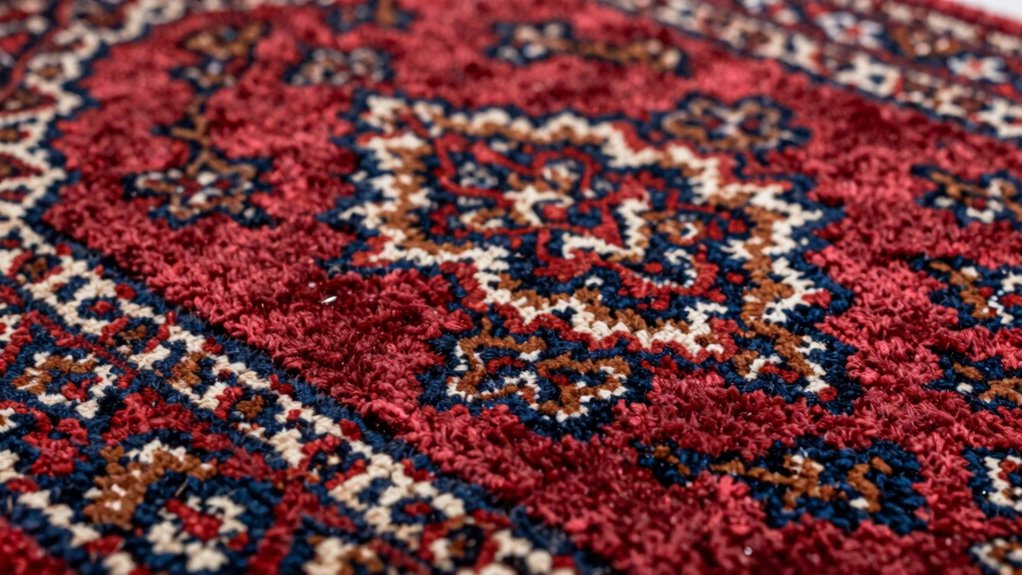
Maintaining the beauty and durability of your wool rug requires consistent care and proper techniques. To prevent dye fading and fiber shedding, follow these expert tips:
- Gently vacuum regularly using a soft brush attachment to remove dirt without damaging fibers.
- Rotate your rug every six months to promote even wear and reduce uneven dye fading.
- Avoid direct sunlight, which accelerates dye fading and weakens wool fibers.
- Use a damp cloth to blot spills immediately, preventing stains and fiber damage.
Choosing the Right Cleaning Products for Wool Rugs
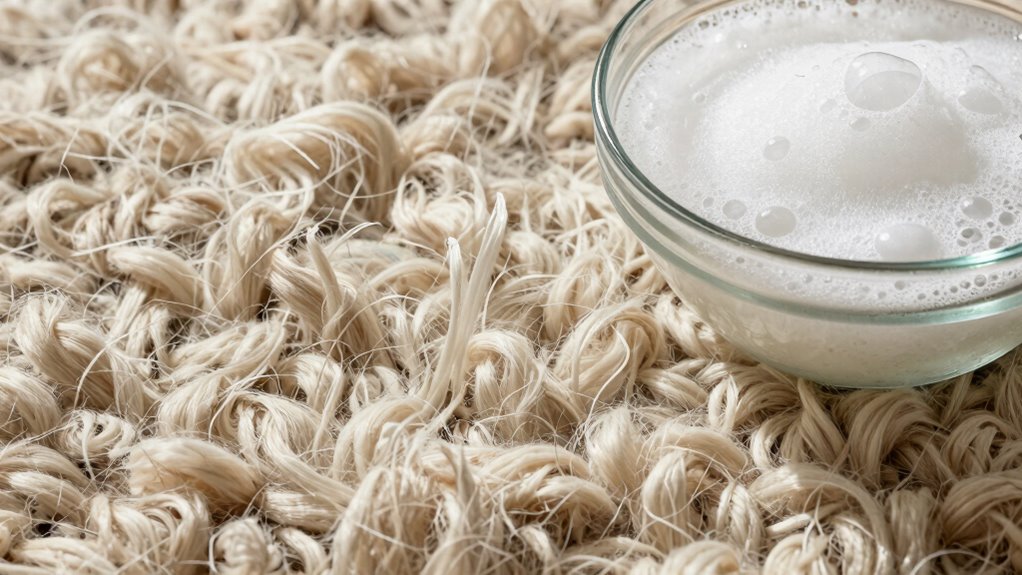
Choosing the right cleaning products is essential to protect your wool rug’s fibers and vibrant dyes. Avoid harsh chemicals that can damage natural wool or cause colors to fade. Instead, opt for gentle, wool-specific cleaners designed to preserve fiber integrity. If your rug contains synthetic fibers, check the label to ensure the product is safe for those materials as well. For pet stains, use enzyme-based cleaners formulated to break down organic messes without harming wool fibers. Never use bleach or harsh detergents, as they can weaken fibers and cause discoloration. Always test a small, hidden area first to ensure colorfastness. Proper product selection keeps your wool rug looking fresh and prevents damage from improper cleaning agents.
Frequently Asked Questions
Can Using the Wrong Shampoo Permanently Harm Wool Fibers?
Yes, using the wrong shampoo can permanently harm wool fibers. Harsh chemicals in some shampoos cause fiber damage, weakening the wool and reducing its lifespan. You might not see immediate effects, but over time, chemical harm accumulates, leading to fraying and loss of softness. Always choose gentle, wool-specific shampoos to safeguard your rug’s fibers and make certain it stays beautiful and durable for years.
Are There Eco-Friendly Alternatives to Traditional Wool Rug Shampoos?
Imagine your wool rug as a delicate garden needing gentle care. Yes, eco-friendly alternatives exist, like sustainable cleaning options with plant-based detergents that nourish rather than harm fibers. These natural solutions act like a gust of fresh air, cleaning effectively without harsh chemicals. By choosing sustainable cleaning, you protect your wool’s natural beauty and reduce environmental impact, ensuring your rug stays vibrant and healthy for years to come.
How Often Should I Professionally Clean My Wool Rug?
You should have your wool rug professionally cleaned every 12 to 18 months to prevent fiber damage and maintain its beauty. Regular cleaning helps remove dirt and allergens, but over-cleaning can harm the fibers. Adjust the cleaning frequency based on foot traffic and your lifestyle. By sticking to this schedule, you guarantee your wool rug stays vibrant and durable, avoiding unnecessary wear and tear from improper care.
What Are the Most Common Mistakes in DIY Wool Rug Cleaning?
They say “a stitch in time saves nine,” and that’s true for DIY wool rug cleaning too. The most common errors include using harsh chemicals, over-wetting, and scrubbing too aggressively. These DIY pitfalls can damage wool fibers or cause shrinkage. Always test cleaning solutions first, use gentle cleaning methods, and avoid excess moisture. Taking care prevents costly mistakes and keeps your wool rug looking beautiful.
Does Cold Water Cleaning Damage Wool Rugs More Than Hot Water?
Cold water cleaning doesn’t necessarily damage wool rugs more than hot water; in fact, it reduces risks like fiber damage and shrinking. Using hot water can cause wool fibers to weaken or warp, especially if not handled properly. To protect your rug, prefer cold water for cleaning, and always test a small area first. This approach helps maintain the rug’s integrity and prolongs its lifespan.
Conclusion
Just like Icarus flew too close to the sun with wax wings, using the wrong rug shampoos can melt away your wool rug’s beauty. By debunking myths and choosing safe, gentle methods, you protect your investment from unseen damage. Remember, the key is patience and knowledge—treat your wool rug like a treasured masterpiece. With the right care, you’ll keep it looking stunning, standing the test of time, much like a timeless work of art.
Halloween Picks
halloween
As an affiliate, we earn on qualifying purchases.