
TL;DR
OMA and Potato Head have created the Good Times General Store, Potato Head’s first permanent retail space, at Desa Potato Head in Bali. Five connected bays pair locally made products with a natural dye studio and workshop, using reclaimed and locally sourced materials in the architecture.
OMA and Bali hospitality brand Potato Head have created the Good Times General Store, Potato Head’s first permanent retail space at Desa Potato Head. Its five connected bays combine Indonesian-made products with a natural dye studio and a hands-on workshop, making craft and material reuse part of the visitor experience rather than keeping them behind the finished goods.

Get furniture and decor delivered free with Prime
- Fast, free delivery on millions of items
- Prime Video, Amazon Music and more included
- Member-only deals all year
The design uses an alang-alang thatch façade, rammed-earth walls made from local clay and bamboo, including bamboo used as aggregate in terrazzo flooring. Reclaimed and locally sourced materials retain their natural variations in color, texture and form. Rather than standardizing those differences, the team adapted the design and its detailing to the materials available.
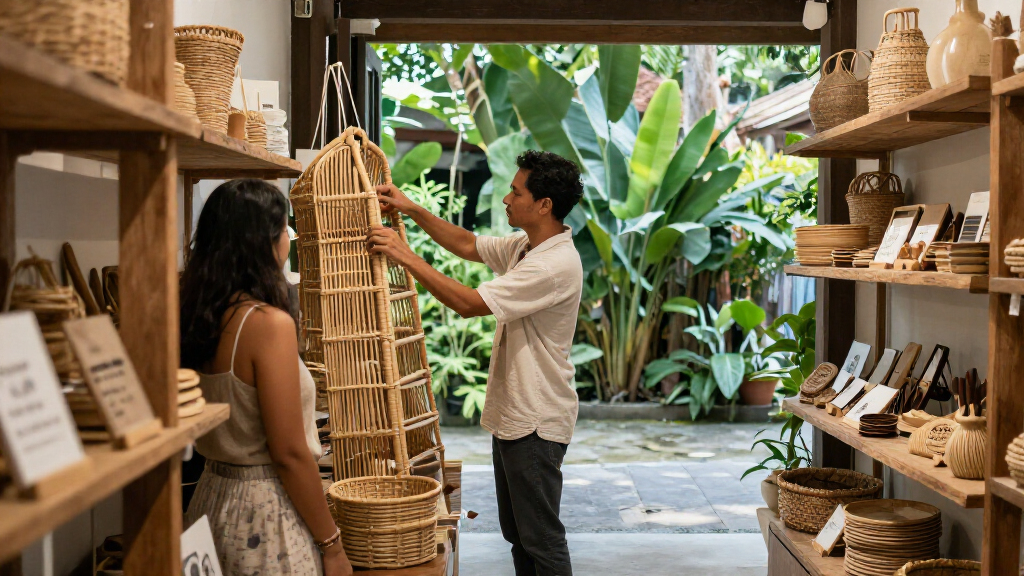
The first three bays focus on products and their makers. They present souvenirs and lifestyle objects by Indonesian craftspeople, the Bali-inspired Potato Head Collection apparel line, and Wasted by Potato Head, a collaboration with British designer Max Lamb that turns discarded materials into furniture and homewares.
The last two bays shift toward making. A working natural dye studio uses food and plant waste to produce pigments for workshops in dyeing, painting and pattern-making. The adjacent Workshop incorporates colorful shredded HDPE plastic recovered from waste collectors across Bali and Java into a wall, exposing the material’s previous use while providing space for experimentation.
Craft meets circular design at Potato Head Bali
OMA and Potato Head turn the brand’s first permanent store into a route through Indonesian-made goods, material reuse and hands-on making.
A store with two roles
The five-bay layout connects shopping with the people and processes behind the products.
- Souvenirs and lifestyle objects by Indonesian craftspeople
- Potato Head Collection apparel
- Wasted furniture and homewares, made with Max Lamb
- Natural dye studio using food and plant waste
- Workshops in dyeing, painting and pattern-making
- Workshop for material experimentation
Materials shape the architecture
The design adapts its details to locally sourced and reclaimed materials, preserving their natural variation.
Thatch, clay and bamboo
An alang-alang façade, rammed-earth walls and bamboo terrazzo connect the building to local materials.
Plastic on view
Shredded HDPE recovered by waste collectors across Bali and Java becomes part of a Workshop wall.
From finished goods to making
Visitors can move from displayed products toward spaces where materials are transformed.
Explore Indonesian crafts and Potato Head collections.
Encounter reclaimed resources as visible parts of the store.
The dye studio hosts activities in dyeing, painting and pattern-making.
Retail Makes Reuse Visible
The project connects shopping with the labor and material choices behind the objects on display. Visitors can move from finished products to spaces where materials are transformed, giving the store a role beyond selling goods. That approach may make circular design more tangible to guests, though the description does not provide evidence about visitor participation, sales, or measurable waste reductions.
Its design also makes local materials part of the building’s visible character. Thatch, clay, bamboo and reclaimed plastic are not presented as a uniform finish; their differences shape the architecture. The result is a retail setting that links Balinese craft and material reuse to the hotel’s broader sustainability programming.
For designers and retailers, the project offers an example of a space planned around both products and processes. It also points to a practical constraint: reuse depends on what can be recovered and supplied. Here, the team says it responded to material availability rather than forcing irregular resources into fixed specifications.
Products Worth Considering

Dyson Cyclone V10 Origin Cordless Vacuum

Levoit Eleva 300X Air Purifier with Fully Sealed HEPA Filtration and Smart Control

iRobot Roomba 105 Combo Robot Vacuum and Mop with AutoEmpty Dock
As an affiliate, we earn on qualifying purchases.
A Decade-Long Design Partnership
OMA and Potato Head have worked together for more than a decade. The store extends Potato Head’s “Good Times, Do Good” philosophy into a permanent retail setting. OMA managing partner and architect David Gianotten described the intention as prioritizing experience, participation and interaction, rather than focusing only on product display and sales.
The store also sits within Desa Potato Head’s existing sustainability efforts, including its Waste Lab and Follow the Waste Tour, which show how discarded materials can be recovered, processed and made into new objects. OMA has explored related ideas in “N*thing is Possible,” a 2022 exhibition in Singapore about zero-waste hospitality. The store carries that interest into a space where visitors can encounter reused materials and making activities directly.
Potato Head group head of architecture and development Ade Herkarisma said the architectural approach reinterprets Balinese building techniques in a contemporary way, rather than reproducing traditional forms or decoration. The project description does not name the store’s opening date or provide operating details.
“We wanted to reinterpret Balinese traditional architecture and craftsmanship in a contemporary way, rather than simply reproducing traditional forms or decorative elements.”
— Ade Herkarisma, Potato Head group head of architecture and development
Opening and Outcomes Unreported
The available project description calls the store new but does not state when it opened, its hours, or whether all workshops are available on a regular schedule. It also gives no figures for the amount of recovered plastic or other reclaimed materials used, workshop attendance, or waste diverted.
Statements about the project’s sustainability goals and intended visitor experience are attributed to the design team. No independent assessment of environmental performance or visitor response is provided, so the store’s actual impact cannot be determined from the reported details.
Visitor Programs and Store Operations
The store’s ongoing role will depend partly on how its dye studio and Workshop operate and how visitors can take part. The description identifies activities including dyeing, painting and pattern-making, but does not give a schedule, booking information or details of future programming.
Further information on opening dates, workshop access and material quantities would clarify how the retail concept works day to day and how it connects with the Waste Lab and Follow the Waste Tour. For now, the confirmed details describe a five-bay store designed to bring products, craft and reuse into one visitor route.
Source: rss
Key Questions
What is the Good Times General Store?
It is Potato Head’s first permanent retail space, designed with OMA at Desa Potato Head in Bali. The store combines product displays with spaces for making and material experimentation.
What materials are used in the store?
Reported materials include alang-alang thatch, local clay rammed into earth walls, bamboo and reclaimed resources. Shredded HDPE plastic recovered from waste collectors across Bali and Java forms part of a workshop wall.
What can visitors do in the final bays?
The final two bays include a natural dye studio that uses food and plant waste to make pigments, with workshops in dyeing, painting and pattern-making. The Workshop provides space for further experimentation; a program schedule was not reported.
Who designed the store?
OMA and Potato Head collaborated on the store. The project extends a partnership that has lasted more than a decade.
When did the store open?
The project is described as new, but no opening date is provided in the available details.
Source: design-milk.com