When considering embodied carbon in finish selections, you should look at the full lifecycle impacts, including production, transportation, and disposal. Use Material Transparency tools like Environmental Product Declarations (EPDs) to compare options objectively. Opt for finishes with low embodied carbon that also offer durability and easy maintenance to avoid hidden costs later. Balancing environmental impact with overall performance helps create a more sustainable space. Keep exploring how to make smarter choices for a greener future.

Get furniture and decor delivered free — and shop member deals
- Fast, free delivery on millions of items
- Access to Prime Big Deal Days deals on October 6–7
- Prime Video, Amazon Music and more included
Key Takeaways
- Prioritize finishes with transparent Environmental Product Declarations (EPDs) that detail lifecycle emissions.
- Evaluate the full lifecycle impacts, including durability, maintenance, and disposal, not just initial embodied carbon.
- Use Lifecycle Assessment (LCA) data to compare options and make informed, sustainable material choices.
- Balance low embodied carbon with material longevity to ensure overall environmental benefits over time.
- Promote industry transparency to encourage manufacturers to provide accurate environmental impact information.
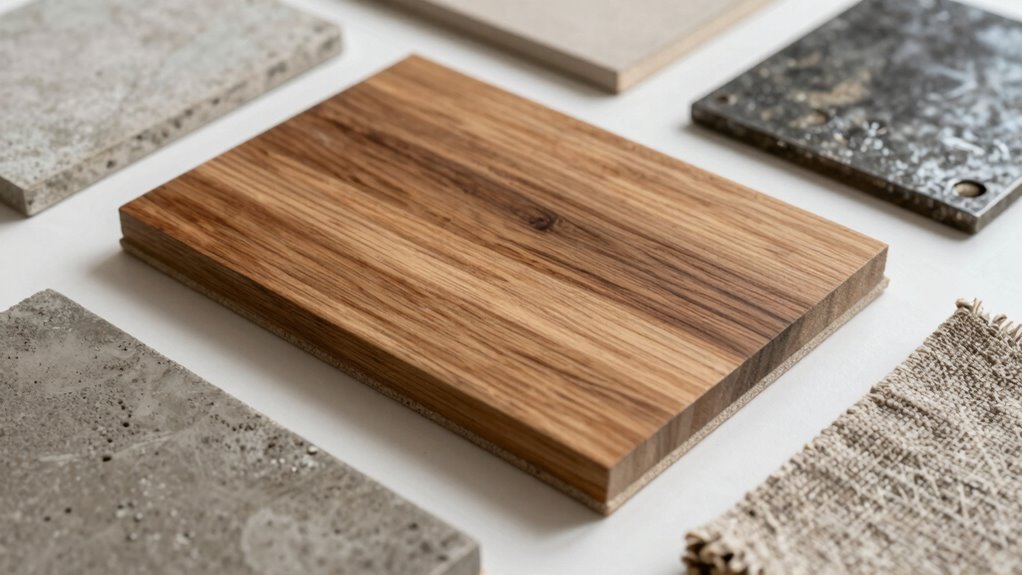
When choosing finishes for a building project, understanding their embodied carbon is essential because it directly impacts the environment. Embodied carbon refers to the greenhouse gases emitted during the production, transportation, and installation of finishing materials. To make informed choices, you need to consider the entire lifecycle of these materials, which is where a thorough lifecycle assessment (LCA) becomes invaluable. An LCA helps you evaluate the environmental impact of each finish from cradle to grave, ensuring you account for all emissions associated with its use. By doing this, you can compare options more effectively and select finishes that align with your sustainability goals.
Understanding embodied carbon and lifecycle impacts is key to making sustainable finish choices for your project.
Material transparency plays a key role in this process. When manufacturers openly share information about their products, including the environmental impacts, it becomes easier for you to assess the embodied carbon of different finishes. Transparent data on material composition, sourcing, and manufacturing processes allows you to understand precisely what goes into each product. This knowledge empowers you to prioritize finishes made from sustainably sourced materials, low-impact manufacturing techniques, or those that have been certified by environmental standards. Transparency also encourages manufacturers to adopt greener practices, knowing that consumers are scrutinizing their disclosures. Improving material transparency across the industry further supports the adoption of more sustainable practices and easier comparison of environmental impacts.
Incorporating lifecycle assessments and material transparency into your decision-making process can seem overwhelming initially, but it’s an essential step toward reducing your project’s carbon footprint. Seek out suppliers and manufacturers who provide clear environmental product declarations (EPDs) or similar documentation. These tools give you detailed insights into the embodied carbon of their finishes, allowing you to compare different options objectively. Remember, choosing finishes with lower embodied carbon doesn’t just benefit the environment—it can also enhance your project’s overall sustainability credentials and appeal to eco-conscious clients.
Furthermore, considering the lifecycle impact encourages you to think beyond initial installation costs. Think about durability, maintenance, and end-of-life disposal. A finish that is initially low in embodied carbon but requires frequent replacement or harsh cleaning chemicals might not be the most sustainable choice long-term. Instead, aim for finishes that balance low embodied carbon with durability and ease of maintenance, reducing the need for frequent replacements or repairs. Incorporating product transparency helps you verify the sustainability claims of finishes and make more informed decisions. Additionally, understanding the full lifecycle of a material can help you identify hidden environmental costs that might not be immediately apparent at the selection stage.
Ultimately, thinking about embodied carbon in finish selections requires a deliberate approach grounded in lifecycle assessment and material transparency. It’s about making smarter choices that consider the full environmental impact, not just the immediate aesthetic or cost factors. By doing so, you contribute to a more sustainable built environment, where every material choice reflects a commitment to reducing greenhouse gas emissions and protecting our planet.
Environmental Product Declarations (EPDs) for building finishes
As an affiliate, we earn on qualifying purchases.
As an affiliate, we earn on qualifying purchases.
Frequently Asked Questions
How Do I Compare Embodied Carbon for Different Finish Options?
You compare embodied carbon for different finish options by examining their material sourcing and lifecycle analysis. Look for transparency in supplier data and choose finishes with lower embodied carbon footprints. Conduct a lifecycle analysis to assess the emissions from production, use, and disposal. Prioritize materials that are locally sourced, sustainably produced, and have documented lower embodied carbon to make more eco-conscious decisions.
What Tools Are Available to Measure Embodied Carbon in Finishes?
Think of embodied carbon measurement tools as your compass in a sea of finish options. Tools like One Click LCA and Tally perform detailed lifecycle analyses, helping you evaluate embodied carbon based on material sourcing and production impacts. These platforms provide data-driven insights, enabling you to make sustainable choices. By using them, you navigate the complex world of finishes with confidence, ensuring your decisions support both design goals and environmental responsibility.
How Does Embodied Carbon Impact Long-Term Building Sustainability?
Embodied carbon considerably impacts long-term building sustainability by influencing the overall environmental footprint. When you focus on material sourcing and conduct lifecycle assessments, you can better understand how finishes contribute to embodied carbon. By choosing low-carbon materials and prioritizing sustainable sourcing, you reduce the building’s long-term impact. This approach guarantees your building remains environmentally responsible over its lifespan, supporting sustainability goals and minimizing future carbon emissions.
Are There Certifications for Low-Embodied-Carbon Finishes?
Yes, there are certifications for low-embodied-carbon finishes, giving you a clear marker amid the complex landscape of material sourcing. Think of certification standards as your guide through sustainable choices, contrasting the often opaque process of material sourcing. These certifications, like LEED or WELL, guarantee your finishes meet strict environmental criteria, helping you make informed decisions that reduce embodied carbon without sacrificing quality or aesthetics.
How Does Embodied Carbon Influence Overall Project Costs?
Embodied carbon impacts your project costs through material sourcing and lifecycle assessment. Choosing low-embodied-carbon finishes might cost more upfront due to specialized materials or suppliers, but it can reduce long-term expenses by lowering energy use and environmental impact. Considering lifecycle assessment helps you evaluate overall costs, encouraging sustainable choices that, while potentially pricier initially, save money over the building’s lifespan and support eco-friendly goals.
Conclusion
Think of your finish choices as the roots of a mighty tree, anchoring your project’s future. Every selection you make sends ripples through the soil, shaping the landscape long after the work is done. By considering embodied carbon, you’re tending to these roots, ensuring they grow strong and sustainable. Just as a tree’s strength depends on its roots, your building’s legacy rests on mindful finishes—nurturing a healthier world from the ground up.
Fall Picks
fall essentials
As an affiliate, we earn on qualifying purchases.