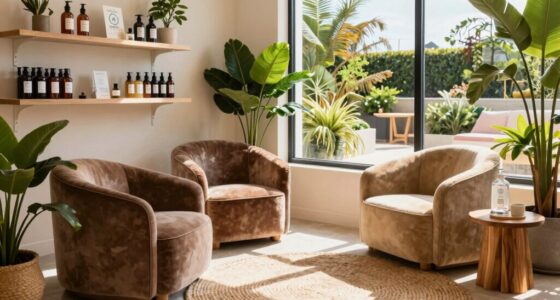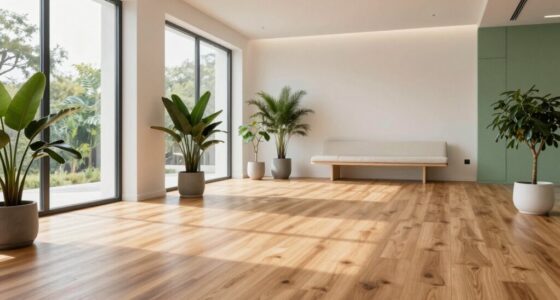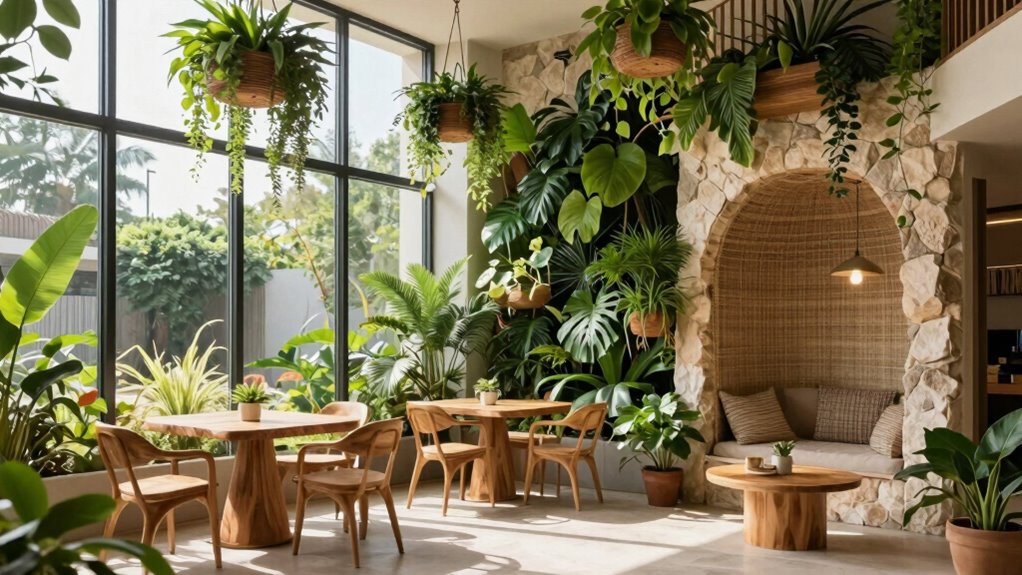

To avoid clichés in biophilic design, focus on authentic natural elements like indigenous plants, quality textures, and sustainable materials rather than artificial greenery or superficial rocks. Arrange your space to maximize light and openness, using natural textures and large windows. Regularly maintain your natural features to keep them vibrant and meaningful. Prioritize genuine connections to nature over trendiness, and you’ll create a calming, sustainable environment. Keep exploring for practical tips that help you achieve this balance seamlessly.
Key Takeaways
- Prioritize authentic, locally-sourced natural materials like indigenous plants, wood, and stone over artificial or trendy decor.
- Integrate natural textures thoughtfully to create sensory depth without clutter or superficial elements.
- Arrange spaces to maximize natural light, using large windows, skylights, and minimal window treatments.
- Regularly maintain natural features to ensure longevity and genuine connection with the environment.
- Avoid overused motifs; focus on meaningful, well-integrated natural elements that promote authenticity and well-being.
Start by Understanding What Biophilic Design Really Is

Have you ever wondered what truly makes a space feel more alive and inviting? It’s all about understanding biophilic design—an approach that connects you with nature indoors. At its core, biophilic design emphasizes the use of indoor greenery and natural textures to create a calming environment. It’s not just about adding plants; it’s about integrating natural elements that foster well-being and stimulate your senses. Natural textures, like wood, stone, and woven materials, help mimic the outdoors and enhance your space’s authenticity. To truly grasp biophilic design, think beyond decoration—consider how these elements influence your mood, productivity, and comfort. Incorporating natural textures and greenery can also improve air quality and overall health, making your space more inviting and beneficial. When you understand its essence, you can craft spaces that nourish your mind and body while feeling effortlessly harmonious.
How to Spot and Steer Clear of Common Biophilic Design Clichés

While incorporating natural elements is the essence of biophilic design, it’s easy to fall into clichés that dilute its impact. Beware of artificial greenery that looks fake or overdone, which can feel insincere. Instead, opt for plants with genuine texture and color, or well-crafted natural-looking alternatives. Decorative rocks can add visual interest, but avoid using them solely as fillers; they should complement the overall design purpose. Overusing these elements without thought can create a superficial feel, undermining authenticity. To steer clear of clichés, focus on integrating natural features meaningfully—prioritizing quality over quantity. Authenticity matters more than trendiness, so choose elements that genuinely enhance the space’s connection to nature rather than just ticking a design box. Being aware of design authenticity can help you create a space that truly reflects natural harmony.
Incorporate Authentic Natural Features That Make a Difference

Moving beyond superficial decor, incorporating authentic natural features transforms a space from merely stylish to genuinely inviting. Use indigenous plants to create a sense of place and ecological harmony, reducing maintenance and supporting local biodiversity. These plants thrive naturally, adding authenticity and resilience to your environment. Incorporate natural textures like rough wood, stone, and woven fibers to deepen the sensory connection to nature. These elements provide tactile richness and visual warmth, making your space feel more grounded and authentic. Avoid artificial imitations; instead, seek genuine natural features that age gracefully and develop character over time. By thoughtfully integrating indigenous plants and natural textures, you foster a more meaningful and sustainable connection to the natural world, elevating your space’s authenticity and comfort. Incorporating vetted woods, known for their durability and natural beauty, can also enhance the authenticity of your furniture and decor choices.
Maximize Space and Natural Light to Deepen Your Connection to Nature

Maximizing space and natural light is essential for creating a seamless connection to the outdoors. To achieve this, arrange your interior to promote openness, removing unnecessary clutter that blocks views or sunlight. Incorporate indoor greenery strategically near windows or well-lit areas to enhance the natural feel. Focus on daylight optimization by installing larger windows, skylights, or glass doors to flood your space with sunlight. Use light-colored walls and reflective surfaces to bounce light further into the room. Keep window treatments minimal or sheer to let in maximum daylight. This approach not only boosts your mood but deepens your connection to nature, making your environment feel more alive and inviting. Properly maximizing space and light transforms your space into a natural sanctuary and supports simple organizing strategies that keep your home functional and calming.
Evaluate Your Biophilic Design and Keep It Sustainable
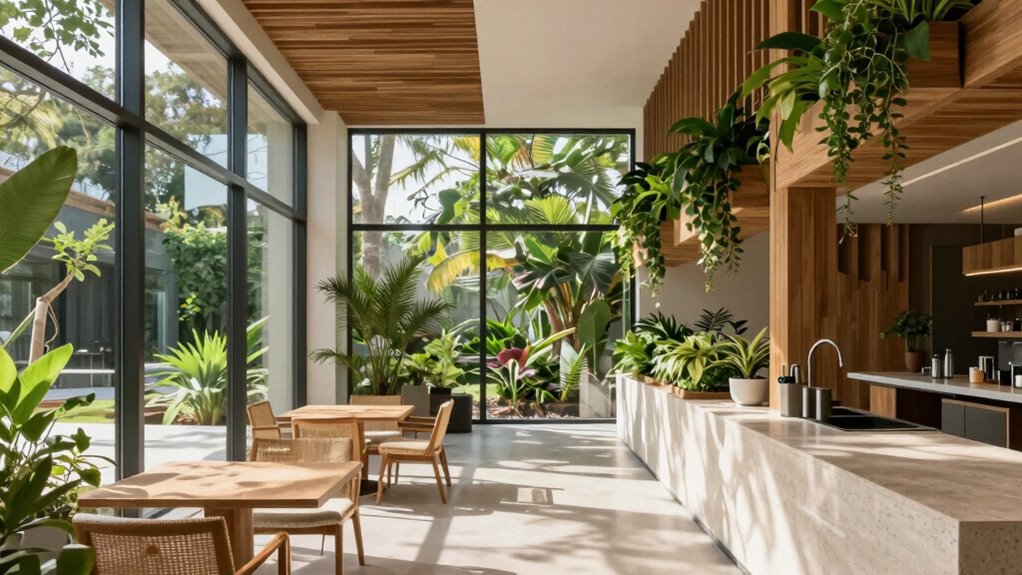
After creating a space that connects you with nature and maximizes light, the next step is to assess your biophilic design to guarantee it remains effective and sustainable. Regular evaluation helps you identify areas needing improvement, ensuring eco-friendly materials are maintained and replaced when necessary. Implement maintenance strategies like cleaning natural elements and checking for wear to prolong their lifespan. Use the following table to visualize how to keep your design sustainable:
| Aspect | Action | Purpose |
|---|---|---|
| Eco friendly materials | Regularly inspect for damage or wear | Sustain natural elements |
| Maintenance strategies | Schedule routine cleaning and upkeep | Preserve natural feel and function |
| Reassessment | Periodically review design effectiveness | Ensure ongoing connection with nature |
Frequently Asked Questions
How Can Biophilic Design Improve Mental Health and Well-Being?
You can boost your mental health and well-being through biophilic design by maximizing natural light, which lifts your mood and energizes you. Incorporate plant life and natural elements to create a calming environment that reduces stress. These features connect you with nature, helping you feel more relaxed and focused. By thoughtfully integrating natural light and greenery, you improve your overall mental state and foster a sense of tranquility.
What Are Cost-Effective Ways to Implement Authentic Natural Elements?
To implement authentic natural elements cost-effectively, focus on adding indoor plants, which boost air quality and create a calming environment. Use natural textures like wooden furniture, woven baskets, or stone accents to bring tactile warmth without high expenses. You can also incorporate natural light through simple window treatments and maximize existing outdoor views, making your space feel more connected to nature without breaking the bank.
How Does Biophilic Design Influence Workplace Productivity?
You’ll notice increased workplace productivity when you prioritize biophilic design by integrating plants and maximizing natural lighting. Plant integration reduces stress and boosts creativity, while natural lighting enhances focus and energy levels. Together, these elements create a healthier, more inviting environment that encourages collaboration and motivation. By thoughtfully incorporating these natural features, you transform your workspace into a place where employees thrive and perform at their best.
Can Biophilic Principles Be Integrated Into Existing Buildings?
You can definitely integrate biophilic principles into existing buildings through adaptive reuse and retrofit strategies. Studies show that biophilic design enhances well-being and productivity, making it worth the effort. By adding green walls, natural lighting, or indoor plants, you can transform your space without complete reconstruction. These retrofit strategies are cost-effective, sustainable, and improve the environment, allowing you to create a healthier, more inspiring workspace that aligns with biophilic principles.
What Are Emerging Trends in Sustainable Biophilic Design?
You’ll see emerging trends like increased urban greenery and innovative living walls that enhance natural connectivity. These features not only boost aesthetic appeal but also improve air quality and reduce urban heat. Expect to incorporate more modular, sustainable plant systems that are easier to maintain and adapt. As cities grow smarter, biophilic design trends focus on integrating nature seamlessly into urban environments, making spaces healthier, more inviting, and environmentally resilient.
Conclusion
Think of your space as a living garden. With intentional care, you nurture genuine natural elements, avoiding superficial clichés. As you refine your design, it becomes a sanctuary that breathes and evolves—a true reflection of nature’s complexity. By staying authentic and sustainable, you craft a sanctuary that nurtures your well-being, much like a well-tended garden flourishes in harmony. Your space, like nature itself, thrives when rooted in sincerity and mindful stewardship.