
TL;DR
Luxury decorative throw pillows combine comfort with thoughtful materials, careful construction, and a design that fits your room. Compare the fabric, insert, seams, proportions, and care label before buying, then mix textures and pattern sizes to create a polished grouping that still feels comfortable to use.
A sofa can look finished in a showroom and strangely bare once it reaches your living room. A few well-chosen pillows can change that in minutes: velvet catches the light, linen softens a crisp modern sofa, and a nubby weave gives a smooth leather seat some welcome texture.

Get furniture and decor delivered free with Prime
- Fast, free delivery on millions of items
- Prime Video, Amazon Music and more included
- Member-only deals all year
Luxury decorative throw pillows bring together comfort and design. They can add color, texture, pattern, and a sense of polish to a room while reflecting the quality of their materials and construction. That doesn’t mean you need a matching set or the highest price on the shelf.
This guide will help you spot the details that matter, choose shapes and fabrics for your home, and care for your pillows without guessing. Whether you’re styling a deep sectional or adding one accent to a reading chair, you’ll learn how to get a considered look that still invites you to sit down.
Judge a pillow by its fabric, stitching, insert, proportions, and care requirements together; price alone does not show how it will perform.
Echo one or two colors already in the room, then create interest with a different texture or pattern scale.
Use larger pillows to anchor deep sofas and beds, and smaller accents to add detail without crowding compact furniture.
Choose removable, durable covers for busy seating, and follow each fabric’s care label before cleaning.
Refresh a room by changing a few covers or rearranging existing pillows instead of replacing every insert.
What makes a throw pillow feel luxurious?
A luxury decorative throw pillow feels luxurious when its fabric, construction, insert, and proportions work together. A soft fabric may make a strong first impression, but the pillow’s everyday value depends on how it holds its shape, feels against your body, and responds to use. A beautiful cover with scratchy seams or a limp insert can make the whole pillow feel less considered.
Run your hand over the cover and think about how it will behave in the room. Linen has a dry, relaxed texture that can make a formal sofa feel less stiff, though its creases are visible and part of its character. Velvet feels plush and changes shade as the nap shifts, giving a room depth, but it may show pressure marks. Silk brings a gentle sheen and catches light, yet its delicacy can make it stressful to place where spills are likely. Woven wool or richly textured cotton can add depth without a glossy finish. The right choice depends on which qualities you want to see and feel, and which upkeep you can accept.
Look closely at the edges and closure. Even stitching, finished seams, and a zipper that moves smoothly suggest care in construction and make it easier to remove the cover for cleaning. Piping or a flange can create a tailored outline, like a narrow frame around a picture; it also adds seams and detail that may affect how the pillow feels when you lean on it. An embroidered motif or visible weave can offer more character than a prominent logo, though intricate embellishment may call for gentler care.
The insert shapes both comfort and appearance. Down and feather fills feel soft and moldable, so you can plump them into a relaxed, inviting form; they may also need regular fluffing and may not suit allergies or animal-product preferences. Quality down alternatives can provide a similar plump look for people who prefer non-animal fill, but the feel varies by product. For example, a down pillow on a formal guest bed may look beautifully relaxed because it can be casually reshaped, while a washable alternative may be easier to live with on the family sofa.
Price is only one clue. A costly cover that needs special cleaning may spend more time being protected than enjoyed in a home with a muddy dog. A carefully made cotton pillow may offer better practical value there, even if it has less sheen or status. Compare the fabric, finish, insert, and care label together: the best pillow is the one whose comfort and appearance you can sustain in the room where it will live.
Products Worth Considering

Dyson V9 Motorbar Cordless Vacuum

TCL 75-Inch Class 4-Series 4K UHD HDR Smart Google TV (75S446, 2022)

LG 55-Inch QNED73B Mini LED 4K Smart TV (2026)
As an affiliate, we earn on qualifying purchases.
How do you choose pillows that fit your room?
Choose pillows that echo at least one feature already in your room—such as the sofa color, a rug pattern, or the warmth of your wood furniture. Then add contrast through texture, pattern, or size. Repeating a color gives the eye a connection between the pillow and the rest of the room; contrast keeps the grouping from disappearing into the sofa. This creates a coordinated look without making it seem like everything came in one box.
- Start with the furniture. Note whether your sofa is deep or compact, smooth or textured, light or dark. An oversized pillow can anchor a deep sectional because it has room to sit without taking over, but it can overwhelm a narrow chair and reduce usable seat space.
- Pick a small palette. Repeat one or two colors already present. On a gray sofa, for example, a rust pillow can pick up a nearby terracotta planter. That echo makes the accent feel intentional; too many unrelated colors can make each pillow compete for attention.
- Vary pattern scale. Pair a broad geometric print with a smaller motif, then use a solid or tactile cover to give your eye a resting place. Different scales create hierarchy, so one pattern reads as the feature and another as supporting detail.
- Match fabric to use. Reserve delicate silk for an accent chair and choose a durable linen or cotton blend where people lounge every day. The tradeoff is between a particular look or feel and the amount of wear and cleaning the fabric can handle.
- Check care before checkout. Read the label so a beautiful cover won’t surprise you with a cleaning routine you can’t keep up with. Care affects how often you can use the pillow comfortably, not just how you clean it after a spill.
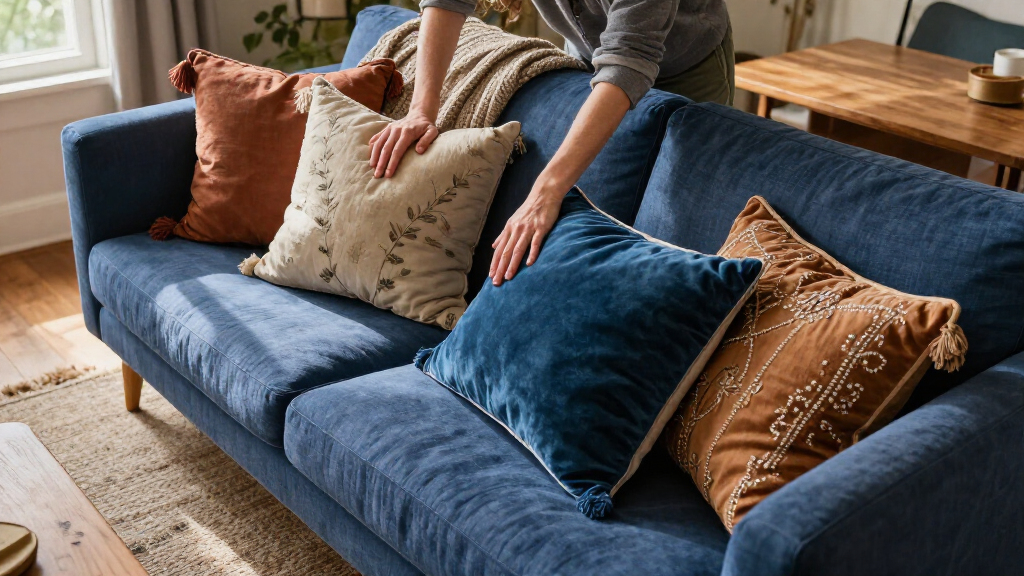
Think of a pillow grouping as a short musical phrase: a bold pattern provides the main note, a quiet solid fills the pause, and texture adds rhythm. For a practical example, a large sand-colored linen pillow, a smaller blue embroidered cushion, and a woven neutral can make a plain sofa feel collected rather than crowded. The scale and color links help the pieces relate, while the difference in surface keeps them from looking like a set.
Let the furniture set the scale. A compact chair usually needs fewer, smaller accents than a long sofa or bed. The point is not to reach a particular pillow count, but to preserve the furniture’s purpose. If you can’t sit comfortably without moving every cushion, the arrangement is making the room harder to use; remove a pillow or move it to another seat.
How can different fabrics change a room?
Fabric changes the way a pillow looks, feels, and fits into daily life. Velvet brings rich color and a soft hand; linen feels airy and relaxed; silk adds sheen; and woven cotton or wool introduces a more tactile surface. Those differences shape the mood of a room, but they also affect how marks, wear, and cleaning show up. Compare the effect with the room’s use in mind, not just the fabric swatch under store lighting.
| Fabric | Look and feel | Good fit | Practical note |
|---|---|---|---|
| Velvet | Soft pile with a shifting glow | A living room accent or layered bed | Check the label; the nap can show marks and some covers need professional cleaning. |
| Linen | Matte, relaxed, and lightly textured | Everyday seating and layered neutrals | Wrinkles are part of its casual character; cleaning instructions vary. |
| Silk | Smooth, light-catching sheen | A lower-traffic accent chair or bedroom | Often best kept away from spills and rough daily use. |
| Textured cotton or wool | Visible weave, nubs, or a soft natural surface | Rooms that need tactile contrast | Check whether the cover is removable and how it should be cleaned. |
Imagine a dark green velvet pillow beside a cream linen one. The velvet deepens the color, while the linen keeps the arrangement from feeling too formal. Their contrast works because the fabrics do different jobs: one draws attention with color and sheen, while the other softens the grouping. These current décor directions favor tactile materials, natural-looking fibers, layered neutrals, and combinations with more personality; use them as inspiration rather than rules.
Choose for your actual routine. If children build blanket forts on the sofa, a washable, durable cover may bring more value than delicate silk. That choice may give up some sheen or a particular hand feel, but it can make the seating easier to enjoy without constant worry. A single special pillow can still add a touch of polish, as long as the rest of the grouping can handle everyday life.
How many pillows should you use, and what sizes work?
Use enough pillows to make furniture inviting without making it hard to sit down. There is no fixed count: a long, deep sectional can hold more than a compact loveseat, and a single chair may need only one well-proportioned accent. The useful test is whether the pillows add comfort and shape while leaving room to use the seat as intended.
Size helps establish the order of the arrangement. Larger pillows can anchor a sofa or bed, while smaller ones add detail in front. For instance, place two larger solids at the ends of a sofa, then add one smaller patterned cushion near the center. The larger shapes do the quiet work; the smaller print draws the eye. This arrangement creates a focal point without asking every pillow to compete for attention.
Check the cover against the furniture. A generously sized pillow can look relaxed on a deep sectional because it fills the broad seat, but may swallow a narrow armchair and leave too little room for a person. On a bed, layering two sizes adds depth, much like stacking books with different heights. On a petite chair, a small cushion can support your back without taking over the seat.
The insert should make the cover look full without putting strain on the seams. Some people like a soft, moldable shape; others prefer a firmer cushion that holds its edges. An insert that is too small can leave corners limp and make the pillow look undersized, while one that is too large may stress the zipper or stitching and make the cover difficult to close. Check the maker’s sizing advice and judge the final shape by how the pillow looks and feels, since the ideal balance depends on the cover’s fabric and the firmness you prefer.
Comfort is part of the design. Before you commit to a full grouping, try sitting with the pillows in place. If you have to move them all to make room, remove one or shift it to a nearby chair. That small adjustment can make the room feel more welcoming because the arrangement serves the people using it rather than treating the sofa as a display.
How do you mix patterns without making the sofa look busy?
Mix patterns by changing their scale and repeating a small number of colors. A large, open print can sit beside a tight, detailed motif, while a solid or textured pillow gives your eyes a place to rest. Scale creates a clear order: one print reads first, another rewards a closer look, and the quieter surface keeps both from filling the whole visual field.
Start with one pattern you love, perhaps a bold botanical with deep green leaves. Pick a smaller pattern that repeats green or introduces a related color, such as a cream-and-olive stripe. Then add a plain linen or nubby cotton pillow to break up the prints. Shared color makes variety feel connected. Keeping the palette restrained lets the pattern shapes provide interest without introducing a new color story with every cushion.
A familiar living-room scenario makes the rule easy to see: a small sofa already faces a patterned rug. If you add three pillows with equally busy prints, every surface competes for attention and it becomes harder to notice any one detail. Keep one pillow patterned, choose another in a solid pulled from the rug, and use texture for the third. The room feels layered, but the rug still gets to speak.
Personalized combinations and visible craft details, such as embroidery, handwork, and woven patterns, can make a room feel less like a catalog page. You might pair a hand-embroidered cushion with a simple velvet one and a relaxed cotton cover. Let the unusual detail be the accent, then give it breathing room with quieter neighbors. That balance helps the craftsmanship stand out instead of making every surface demand attention.
Trend palettes come and go; the colors already in your home offer a steadier guide. If a particular mix feels too loud in daylight, remove one patterned pillow and try again. Your eyes will tell you when the arrangement has found its rhythm, and living with the grouping for a day can show whether it feels restful as well as attractive.
Which pillows work best in homes with children or pets?
For a busy home, favor durable fabrics, removable covers, and cleaning instructions you can follow. The most suitable pillow depends on what happens in your rooms: pets may shed on a favorite sofa, and children may bring snacks to the same seat. Thinking about these routines first helps you avoid buying a pillow whose upkeep makes you reluctant to use it.
Tightly woven fabrics and washable covers are often practical choices, but don’t assume that a fabric name guarantees stain resistance. Finishes and washing instructions differ by product. Read the label, and check whether the cover needs gentle washing, professional cleaning, or a very particular drying method. A removable cover can make care simpler, especially if the insert stays clean and dry; it does not make every fabric machine washable, so the label still determines what you can safely do.
Down and feather inserts offer a soft, easy-to-shape feel, but they may need regular fluffing and may not suit people with allergies or animal-product preferences. Synthetic fills are widely available and can be easier for some households to care for; their feel and quality vary. Choose the fill around your comfort needs and household preferences. A low-maintenance fill can be a sensible compromise if it means the pillow gets used without adding a care task no one wants.
Picture a dog that claims the end of a light-colored sofa every afternoon. A washable, tightly woven cotton-blend cover in a mid-tone may be a calmer choice than a pale silk cover that needs careful cleaning. The mid-tone can make everyday shedding less conspicuous, while the removable cover offers a practical response to dirt. You can still use a special velvet pillow on a chair the dog rarely reaches.
For outdoor spaces, use pillows made specifically for outdoor conditions. Their fabrics and inserts are designed to handle exposure better, though you still need to follow care and storage directions. Indoor luxury fabric is not automatically outdoor-ready. Choosing a suitable outdoor pillow may limit your fabric choices, but it reduces the chance that sun or moisture quickly spoils a favorite indoor cover.
How do you care for pillows and refresh a room affordably?
Care begins with the label, because different fabrics need different cleaning methods. Remove the insert before cleaning a cover when the maker instructs you to do so. Some covers tolerate gentle washing; silk, velvet, and embellished designs may need professional cleaning. Following the stated method helps preserve a fabric’s color, texture, and shape, while guessing can turn a small mark into a damaged cover.
- Check the care label before treating a mark. Don’t assume a cleaner or wash cycle suits every finish.
- Separate cover and insert when advised. This helps you clean the right part without soaking or misshaping the fill.
- Follow the stated cleaning method. Pay attention to washing, drying, and pressing instructions.
- Let the cover dry as directed before refitting it. A damp cover can feel unpleasant and may affect the insert.
- Fluff and reshape the pillow. A few careful pats help restore its outline after use.
For a quick room refresh, change a few covers, add one new texture, or rearrange pillows you already own. If your cream sofa feels flat in winter, try a warmer accent cover and a woven neutral before buying an entire new set. Seasonal updates can cost less when you reuse the inserts and swap only the covers, and they let you change the room’s mood without replacing pieces that still work.
Think of covers as the room’s wardrobe. A small change can shift the mood without changing the furniture. Material transparency also matters to many buyers, so check fiber content and product details if sourcing or how a cover is made influences your choice. That information can help you decide whether the material suits your priorities as well as your decorating plans.
A high price may be worthwhile when the fabric, workmanship, comfort, and expected lifespan suit your needs. Compare those details against your cleaning routine and budget. A beautiful pillow you can comfortably maintain is more likely to remain in rotation than one that spends its life protected from the room; its value comes from the pleasure and practical use it provides over time.
Frequently Asked Questions
Are luxury decorative throw pillows worth the price?
They can be worth it when the fabric, construction, design, and expected lifespan fit your needs. Compare those details, along with care requirements, instead of relying on the label or price by itself.
Should the insert be the same size as the cover?
The right fit depends on the cover and the shape you prefer. A fuller insert can make a pillow look plump, but an insert that is too large may strain seams or the zipper; check the maker’s sizing advice.
Are down or feather inserts better than synthetic ones?
Down and feather inserts feel soft and are easy to shape, though they may need regular fluffing and may not suit people with allergies or animal-product preferences. Synthetic fills offer another option and can be easier for some households to care for, but feel and quality vary.
How do I clean velvet or silk throw pillows?
Follow the care label; velvet and silk covers may need professional cleaning, while other products may have different instructions. Remove the insert before cleaning the cover when the maker advises it, and don’t guess at a wash cycle.
Can I refresh my living room without buying new pillows?
Yes. Rearrange the pillows you own, change a few covers, or add a new accent color or texture. Reusing inserts and swapping covers can change the room’s mood without replacing every pillow.
How do I mix pillow patterns without making a room look busy?
Vary the scale of the patterns, repeat one or two colors, and include a solid or textured pillow to give the eye a rest. For example, pair a large botanical print with a fine stripe and a quiet linen cover.
Conclusion
Choose pillows for the life happening in your room. Pair a fabric you love with sound construction, a comfortable insert, a size that suits the furniture, and care instructions you can follow. A few thoughtful contrasts usually feel richer than a matching pile.
Start with one cover that connects to a color already in your home, then add a texture that makes you want to reach out and touch it. That’s how a sofa becomes a place you want to sink into, not just a picture-perfect backdrop.