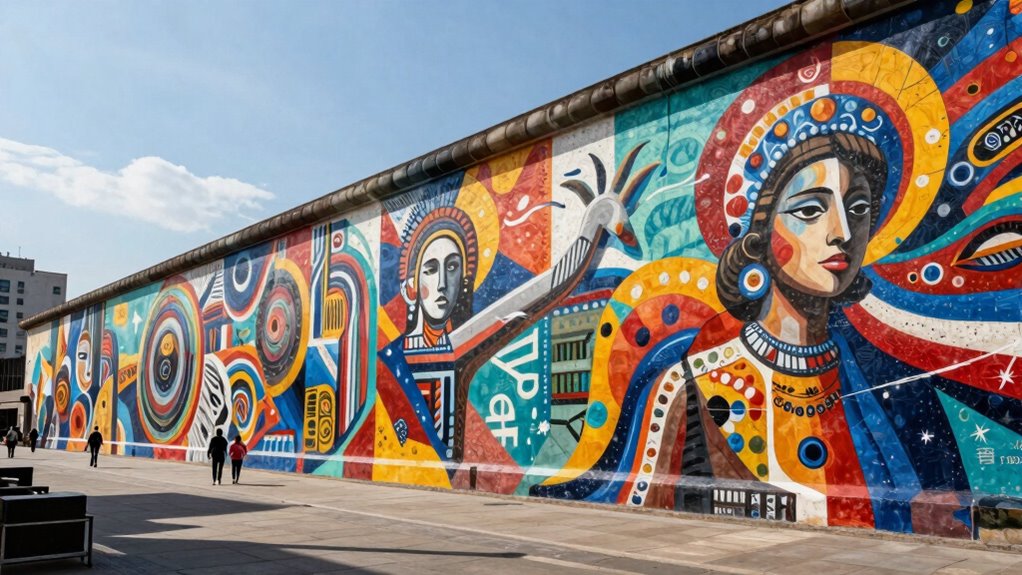

Large-scale art commands your attention instantly with its grand presence, filling your entire visual field and transforming the environment around you. You feel a physical and emotional connection as it invites exploration and alters how you perceive the space. It sparks awe, wonder, or even intimidation, leaving a lasting impression. Unlike small art, it encourages public engagement and fosters community conversations. To discover more about how big art shapes perceptions and experiences, keep exploring what makes it truly powerful.

Get furniture and decor delivered free — and shop member deals
- Fast, free delivery on millions of items
- Access to Prime Big Deal Days deals on October 6–7
- Prime Video, Amazon Music and more included
Key Takeaways
- Creates a physical and emotional connection by transforming surrounding space and inviting exploration.
- Commands attention instantly, evoking awe or intimidation with its scale.
- Acts as a communal focal point, fostering social interaction and collective identity.
- Challenges perceptions of environment and space, encouraging new narratives.
- Leaves a lasting impression, influencing cultural dialogue and community identity.
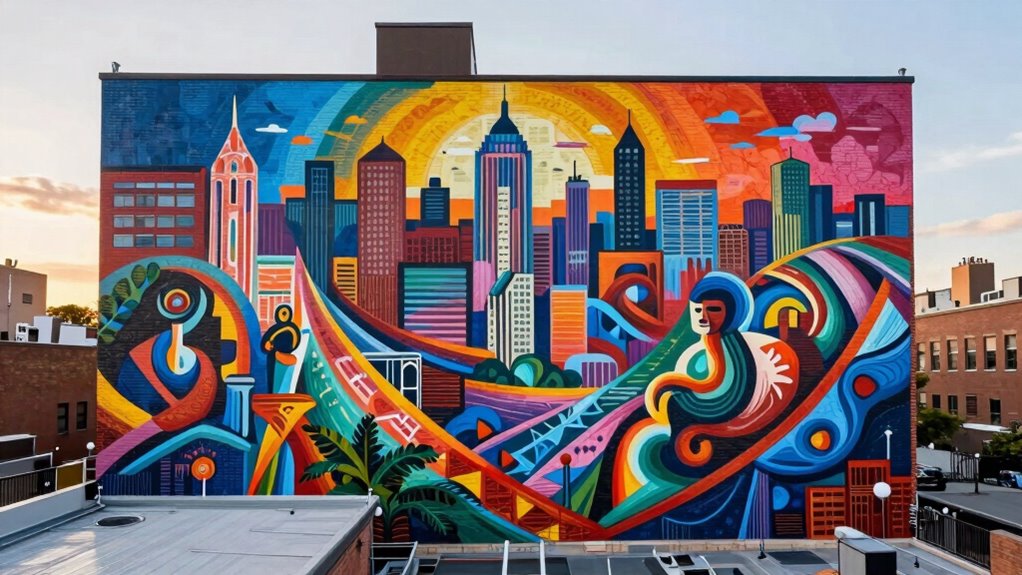
When it comes to art, size can dramatically influence how you experience and interpret a piece. Large-scale art commands your attention instantly, filling your visual field and demanding your focus. Unlike small art, which often encourages quiet contemplation, big artworks have a powerful spatial impact that can transform the environment around you. They don’t just sit on a wall or pedestal; they interact with the space, making you feel part of something larger than yourself. This spatial presence sparks public engagement in a way small art simply can’t match. When you encounter a massive sculpture or mural, you’re drawn into a dialogue with it—not just as an observer but almost as a participant in its environment. The sheer size creates a physical and emotional connection, inviting viewers to move around, explore, and experience it from multiple angles.
Large-scale art also amplifies the message or emotion it aims to convey. Its scale can evoke awe, wonder, or even intimidation, making the impact long-lasting. When you stand before a monumental installation, you’re often overwhelmed by its magnitude, which intensifies your emotional response and deepens your understanding of the work’s significance. Small art, while intimate, tends to invite quiet reflection, but it rarely engenders the same level of collective public engagement. Big art transforms public spaces, turning them into open-air galleries or communal hubs where people gather, discuss, and share experiences. Its size acts as a catalyst for social interaction, encouraging dialogue among viewers and fostering a sense of community. In this way, large art becomes a focal point that unites individuals around a shared experience, transcending personal taste and reaching a broader audience.
Moreover, the spatial impact of large art can challenge perceptions of the environment itself. It alters the way you move through a space, guiding your attention and influencing how you experience a place. This effect is difficult to achieve with small art, which often remains confined to a limited area. Large artworks can reshape the physical and visual landscape, creating new narratives within familiar settings. They invite you to see your surroundings differently, highlighting the relationship between the artwork, the space, and the people within it. Fundamentally, large-scale art does something small art never can: it transforms environments, elevates public engagement, and makes a lasting impression through its commanding spatial presence. Additionally, the spatial impact of large art can foster a shared sense of wonder and collective identity that small works rarely achieve. Recognizing the importance of public art helps us appreciate how these large installations can influence community identity and cultural dialogue. This emphasizes how the scale of art plays a crucial role in shaping social and cultural interactions within public spaces.
Furthermore, the ability of large art to enrich cultural experience highlights its significance in fostering a deeper appreciation and understanding of diverse cultural narratives.
As an affiliate, we earn on qualifying purchases.
Frequently Asked Questions
How Does Large-Scale Art Impact Community Identity?
Large-scale art boosts your community pride by creating a powerful visual symbol everyone can rally around. It brings people together, fostering social cohesion as residents gather to celebrate and maintain the artwork. You’re likely to feel more connected and invested in your neighborhood, as the art becomes a shared identity and a source of local pride. It transforms public spaces, making them more vibrant and meaningful for everyone involved.
What Materials Are Unique to Large-Scale Installations?
You’re dealing with materials like steel, concrete, and weather-resistant fabrics that are unique to large-scale installations, essential for their durability and ability to withstand the elements. These materials enable art to dominate the landscape, offering an expansive scale perspective that small art simply can’t match. Their strength guarantees the artwork remains impressive over time, creating a monumental impact that transforms public spaces and captures viewers’ imaginations on an unprecedented level.
How Is Large Art Funded and Maintained Long-Term?
You fund large-scale art through donor funding, grants, and sponsorships, which provide essential financial support. Maintenance strategies include regular inspections, cleaning, and repairs, often managed by dedicated preservation teams or partnerships with local organizations. These efforts help guarantee the artwork remains impactful and safe over time, requiring ongoing investment and community engagement. This long-term approach keeps large-scale art vibrant, accessible, and well-preserved for future audiences.
Can Small Art Pieces Be Transformed Into Large-Scale Works?
Yes, you can transform small art into large-scale works, turning tiny sculptures into towering installations or portable murals into expansive public art. Ironically, what starts as miniature sculptures or delicate pieces can grow into massive, awe-inspiring displays—showing that even small art pieces hold the potential for grandeur. All it takes is imagination, scale, and the desire to reimagine the boundaries of your original creations.
What Are the Environmental Considerations for Large-Scale Art?
When creating large-scale art, you need to take into account environmental factors, especially the ecological impact. Using sustainable materials helps minimize harm to the environment, reducing waste and pollution. You should also think about energy consumption during construction and transportation, aiming for eco-friendly practices. By prioritizing sustainability, you guarantee your large-scale art contributes positively to the environment, fostering awareness and encouraging others to adopt eco-conscious approaches in their artistic endeavors.
Conclusion
In the grand gallery of art, size sparks spectacle and scope, creating colossal connections. Small art, however, invites intimacy and inspection, inspiring individual interaction. While large art dazzles with its daring dimensions, small art whispers stories in subtle strokes. Both bring beauty and brilliance, but it’s your personal preference that truly paints the picture. So, whether you favor the massive masterpiece or the modest marvel, remember: art’s appeal always aligns with your own unique understanding.
Halloween Picks
halloween
As an affiliate, we earn on qualifying purchases.