TL;DR

Get furniture and decor delivered free with Prime
- Fast, free delivery on millions of items
- Prime Video, Amazon Music and more included
- Member-only deals all year
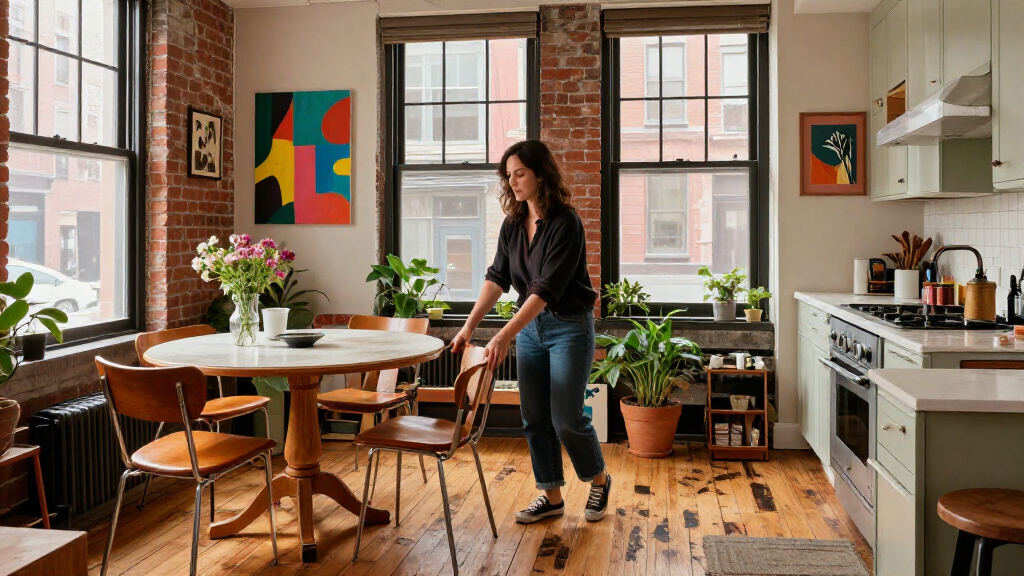
A New York design firm has revisited an East Village loft it first designed more than 15 years ago, keeping its exposed brick, timber and irregularities while making the open space feel warmer and more intimate. Designer Joshua Evan Goldfarb says the project was shaped by the neighborhood’s creative character and was never meant to feel overly polished.
New York design firm Evan Edward has redesigned an East Village loft it first worked on more than 15 years ago, retaining exposed brick, timber and the building’s uneven details while introducing a warmer, more intimate interior. In an interview with Livingetc, designer and firm co-founder Joshua Evan Goldfarb said the goal was to preserve the apartment’s connection to the neighborhood rather than make it feel overly polished.
Goldfarb told Livingetc that the apartment’s history provided the starting point for the redesign. The project revisited the firm’s earlier work with fresh eyes, he said, while keeping features that had given the loft its character. The report describes exposed brick walls, timber and rooftop volumes among the elements the design team sought to respect.
The new scheme layers references to the 1970s through low-slung furniture, rich woods, smoked and brushed metals, and Bordeaux tones. Goldfarb said the intention was not to recreate a single period. Instead, vintage pieces sit alongside contemporary furniture, and the original materials are allowed to show their patina.
The loft’s open plan presented a practical design challenge: creating intimate areas without losing the spaciousness and authenticity of the interior. Rather than adding walls, the team used furniture placement, lighting, rugs and changes in materials to mark out living zones. The report also identifies a sculptural pendant above the dining table and a compact wood kitchen as parts of the overall composition.
A Retreat Without Erasing the Loft
The project illustrates a design approach that treats a home’s existing character as an asset rather than something to smooth away. In an older Manhattan building, Goldfarb said, walls and other architectural features are not always straight or uniform. The team worked around those conditions and used them to retain a sense of the apartment’s history.
That choice also addresses a common challenge in open-plan homes: making a large area feel welcoming without dividing it into smaller rooms. The firm’s use of lighting, rugs and furniture offers one way to create distinct settings while keeping the loft’s open layout. The result, as described by Goldfarb, aims to feel quieter and more enveloping than the busy streets outside, without losing the neighborhood’s visual influence.
The report is a design feature, not a sales listing or an independent evaluation of the renovation. It does not provide costs, construction details or information about the residents. Its significance lies in the designer’s account of how the space was reworked and the choices made to balance historic texture with contemporary comfort.
low profile vintage style mid century modern sofa
As an affiliate, we earn on qualifying purchases.
As an affiliate, we earn on qualifying purchases.
A Return to an Earlier Design
According to Goldfarb, Evan Edward first designed the apartment more than 15 years before returning for this redesign. The firm’s co-founders, Joshua Evan Goldfarb and Michael Edward Moirano, established Evan Edward in 2019, and the company works in New York and Miami, according to the source material.
The East Village’s character was a specific influence on the project. Goldfarb described its creative energy and grit as qualities the clients valued and wanted to preserve. The interiors translate that brief through patinated surfaces, exposed brick and a mix of old and new furnishings, rather than through a literal recreation of a past era.
The source report also notes that the loft’s scale required careful planning. The design team used objects and finishes to define areas, while keeping the original architecture visible. That approach frames the redesign as a return to a known space, not a wholesale replacement of its character.
“The history of the loft itself was really our starting point.”
— Joshua Evan Goldfarb, designer and Evan Edward co-founder, speaking to Livingetc
Project Details Not Reported
Livingetc presents the redesign through the design team’s account and images credited to photographer Nicole Franzen. The available report does not state when the renovation was completed, how much it cost, what construction work was carried out, or whether the apartment’s layout changed beyond the described use of furnishings and finishes.
The source does not identify the clients or provide their own comments. It also does not independently verify the project’s details or assess how the design performs in daily use. Claims about the apartment feeling quieter or more comfortable are presented as design intentions and descriptions, not as measured outcomes.
No Further Milestone Listed
The source material does not announce a future phase, opening date or follow-up project for the apartment. The reported development is the completed redesign and the designer’s explanation of its choices. Any additional information about the renovation timeline, budget or residents would need to come from the firm, the clients or a later report.
Key Questions
What changed in the East Village apartment?
Evan Edward revisited an apartment it had designed more than 15 years earlier. The redesign added warmth and defined areas within the open loft while retaining features such as exposed brick and timber, according to designer Joshua Evan Goldfarb.
Why did the designers keep the apartment’s rougher details?
Goldfarb said the team wanted to preserve the loft’s history and the East Village’s creative character. He said the goal was not to make the space feel overly polished or pristine.
How did the design create separate areas without adding walls?
The team used furniture placement, lighting, rugs and material changes to define areas within the open plan, Goldfarb told Livingetc.
What style influences appear in the redesign?
The interiors include 1970s references, including low-slung furniture, rich woods, metal finishes and deeper Bordeaux tones. Goldfarb described the result as a layering of eras rather than a period-style recreation.
Are the renovation cost and completion date known?
No. The source report does not give a budget or completion date, and it does not provide construction details or comments from the apartment’s residents.
Source: rss
Halloween Picks
halloween
As an affiliate, we earn on qualifying purchases.