
TL;DR
Joanna Gaines’ kitchen designs feature curved islands as an alternative to the standard rectangular layout, including a dark teal island in a small bungalow kitchen. The examples show how rounded edges can combine storage and seating with a softer look, though the best fit depends on the room and the specific island.
Joanna Gaines’ kitchen designs feature curved islands as an alternative to conventional rectangular centers, with one example showing how a rounded shape can fit a compact kitchen while providing storage and seating. The approach, seen in episodes of Fixer Upper: Welcome Home and Fixer Upper: The Lakehouse, offers homeowners a design option that may ease movement and soften a room’s appearance.

Get furniture and decor delivered free with Prime
- Fast, free delivery on millions of items
- Prime Video, Amazon Music and more included
- Member-only deals all year
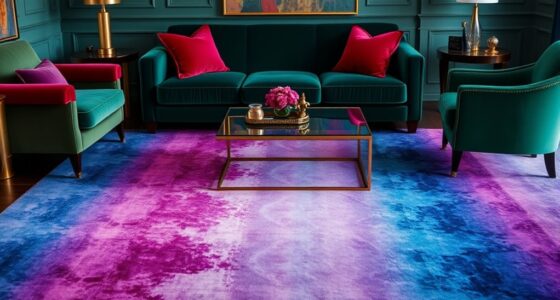
In Episode 3 of Fixer Upper: Welcome Home, Gaines renovates a small kitchen with a dark teal island whose base and countertop curve rather than forming a standard rectangle. The island includes storage and room for two stools. Its shape was inspired by the home’s original concave cabinetry, and the design was selected to make better use of the limited kitchen footprint.
Gaines described the island’s role in a post on her Magnolia Realty blog, writing: “Bold color makes this island the focal point of the room, and rounded corners enhance the soft bungalow feeling of the house.” She added that she liked how the small island offered storage as well as seating. Those are her design observations, not a claim that a curved island will work equally well in every kitchen.
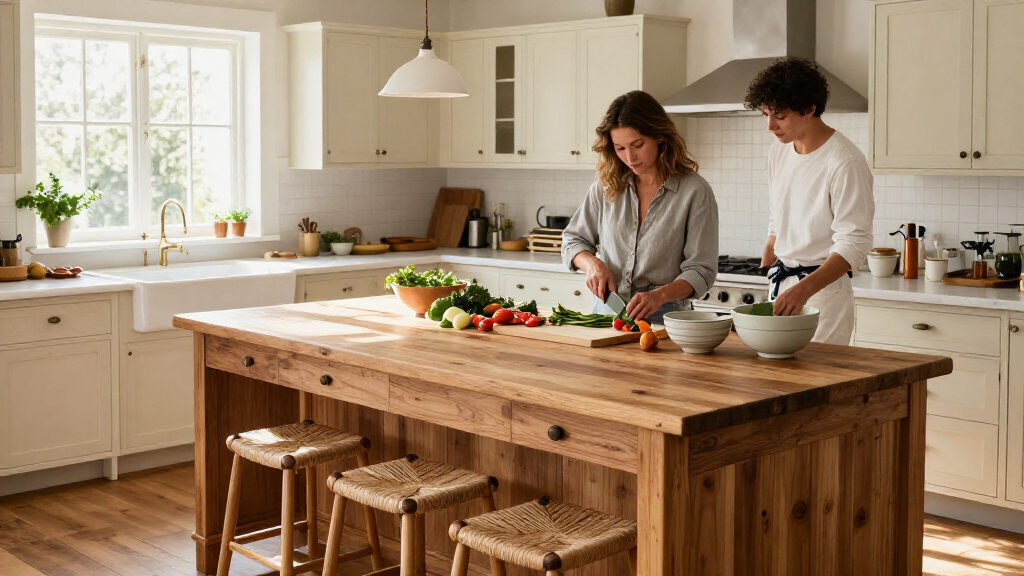
A second example appears in Fixer Upper: The Lakehouse. There, the countertop curves at one end to make the seating area feel more inviting, while the other, squarer end is used more for food preparation. The contrast shows how a single island can divide its functions without relying on a fully rectangular outline.
A softer kitchen island built around the room
Joanna Gaines’ curved islands pair rounded edges with storage and seating. Their practical fit depends on each kitchen’s layout and needs.
Two designs, different uses
The examples adapt the curve to the home and the tasks the island needs to support.
Compact bungalow
A dark teal island echoes the home’s concave cabinetry and combines storage with seating for two.
Split island functions
A curved end makes seating more inviting, while the squarer end is used for food preparation.
What the curve can change
Shape can influence both movement around an island and how the kitchen feels.
- Rounded corners may be easier to pass in a tight layout.
- A curved end can make seating feel more connected to the room.
- Clearance and circulation depend on the kitchen’s dimensions and layout.
- A curved outline can change the usable countertop shape.
Choose for your kitchen
The examples offer design ideas, but no measurements, costs or installation details.
Map circulation and available clearance around the island.
Consider work surface, storage and seating needs.
Ready-made and rolling islands are mentioned, but their prices and specifications are not provided.
How Curves Change Kitchen Use
A kitchen island often serves several purposes at once: it can provide a work surface, storage and a place for people to sit. Gaines’ examples make the case for treating the island’s shape as part of that practical planning, rather than choosing a rectangle by default. In a tight layout, rounded corners may make it easier to move past the island and reduce the chance of striking a sharp edge. Whether they actually improve circulation depends on the room’s dimensions, placement and the clearance around the island.
The design also changes how the kitchen reads. A curved end can make seating feel more connected to the room, while a bold color such as teal can give the island visual prominence. For homeowners, the examples suggest a way to combine a distinct focal point with everyday uses. But the available descriptions do not provide measurements or establish that the style creates more usable floor area in every small kitchen.
Products Worth Considering

eufy Security SoloCam S340 3K Dual-Lens Solar Security Camera

Dyson V8 Cyclone Cordless Vacuum

LEVOIT Vital 200S-P Smart Air Purifier for Large Rooms, White
As an affiliate, we earn on qualifying purchases.
Two Fixer Upper Island Examples
The designs appear in two installments of Gaines’ home-renovation television work. The Welcome Home kitchen is described as small, and its rounded island echoes the home’s existing concave cabinetry. That connection gives the curve a relationship to the house’s existing character as well as a functional purpose.
In the Lakehouse example, the island uses a more specific division of tasks: its curved end accommodates seating and its squarer end supports preparation. Together, the rooms illustrate variations on the idea rather than a single prescribed island design. The accompanying design guidance also points to ready-made or rolling islands as possible lower-cost alternatives to a custom installation. No product price, detailed installation information or comparison of options is provided.
Fit Depends on Each Kitchen
The examples do not include island dimensions, aisle clearances, costs or a detailed assessment of installation requirements. It is therefore unclear how much space the curved design saved in the bungalow kitchen, or whether it would improve movement in another room. A curved outline can also affect the amount and shape of usable countertop, so homeowners would need to assess how it suits their cooking and seating needs.
The design material mentions ready-made and rolling islands as less expensive possibilities, but provides no verified price comparison or product-performance details. It does not establish that a particular model will fit a given kitchen or offer the same storage and seating as Gaines’ built-in examples.
Measure Before Choosing an Island
For homeowners considering the look, the practical next step is to measure the kitchen and map out circulation, seating and work-surface needs before choosing an island. A fixed curved island, a ready-made unit and a rolling option may differ in cost, storage and flexibility, but the material provides no specifications to compare them. The right choice will depend on the room and how it is used.
No further project announcement or follow-up date is given. The design takeaway from the two television examples is narrower: a curved island can be tailored to a compact layout or used to make one end of a larger work surface more welcoming, but its benefits need to be judged against the specific kitchen.
Source: rss
Key Questions
What is a curved kitchen island?
It is an island with one or more rounded edges, often with a countertop that follows the curve, rather than a fully rectangular outline.
How did Gaines use a curved island in a small kitchen?
In Fixer Upper: Welcome Home, she used a dark teal island with a rounded base and countertop, storage and seating for two. The shape drew on the home’s concave cabinetry and was chosen for the limited kitchen footprint.
Can a curved island make a kitchen easier to move through?
Rounded corners may make it easier to pass an island and reduce sharp edges, but the result depends on the kitchen’s measurements, layout and available clearance.
Does a curved island have to be custom-made?
No. The design guidance mentions ready-made and rolling islands as alternatives, but gives no specific prices or product details. Homeowners would need to check dimensions, storage and suitability for their space.
Source: hunker.com