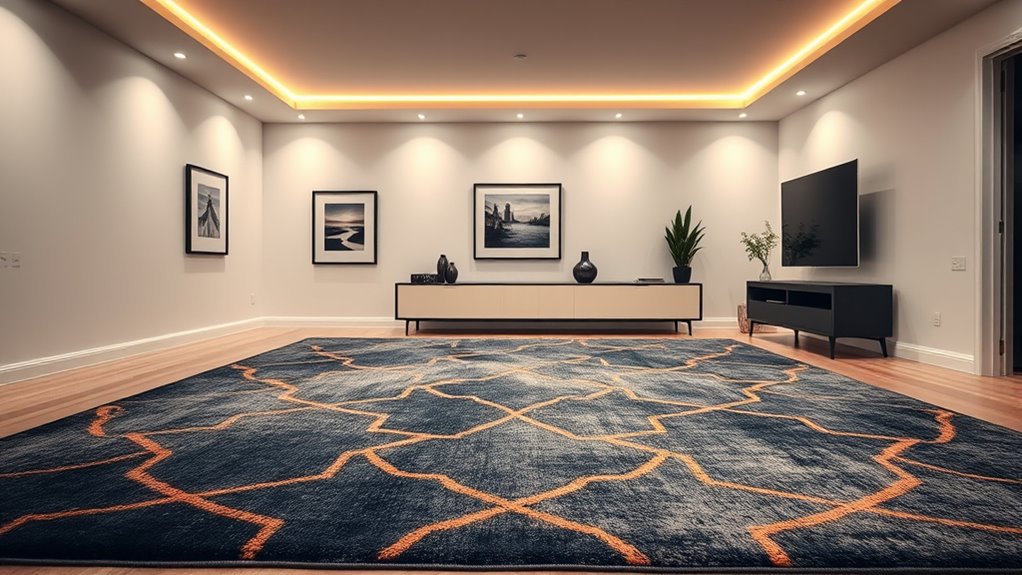

To create gallery-style rug lighting at home, start by selecting sleek adjustable fixtures like track or spotlights that highlight textures and colors. Position lights at angles that focus on the rug’s details, and use layered ambient, task, and accent lighting to add depth. Dimmers help set the perfect mood while emphasizing key features. To achieve this look, continue exploring tips on fixture placement, layering, and maintenance for a stunning display.
Key Takeaways
- Select adjustable track or spotlight fixtures with appropriate bulbs to highlight rug textures and colors effectively.
- Layer lighting with ambient, task, and accent fixtures to create depth and focus on key rug features.
- Position lights at low angles and slightly angled toward rug edges to enhance textures without glare.
- Use dimmers to adjust brightness and set the desired atmosphere, from warm inviting to bright modern.
- Regularly inspect, clean, and reconfigure lighting to maintain optimal appearance and adapt to changing decor.
Choosing the Right Lighting Fixtures

Selecting the right lighting fixtures is essential to highlight your rug gallery effectively. Your choice of fixture styles can dramatically influence the overall ambiance and focus. Opt for sleek, adjustable track lighting or spotlights that direct light precisely where you want it. Consider the color temperature of your bulbs; warmer tones (around 2700K) create a cozy, inviting feel, while cooler temperatures (around 4000K) offer a crisp, modern look. Choose fixtures that complement your space’s decor without overwhelming it. Dimmers are a smart addition, allowing you to modulate brightness based on the mood or time of day. Ultimately, balancing fixture styles and color temperature ensures your rugs are showcased beautifully, creating a gallery-like atmosphere right in your home. Additionally, understanding personality traits can help you select lighting styles that reflect your personal taste and enhance your space’s character.
Positioning Your Lights for Optimal Effect
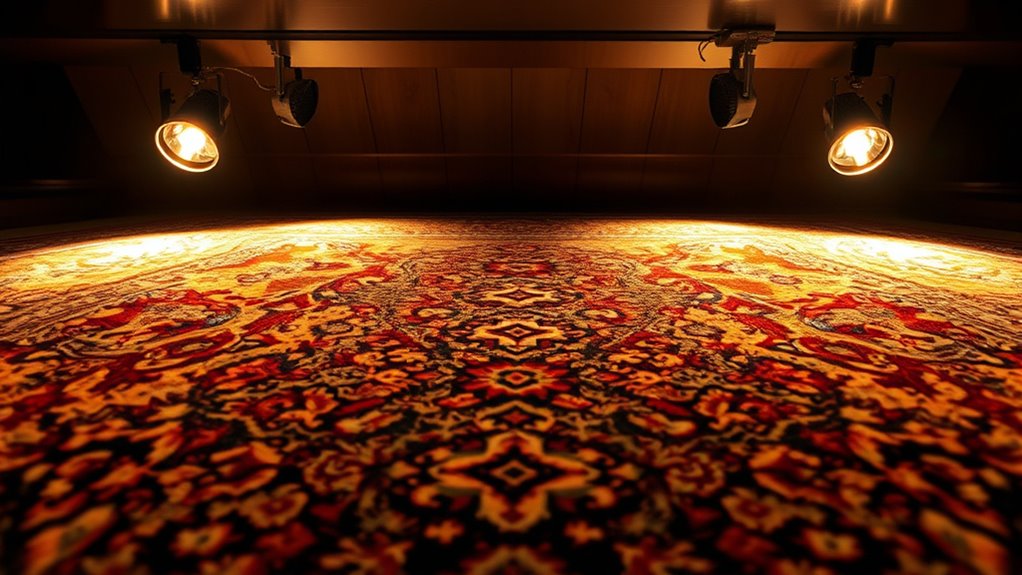
Once you’ve chosen the right fixtures, the next step is to position your lights to maximize their impact. Proper placement guarantees your rug becomes a focal point with enhanced decorative spotlighting and effective ambient light layering. Place spotlights slightly angled toward the rug’s edges to highlight textures and colors. Position ambient lights around the perimeter to create a soft, even glow, preventing harsh shadows. Use the table below as a guide: Additionally, understanding how attention can be directed through strategic lighting improves the overall visual harmony.
| Focus Area | Placement Tips |
|---|---|
| Rug Center | Direct a spotlight at the center for emphasis |
| Edges of Rug | Angle lights to highlight borders |
| Surrounding Walls | Add ambient lights to soften shadows |
This strategic positioning brings out your rug’s beauty and creates a cohesive lighting effect.
Using Dimmers to Set the Mood
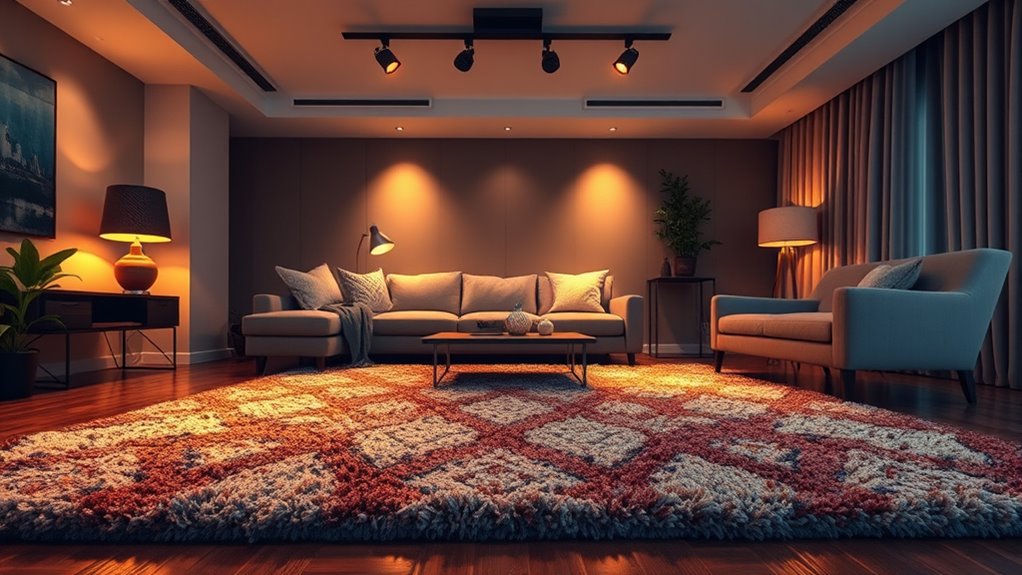
Using dimmers allows you to effortlessly adjust your rug lighting to create the perfect atmosphere. By controlling the lighting color and intensity, you can set a warm, inviting mood or a bright, vibrant display. Dimmers also help you save energy by reducing power consumption when full brightness isn’t needed, making your lighting more energy-efficient. With adjustable lighting levels, you can highlight different areas of your rug or change the ambiance to suit your mood or occasion. This flexibility allows you to transform your space quickly, whether you want a cozy evening or a lively gathering. Incorporating dimmers ensures you have complete control over your gallery-style rug lighting, enhancing both style and efficiency. Additionally, using dimmers can contribute to a sustainable and cost-effective home environment by optimizing energy use.
Highlighting Rugs With Accent Lights
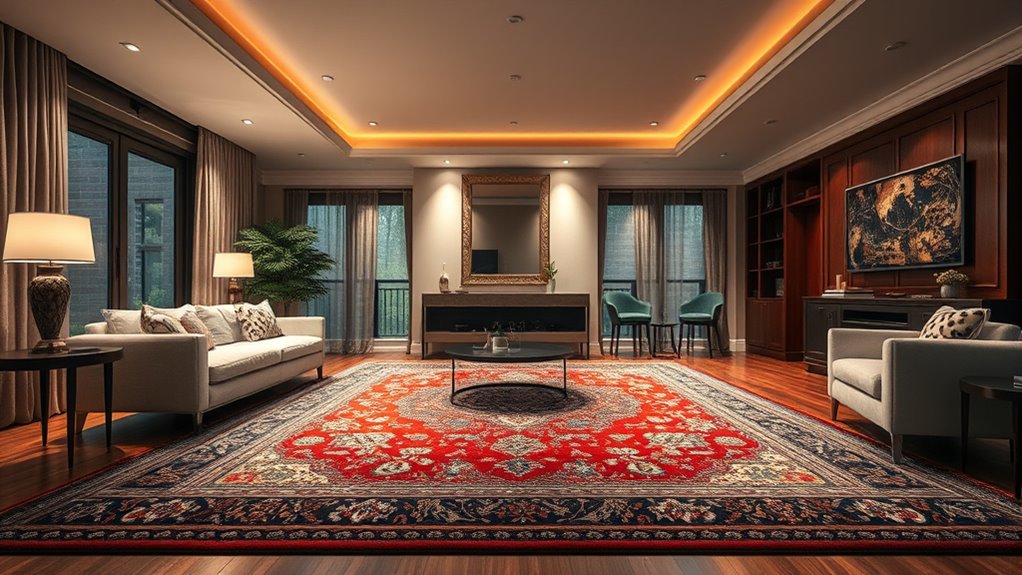
Choosing the right accent lights makes your rug stand out beautifully. Positioning them strategically brings out textures and details that might otherwise go unnoticed. When you understand how to select and place your lights, your rug becomes a true focal point in your space. Incorporating mindfulness techniques can help you better assess the ambiance and lighting needs of your area.
Selecting Perfect Accent Lights
To effectively highlight your rug with accent lights, you need to select fixtures that provide focused, adjustable illumination without overwhelming the space. Start by considering the color temperature; a warm white (around 2700K-3000K) creates a cozy, inviting atmosphere, while cooler tones (3500K-4000K) bring a modern, crisp look. Next, pay attention to bulb wattage—choose bulbs that are bright enough to emphasize your rug without causing glare or harsh shadows. Typically, 40 to 60-watt equivalents work well for accent lighting, but always check the fixture’s recommended wattage. Adjustable fixtures allow you to fine-tune the light intensity and angle, ensuring your rug is beautifully highlighted without overpowering the room. Proper selection of color temperature and bulb wattage is key to achieving the perfect gallery-style effect. Additionally, considering the impact of AI on tech can help you choose smart lighting options that can be controlled remotely for added convenience and customization.
Optimal Placement Strategies
Placing accent lights effectively around your rug guarantees it becomes a focal point without casting unwanted shadows or glare. To achieve this, consider your wall color; lighter walls reflect more light, so adjust your lighting angle to avoid washing out the rug’s colors. For darker walls, direct lighting can create dramatic contrast, emphasizing the rug’s details. Proper rug placement is essential—center the rug in the space and position accent lights to highlight its edges or central patterns. Use adjustable fixtures to fine-tune the light spread and intensity. Avoid placing lights directly in line with the rug to prevent glare. Instead, aim lights at a slight angle, ensuring even illumination that accentuates your rug’s design and complements your wall color. Additionally, choosing appropriate lighting with safety features like auto shut-off can prevent overheating and ensure a secure setup.
Enhancing Rug Textures
Accent lighting can dramatically enhance the texture of your rug by creating subtle shadows and highlights that reveal its intricate details. To showcase fiber textures effectively, position your lights to cast gentle oblique illumination, emphasizing raised or woven patterns. Using accent lights with adjustable brightness allows you to highlight specific areas and bring out vivid color contrasts. Here are four tips to improve rug texture visibility: 1. Focus lights at low angles to cast shadows that reveal fiber textures. 2. Use warm or neutral bulbs to enhance natural color contrasts. 3. Experiment with different distances to find the ideal spotlight effect. 4. Incorporate multiple light sources for layered highlighting of detailed patterns. Additionally, understanding lighting techniques can help you optimize the overall effect and make your rug’s textures stand out even more.
Incorporating Art Lighting Techniques
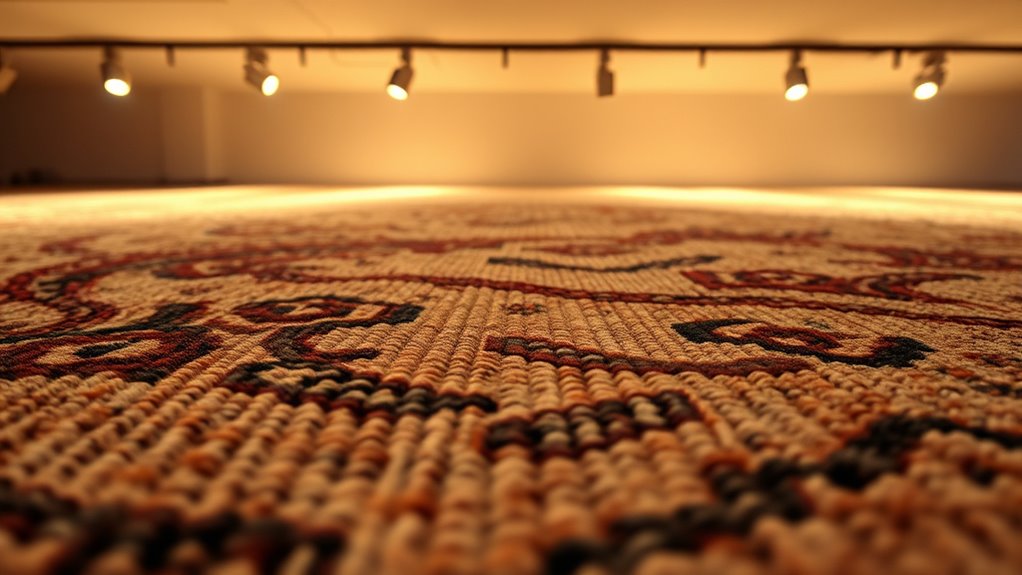
To make your rug stand out like a piece of art, consider highlighting its details with targeted lighting. Using layered lighting creates depth and emphasizes different textures and patterns. This approach helps you craft a dynamic, gallery-like atmosphere in your home. Additionally, just as entertainment venues like SeaWorld or Worlds of Fun adjust their hours to enhance visitor experience, you can adjust your lighting setup to optimize the impact of your artwork at different times of day. Operating hours can influence how well your lighting showcases the rug’s features during various periods.
Highlighting Rug Artwork
When it comes to showcasing rug artwork, strategic lighting can make all the difference. Proper illumination highlights the rug’s texture and details, drawing attention to its unique rug material. To achieve this, consider the following:
- Use adjustable spotlights to cast focused light directly on the rug’s focal points.
- Choose lighting color that complements the rug’s hues, enhancing its visual appeal.
- Position lights at a low angle to emphasize surface textures without causing glare.
- Avoid harsh, overly bright lights that can wash out the rug’s colors or create shadows.
- Incorporate professional lighting techniques to optimize the overall presentation and ambiance.
Using Layered Lighting
Layered lighting enhances the way rug artwork is displayed, combining different light sources to create depth and focus. By layering ambient, task, and accent lighting, you can highlight textures and details effectively. Start with ambient light for overall brightness, then add accent fixtures that direct attention to key areas. When selecting fixtures, verify compatibility with your existing decor and consider color coordination to avoid clashes. For example, choose warm-toned bulbs for a cozy feel or cooler tones for a modern look. Proper layering allows you to control shadows and highlights, making rug artwork more vibrant. Always check fixture compatibility with your dimmers and switches to ensure smooth operation. Additionally, choosing energy-efficient appliances can help reduce overall energy consumption in your home. Layered lighting gives your rug display a professional gallery vibe, emphasizing its beauty from every angle.
Maintaining and Adjusting Your Setup
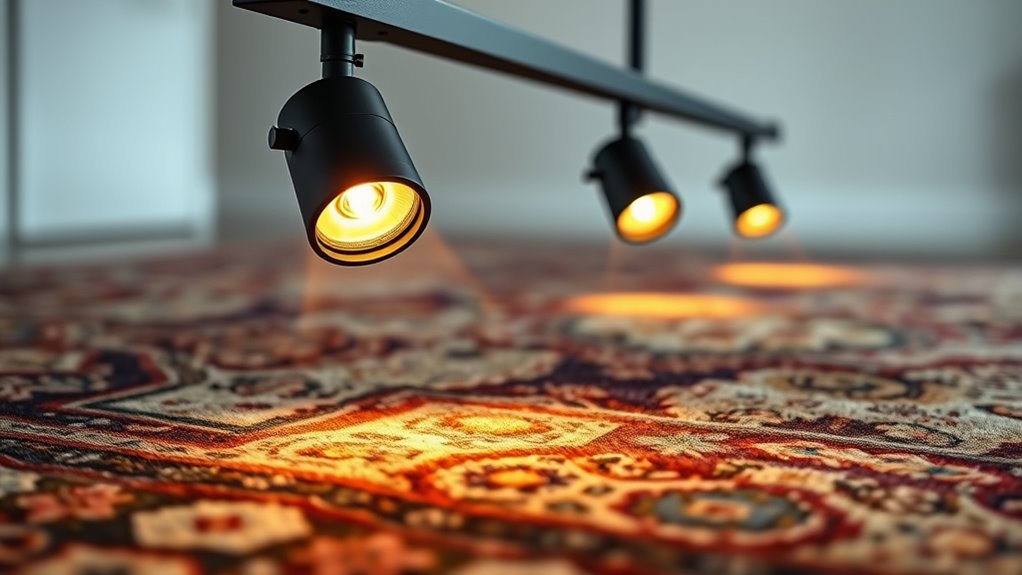
Regularly inspecting your rug lighting setup guarantees it continues to highlight your artwork effectively. Over time, bulbs may dim, fixtures shift, or creative color schemes may need adjustment. To keep everything ideal, follow these maintenance tips:
- Check for any flickering or dimming bulbs and replace them promptly.
- Adjust fixtures to ensure even lighting and prevent glare.
- Clean lenses and fixtures to maintain brightness and clarity.
- Experiment with creative color schemes to refresh your display and suit changing moods or artwork.
Frequently Asked Questions
What Are the Best Energy-Efficient Lighting Options for Gallery Rugs?
When choosing energy-efficient lighting options for gallery rugs, you want to focus on LED solutions, as they consume less power and last longer. Solar options are also great, especially if you want to reduce electricity use and add sustainability. These choices not only highlight your rug beautifully but also save energy. You’ll find that combining LED and solar lighting creates an eco-friendly, cost-effective way to showcase your artwork effectively at home.
How Can I Prevent Glare and Reflections on Shiny Rug Surfaces?
To prevent glare and reflections on shiny rug surfaces, you should focus on glare reduction and reflection control. Use adjustable, diffused lighting options like soft, warm LEDs to minimize harsh reflections. Position lights at angles that avoid direct reflection into your eyes or camera. Incorporate matte or textured rugs to reduce surface shine, and consider using dimmers to fine-tune light intensity, creating an even, glare-free illumination.
What Safety Precautions Should I Consider When Installing Gallery Lighting?
When installing gallery lighting, you should prioritize safety by carefully handling electrical wiring to prevent shocks or shorts. Make sure all wiring is properly insulated and secured. Follow fire safety guidelines by using appropriate fixtures and avoiding overloading circuits. Always turn off power before installation, and consider consulting a professional electrician. These precautions help guarantee your setup is safe, reducing risks of electrical hazards or fire.
Can Smart Lighting Systems Enhance Gallery-Style Rug Displays?
Did you know that smart lighting can boost your rug display’s visual appeal by up to 30%? When you use smart lighting for rug illumination, you can easily adjust brightness and color to highlight textures and patterns. These systems allow you to customize your gallery-style setup, making your rugs stand out beautifully while adding convenience. So, yes, smart lighting markedly enhances your rug display at home.
How Often Should I Clean or Replace My Gallery Lighting Fixtures?
You should clean your gallery lighting fixtures regularly, at least once every few months, to maintain ideal brightness and appearance. Fixture maintenance involves dusting and gentle cleaning to prevent dirt buildup. Replacement intervals depend on the fixture type and usage but generally range from 2 to 5 years for bulbs and components. Keep an eye on performance and signs of wear, and replace fixtures promptly to ensure consistent, beautiful lighting for your display.
Conclusion
Now that you’ve set up your gallery-style rug lighting, you’re ready to enjoy a space that feels both curated and cozy. Remember, lighting is like a good story—it needs adjustments and a touch of magic. Keep experimenting with different fixtures and angles, and don’t forget to dim the lights when you want a relaxed vibe, just like a classic film noir. Your home will become a timeless masterpiece, blending art and ambiance seamlessly.