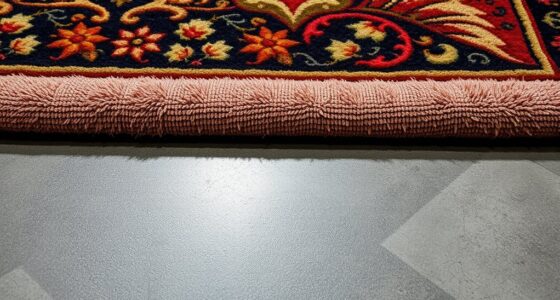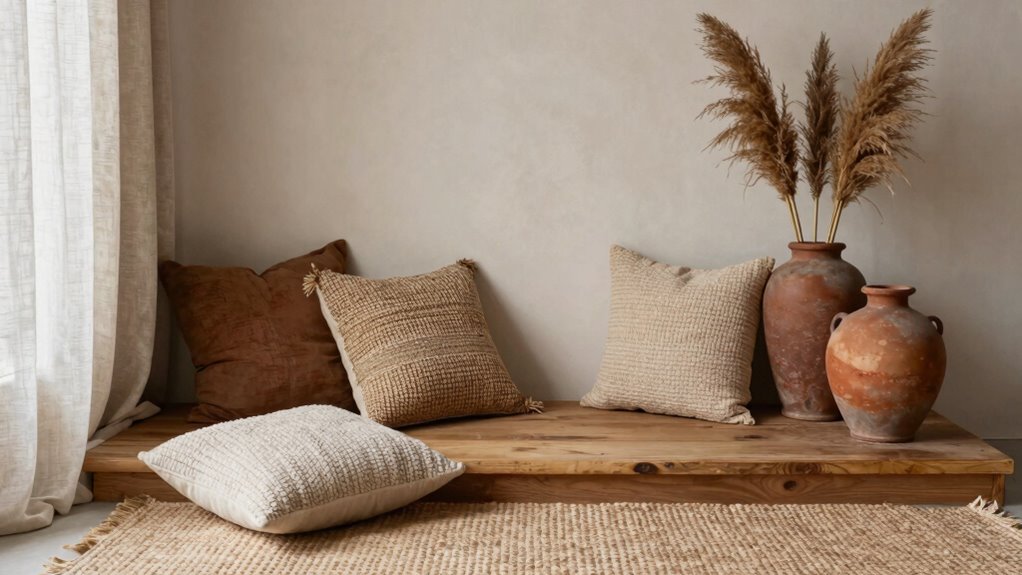

To make your meditation space more grounding through texture, incorporate soft, natural fabrics like cotton, wool, or velvet that invite touch and foster calmness. Combine different textures—smooth, rough, plush, and coarse—to create visual and tactile interest while maintaining harmony with calming earth tones. Add natural scents like sandalwood or lavender to enhance sensory connection. If you explore further, you’ll discover how to balance these elements for a truly tranquil and rooted environment.

Get furniture and decor delivered free with Prime
- Fast, free delivery on millions of items
- Prime Video, Amazon Music and more included
- Member-only deals all year
Key Takeaways
- Incorporate soft, plush fabrics like velvet or chenille to create a cozy, comforting environment.
- Use natural fibers such as cotton, linen, or wool to evoke stability and a grounding presence.
- Combine varied textures—smooth, rough, soft, coarse—for tactile interest without overwhelming senses.
- Coordinate earthy colors with textured elements to reinforce a sense of calm and stability.
- Add natural scent elements like cedar or lavender to enhance tactile sensations and deepen sensory connection.
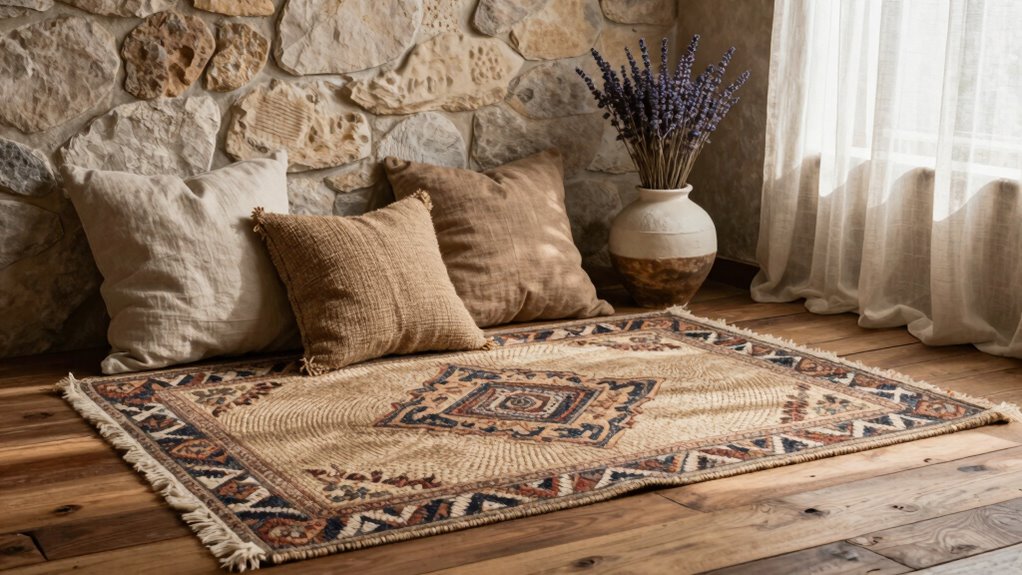
Creating a grounding meditation space involves more than just choosing the right colors or calming scents; it’s about engaging your senses to foster a sense of stability and presence. Texture plays an essential role in this process, providing tactile signals that anchor you in the moment. When you think about how to use texture effectively, consider how it complements other elements like color coordination and scent incorporation. These sensory details work together to create a cohesive environment that feels safe and inviting.
Engage your senses with textures, colors, and scents to create a calming, grounding meditation space.
Start by selecting textiles and materials that evoke calmness and stability. Soft, plush fabrics like velvet or chenille can give your space a cozy, comforting feel, inviting you to settle in and relax. Natural fibers such as cotton, linen, or wool bring a grounding element through their earthy textures, connecting you to nature even indoors. Incorporate a variety of textures—smooth, rough, soft, or coarse—to add depth and interest, which helps prevent your space from feeling monotonous or sterile. When you combine these tactile elements with a thoughtful color coordination, you create a visual harmony that enhances your overall experience. Earth tones like browns, greens, and warm neutrals work well to reinforce a sense of stability, while subtle contrasts in texture keep the environment engaging without becoming overwhelming.
Scent incorporation also plays a fundamental part in grounding your meditation space. Choose scents that evoke nature, such as cedar, sandalwood, or lavender, which can complement the textures you’ve introduced. As you breathe in these aromas, imagine them weaving through the tactile sensations around you—imagine the softness of a blanket combined with the scent of fresh pine. This multisensory interplay deepens your connection to the space, making it more immersive and calming. You can further reinforce this by placing textured objects like a woven basket, a wooden bowl, or a stone sculpture nearby, amplifying the tactile experience alongside the scent. Additionally, incorporating sensory harmony by aligning textures, scents, and visuals helps deepen your meditative focus. Paying attention to sensory balance ensures that no single element overwhelms the others, creating a harmonious environment. Incorporating natural textures can also enhance the authenticity and grounding effect of your space. Moreover, integrating tactile variety can stimulate your senses in a gentle way, enriching your meditative experience.
Ultimately, your goal is to craft a space where textures, colors, and scents work seamlessly to ground you. Use color coordination to create visual harmony, choosing hues that evoke calm and stability. Incorporate scent with natural, earthy aromas that complement the textures and reinforce a sense of connection to the earth. When these elements align, your meditation space becomes a sanctuary—a place where your senses are engaged, and your mind can settle into a peaceful, grounded state.
As an affiliate, we earn on qualifying purchases.
Frequently Asked Questions
What Textures Are Best for a Calming Meditation Environment?
Soft, natural textures work best for a calming meditation environment. You should incorporate decorative wall textures like woven or matte finishes to add warmth. Use textured meditation cushions made from plush or linen fabrics to enhance comfort and grounding. Incorporate subtle tactile elements like rugs or throws with gentle, textured surfaces. These choices create a cozy, inviting space that encourages relaxation, mindfulness, and a sense of stability during your meditation practice.
How Can I Incorporate Natural Textures Into My Space?
You can incorporate natural textures into your meditation space by using natural fibers like jute or wool for rugs and cushions. Choose organic materials such as linen or hemp for curtains and upholstery. These textures add earthy, grounding vibes, helping you feel more connected to nature. Incorporate wooden accents and stone elements as well, creating a harmonious environment that promotes relaxation and mindfulness.
Are There Specific Textures to Avoid in Meditation Areas?
You should avoid synthetic fabrics and shiny surfaces in your meditation space because they can be as disruptive as a thunderstorm. These textures tend to feel cold, harsh, and uninviting, making it harder to relax and connect. Stick to natural, soft textures like cotton, wool, or linen that promote calmness and grounding. Foregoing shiny surfaces helps maintain a peaceful atmosphere, ensuring your meditation space remains a sanctuary for tranquility.
How Does Texture Influence Meditation Focus and Relaxation?
Texture influences your meditation focus and relaxation by providing sensory stimulation and tactile comfort. When you incorporate soft, natural textures like plush rugs or smooth stones, you create a calming environment that grounds your senses. These textures help reduce distractions, allowing your mind to settle. Conversely, rough or overly busy textures might overstimulate you. Choose tactile elements that soothe and anchor your experience, fostering deeper relaxation and mindfulness during your meditation.
Can Texture Choices Help With Meditation for Stress Relief?
Yes, texture choices can help with meditation for stress relief by providing gentle sensory stimulation and enhancing visual appeal. Soft, plush fabrics or smooth wood surfaces invite touch, calming your nervous system. Incorporate varied textures like cozy rugs or textured wall art to create a soothing environment. These tactile elements help ground your mind, making it easier to focus inward and reduce stress during meditation.
Conclusion
By embracing varied textures, you create a sanctuary that anchors you like the roots of an ancient tree, grounding your spirit amidst life’s chaos. Just as the ocean’s waves find stability in the sand, your meditation space becomes a haven of calm through tactile comfort. Remember, the right textures invite serenity and deepen your connection to the present moment, turning your retreat into a sacred oasis where your soul can rest and recharge, much like a timeless, grounding embrace.
Fall Picks
fall essentials
As an affiliate, we earn on qualifying purchases.