

To create a restful bedroom for genuine rest and recovery, focus on optimizing both lighting and mattress choice. Use soft, warm lighting that gradually dims to signal relaxation, and block out external light with blackout curtains or masks. Select a mattress that supports your sleep position and provides proper pressure relief to prevent aches and stiffness. Combining these elements supports your natural sleep cycle, helping you wake refreshed. Keep exploring to discover even more tips for your perfect sleep sanctuary.
Key Takeaways
- Use soft, warm lighting and dimmable options to promote relaxation and support melatonin production before sleep.
- Incorporate blackout curtains or sleep masks to create a dark environment that enhances deep, restorative sleep.
- Select a mattress suited to your sleep position and body type to ensure proper support and reduce discomfort.
- Design the bedroom environment to minimize external light and noise disturbances for uninterrupted rest.
- Combine appropriate lighting with comfortable bedding and supportive furniture to create a calming sleep sanctuary.
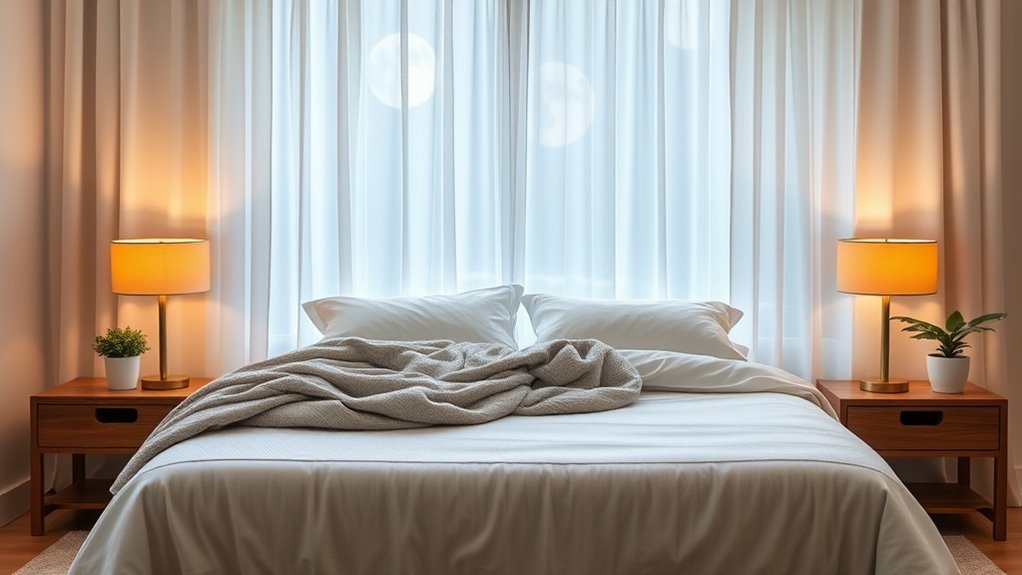
When it comes to bedroom lighting, think of it as the switch that influences your circadian rhythm. Bright, harsh lights before bed can trick your body into thinking it’s daytime, making it harder to wind down. Instead, opt for soft, warm lighting in the evening. Dimmable lamps, warm-colored bulbs, or even smart lighting that gradually dims as you approach bedtime can signal to your brain that it’s time to relax. Avoid blue light from screens at least an hour before sleeping, as it suppresses melatonin production, the hormone responsible for sleepiness. Instead, consider using blackout curtains or sleep masks to block out external light sources, ensuring complete darkness that promotes the deepest, most restorative sleep. Incorporating lighting adjustments into your sleep environment can further enhance your rest by supporting your natural sleep-wake cycle. Equally important is mattress selection, which forms the foundation of a good sleep environment. You might not realize it, but your mattress directly impacts your comfort and spinal alignment. An unsupportive mattress can lead to aches, pains, and restless nights. Choose one that suits your preferred sleep position and body type. For example, if you sleep on your side, a slightly softer mattress may cushion your hips and shoulders. If you’re a back or stomach sleeper, a firmer surface could provide the necessary support. Don’t skimp on quality—invest in a mattress that offers proper pressure relief and support, as it can considerably improve sleep quality and reduce waking up with stiffness or discomfort. Creating a sleep sanctuary isn’t just about aesthetics; it’s about fostering an environment that cues your body for rest. Proper bedroom lighting helps you wind down naturally and improves melatonin production, while selecting the right mattress ensures your body gets the support it needs for uninterrupted sleep. When these elements work in harmony, they help you fall asleep faster, stay asleep longer, and wake up feeling refreshed. By paying attention to these details, you’re not just designing a pretty bedroom—you’re cultivating a space that actively promotes health, recovery, and well-being.
Frequently Asked Questions
What Are the Best Plants to Improve Bedroom Air Quality?
You should consider adding air purifying plants like snake plants, pothos, and peace lilies to your bedroom. These sleep enhancing greenery remove toxins and improve air quality, helping you breathe better overnight. They’re easy to care for and won’t disrupt your sleep with strong scents. Incorporating these plants creates a healthier environment, making it easier to relax and achieve restful sleep every night.
How Can I Reduce Noise Disturbances in My Bedroom?
To reduce noise disturbances in your bedroom, focus on soundproofing techniques like adding thick curtains, weather stripping on windows and doors, and using rugs to absorb sound. Identify bedroom noise sources, such as street noise or household appliances, and address them directly. Consider installing acoustic panels or a white noise machine to mask residual sounds. These steps create a quieter environment, helping you relax and get better rest.
What Colors Promote Relaxation in a Sleep Sanctuary?
You should choose soothing color palettes and calming paint choices to promote relaxation in your sleep sanctuary. Soft, muted tones like gentle blues, tranquil greens, and warm neutrals help create a peaceful atmosphere. These calming colors reduce stress and make your bedroom feel more inviting for rest. Stick to matte finishes and avoid bright, stimulating hues to guarantee your space remains a true haven for restful sleep.
Which Furniture Materials Promote Better Sleep?
Think of your bedroom as a peaceful garden; the right furniture materials nurture your sleep. You should choose bed frame materials like solid wood or metal, which are sturdy and promote better sleep by reducing noise and movement. Opt for a mattress with natural or organic composition, like memory foam or latex, to guarantee comfort and breathability. These choices create a calm environment, helping you drift into restful slumber effortlessly.
How Does Bedroom Temperature Affect Sleep Quality?
You’ll find that maintaining a cool bedroom temperature, around 60-67°F, enhances sleep quality through effective temperature regulation. A comfortable environment helps your body synchronize its sleep cycle, making it easier to fall asleep and stay asleep longer. When your room is too warm or too cold, it disrupts this process, leading to restless nights. Prioritize good airflow and adjustable thermostats to keep your sleep environment ideal for recovery and rest.
Conclusion
Creating a sleep sanctuary tailored to your needs can dramatically improve your rest and recovery. Remember, studies show that a well-designed bedroom can boost sleep quality by up to 50%. By choosing calming colors, minimizing noise, and optimizing comfort, you set yourself up for better nights. Prioritize your sleep space, and you’ll wake up feeling refreshed and ready to conquer your day. Your perfect sanctuary is within reach—sweet dreams start with thoughtful design.