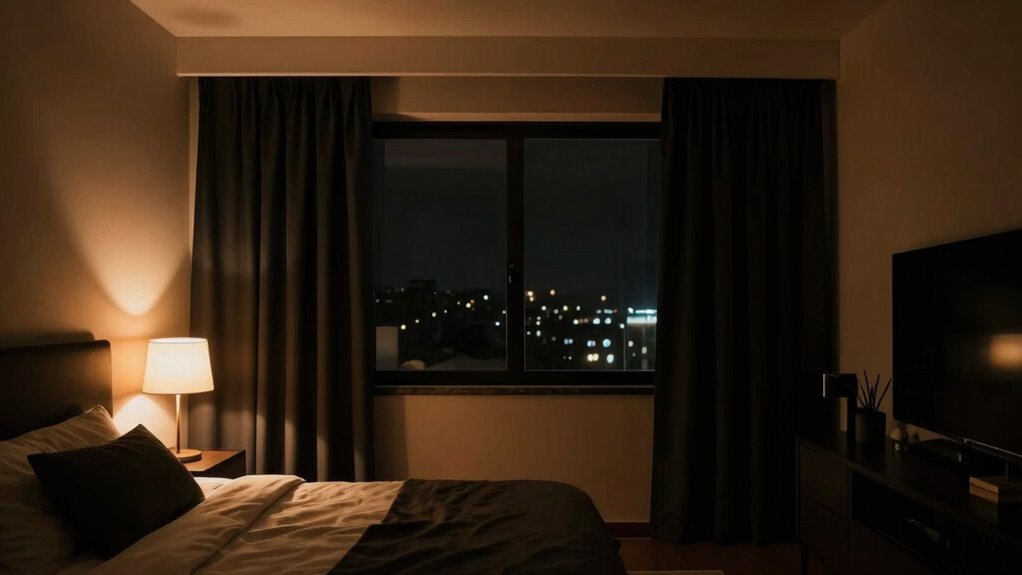
To reduce bedroom light pollution, start by replacing bright, harsh overhead lights with dimmable, warm-colored bulbs or bedside lamps with shades. Use smart lighting controls to gradually dim lights before bed and position fixtures away from your line of sight. Turn off screens at least an hour before sleep or use blue light filters. Keep indoor lights from shining into your room, and consider installing low-intensity nightlights for nighttime moves. Continuing will help you create a darker, more restful space.

Get furniture and decor delivered free — and shop member deals
- Fast, free delivery on millions of items
- Access to Prime Big Deal Days deals on October 6–7
- Prime Video, Amazon Music and more included
Key Takeaways
- Use dimmable, warm-colored lighting fixtures in the evening to create a relaxing, sleep-friendly environment.
- Incorporate bedside lamps with shades and indirect lighting to minimize glare and light spill.
- Employ smart lighting controls or timers to gradually dim lights before bedtime.
- Keep bright light sources away from the bed’s line of sight to reduce direct exposure.
- Turn off or cover electronic devices emitting blue light at least one hour before sleep.
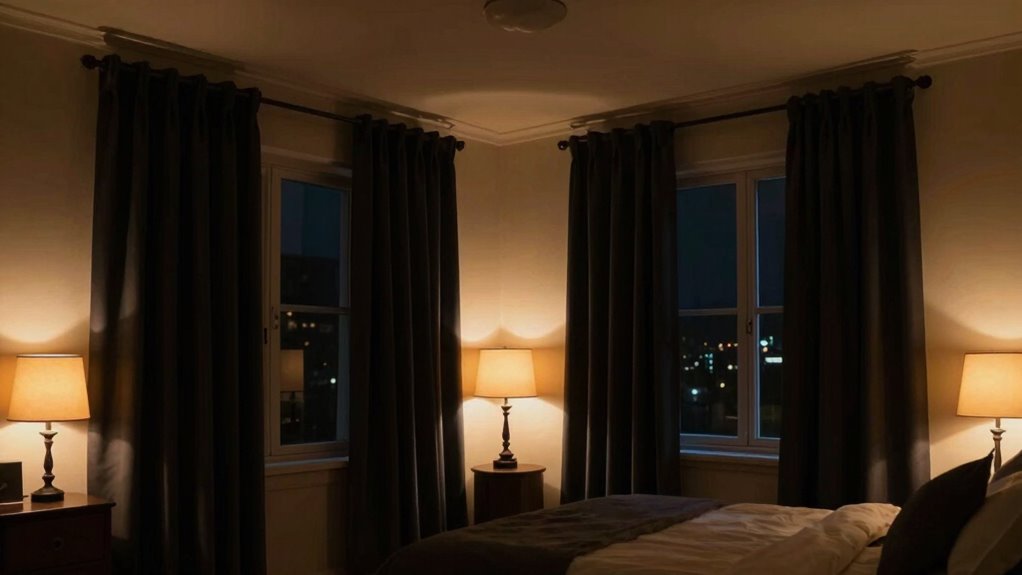
Have you ever noticed how bright lights from outside or even inside your bedroom can disrupt your sleep? These unwanted illuminations create a barrier to restful nights, making it harder for your body to wind down. To reduce bedroom light pollution from inside the home, you need to contemplate the role of nighttime ambiance and the impact of light color choices. Creating a calming environment helps signal to your brain that it’s time to rest, and controlling the light you’re exposed to is a big part of that.
Start by evaluating your current lighting setup. Bright overhead lights can be harsh, especially if they’re on late at night. Switch to dimmable fixtures or use lower wattage bulbs whenever possible. Incorporate warm-colored lights, like soft yellows or amber hues, which promote relaxation and don’t interfere with your melatonin production. Cold or blue-toned lights tend to be more stimulating and can delay sleep onset, so avoid them in the hours before bed.
Switch to dimmable, warm-colored lighting in the evening to promote relaxation and support healthy sleep.
Adjusting your nighttime ambiance is also essential. Instead of bright, glaring lights, opt for bedside lamps with shades that diffuse the light gently. This creates a cozy, inviting atmosphere that encourages relaxation. You might also consider using smart lighting systems that gradually dim as your bedtime approaches, mimicking natural sunset cues. These subtle changes can make a significant difference in how easily you fall asleep and stay asleep throughout the night.
In addition to choosing appropriate light colors, consider the placement of your lighting. Keep bright sources away from your line of sight when lying in bed. Use indirect lighting or wall sconces to reduce the direct glare and avoid shining bright lights directly into your eyes. If you need to get up during the night, use a low-intensity nightlight with a warm hue to prevent disrupting your circadian rhythm. Being mindful of lighting placement can also help minimize unnecessary light exposure that interferes with sleep. Paying attention to the role of nighttime lighting can further improve your sleep quality and overall well-being. Additionally, understanding how different light color choices influence your body’s natural rhythms can help you optimize your bedroom environment for better rest. Incorporating well-designed lighting controls can also enhance your ability to adjust lighting levels quickly and conveniently, further supporting healthy sleep habits. Moreover, utilizing light sensors or timers can automate the process of adjusting lighting, making it easier to maintain a sleep-friendly environment without manual effort.
Finally, be mindful of electronic devices. Screens emit blue light, which can severely impact your sleep quality. Turn off devices at least an hour before bed or use apps and settings that filter out blue light. Cover or turn off any unnecessary indoor lights that might shine into your room from other areas of your home.
As an affiliate, we earn on qualifying purchases.
Frequently Asked Questions
Can Blackout Curtains Completely Eliminate All Light Pollution?
Blackout curtains can substantially reduce light pollution but won’t eliminate all sources. Exterior streetlights might still shine through gaps or around curtains, and window tinting can help block residual light. You should also consider sealing any cracks around windows and using additional window treatments. Combining blackout curtains with window tinting offers the best protection against unwanted light, creating a darker, more restful bedroom environment.
Are There Specific Types of Indoor Lighting That Minimize Light Pollution?
Yes, choosing specific indoor lighting can minimize light pollution in your bedroom. Opt for warm, dimmable LED bulbs with low lumen output to reduce excess light. Use fixtures with opaque shades or indirect lighting to prevent light from escaping upward or outward. This approach guarantees sufficient illumination for comfort while minimizing glare and stray light, helping you create a darker, more restful environment that’s easier on your eyes and sleep quality.
How Does Light Pollution Affect Sleep Quality?
Light pollution disrupts your sleep by causing circadian disruption and melatonin suppression. When you’re exposed to excessive or blue light at night, your body’s internal clock gets confused, making it harder to fall asleep and stay asleep. This can lead to poorer sleep quality, leaving you tired and less refreshed. To improve your sleep, limit bright and blue light exposure before bed, and consider using dim, warm-colored lighting.
Can Using Dimmers Help Reduce Bedroom Light Pollution?
Absolutely, dimmer switches are your secret weapon against bedroom light pollution. By adjusting light intensity, you can turn your room into a cozy cave, perfect for sleep. No more blinding brightness at midnight—just smooth, subtle lighting. Plus, your eyes will thank you for the gentle shift, and your sleep quality will improve. So, go ahead, dim those lights and reclaim your peaceful slumber!
Are There Any Health Risks Associated With Indoor Light Pollution?
Yes, indoor light pollution can pose health risks; it disrupts your circadian rhythm, leading to sleep issues and fatigue. Excessive light can also affect indoor air quality by encouraging mold growth and attracting pests, impacting your health. Additionally, bright or noisy environments may cause noise disturbances, increasing stress levels. To protect your health, keep your bedroom dark and quiet at night, and guarantee good indoor air quality.
Conclusion
Think of your bedroom as a quiet pond at dusk. When you let excess light spill in, it’s like tossing stones that ripple outward, disturbing the peace. By sealing gaps, choosing dimmer bulbs, and using blackout curtains, you’re gently tossing pebbles that keep the water still and serene. Embrace these small changes, and you’ll create a tranquil sanctuary where darkness and calm can peacefully settle, allowing your mind to rest like the pond’s surface at night.
Evergreen bestsellers Picks
bestsellers
As an affiliate, we earn on qualifying purchases.