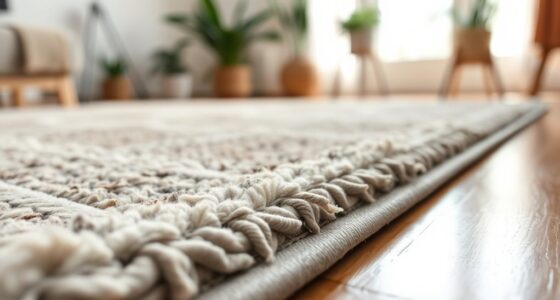
Using soft rugs and fabrics creates a mindful, comforting space you can turn to when you need emotional support. By choosing natural fibers like wool or cotton, you invite tactile warmth that soothes your senses and helps you feel grounded. Textural layers like fuzzy blankets or plush rugs promote relaxation and mindfulness, making your environment feel like a sanctuary. Keep exploring how these simple additions can transform your daily surroundings into a nurturing retreat.
Key Takeaways
- Incorporate natural fibers like wool and cotton to create inviting, tactile environments that promote relaxation and emotional security.
- Use layered textures such as chunky knits, velvets, or fleece to add sensory interest and encourage mindful tactile engagement.
- Select soft rugs and fabrics intentionally to foster a cozy atmosphere that supports mental well-being and reduces stress.
- Engage your senses through tactile interactions to enhance presence, mindfulness, and grounding in everyday spaces.
- Design spaces with textured textiles to nurture emotional health, promote resilience, and create a safe, comforting environment.

When it comes to creating a cozy and inviting space, soft rugs and fabrics play a crucial role. They’re more than just decorative elements; they’re tools for texture therapy, offering a tactile experience that soothes your senses and elevates your environment. Imagine stepping barefoot onto a plush, thick rug—your feet immediately feel the sensory warmth it provides. That warmth isn’t just physical; it’s emotional, creating a sense of security and comfort that invites you to relax fully. This tactile richness helps ground you in the moment, making your space feel more personal and nurturing.
Choosing the right textures is essential for maximizing this sensory warmth. Soft rugs made from natural fibers like wool, cotton, or alpaca bring a gentle, inviting feel underfoot. These materials are naturally insulating, trapping heat and providing a cozy foundation that encourages you to linger longer in your space. When you incorporate fabrics with varied textures—think chunky knits, velvets, or fleece—you create layers of sensory interest. These textures stimulate your touch, fostering a calming effect that can reduce stress and promote mindfulness.
The beauty of texture therapy lies in its simplicity. It’s about engaging your senses intentionally—feeling the softness of a blanket, running your fingers over a woven throw, or sinking into a plush area rug. These tactile interactions help you become more present in your environment, grounding your mind and calming your nerves. Soft fabrics and rugs serve as physical reminders to slow down, breathe, and appreciate the sensory experience. They invite you to touch, feel, and enjoy moments of comfort amid a busy day or a hectic household.
Furthermore, sensory warmth from soft textiles isn’t just about comfort; it also enhances your overall well-being. When you surround yourself with cozy textures, your body responds by releasing feel-good hormones, promoting relaxation and reducing anxiety. Whether it’s a thick shag rug in your living room or a velvety throw on your bed, each piece adds a layer of sensory richness that nurtures your mental and emotional health.
In addition, understanding the importance of personal and community resilience can help you create spaces that support mental health and emotional stability during stressful times. In essence, careful selection of soft rugs and fabrics transforms your space into a sanctuary of tactile delight. They provide more than visual appeal—they offer texture therapy, creating sensory warmth that soothes and comforts. When you prioritize these elements, you craft an environment that not only looks inviting but feels safe and nurturing to your body and mind.
Frequently Asked Questions
How Do I Choose the Safest Fabrics for Allergy Sufferers?
To select the safest fabrics for allergy sufferers, look for hypoallergenic fibers like organic cotton, bamboo, or silk, which diminish allergy risks. Opt for toxin-free textiles that avoid harsh chemicals and dyes. Always check labels to verify the fabrics are free from allergens and irritants. Regularly clean and maintain your textiles to minimize dust and mold buildup, creating a safer, more comfortable environment for allergy sufferers.
What Are Eco-Friendly Options for Soft Rugs and Fabrics?
Imagine you’re planting a garden where every choice nurtures the earth. Eco-friendly soft rugs and fabrics are like that garden—crafted from sustainable materials and natural fibers that support the environment. Look for products made from organic cotton, wool, jute, or hemp. These options are biodegradable, renewable, and free of harmful chemicals, helping you create a cozy space that’s gentle on both your skin and the planet.
How Do I Maintain and Clean Delicate Textured Textiles?
To maintain and clean delicate textured textiles, you should use gentle washing techniques like hand washing or a delicate cycle on your machine. Avoid harsh detergents; opt for mild, eco-friendly ones. For stain removal, treat spots immediately with a soft cloth and a gentle stain remover, avoiding scrubbing that could damage fibers. Regularly vacuum or shake out your textiles to keep them fresh and preserve their softness.
Can Soft Rugs Help Improve Indoor Air Quality?
Soft rugs can indeed lend a gentle touch to your home’s air quality. They act as natural filters, aiding in air purification by trapping dust, pet dander, and allergens, which often cause discomfort. Regular vacuuming enhances this benefit, reducing allergens and creating a fresher, more inviting space. So, by choosing cozy, well-maintained rugs, you subtly boost indoor air quality, making your environment more comfortable and healthful.
Are There Specific Fabrics Best for High-Traffic Areas?
For high-traffic areas, you should choose fabrics that prioritize durability considerations and stain resistance. Opt for tightly woven materials like nylon, polyester, or wool blends, as they stand up better to daily wear and tear. These fabrics are easier to clean, resist stains, and maintain their softness over time. Avoid delicate or plush fabrics that can quickly wear out or stain, ensuring your space stays comfortable and looking fresh.
Conclusion
By choosing soft rugs and fabrics, you’ll transform your space into a haven so cozy, it’s practically a hug from the universe itself. Every step will feel like walking on clouds, and every touch will melt your worries away like ice in the sun. Your home will become an extraordinary sanctuary where comfort reigns supreme—so irresistibly inviting, you’ll never want to leave. Get ready to indulge in a level of coziness that’s nothing short of legendary!