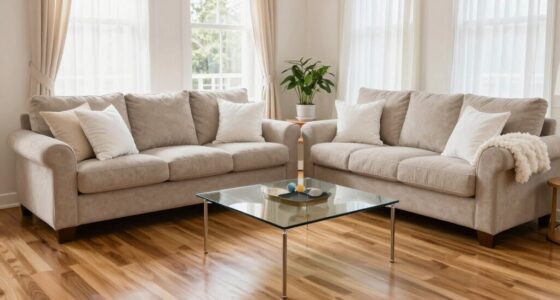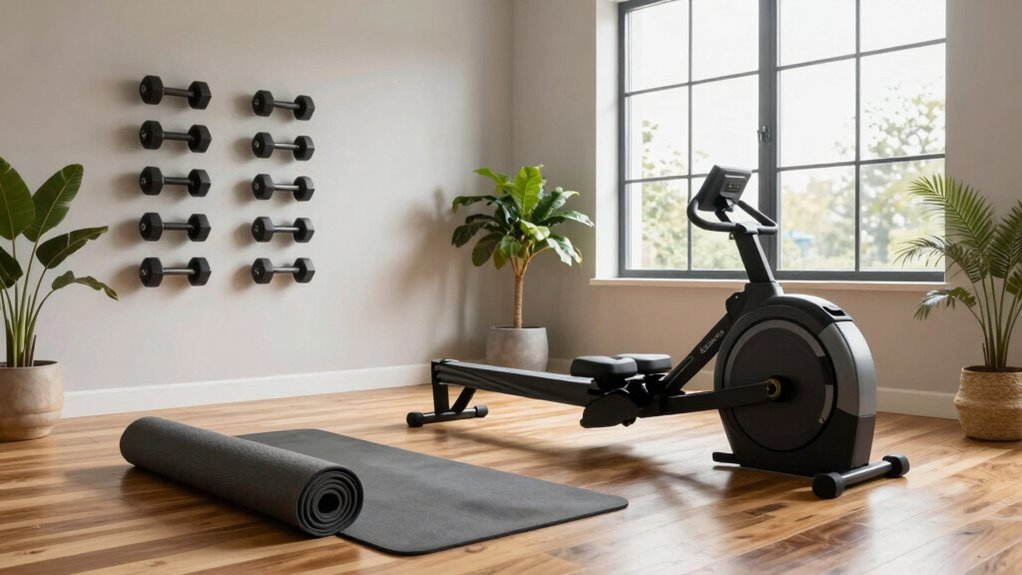

To make your home gym blend seamlessly, consider designing dedicated zones that match your space and fitness goals. Use foldable or multi-purpose equipment to save room and keep the area tidy. Incorporate stylish storage solutions and natural materials for a calming vibe. Personalize the space with inspiring decor and motivational elements to boost your motivation. Keep everything functional and accessible, so it feels like a natural extension of your home. Curious for more tips? Keep exploring to perfect your setup.

Get furniture and decor delivered free — and shop member deals
- Fast, free delivery on millions of items
- Access to Prime Big Deal Days deals on October 6–7
- Prime Video, Amazon Music and more included
Key Takeaways
- Integrate the gym seamlessly into your home layout using cohesive design elements and natural materials.
- Choose compact, foldable, or multi-purpose equipment to save space and maintain aesthetic flow.
- Use smart storage solutions like wall-mounted racks and hidden compartments to keep the area tidy.
- Design with inspiring decor, mirrors, and motivational elements to create an energizing, house-like atmosphere.
- Personalize the space to reflect your style and preferences, ensuring it feels like a natural part of your home.
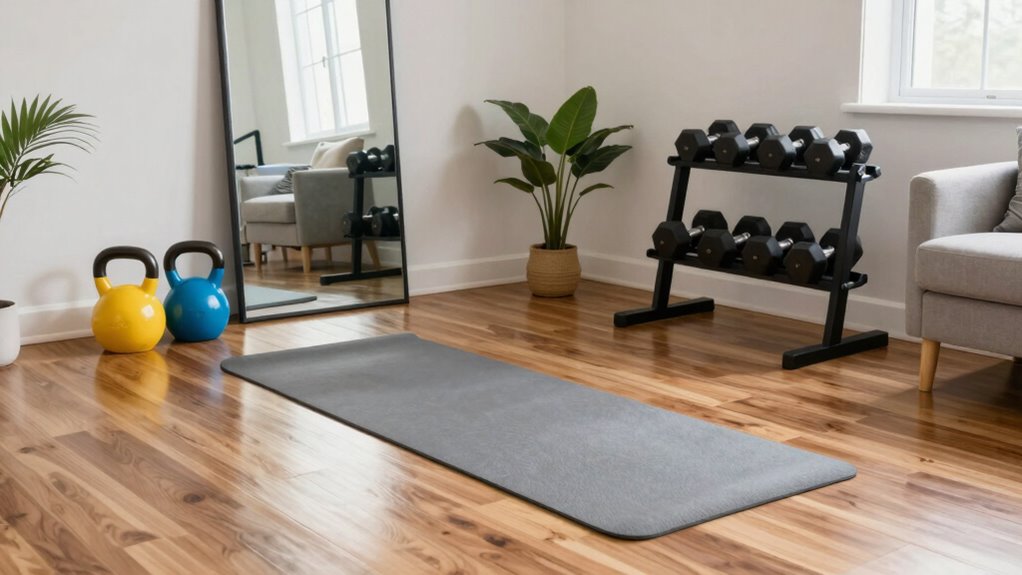
Creating a home gym is a practical way to stay fit without the hassle of commuting to a gym. When you set up your space, it’s important to think about how to make it efficient and visually appealing so it feels like a natural part of your home rather than a separate, cluttered area. To do this, start with a clear plan for your workout zone, considering the size of the space and your fitness goals. You’ll want to choose versatile equipment that fits your routine, but equally important are the smaller details—like your fitness accessories and storage solutions—that make the area functional and tidy.
Design your home gym to blend seamlessly with your home, focusing on smart storage, versatile equipment, and a motivating atmosphere.
Fitness accessories, such as resistance bands, yoga mats, dumbbells, and foam rollers, are essential for variety in your workouts. Instead of leaving these scattered around, invest in smart storage solutions. Use wall-mounted racks or hooks for resistance bands and jump ropes, and sleek shelves or bins for smaller items like water bottles, towels, and workout gloves. Proper storage not only keeps your space organized but also helps you quickly find what you need, so your workout isn’t interrupted by clutter. Keep frequently used accessories within easy reach, and store less-used items in less accessible areas to maximize space and maintain a clean look.
Incorporating smart storage solutions allows you to optimize your home gym without sacrificing style. Modular storage units or multi-purpose furniture with built-in compartments can help hide away bulky equipment when you’re not using it. For larger items like kettlebells or medicine balls, consider dedicated corner shelves or heavy-duty bins. If your space is limited, foldable or compact equipment, such as collapsible benches or fold-up treadmills, can save a lot of room. The key is to create a seamless flow between your workout zone and the rest of your home, so it doesn’t feel like a separate, isolated area but rather an integrated part of your living space. Additionally, incorporating elements of biodiversity and natural design can make your home gym more inviting and inspiring, promoting overall well-being. Including natural materials such as wood or stone accents can also enhance the calming atmosphere of your workout environment. Incorporating biophilic design principles can further enhance your connection to nature and improve your mental well-being. Furthermore, using sustainable and eco-friendly materials can contribute to a healthier environment and make your fitness space more sustainable.
Creating a functional space that aligns with your lifestyle encourages consistent use and enhances your overall exercise experience. Finally, keep in mind that your home gym should reflect your personality and workout preferences. Use decor, mirrors, or motivational posters to make the space inviting and energizing. When your fitness accessories are well-organized with smart storage solutions, and your space looks good, you’ll be more motivated to work out regularly. Building a home gym that still belongs to your house involves thoughtful planning—selecting the right equipment, organizing with style, and ensuring everything is easily accessible, so your fitness routine becomes a natural and enjoyable part of your daily life.
As an affiliate, we earn on qualifying purchases.
Frequently Asked Questions
How Much Space Is Needed for a Home Gym?
You’ll want at least 50 to 100 square feet for a functional home gym, depending on your workout needs. Make sure to include space for exercise mats and storage solutions for equipment. Clear, open areas allow safe movement and effective workouts. If space is limited, prioritize versatile equipment and smart storage to maximize your workout area without sacrificing comfort or safety.
What Are Budget-Friendly Gym Equipment Options?
You can create an effective home gym with budget-friendly options like affordable accessories and multi-use equipment. Look for resistance bands, dumbbells, or a jump rope to start, as they’re inexpensive and versatile. Consider a foldable bench or adjustable kettlebell for multi-use functionality. These options maximize your space and budget, giving you a solid workout setup without breaking the bank. Prioritize versatile pieces to get the most out of your investment.
How Can I Soundproof My Home Gym?
To soundproof your home gym, start by applying soundproofing techniques like sealing gaps around doors and windows with weatherstripping. Use noise reduction materials such as acoustic foam panels or thick rubber mats on floors to absorb impact noise. Adding heavy curtains or wall hangings can also dampen sound. Combining these methods creates a quieter environment, keeping noise levels down and preserving your home’s peace.
Are There Safety Tips for Small Home Gyms?
Think of your small home gym as a delicate flower—you need to nurture safety to keep it thriving. Prioritize personal safety by keeping pathways clear and secure, ensuring proper equipment placement to prevent accidents, and using mats for stability. Always inspect your gear regularly, and avoid overloading weights. These safety tips help you stay injury-free, so your workout remains a positive experience, not a trip to the emergency room.
How Do I Maintain Cleanliness in My Home Gym?
To keep your home gym clean, establish regular cleaning routines like wiping down equipment after each use and mopping floors weekly. Stay organized by using storage solutions for weights, mats, and accessories, which helps prevent clutter and accidents. Regularly check and clean your equipment to guarantee safety and longevity. By maintaining these routines, you create a hygienic, inviting space that motivates you to stay consistent with your workouts.
Conclusion
Building a home gym that seamlessly fits into your house is totally doable, and it can boost your fitness routine without sacrificing space or style. Surprisingly, some experts believe that creating a dedicated workout area actually increases motivation and consistency. So, not only does your gym become a functional part of your home, but it might also make sticking to your fitness goals easier. With a little planning, your home gym can be both practical and inspiring.
Fall Picks
fall essentials
As an affiliate, we earn on qualifying purchases.