Wool rugs naturally shed fibers as part of their manufacturing process and initial use, helping them settle and strengthen. However, persistent or excessive shedding can signal underlying issues like poor manufacturing quality, damage, or wear from foot traffic and environmental conditions. If your rug continues to shed heavily or shows signs of fraying, it’s a red flag. Keep exploring to discover how to tell the difference between normal shedding and problem signs, and what to do next.
Key Takeaways
- Wool rugs shed naturally during initial months due to loose fibers from manufacturing and fiber resilience.
- Excessive or persistent shedding beyond a few weeks may indicate manufacturing flaws, damage, or improper care.
- Structural issues like frayed edges, thinning areas, or visible damage signal potential red flags needing professional evaluation.
- Using gentle vacuuming, proper placement, and maintaining humidity can minimize shedding and extend rug lifespan.
- Seek professional help if shedding worsens, fibers fray, or the rug shows signs of structural damage despite proper maintenance.
Why Do Wool Rugs Shed Naturally?
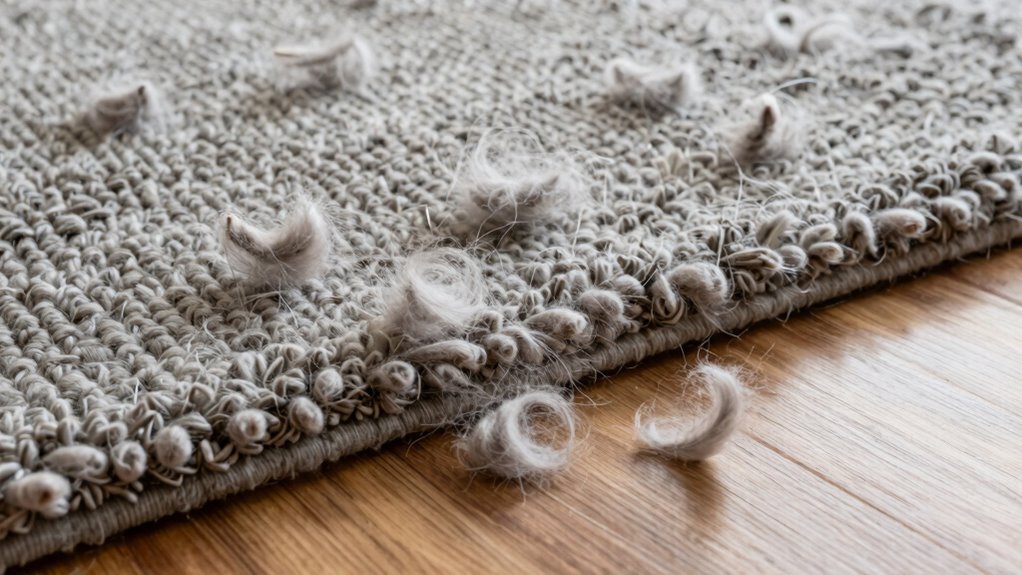
Wool rugs shed naturally because loose fibers become dislodged during the manufacturing process and as the rug ages. This shedding is a normal part of wool fiber’s characteristics, tied to its natural rug durability. Wool fibers are resilient, but they can loosen over time with foot traffic and cleaning. The shedding occurs as tiny fibers work their way out of the rug’s surface, especially during the initial months. This process helps the rug settle and develop its full strength. Additionally, fiber resilience contributes to the shedding process as the fibers adjust and settle into their proper position. Keep in mind, shedding doesn’t mean your rug is poorly made; it simply reflects the inherent qualities of wool fiber. With proper care and patience, your wool rug will maintain its durability and beauty despite some natural shedding.
What Causes Excessive Shedding in Wool Rugs?

Excessive shedding in wool rugs often results from manufacturing issues, improper care, or environmental factors. Poor wool fiber health weakens the fibers, making them more prone to shedding. When rug pile density is uneven or too loose, fibers are less securely held in place, increasing shedding over time. Low-quality wool or improper dyeing processes can also compromise fiber integrity, leading to excessive fiber loss. Additionally, frequent foot traffic, vacuuming with too much suction, or harsh cleaning methods can damage the wool fibers and reduce their strength. Environmental factors like high humidity or direct sunlight can weaken fibers further, causing more shedding. To minimize this, choose high-quality wool rugs with good pile density and follow proper care routines to protect fiber health. Recognizing fiber integrity and maintaining optimal environmental conditions can significantly reduce shedding issues.
How Manufacturing Flaws Lead to Wool Rug Shedding
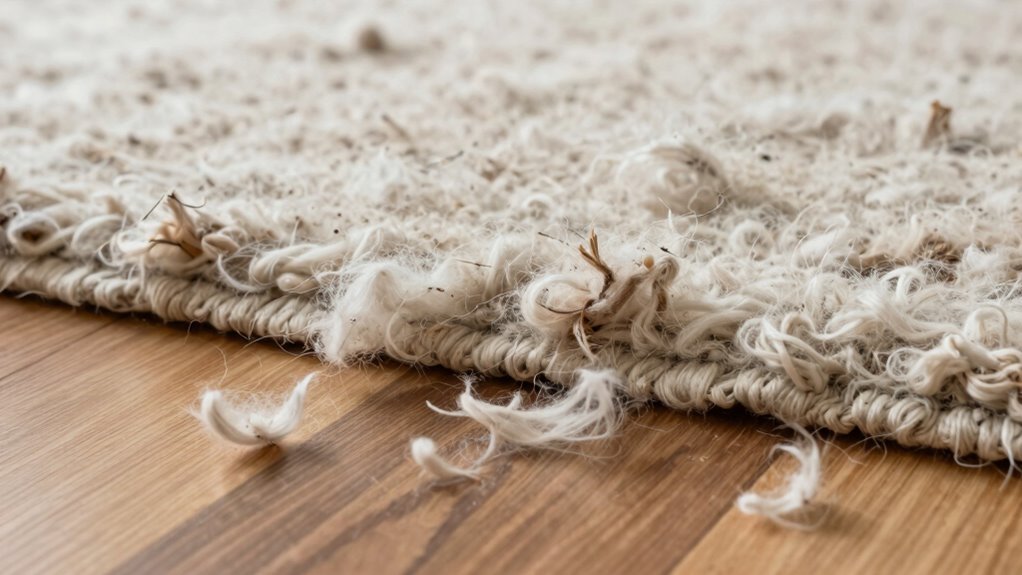
Manufacturing flaws can cause wool rugs to shed more than they should. When poor processes, low-quality wool, or inadequate finishing are involved, fibers become loose and fall out easily. Understanding these issues helps you identify rugs prone to excessive shedding. Additionally, free-floating fibers can sometimes be mistaken for shedding but are actually loose fibers not securely attached during manufacturing.
Poor Manufacturing Processes
When rugs are produced with poor manufacturing practices, flaws can easily develop that cause shedding over time. Inconsistent fiber density weakens the rug’s structure, making fibers more prone to fall out. Additionally, dye stability issues can lead to uneven color retention, which may loosen fibers and increase shedding. Manufacturing flaws often occur during the weaving process, resulting in weak spots that compromise durability.
| Fiber Density | Dye Stability |
|---|---|
| Uneven fiber distribution weakens rug structure | Poor dye adherence causes fibers to loosen |
| Weak spots increase shedding | Color fading can indicate compromised fibers |
| Low fiber density reduces durability | Dye instability can lead to fiber breakage |
| Inconsistent weaving leads to flaws | Both issues contribute to shedding over time |
Low-Quality Wool Selection
Choosing low-quality wool for rug production can markedly increase shedding because inferior fibers are often weaker and less resilient. Poor wool fiber quality results in fibers that break easily, leading to more shedding over time. Additionally, low-grade wool often isn’t dyed properly, which affects the overall durability of the fibers. Rug dyeing techniques used on inferior wool may weaken the fibers further, making them more prone to shedding. You might notice that rugs made from subpar wool shed excessively even after initial use. To spot low-quality wool, consider the following:
- Thin or brittle fibers
- Uneven or faded dyeing
- Loose or fuzzy fibers
- Shorter fiber length overall
Choosing higher-quality wool with proper dyeing techniques ensures a more durable, shedding-resistant rug.
Inadequate Finishing Techniques
Even if you select high-quality wool, poor finishing techniques during manufacturing can cause significant shedding issues. Inadequate finishing techniques, such as improper trimming or loose fiber binding, weaken the rug’s structure, making fibers more prone to shed. The way a rug is finished directly impacts its durability and appearance. Poor rug design choices in the finishing stage—like uneven edges or sloppy bindings—can leave fibers loose and easily pulled out over time. These manufacturing flaws compromise the rug’s integrity, leading to persistent shedding that may seem unavoidable. To avoid this, look for rugs with tightly secured edges, smooth finishes, and well-executed rug design. Proper finishing ensures the rug’s fibers stay in place, reducing shedding and extending its lifespan.
How Damage and Wear Make Your Wool Rug Shed More

Damage and wear directly increase wool rug shedding by loosening the fibers and disrupting the rug’s structure. Over time, foot traffic, dirt, and mishandling weaken the fibers, making them more prone to shedding. Proper fiber care becomes essential to maintain the integrity of your wool variety rug. When fibers become frayed or broken, shedding accelerates. Additionally, neglecting regular maintenance and education can lead to more rapid deterioration. You might notice: – Frayed edges or worn patches – Matted or flattened areas – Loose fibers on the surface – Pilling or fuzziness These signs indicate damage that compromises the rug’s structure. Regular maintenance and gentle cleaning help prevent excessive shedding. Once damage occurs, shedding can become more persistent, so addressing issues early is key to preserving your wool rug’s beauty and longevity.
How to Tell If Your Wool Rug’s Shedding Is Normal or a Red Flag
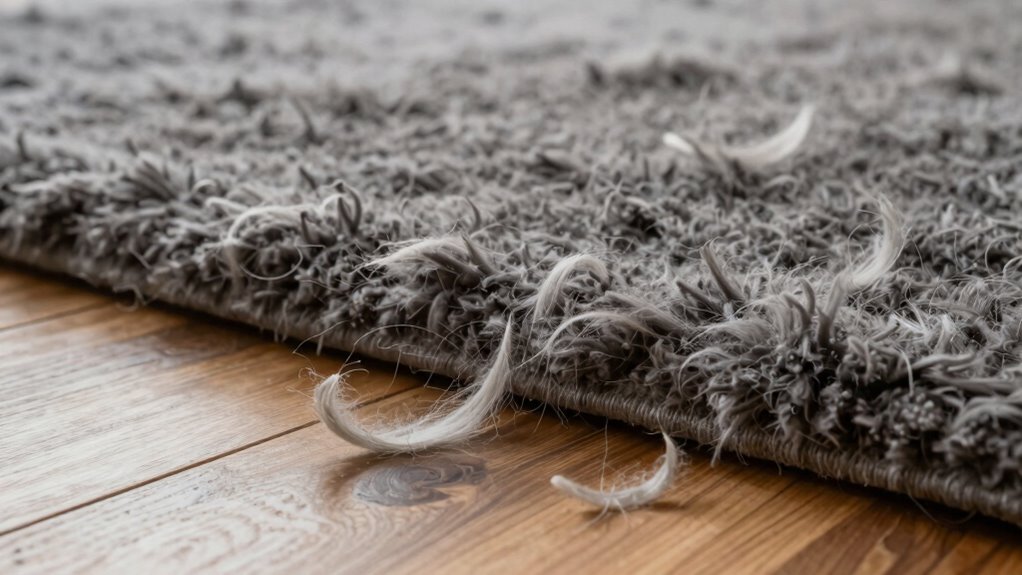
It’s common for new wool rugs to shed some fibers initially, but understanding when shedding is normal or a red flag can save you frustration. Normal shedding often occurs due to fiber dyeing processes, where loose fibers are a natural part of the dyeing method. If shedding continues beyond a few weeks or worsens, it could signal a problem. Check if excessive fibers are coming loose despite proper rug padding, which helps reduce friction. Also, observe if the fibers are uniform or if there are large fibers coming loose, indicating possible damage. A rug that sheds heavily despite gentle vacuuming and proper care may need professional assessment. Monitoring shedding patterns helps you determine whether it’s temporary or a sign that your rug needs attention. Additionally, understanding fiber bonding can help you assess whether shedding is likely to diminish over time or indicate a defect.
Tips to Prevent and Minimize Wool Rug Shedding

To keep shedding under control, make sure you vacuum your wool rug regularly to remove loose fibers. Proper rug placement also helps reduce stress on the fibers, preventing excess shedding. By following these simple steps, you can maintain a cleaner, longer-lasting wool rug. Additionally, understanding the origin and history of wool rugs can help you select high-quality pieces that are less prone to shedding over time.
Regular Vacuuming Practices
Regular vacuuming is essential for reducing wool rug shedding and keeping your rug looking its best. Regularly removing loose fibers prevents buildup that can lead to dye fading or color bleeding over time. Use a vacuum with a gentle suction setting to avoid damaging the fibers. Make sure to vacuum in different directions to loosen trapped fibers. Avoid aggressive brushing or harsh brushes, which can cause more shedding. Additionally, maintaining proper humidity levels can help reduce fiber loss, as overly dry environments can increase shedding fiber integrity. Here are some tips:
- Use a vacuum with a beater bar set to low or off for delicate wool fibers
- Vacuum frequently, especially in high-traffic areas
- Avoid vacuuming too aggressively to prevent damage
- Protect your rug from excess dirt and moisture to preserve dye integrity
Proper Rug Placement
Proper rug placement plays a crucial role in minimizing wool shedding by reducing unnecessary friction and wear. To achieve this, carefully consider your rug’s placement in the room. Avoid placing the rug where high traffic or frequent furniture movement occurs, as constant rubbing can loosen fibers and increase shedding. Proper furniture positioning helps distribute weight evenly, preventing areas from becoming overly compressed or worn. Use furniture pads under heavy pieces to reduce pressure points and friction. Additionally, ensure the rug is fully supported and lies flat without bunching or slipping, which can cause fibers to loosen over time. Understanding fiber behavior and the importance of proper rug placement can help you significantly lessen wool shedding and maintain the rug’s appearance longer.
Signs You Need to Call a Professional About Your Wool Rug

If your wool rug is shedding excessively despite regular vacuuming, it’s a clear sign that you should call a professional. Over time, persistent shedding can indicate issues with fiber quality or the need for specialized rug cleaning. When fibers continue to come loose, it can damage the rug’s structure and appearance. Understanding fiber quality can help you determine whether shedding is a normal occurrence or a sign of deeper issues. You should consider professional help if you notice: – Excessive shedding that doesn’t improve after routine cleaning – Frayed or unraveling fibers – Unusual texture or stiffness – Visible damage or thinning areas A rug cleaning expert can assess whether the shedding relates to fiber quality or underlying damage. Addressing these issues early guarantees your wool rug stays beautiful and durable for years to come.
When to Seek Help for Wool Rug Shedding Problems

Knowing when to seek help for wool rug shedding is essential to preserving its beauty and longevity. If shedding becomes excessive or continues despite regular vacuuming, it’s time to consult a professional. Sometimes, switching to synthetic alternatives can reduce shedding, but persistent problems may indicate underlying issues. Proper rug pad benefits also play a role; a quality pad can stabilize the rug and minimize fiber loss. If shedding worsens or shows signs of damage, such as bald patches or fraying, don’t delay seeking expert advice. Professionals can assess whether the shedding is normal or if restoration is needed. Regular maintenance and understanding rug construction can help prevent ongoing shedding issues. Addressing shedding early prevents further damage, helping your rug stay vibrant and durable for years to come.
Frequently Asked Questions
Can Environmental Conditions Affect Wool Rug Shedding?
Environmental conditions can definitely affect wool rug shedding. Poor storage conditions, like high humidity or temperature fluctuations, can weaken fiber quality and cause more shedding over time. Additionally, exposure to sunlight or moisture can damage the fibers, leading to increased shedding. To minimize this, keep your wool rug in a stable environment with controlled humidity and proper storage, ensuring the fiber quality stays intact and shedding remains minimal.
Does Washing or Cleaning Increase Shedding Risk?
Think of your wool rug like a sponge soaking up dust. Washing or cleaning too often can loosen fibers, increasing shedding. I once cleaned my rug weekly, and it shed more than usual; now I clean only when needed. Dust buildup weakens fibers over time, so maintaining a proper cleaning frequency helps reduce shedding. Regular gentle cleaning preserves your rug’s beauty without triggering excessive fiber loss.
Are Certain Wool Rug Styles More Prone to Shedding?
Yes, certain wool rug styles are more prone to shedding, especially those made with lower fiber quality or intricate rug designs. Cheaper fibers tend to break down easily, leading to more fibers shedding over time. Additionally, rugs with complex or high-pile designs often shed more because their fibers are less tightly woven. To reduce shedding, opt for high-quality wool and simpler rug designs that use tightly woven fibers.
How Long Does Typical Wool Rug Shedding Last?
You can expect wool rug shedding to last for several weeks to a few months, depending on fiber types and rug textures. During this time, loose fibers from the wool may appear as you vacuum or walk on the rug. Regular gentle cleaning helps reduce the shedding, but it’s normal to see some fiber loss initially. Keep in mind, high-pile or shaggy textures might shed longer than tightly woven styles.
Does Age Impact the Shedding Severity of Wool Rugs?
Yes, age can impact how much your wool rug sheds. Over time, fiber quality might decline, leading to increased shedding, especially if the rug’s dye stability weakens with age. As the rug gets older, loose fibers become more noticeable, but proper maintenance and choosing high-quality materials can minimize this. Keep an eye on shedding patterns to determine if aging is affecting your rug or if other issues are at play.
Conclusion
While some shedding is normal, excessive fuzz can signal underlying issues like manufacturing flaws or damage. Think of it like a warning sign—if your wool rug sheds beyond what’s typical, it might be time to act. Investigate its condition, address wear early, and seek professional help if needed. Remember, a well-maintained rug not only looks better but also lasts longer, proving that catching problems early truly makes all the difference.