
In the profile of Master Ali Khodadadi, you’ll discover how his early life in a traditional village shaped his passion for weaving and cultural storytelling. He combines ancient techniques with modern innovations like digital design and natural dyes, facing challenges from industrialization while preserving his heritage. His projects showcase a deep respect for cultural symbols and craftsmanship, emphasizing sustainability. Exploring his journey will reveal much about the future of traditional weaving and its continued importance—there’s more to uncover if you keep going.
Key Takeaways
- Master Ali Khodadadi emphasizes the cultural significance of textiles as storytelling tools rooted in tradition.
- He integrates ancient weaving techniques with modern technology to preserve and innovate traditional crafts.
- Khodadadi advocates for digital documentation and online platforms to safeguard and promote traditional weaving.
- He collaborates with artisans to blend cultural motifs with contemporary designs, ensuring relevance and sustainability.
- Preservation efforts include using natural dyes, textile restoration, and educating younger generations about cultural heritage.
Early Life and Inspirations Behind Master Khodadadi’s Craft

Growing up in a small village surrounded by lush landscapes and traditional weaving communities, Master Khodadadi developed an early fascination with textile arts. He learned that each pattern and color carried deep textile symbolism, representing stories, beliefs, and cultural values. His weaver’s philosophy emphasizes that textiles are more than just fabric—they’re a language conveying history and identity. From a young age, he absorbed these meanings, understanding that every stitch reflected a connection to his heritage. This foundation shaped his approach to weaving, where every piece embodies a story and a spiritual connection to tradition. His early life immersed him in a world where textile symbolism and personal philosophy intertwined, inspiring his lifelong dedication to preserving and innovating his craft. Additionally, he considers weaving techniques to be a vital part of cultural preservation, ensuring that traditional methods are passed down through generations.
The Unique Techniques That Define His Weaving Style

You’ll notice that Master Khodadadi’s weaving features intricate knot patterns that create stunning textures and designs. He also exclusively uses natural dyes, giving his pieces vibrant colors rooted in tradition. These techniques set his work apart and showcase his mastery of the craft. Incorporating artistic techniques such as detailed knotting and dyeing methods further elevates the uniqueness of his creations.
Intricate Knot Patterns
The weaving maestro’s signature style hinges on his mastery of intricate knot patterns, which transform simple threads into complex, visually mesmerizing designs. These knots carry deep textile symbolism, representing unity, eternity, and cultural stories woven into every piece. You’ll notice how each knot embodies weaving symbolism, conveying messages beyond mere decoration—signifying spiritual beliefs, social status, or ancestral heritage. Master Khodadadi’s techniques involve precise, deliberate knotting that creates texture and depth, making each textile a narrative of tradition and artistry. His patterns don’t just serve aesthetic purposes; they connect history, identity, and meaning. By weaving these intricate knots, he preserves cultural stories and elevates weaving into a powerful symbolic language that invites viewers to interpret its hidden messages. Understanding these techniques enhances appreciation of textile symbolism and its role in cultural expression.
Use of Natural Dyes
What sets Master Khodadadi’s weaving style apart is his mastery of natural dyes, which imbue each textile with rich, authentic hues. He carefully selects plants and minerals, leveraging his understanding of color chemistry to produce vibrant, enduring colors without synthetic additives. His approach emphasizes the harmony between dye and fabric, ensuring the shades penetrate deeply and last over time. By controlling factors like pH and temperature, he achieves precise tones that enhance the intricate patterns he weaves. This dedication to natural dyes not only preserves traditional methods but also results in textiles with a unique depth and character. Your appreciation grows as you notice how each color tells a story—an authentic, time-honored craft rooted in nature’s palette.
Challenges Faced in Preserving Traditional Weaving Methods

Preserving traditional weaving methods faces numerous challenges in today’s rapidly changing world. Modernization and industrialization threaten cultural preservation, making it harder for artisans to pass down skills. Young generations often prefer new industries over traditional crafts, risking the loss of valuable techniques. Additionally, artisan collaboration becomes difficult as fewer weavers practice these methods, leading to skills fading. Efforts to cybersecurity protect digital records of artifacts and techniques are increasingly important to safeguard cultural heritage.
The Role of Cultural Heritage in His Artistic Journey
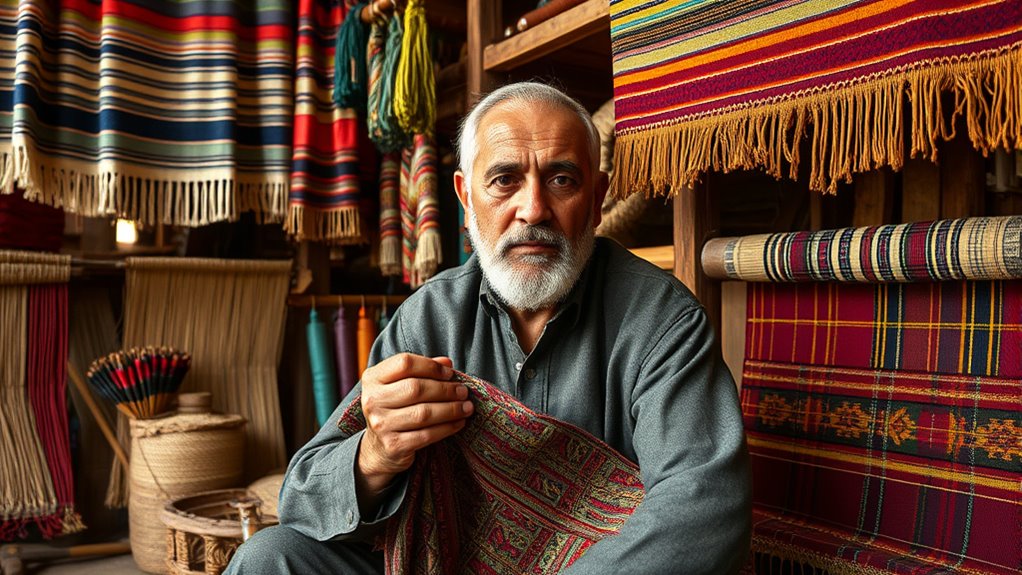
Cultural heritage deeply influences his artistic journey, serving as both a foundation and inspiration for his work. You can see this in his use of textile symbolism, where traditional patterns and motifs tell stories and carry meaning passed down through generations. His commitment to cultural preservation drives him to incorporate these elements into modern weaving, keeping ancient techniques alive. By weaving cultural symbols into his textiles, he’s not only honoring tradition but also making it relevant today. This connection to heritage shapes every piece he creates, reminding you of the importance of maintaining cultural identity amid changing times. His work becomes a bridge between the past and present, ensuring that cultural stories continue to resonate through his craftsmanship. Recognizing the cultural significance of his motifs helps deepen appreciation for his artistry and the stories embedded within each textile.
Notable Projects and Collaborations Throughout His Career
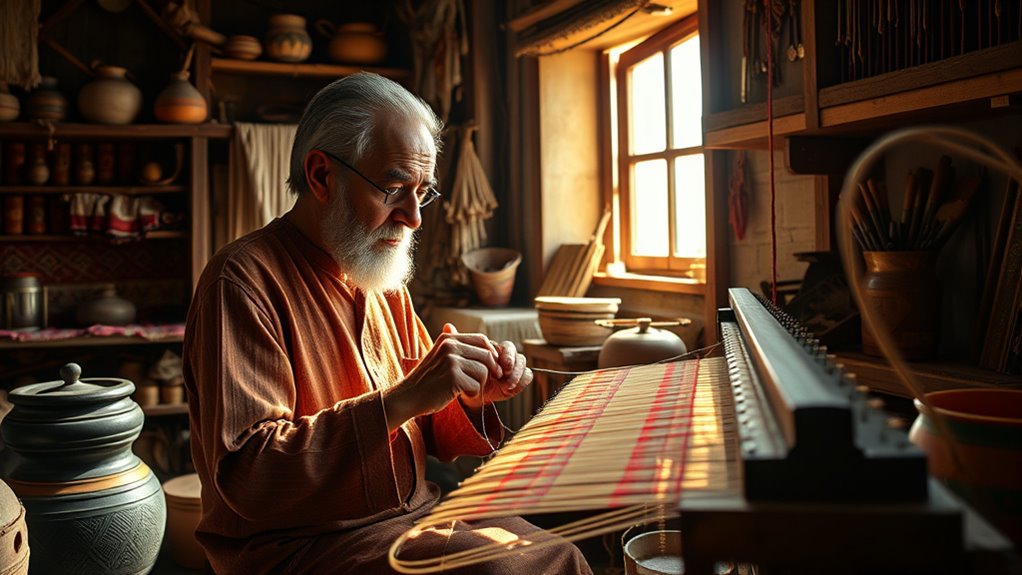
Throughout his career, he has brought his deep respect for cultural heritage into a series of notable projects and collaborations that showcase the versatility of his craft. His work often explores textile symbolism, blending traditional motifs with contemporary designs to create meaningful pieces. One standout project involved collaborating with artisans from different regions, emphasizing weaving symbolism’s role in conveying identity and history. These collaborations highlight his ability to fuse cultural narratives with innovative techniques. You’ll see how he elevates simple materials into powerful storytelling tools through intricate patterns and symbolic motifs. His projects serve as a testament to the richness of woven traditions, demonstrating how weaving symbolism can connect past and present, making each piece a vibrant reflection of cultural continuity. Additionally, understanding the legislative environment surrounding cultural crafts can help in securing funding and recognition for such projects.
The Significance of Materials and Patterns in His Work
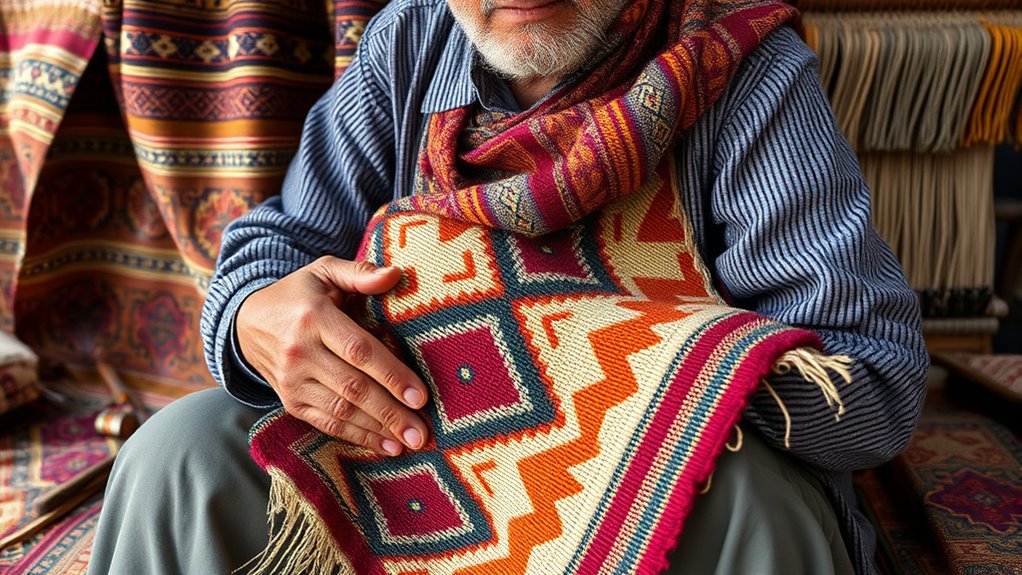
Materials and patterns play a essential role in shaping the meaning and impact of his work. You notice how textile symbolism conveys cultural stories, while color symbolism evokes deep emotions. The choice of fibers reflects tradition and innovation, creating a tactile connection with viewers. Patterns are carefully selected to tell stories or symbolize concepts, making each piece meaningful. Here’s a glimpse into his approach: Vetted in art, the deliberate selection of materials and patterns enhances storytelling and emotional resonance.
| Material | Pattern | Emotional Impact |
|---|---|---|
| Silk and wool | Geometric and floral motifs | Elegance and vitality |
| Natural fibers | Repeated symbols of nature | Serenity and growth |
| Bright dyes | Symmetrical designs | Joy and celebration |
| Earth tones | Asymmetrical, freeform patterns | Grounding and stability |
| Textured fabrics | Cultural symbols integrated | Heritage and pride |
His mastery lies in blending these elements to evoke powerful stories and feelings.
Advice for Aspiring Weavers and Future Generations

To succeed as a weaver, focus on developing your technical skills and understanding the stories behind each pattern and material. Immerse yourself in textile conservation techniques to preserve your work and learn dye chemistry to create vibrant, lasting colors. Patience is essential—you’ll need to master intricate weaving methods and experiment with natural dyes. Stay curious about traditional practices and adapt them with modern insights. Connect with other weavers to exchange knowledge and techniques that deepen your craft. Remember, each piece tells a story, so approach your work with respect and dedication.
Exploring natural dye sources can inspire more authentic and environmentally friendly creations.
The Future of Traditional Weaving in a Modern World
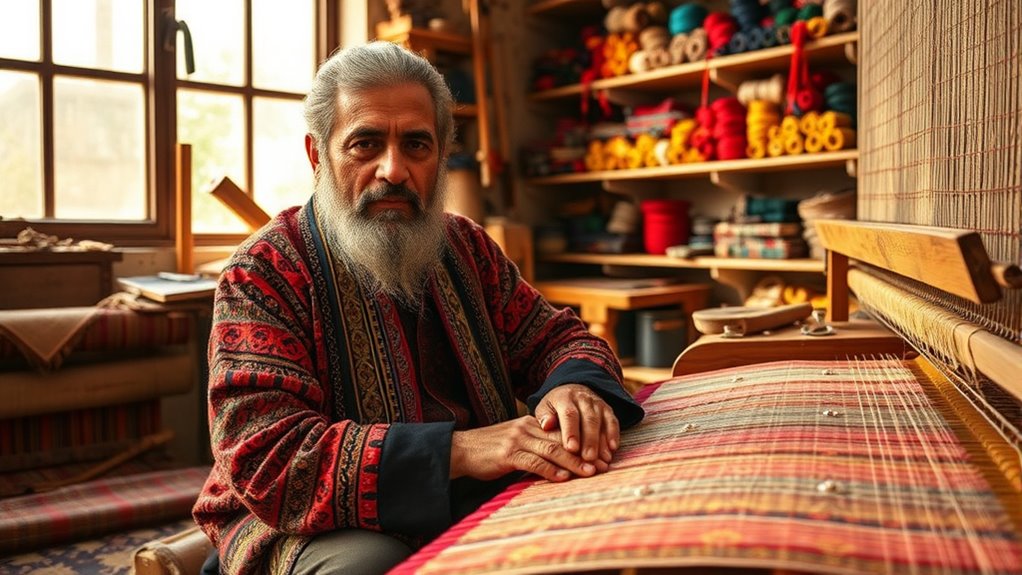
As traditional weaving faces a changing world, you have the chance to help safeguard cultural heritage while embracing new technologies. By adapting to market trends, you can guarantee these crafts stay relevant and sustainable. Balancing tradition with innovation is key to shaping the future of weaving.
Preserving Cultural Heritage
Despite the rapid pace of modern life, preserving traditional weaving remains crucial to maintaining cultural identity. Your efforts in textile restoration help save intricate patterns and techniques passed down through generations. These textiles carry deep cultural symbolism, telling stories and representing beliefs unique to your community. As you work to preserve this heritage, consider how each woven piece connects the past with the present. Visualize vivid, handwoven fabrics adorned with symbols that embody history and tradition. Your dedication ensures that future generations can experience these cultural treasures. By safeguarding these textiles, you protect an essential part of your identity and history. Every restored piece becomes a living testament to your culture’s resilience and enduring artistry. Incorporating UV filters and color protection in preservation techniques can further enhance the longevity of these delicate textiles.
Embracing Technological Innovation
Innovations in technology are opening new possibilities for traditional weaving communities, blending age-old techniques with modern tools. These advancements help with textile preservation by guaranteeing authentic methods are documented and safeguarded digitally. They also enable weavers to adapt to changing markets, reaching broader audiences through online platforms and digital marketing. By incorporating new technologies, you can improve production efficiency without sacrificing cultural integrity. Modern tools like digital loom designs or dyeing techniques can enhance creativity while maintaining traditional aesthetics. Embracing these innovations ensures your craft remains relevant, attracting younger generations and new customers. Additionally, space and organization strategies can help manage the increased influx of digital content and inventory, making operations more streamlined. Ultimately, blending tradition with innovation allows you to preserve your cultural heritage while thriving in a competitive, modern economy.
Adapting to Market Trends
To stay relevant in today’s evolving market, traditional weavers must actively adapt to emerging trends and consumer preferences. Embracing market diversification allows you to reach new audiences and sustain your craft. Incorporate textile symbolism that connects modern designs with cultural stories, creating deeper emotional appeal. You might experiment with blending traditional patterns with contemporary aesthetics or using sustainable materials to attract eco-conscious buyers. By recognizing shifting tastes, you can innovate while honoring heritage. Visualize your work displayed in diverse settings:
- Vibrant market stalls blending old and new styles
- Modern fashion runways showcasing woven accessories
- Art galleries highlighting textile symbolism in contemporary art
- Online platforms expanding global reach
- Collaborations with designers embracing market diversification
Staying adaptable ensures your weaving remains relevant and appreciated in a modern world.
Frequently Asked Questions
What Inspired Master Khodadadi to Pursue Weaving as a Lifelong Passion?
You’re curious about what sparked Master Khodadadi’s lifelong passion for weaving. His deep connection to cultural heritage fuels his artistic inspiration, as he aims to preserve traditional craftsmanship through every thread. Watching his ancestors’ work and feeling the rich history behind each pattern motivated him to continue this art form. His dedication transforms cultural stories into beautiful textiles, inspiring others to appreciate and uphold this timeless craft.
How Does He Innovate Within Traditional Weaving Practices?
You see, Master Khodadadi innovates within traditional weaving by blending new techniques with age-old methods, ensuring textile preservation while honoring cultural exchange. He experiments with modern dyes and patterns, adding fresh perspectives without losing the essence of tradition. Through this approach, he keeps weaving vibrant and relevant, inspiring others to appreciate its cultural significance and adapt it creatively for future generations.
What Are His Thoughts on the Global Appreciation of Iranian Textiles?
You might wonder how he views the global appreciation of Iranian textiles. He believes these textiles hold deep cultural significance, showcasing Iran’s rich history and artistry. He’s optimistic about increased artistic recognition worldwide, which helps preserve traditional techniques while inspiring innovation. To him, this global appreciation not only honors Iran’s craftsmanship but also elevates its cultural legacy, encouraging new generations to value and continue these beautiful weaving traditions.
How Does He Mentor the Next Generation of Weavers?
You mentor the next generation of weavers by actively engaging in youth mentorship programs, sharing your extensive knowledge and techniques. You emphasize skill preservation, encouraging young artisans to learn traditional methods while adapting to modern trends. By fostering a supportive environment, you inspire passion and dedication, ensuring these timeless crafts continue thriving. Your hands-on approach helps sustain cultural heritage and motivates emerging talent to carry forward the legacy of Iranian textiles.
What Impact Does Modern Technology Have on His Craft?
Did you know that 85% of textile preservation now involves digital techniques? Modern technology transforms Ali Khodadadi’s craft by enhancing traditional weaving with digital tools, making intricate designs more precise and accessible. You see, digital techniques help preserve centuries-old techniques and adapt them for future generations. This fusion of old and new keeps the art alive, ensuring that traditional weaving continues thriving in a rapidly changing world.
Conclusion
You’ve seen how Master Khodadadi keeps traditional weaving alive, blending passion with skill. Did you know that over 60% of artisans like him face challenges in preserving their craft? By supporting artisans and learning about their stories, you help keep these beautiful traditions thriving. So, embrace the artistry behind every weave and continue to celebrate cultural heritage—because your interest truly makes a difference in securing their future.