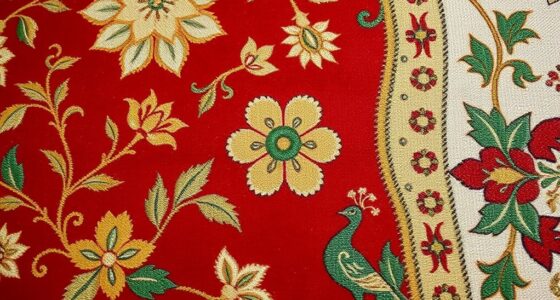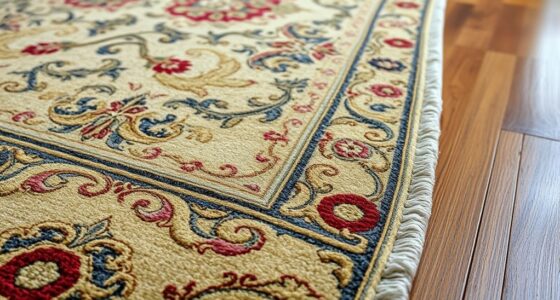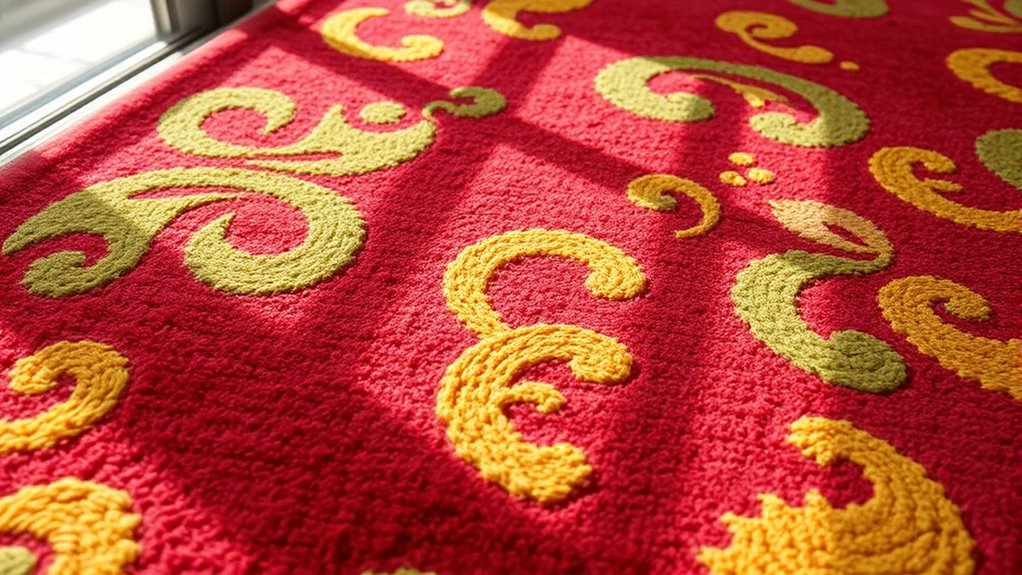

Many believe UV light instantly ruins vegetable-dyed carpets, but fading is a slow process influenced by factors like sunlight intensity, dye composition, and fiber type. Prolonged exposure, especially to UV rays, gradually weakens the pigments and causes colors to fade over time. Proper care can slow this process, and understanding what affects dye stability helps you protect your rug. If you want to uncover the truth behind UV fading and how to preserve your carpets, keep exploring.
Key Takeaways
- Not all UV exposure causes immediate fading; effects depend on UV intensity, duration, and dye chemistry.
- Indoor lighting typically causes slower fading than direct sunlight, but prolonged exposure still degrades vegetable dyes.
- Proper care, including UV protection like curtains or window films, can significantly slow natural dye fading.
- Natural vegetable dyes are inherently less stable than synthetic dyes and more susceptible to environmental factors.
- Fading results from chemical degradation over time, not solely from UV exposure, emphasizing the importance of preservation practices.
Understanding Vegetable Dyes and Their Properties
Vegetable dyes are natural colorants derived from plants, roots, fruits, and leaves. These dyes work through chemical reactions that bind pigments to fibers, creating vibrant colors. However, their stability depends on the dye’s molecular structure, which can be sensitive to environmental factors. When exposed to light, moisture, or heat, chemical reactions may cause pigment degradation, leading to fading over time. Unlike synthetic dyes, vegetable dyes often lack the chemical stability needed for long-lasting color, making them more vulnerable to fading. Understanding these properties helps you recognize why vegetable-dyed carpets might change in appearance. Proper care can slow pigment degradation, but it’s important to remember that natural dyes inherently have a different resilience level than synthetic alternatives. Additionally, artificial and natural dyes differ significantly in their chemical composition and stability, affecting their longevity. Recognizing the environmental sensitivities of vegetable dyes can help in maintaining their appearance over time. For example, light exposure can accelerate fading, highlighting the importance of protecting dyed textiles from direct sunlight. Knowing about oxidative reactions can also inform better preservation practices to extend the vibrancy of vegetable dyes.
The Impact of Sunlight on Natural Pigments
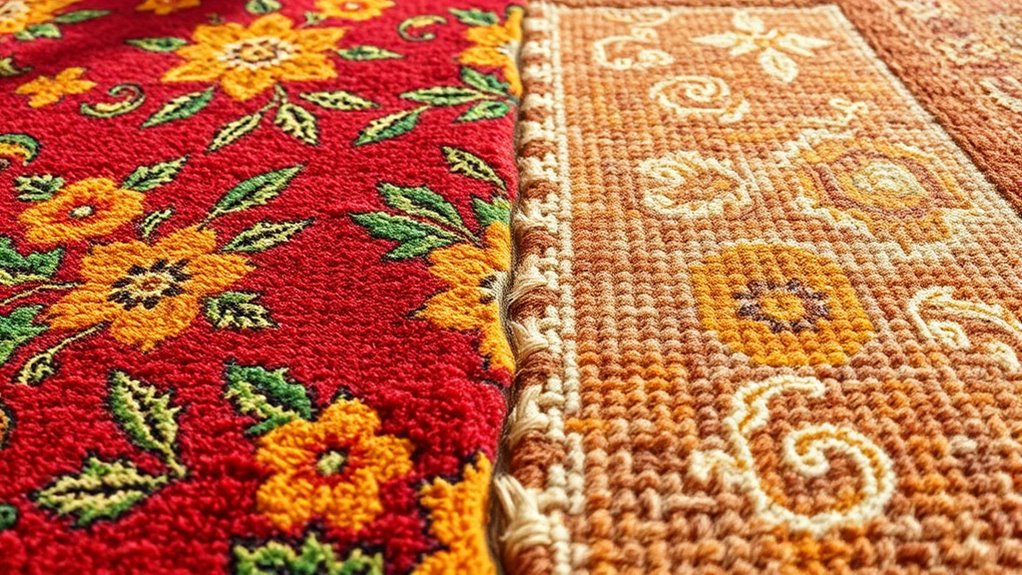
Sunlight plays a significant role in the fading of natural pigments, directly impacting their vibrancy over time. The dye chemical composition determines how pigments react to the sunlight spectrum, which includes UV, visible, and infrared light. Some natural dyes contain compounds that are more sensitive to specific wavelengths, making them prone to quicker fading when exposed to certain parts of the spectrum. For example, carotenoids may degrade under prolonged sunlight, losing their bright hues. Understanding how the sunlight spectrum interacts with a dye’s chemical makeup helps explain why some vegetable-dyed carpets fade faster than others. The spectral sensitivity of dyes influences their longevity when exposed to sunlight, highlighting the importance of proper care. It’s not just UV light causing the fading; visible light can also weaken certain pigments. Recognizing the effects of sunlight exposure on natural dyes can aid in developing better preservation techniques. The photodegradation process explains how prolonged exposure leads to chemical changes that weaken dye vibrancy. Additionally, the chemical stability of dyes can vary based on their botanical source, affecting how quickly they fade under sunlight. This knowledge helps you better protect and preserve natural-dyed textiles from sun damage.
Common Misconceptions About UV Fading
Many believe that UV exposure always causes rapid fading, but the truth depends on the dye and material. Factors like dye stability and protective coatings play a big role in how well something resists UV damage. Understanding these points can help you better preserve your items from fading. Additionally, implementing storage solutions that shield items from direct sunlight can significantly extend their vibrant appearance. For example, certain UV‑resistant coatings can further protect vegetable‑dyed carpets from fading over time. Proper lighting conditions also contribute to maintaining color integrity and should be considered in preservation strategies. Recognizing the traits of protective coatings can aid in choosing the most effective method for conservation.
UV Exposure Effects
A common misconception about UV fading is that all exposure to ultraviolet light will instantly ruin your items. In reality, UV exposure effects depend on factors like UV intensity and the duration of exposure, especially under indoor lighting. You might think a little sunlight won’t cause damage, but prolonged or intense UV can weaken dyes over time. Don’t be fooled—indoor lighting often has lower UV levels, making fading a slow process rather than immediate. Understanding this can help you protect your cherished carpets. Remember, it’s not just sunlight that causes fading; even artificial UV from indoor lighting can contribute gradually. Additionally, awareness of fading mechanisms can help you better understand how your carpets age over time. Recognizing the effects of UV exposure on dyes is essential for proper maintenance and preservation, and knowing how light conditions influence fading can guide your care routines. Properly managing light exposure can significantly extend the life of your dyed carpets.
Dye Stability Factors
A common misconception is that UV exposure alone determines how quickly dyes fade, but in reality, several other factors influence dye stability. The type of dye, often derived from natural dye extraction, plays a significant role. Natural dyes vary in their resistance to light, with some fading faster than others regardless of UV levels. Additionally, eco friendly dyeing processes, which focus on gentle, sustainable methods, can enhance dye stability by reducing chemical vulnerabilities. Fiber type also matters; tightly woven, natural fibers tend to hold color better. Proper dye fixation during the natural dye extraction process helps improve longevity. Overall, understanding these dye stability factors helps you appreciate that UV fading isn’t the sole culprit in dye degradation, and that the initial dyeing techniques greatly impact carpet longevity.
Factors That Influence Color Stability in Carpets
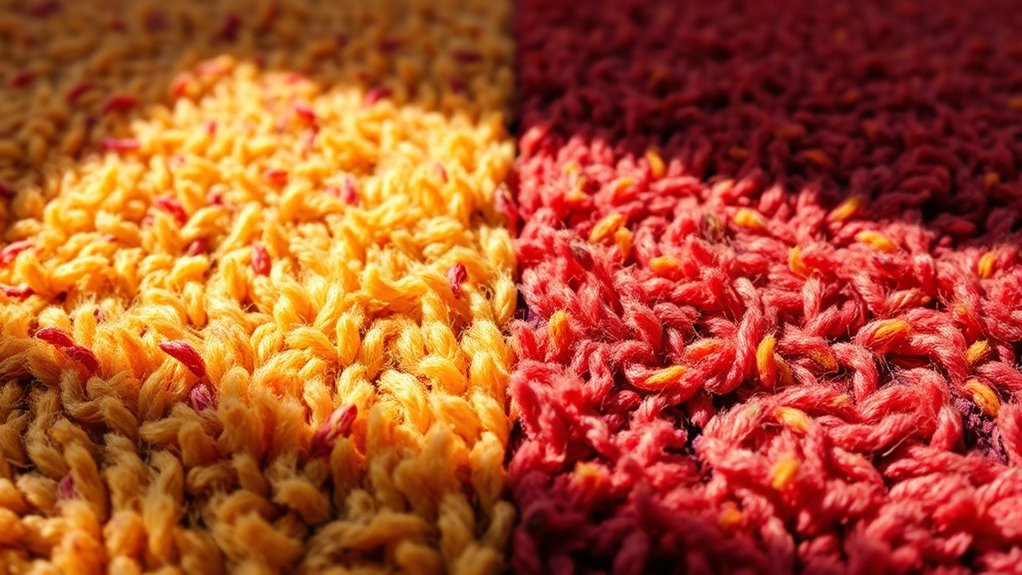
Several factors directly impact how well a carpet’s color remains stable over time. One key element is the type of dyes used; synthetic dyes often offer better chemical stability, resisting fading longer. Exposure to sunlight, especially UV rays, can weaken dye bonds, but the dye’s inherent stability determines how much fading occurs. UV stability varies among dye types, influencing how well colors hold up under sun exposure. Environmental conditions like humidity and pollution also play a role, accelerating deterioration. Additionally, the quality of the carpet’s fibers influences color retention—durable fibers help preserve vibrancy. Finally, cleaning methods matter: harsh chemicals or excessive washing can strip color, regardless of dye type. Understanding these factors helps you choose and care for carpets that stay vivid, whether vegetable-dyed or synthetic, and resist fading longer. Juice cleansing benefits can also support overall health and potentially influence the longevity of dye stability by promoting better skin and tissue health.
Practical Tips for Protecting Your Vegetable-Dyed Rugs
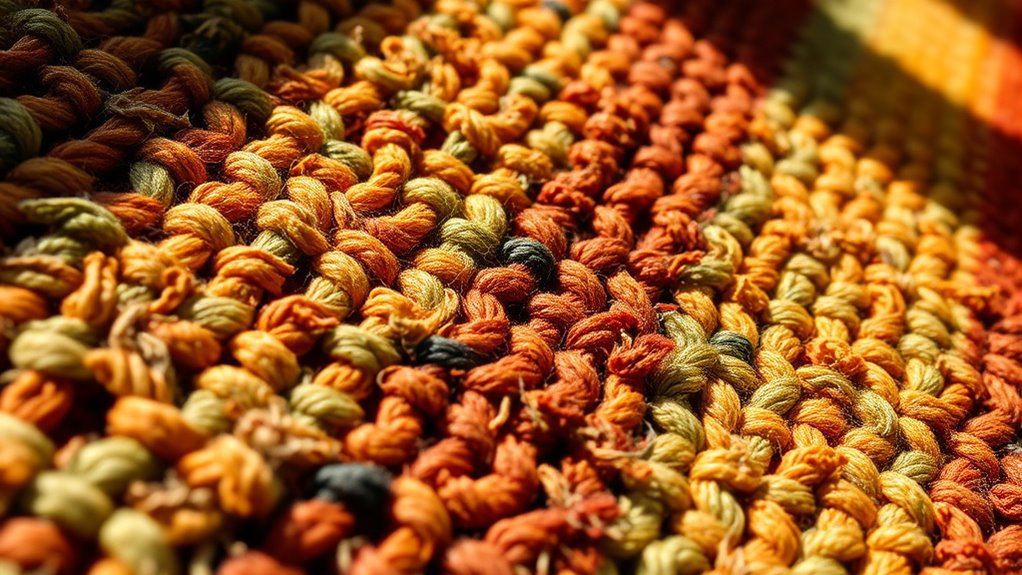
To keep your vegetable-dyed rugs vibrant, limit their sun exposure whenever possible. Consider using protective coverings like curtains or UV-filtering window films to shield them from direct light. Regular cleaning also helps maintain their appearance and prevents damage from dirt and dust. Using a shower can also help remove surface dirt gently without damaging the dyes.
Limit Sun Exposure
Since vegetable dyes are sensitive to sunlight, limiting your rug’s exposure is essential to prevent fading. Reducing direct sunlight preserves its vibrant colors and extends its sunlight longevity, ensuring your rug stays beautiful for years. To prevent dye fading effectively, consider these practical tips:
- Rotate your rug regularly to even out sun exposure.
- Use sheer curtains or UV-protective window films to block harsh rays.
- Keep curtains closed during peak sunlight hours.
- Place furniture or decorative screens to shield the rug from direct sunlight.
- Position your rug in shaded areas or away from windows.
- Understanding UV sensitivity can help you better protect your vegetable-dyed rugs from fading caused by sunlight. Additionally, being aware of lifestyle factors like indoor climate and placement can further support your preservation efforts.
- Being mindful of light exposure can significantly impact the longevity of your vegetable-dyed carpets.
- Incorporating air purification methods, such as using air purifiers, can also help reduce indoor pollutants that might accelerate fabric deterioration over time.
Use Protective Coverings
Protective coverings are an effective way to shield your vegetable-dyed rug from sunlight and daily wear. They help minimize UV exposure, protecting the fiber treatment and preventing premature dye extraction. Using covers like clear acrylic or UV-resistant films creates a barrier that preserves vibrant colors and prolongs your rug’s life. Consider implementing a schedule for covering your rug during peak sunlight hours, especially if it’s in a sunny spot. Here’s a quick comparison:
| Cover Type | Benefits | Best Use Case |
|---|---|---|
| UV-resistant film | Blocks UV rays, preserves dye | Daily protection |
| Canvas or fabric | Breathable, easy to remove | Seasonal or temporary |
| Glass or acrylic | Prevents dust, easy to clean | Display areas |
| Plastic sheeting | Cost-effective, simple | Short-term coverage |
Regular Cleaning Practices
Regular cleaning is essential for maintaining the vibrancy and longevity of your vegetable-dyed rug. Proper care guarantees the natural dye remains vivid and avoids premature fading. Use gentle, compatible cleaning products that support natural dye longevity and prevent damage. Avoid harsh chemicals or bleach that can strip colors and weaken fibers. Regular vacuuming removes dirt that can dull the colors over time. Spot clean spills immediately with a mild soap and water solution. When in doubt, test cleaning products on a small, inconspicuous area first to check compatibility. Consistent, gentle cleaning helps preserve your rug’s beauty and extends its lifespan. By protecting your investment with mindful maintenance, you keep your vegetable-dyed rug looking stunning for years to come.
Long-Term Care and Maintenance for Vibrant Colors
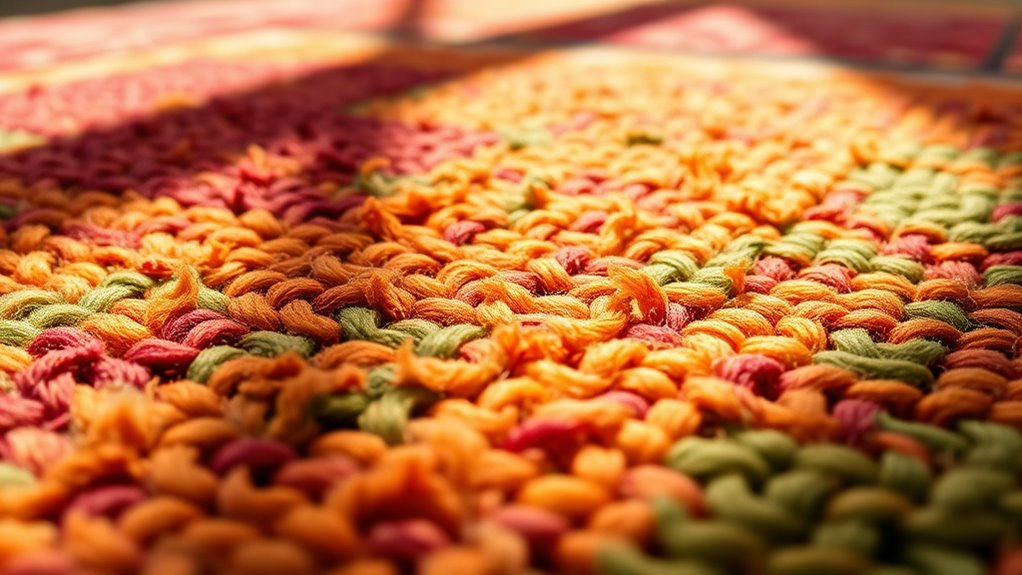
Maintaining vibrant colors over the long term requires consistent care and mindful maintenance. You should minimize exposure to environmental factors like sunlight, which can accelerate chemical reactions that cause fading. Regularly rotate and shift your carpets to prevent uneven wear and sun exposure. Use protective barriers, such as curtains or UV-blocking window films, to shield your carpets from direct sunlight. When cleaning, avoid harsh chemicals that can damage the vegetable dyes; instead, opt for gentle, pH-balanced solutions. Keep humidity levels steady to prevent mold and deterioration. By understanding how environmental factors and chemical reactions influence fading, you can take proactive steps to preserve your carpet’s vibrant hues, ensuring they stay lively and beautiful for years to come.
Frequently Asked Questions
How Does Indoor Lighting Affect Vegetable-Dyed Carpet Colors?
Indoor lighting, whether natural light or artificial lighting, can impact vegetable-dyed carpet colors. Natural light, especially sunlight, may cause gradual fading over time, while some artificial lights can alter the appearance temporarily. You should be mindful of direct sunlight and choose lighting that minimizes fading. Proper placement and window treatments help protect your carpet, keeping its vibrant colors longer and maintaining its original beauty.
Are Certain Vegetable Dyes More Uv-Resistant Than Others?
You might wonder if some vegetable dyes are more UV-resistant than others. Generally, natural dye stability varies, with some vegetable dyes being more UV resistant due to their chemical composition. Choosing carpets with UV resistant fibers can also help protect the colors from fading over time. While no dye is completely immune, selecting high-quality, naturally dyed carpets with UV-resistant fibers minimizes fading and keeps your carpet vibrant longer.
Can Cleaning Products Impact the Longevity of Vegetable Dyes?
Cleaning products can definitely impact the longevity of vegetable dyes. Chemical interactions from harsh cleaners may break down dye molecules, reducing dye stability over time. You should avoid strong bleaches or acidic formulas, as they can cause fading or uneven discoloration. Instead, opt for gentle, pH-balanced cleaning solutions. Proper care preserves the vibrant colors and extends the life of your vegetable-dyed carpet, ensuring it stays beautiful for years to come.
What Are the Best Methods to Restore Faded Vegetable-Dyed Carpets?
To restore faded vegetable-dyed carpets, focus on natural dye preservation and effective carpet restoration techniques. You should start by gently cleaning the carpet with pH-neutral solutions to avoid further fading. Consider professional color restoration treatments that use natural dyes or specialized dyeing methods to revive the original hues. Always test any method on a small area first, and avoid harsh chemicals that can damage delicate vegetable dyes.
Do Vegetable Dyes Fade Uniformly or Unevenly Over Time?
Imagine a party where vegetable dyes are guests, some fade gracefully, others sneak away unevenly. You’ll find color stability varies; some areas stay vibrant, while dye migration causes patchy fading. It’s not a uniform fade but more like a quirky dance—some colors hold their ground, others drift. So, no, vegetable dyes don’t fade evenly. Instead, they waltz unevenly, giving your carpet a unique, if unpredictable, character over time.
Conclusion
By understanding how vegetable dyes truly behave, you can protect your rugs from the myth of inevitable fading. Think of your carpet as a delicate garden—careful sunlight exposure and proper maintenance are the watering can and sunshine it needs. With mindful care, your vibrant colors can flourish like a well-tended bloom, remaining lively and beautiful through time. Don’t let misconceptions dim the beauty of your vegetable-dyed carpets; instead, nurture their natural elegance.