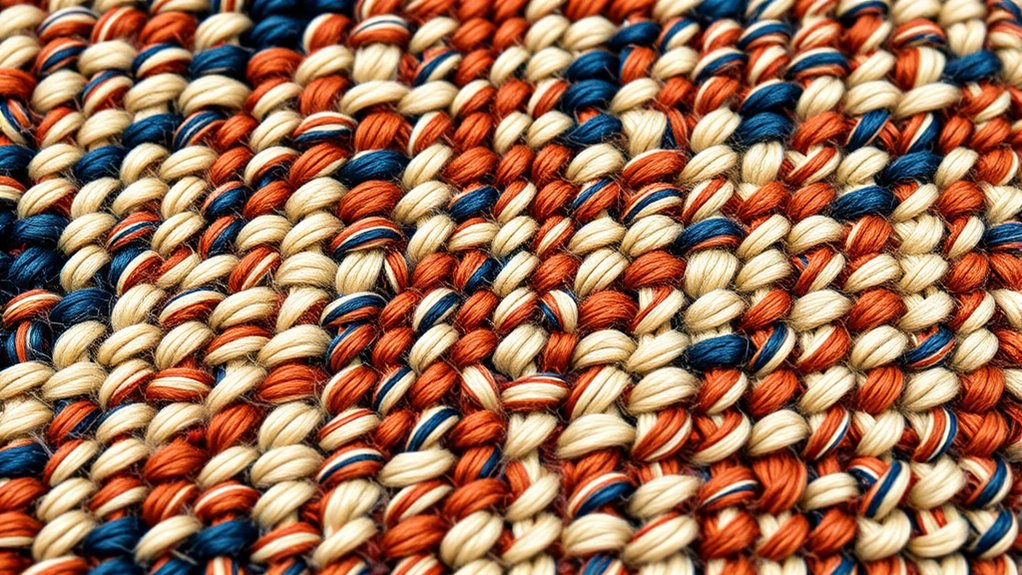

When comparing Persian and Turkish knots, you’ll notice differences in how each rug is made and looks. Persian knots are asymmetrical, allowing for intricate, detailed patterns and a softer, plush feel. Turkish knots are symmetrical, making rugs more durable and uniform, ideal for high-traffic areas. These knot styles influence the craftsmanship, appearance, and longevity of your rug. If you want to understand how these techniques affect quality and design, there’s more to discover ahead.
Key Takeaways
- Persian knots are asymmetrical, allowing for intricate designs, while Turkish knots are symmetrical, producing a uniform appearance.
- Persian knots create a denser pile and finer craftsmanship, whereas Turkish knots result in sturdier, more durable rugs.
- The knot technique influences the rug’s pattern detail, with Persian knots enabling more delicate motifs.
- Turkish knots are easier to weave quickly, ideal for large-scale, high-traffic rugs.
- Understanding knot types helps assess a rug’s quality, durability, aesthetic, and regional origin.
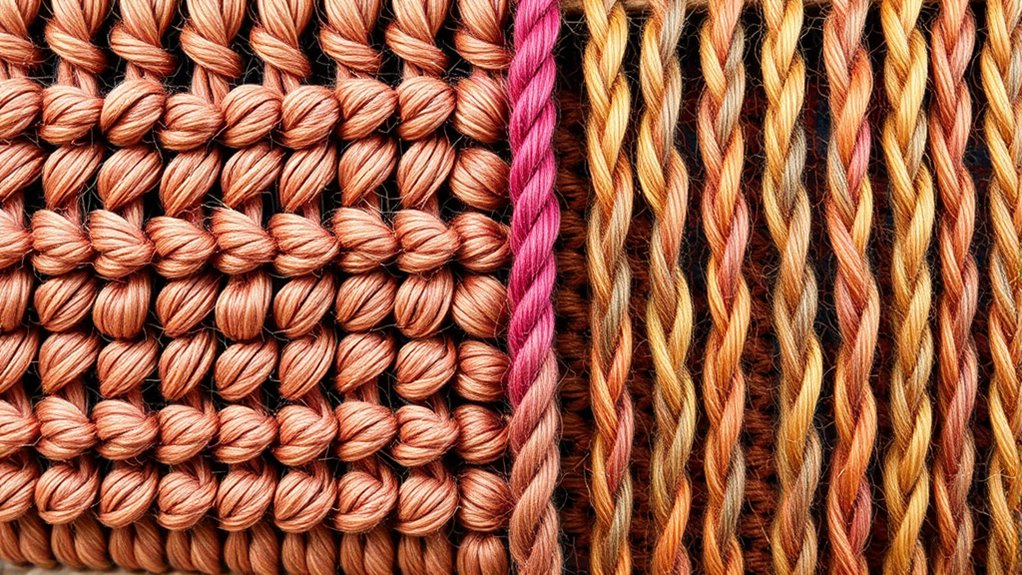
When choosing a rug, understanding the different knot types can help you assess its quality, durability, and appearance. Two primary knot styles dominate the rug weaving world: Persian knots and Turkish knots. Knowing how these knots are tied, their origins, and their differences can guide you in selecting a piece that best fits your aesthetic and functional needs. The knot tying techniques used in each style influence not only the rug’s look but also its longevity. Persian knots, also called asymmetrical or Senneh knots, are tied with a single thread that wraps around the warp yarns at an angle, creating a more detailed and intricate pattern. This technique allows for finer, more delicate designs, often seen in Persian rugs, which have a long and rich rug weaving history. The history of rug weaving reveals that Persian knots have been used for centuries in regions renowned for their craftsmanship, like Iran. Their method of tying results in a denser pile, which enhances durability and gives the rug a plush feel.
In contrast, Turkish knots, known as symmetrical or Ghiordes knots, are tied with a single thread that wraps around two warp yarns simultaneously, forming a symmetrical knot. This knot tying technique produces a sturdier, more robust rug with a uniform appearance. Turkish knots are typically used in rugs from Turkey, Anatolia, and surrounding areas, where the rug weaving tradition emphasizes strength and simplicity. Because these knots are tied symmetrically, they are easier to produce in large quantities, often resulting in thicker, more durable rugs suitable for high-traffic areas. The rug weaving history of Turkish knots shows that they have been employed for centuries in nomadic and village settings, where durability was essential.
Understanding these knot types also helps you recognize the craftsmanship behind each rug. Persian knots tend to allow for more detailed, fine patterns due to their asymmetrical tying method, while Turkish knots provide a sturdier, more uniform structure. The knot tying techniques influence not just the aesthetic but also how the rug wears over time. When evaluating a rug, consider the knot type that aligns with your preferences for detail and durability. Knowing your rug’s knot style and its historical context can deepen your appreciation for its artistry and help you make a more informed purchase.
Frequently Asked Questions
How Do Knot Types Affect Rug Durability?
Knot types directly influence rug durability through knot strength and material compatibility. Persian knots, often tied with wool or silk, create a dense, sturdy pile that resists wear, while Turkish knots tend to be looser, making them more susceptible to damage over time. Your choice of knot type affects how well the rug withstands foot traffic and aging, so selecting the right knot for your material guarantees lasting durability.
Can Knot Styles Indicate Rug Origin or Regional Craftsmanship?
Think of knot style symbolism as a map guiding you through a tapestry of regional craftsmanship indicators. When you examine a rug’s knot style, you reveal its origin—Persian knots often symbolize intricate artistry, while Turkish knots reflect bold, durable craftsmanship. Recognizing these styles helps you trace the rug’s roots, connecting you to the culture and tradition woven into its fibers. It’s like reading a story told in knots and loops.
Are Certain Knot Types More Suitable for High-Traffic Areas?
Yes, certain knot types are more suitable for high-traffic areas. For example, Persian knots often create a denser, more durable rug, making them ideal for busy spaces. The knot pattern significance influences the rug’s resilience and aesthetic variations, so choose a knot style that balances durability with the desired look. Turkish knots, while beautiful, may be less dense, making them better suited for less trafficked areas.
How Does Knot Density Relate to Rug Quality?
Higher knot density usually means better rug quality because it results in a more detailed and durable rug. It also affects rug softness, making the surface feel plush and luxurious under your feet. When you see a rug with tightly packed knots, you’ll notice it’s more resilient and maintains its appearance longer. So, for a high-quality, soft rug that lasts, look for one with a higher knot density.
Can Knot Types Influence the Rug’s Ease of Cleaning?
Yes, knot types can influence how easy it is to clean a rug. Persian knots, with their dense, tight weave, may make knot maintenance more challenging and can trap dirt, leading to cleaning challenges. Turkish knots, being looser, tend to allow easier access for cleaning but might be less durable. Your choice affects not only maintenance but also how well your rug resists stains and dirt buildup over time.
Conclusion
By exploring the nuances between Persian and Turkish knots, you gain more than just knowledge—you uncover a richer appreciation for craftsmanship and tradition. Remember, each knot tells a story, and understanding their subtle differences allows you to see the beauty in every detail. So, as you choose or admire a rug, trust that beneath its surface lies a world of artistry waiting to be softly discovered. Sometimes, what’s hidden holds the deepest meaning.