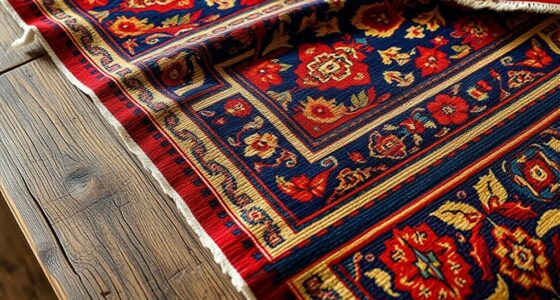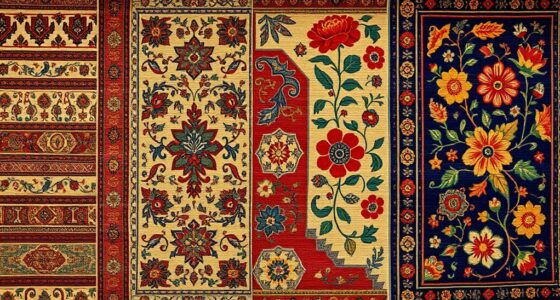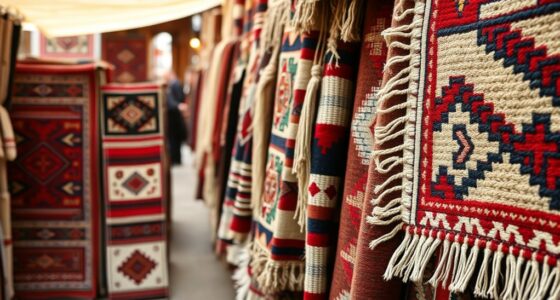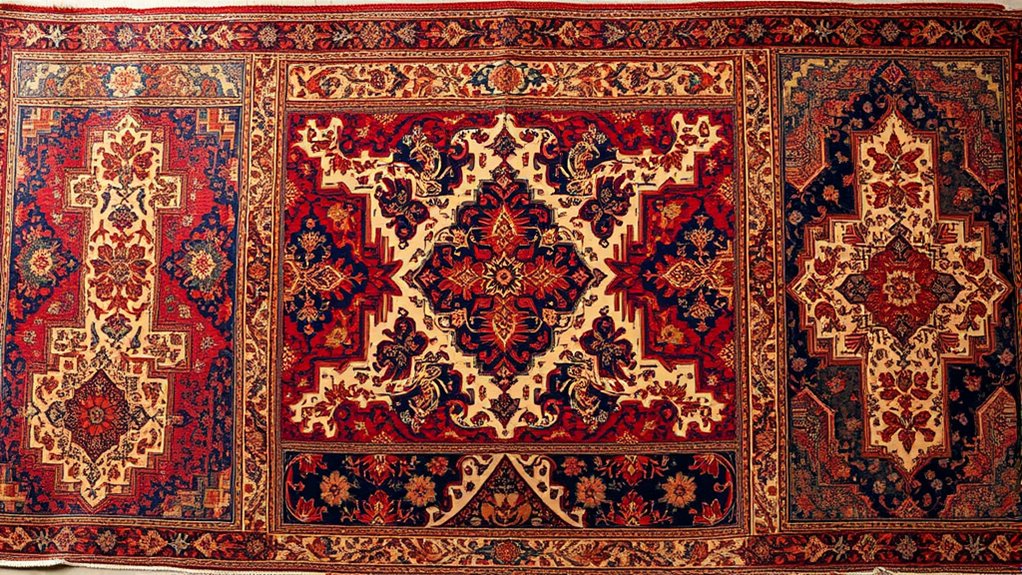

Over the past three centuries, Persian rug weaving has evolved through key movements, from tribal, nomadic designs to elaborate city-produced styles like those in Tabriz, Kashan, and Isfahan. You’ll see a shift from simple geometric patterns to intricate floral motifs reflecting political stability and trade influences. As you explore further, you’ll discover how regional styles, tribal influences, and historical events shaped this rich textile tradition. Stay with us to uncover the detailed timeline behind these timeless creations.
Key Takeaways
- Persian rug craftsmanship developed over 300 years, with regional styles evolving through political stability and trade influences.
- Nomadic tribes introduced tribal patterns emphasizing geometric and symbolic designs as expressions of identity.
- Major weaving centers like Tabriz, Kashan, and Isfahan emerged during stable periods, producing elaborate floral and medallion motifs.
- Periods of upheaval favored simpler, tribal-inspired patterns, reflecting shifts in political power and nomadic dominance.
- Contemporary rug-making continues traditional techniques and motifs, preserving centuries of cultural and artistic legacy.

The Three-Century Rug Timeline offers a fascinating journey through the evolution of rug-making techniques, designs, and cultural influences spanning over 300 years. When you explore this timeline, you’ll notice how Persian weaving played a pivotal role in shaping the art form. Persian rugs are renowned for their intricate craftsmanship, vibrant colors, and detailed motifs. During the early centuries, Persian weavers perfected methods like knotting techniques that created durable, plush piles, and introduced a rich palette of natural dyes. These innovations allowed for the development of distinctive regional styles, each with unique patterns and symbolism. You’ll see that Persian weaving wasn’t just about aesthetics; it reflected cultural stories, religious beliefs, and social status. The craftsmanship was passed down through generations, with master weavers often working within tightly knit communities. Additionally, the influence of color palette and dyeing techniques contributed significantly to the visual richness of these textiles.
As you move along the timeline, tribal patterns come into focus as a defining element of rug design. These patterns originate from nomadic tribes, who used their textiles as a form of expression and identity. You’ll observe that tribal patterns are often geometric, bold, and highly symbolic. They serve as visual stories, with each pattern representing tribal history, beliefs, or natural surroundings. These rugs were practical, portable, and quickly woven, yet they also carried significant cultural weight. The tribal patterns often feature repeated motifs that hold specific meanings, allowing you to trace the origins and movements of different tribes based on the designs. Over time, these tribal aesthetics influenced Persian weaving more broadly, blending traditional tribal motifs with refined, city-based techniques.
Throughout the timeline, you’ll notice how the influence of Persian weaving and tribal patterns fluctuated with political shifts, trade routes, and cultural exchanges. During periods of stability, cities like Tabriz, Kashan, and Isfahan became centers of luxurious, high-quality rug production, emphasizing elaborate floral and medallion designs. Conversely, during upheavals or periods of nomadic dominance, simpler tribal patterns gained prominence, reflecting a more utilitarian and expressive style. The interaction between these approaches created a dynamic tapestry of designs that continue to inspire modern rug-making. As you trace these developments, you’ll understand how Persian weaving and tribal patterns are not just decorative elements but also crucial historical and cultural markers, connecting you to centuries of tradition and craftsmanship.
Frequently Asked Questions
How Did Trade Routes Influence Rug Designs Over Three Centuries?
Trade routes diffusion greatly shaped rug designs over three centuries, exposing you to diverse regional influences. As you observe rugs, you’ll notice how trade connections introduced new motifs, colors, and techniques from distant areas. This exchange allowed regional design influences to blend, creating unique styles. You can see the evolution of patterns driven by traders and artisans, reflecting a rich tapestry of cultural interaction that continually transformed rug artistry across generations.
What Materials Were Most Commonly Used in Different Eras?
You’ll find that natural fibers like wool, silk, and cotton were most commonly used across different eras, depending on regional resources. During earlier periods, wool was favored for its durability, while silk became prominent in luxury rugs. Dye techniques evolved from simple plant-based dyes to more sophisticated methods, producing vibrant colors. These materials and dye methods reflect technological advancements and trade influences that shaped rug craftsmanship over centuries.
Which Regions Produced the Most Influential Rug Styles?
You’ll find Persia, now Iran, as a treasure chest of influential rug styles, with its intricate designs and vibrant colors reflecting rich cultural traditions. Turkey’s regional characteristics shine through in bold geometric patterns, while the Caucasus region produces rugs known for their distinctive tribal motifs. These geographic origins shape each region’s unique aesthetic, making their rugs true reflections of local history and artistry—like woven stories telling their cultural tales.
How Did Technological Advances Impact Rug Manufacturing?
Technological advances transformed rug manufacturing by enhancing weaving techniques and dye innovations. You’ll notice that improved tools and machinery allowed for more intricate patterns and faster production. Dye innovations introduced vibrant, lasting colors, making rugs more visually striking. These advancements made it easier for artisans to experiment with designs and color palettes, ultimately elevating rug quality and diversity. As a result, rugs became more durable and aesthetically appealing, appealing to a broader audience.
Are There Notable Collectors or Museums Dedicated to Historic Rugs?
Many prestigious collections and rug museums showcase historic rugs, drawing dedicated collectors and curious visitors alike. You’ll find renowned institutions like the Victoria and Albert Museum and the Textile Museum, which treasure timeless textiles from centuries past. These museums and collections serve as custodians of cultural craft, offering a glimpse into rug history’s rich heritage. If you’re passionate about antique textiles, exploring these esteemed establishments will deepen your appreciation and understanding.
Conclusion
Just as a master weaver stitches together threads to create a rich tapestry, your journey through these three centuries reveals a vibrant story of craftsmanship and culture. Each movement and maker is a distinct strand, adding depth and color to the fabric of rug history. Remember, understanding these threads helps you appreciate the intricate pattern of artistry woven over generations, reminding you that every piece is a living legacy—an ongoing dance between tradition and innovation.