Smart textiles are transforming traditional rugs by embedding technology that responds to your environment and actions. These innovative fibers can change colors, display messages, or morph patterns based on movement, temperature, or light. They’re designed to be eco-friendly, using recycled and biodegradable materials, making your home décor more sustainable. With seamless integration, these rugs offer safety, durability, and customizable interactive features. Want to discover how these advances are redefining home design and personal comfort? Keep exploring to learn more.
Key Takeaways
- Smart textiles embed sensors and responsive fibers into rugs, enabling interactive patterns that respond to movement, light, or temperature.
- Integration of technology transforms traditional weaving into dynamic decor pieces that can change colors, shapes, or display messages.
- Eco-friendly materials like recycled fibers and biodegradable synthetics make smart rugs sustainable and environmentally conscious.
- Seamless design ensures durability, safety, and easy maintenance while providing intuitive controls for user customization.
- These advancements elevate rugs from static furnishings to engaging, responsive elements that enhance home aesthetics and user experience.
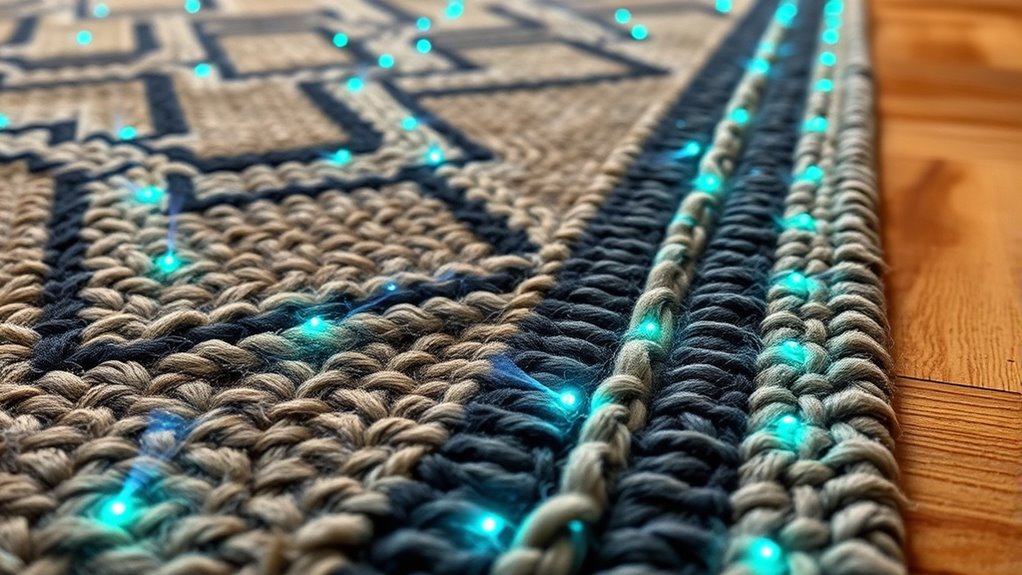
Smart textiles in rugs are transforming the way you experience and interact with your home décor. These innovative textiles incorporate technology directly into the fabric, creating rugs that do more than just add aesthetic appeal. With the integration of interactive patterns, your rug can respond to your presence, changing colors, shapes, or even displaying messages. Imagine walking into a room and your rug greeting you with a dynamic display that shifts based on your mood or activity. This level of interactivity elevates traditional weaving into an engaging, personalized experience.
One of the key advantages of smart textiles in rugs is their use of sustainable materials. As you seek eco-friendly options, you’ll find that many of these textiles are crafted from recycled fibers, biodegradable synthetics, or organic substances. This focus on sustainability guarantees that your stylish upgrade doesn’t come at the expense of the environment. By choosing rugs made from sustainable materials, you contribute to reducing waste and lowering your carbon footprint, all while enjoying the latest in home décor innovation.
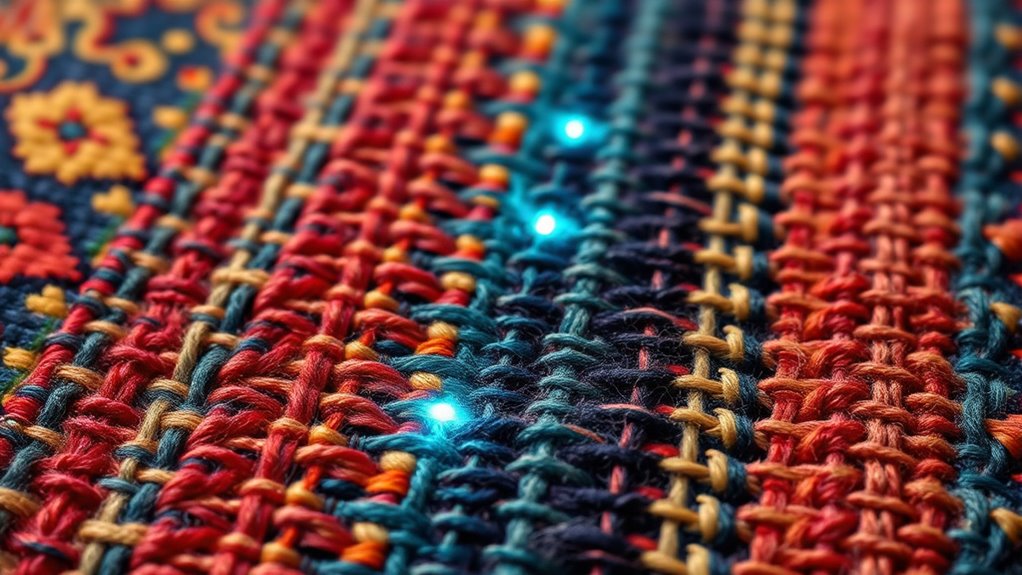
The concept of interactive patterns is at the heart of these smart textiles. Instead of static designs, your rug can feature patterns that change in real-time, responding to your movements or environmental cues like temperature or light levels. You might notice a geometric pattern that morphs into a calming wave pattern when you settle down in the evening or a vibrant burst of color when your guests arrive. These interactive patterns are enabled by embedded sensors and responsive fibers that can detect and react to various stimuli, making your rug a lively centerpiece that adapts to your lifestyle.
What sets these smart rugs apart is their seamless integration into everyday living. They’re designed to be durable, easy to clean, and safe, with technology that blends subtly into the fabric. You don’t need to be tech-savvy to enjoy their benefits; instead, you’ll simply notice how they enhance your space with minimal effort. As the technology advances, expect more intuitive controls and customizable options, giving you even greater control over your home’s ambiance.
In addition, some smart textiles incorporate vetted features that ensure durability and safety, making them suitable for regular household use. In essence, smart textiles in rugs are not just about aesthetics—they’re about creating an interactive, sustainable, and personalized environment. They redefine what a traditional rug can be, transforming it into a dynamic element of your home that responds to your needs and values. By embracing this innovation, you get to enjoy a smarter, more eco-conscious way to decorate your living space, all while experiencing the beauty and comfort of advanced textile technology.
Frequently Asked Questions
How Durable Are Smart Textiles in Everyday Rug Use?
Smart textiles in rugs are quite durable for everyday use, but durability concerns and wear resistance depend on the materials and construction. You’ll find that well-made smart rugs resist cracking and fading, though high foot traffic can still impact longevity. Regular maintenance and choosing quality textiles enhance wear resistance, ensuring your smart rug stays functional and attractive over time, even with daily use.
Can Smart Textiles in Rugs Be Repaired if Damaged?
Think of your smart textile rug as a cherished painting—it can be repaired, but it takes skill. If damaged, fiber repair and textile restoration are possible, often involving specialized techniques to fix or replace affected areas. While repair might not restore every fiber perfectly, skilled artisans can often extend the rug’s life, preserving its beauty and function. You just need to find the right expert to handle your smart textile’s delicate tech components.
Are Smart Textile Rugs Safe for Children and Pets?
Smart textile rugs are generally safe for children and pets when properly designed, but you should always check for non-toxic materials and certification. Child safety is essential, so look for rugs with secure, embedded tech features that won’t pose choking hazards. For pet safety, ensure the rug’s tech components are durable and waterproof to prevent damage or hazards. Regularly inspect the rug for wear and tear to maintain a safe environment.
How Energy-Efficient Are the Embedded Technologies?
They say “a little goes a long way,” and that’s true for embedded tech in rugs. These smart textiles are designed to be highly energy-efficient, minimizing energy consumption while maximizing functionality. They often include sustainability metrics to track their eco-friendly impact, making them a smart choice for eco-conscious homes. Overall, the embedded technologies are engineered for low power use, helping you stay innovative without sacrificing sustainability.
What Is the Lifespan of Smart Textiles in Rugs?
Your smart textiles in rugs typically last around 5 to 10 years, depending on fabric longevity and usage. You should expect some technological degradation over time, especially with frequent foot traffic or cleaning. To maximize lifespan, follow care instructions carefully and choose high-quality materials. Regular maintenance helps prevent early wear and keeps the embedded technology functioning smoothly, ensuring your smart rug remains a stylish and functional addition for years to come.
Conclusion
As you see, smart textiles are transforming traditional rug weaving, blending age-old craftsmanship with cutting-edge technology. This fusion not only enhances functionality but also elevates aesthetic appeal, making your space more dynamic and connected. Isn’t it exciting to imagine how future innovations could redefine your living environment? Embracing these advancements allows you to enjoy the perfect harmony of tradition and innovation—making every step on your rug a step into the future.