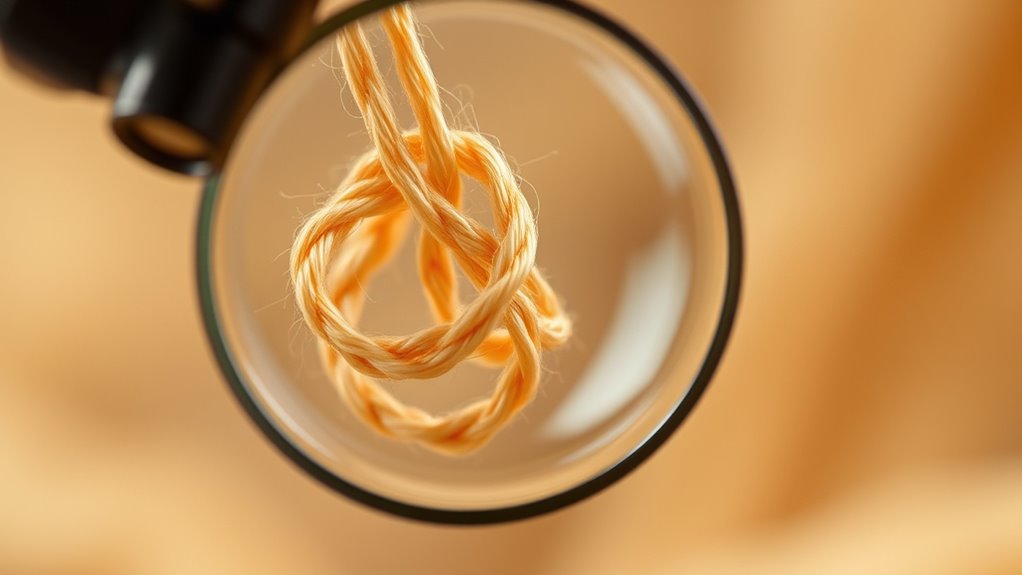

When inspecting micro-knots under a loupe, look for consistent tension, as tight, evenly pulled knots sit flush and create a smooth surface, while loose or uneven knots show gaps or slack. Check that the knots are uniform in size and shape, indicating careful craftsmanship. Also, observe how the knots sit in relation to each other and the material’s finish. Continuing will help you understand how to better assess quality and craftsmanship at this microscopic level.
Key Takeaways
- Check for consistent tension to ensure knots are uniformly tight and sit flush against each other.
- Look for smooth, symmetrical loops and tight wraps indicating precise knot formation.
- Identify gaps, overlaps, or loose threads that suggest uneven tension or poor craftsmanship.
- Observe the alignment and placement of knots to evaluate overall uniformity and attention to detail.
- Assess thread finish and surface quality for signs of material integrity and proper handling.

Reading micro-knots under a loupe can be a challenging yet rewarding task, especially if you’re working with intricate jewelry or delicate textiles. When you look closely through the magnification, you get a detailed view of how each knot is formed and how the thread behaves. Your goal is to assess the quality and craftsmanship, which hinges heavily on thread tension and knot consistency. These two factors determine not only the aesthetic appeal but also the durability of the piece.
First, pay close attention to thread tension. You want the tension to be evenly distributed throughout the knot. If some threads are pulled tighter than others, the knot may appear uneven or loose. This inconsistency can lead to unraveling or weakening over time. When you examine the micro-knots, notice how the tension affects their shape and firmness. Tight knots tend to be more compact, and their threads should sit snugly without any slack. Conversely, loose tension results in gaps or irregularities that compromise structural integrity. Achieving balanced tension requires skill, and evaluating it under a loupe helps you distinguish a well-made knot from one that’s poorly executed.
Next, focus on knot consistency. When you look at multiple knots, you should see uniformity in size, shape, and placement. Consistent knots reflect meticulous craftsmanship and ensure that the piece looks harmonious. If some knots are larger or smaller than others, it might indicate uneven tension during the tying process or inconsistent technique. Look for symmetrical loops and tight wraps; these are signs of precision. Variations in knot structure may not necessarily be a defect, but they can suggest potential weak points. Consistent knots also tend to sit flush against each other, creating a smooth surface, which is especially important in jewelry or textile work where aesthetics matter. Additionally, understanding thread tension can help you better evaluate the overall quality and longevity of handcrafted pieces.
As you scrutinize under magnification, also observe how well the knots sit in relation to each other. Properly formed knots should be snug and aligned, with no gaps or overlaps that could cause snagging or snagging. The thread’s finish—whether smooth or frayed—can also tell you about the quality of the material used.
Frequently Asked Questions
How Do Different Thread Types Affect Micro-Knot Appearance?
Different thread types greatly impact micro-knot appearance due to their fiber texture and knot size. Smooth, fine threads create smaller, less noticeable knots, while thicker or textured threads produce larger, more prominent micro-knots. You’ll notice that silk threads tend to form neater, tighter knots, whereas polyester or nylon may result in slightly bulkier ones. Understanding these differences helps you evaluate your stitching quality and choose the right thread for your project.
What Magnification Level Is Ideal for Inspecting Micro-Knots?
You should use a magnification level of around 10x to 20x for inspecting micro-knots. This range allows you to clearly see the thread color and knot size without losing detail or causing eye strain. With this magnification, you can easily identify uneven tension or loose threads that affect the knot’s strength and appearance. Adjust as needed to get the best view of the thread’s intricacies and the overall knot quality.
Can Micro-Knots Indicate Issues With Thread Tension?
Micro-knots act like tiny warning flags, signaling issues with thread tension. When you see these knots, it’s a sign that your sewing machine adjustments might need attention. Poor thread tension causes uneven stitches and micro-knots, so inspecting them helps you troubleshoot. By addressing tension problems early, you make sure smoother sewing and stronger seams. Think of micro-knots as clues guiding you to fine-tune your machine for perfect stitches every time.
Are There Common Mistakes to Avoid When Examining Micro-Knots?
When examining micro-knots, avoid rushing or neglecting proper lighting conditions, as poor lighting can hide tension issues or flaws. Be careful not to misinterpret thread tension problems as micro-knots, and don’t overlook the importance of a steady hand and a good loupe. Consistently check your lighting and focus on thread tension to accurately assess these tiny knots, preventing mistakes that could lead to misjudging your stitching quality.
How Does Lighting Influence the Visibility of Micro-Knots?
Lighting dramatically impacts how you see micro-knots, revealing hidden details. When you adjust your light source, fiber reflections intensify, making knots more visible, while shadow effects can either obscure or highlight tiny flaws. Be cautious—uneven lighting creates glare or deep shadows that hide critical features. By controlling the angle and intensity of your light, you can uncover subtle micro-knots that might otherwise stay unseen, ensuring an accurate inspection.
Conclusion
Now that you’ve learned to spot micro-knots under a loupe, you’re better prepared to preserve your jewelry’s beauty. Remember, just as a careful surgeon tends to delicate tissue, your attention to detail guarantees longevity. Don’t let tiny flaws turn into big regrets—treat your pieces like a precious relic from the days of Cleopatra. With patience and a keen eye, you’ll keep your jewelry sparkling, proving that even the smallest details can make a world of difference.