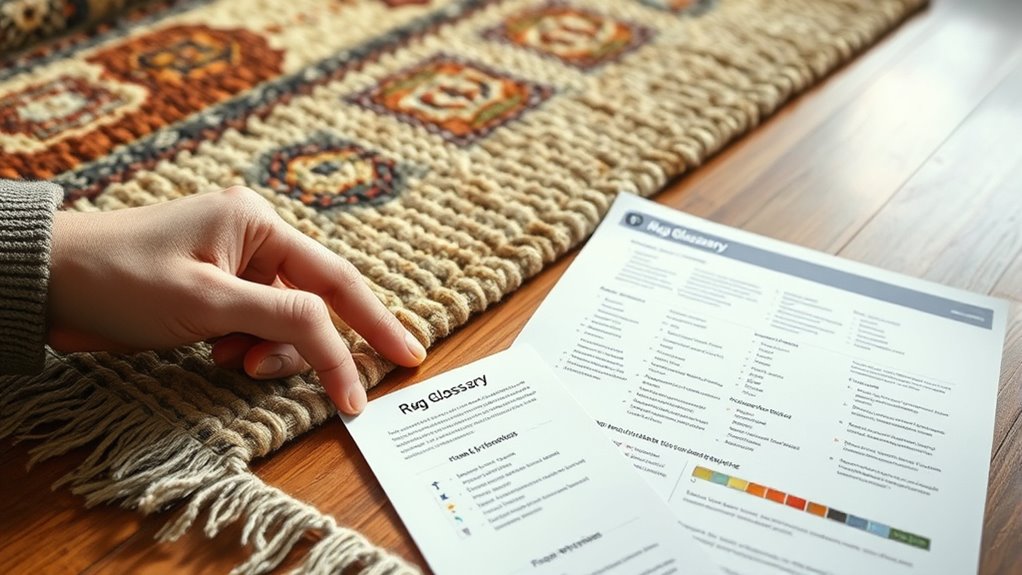
When steering rug glossaries, start by understanding common terms like fiber types—wool, silk, cotton, and jute—and their characteristics, such as durability and texture. Learn about dyeing techniques, including natural and synthetic dyes, and how they affect color and pattern. Recognizing these key concepts helps you evaluate a rug’s quality and style confidently. Keep exploring these terms, and you’ll gain even more insights into choosing the perfect rug for your space.
Key Takeaways
- Learn common fiber names like wool, silk, cotton, and jute to understand rug durability and aesthetics.
- Familiarize yourself with dyeing methods such as natural, synthetic, and resist-dyeing to assess color qualities.
- Understand terminology related to rug patterns, knots, and weaving techniques for accurate style identification.
- Recognize terms describing rug origins and styles to better match your décor and preferences.
- Use glossaries to decode technical language, ensuring informed decisions during rug shopping and maintenance.

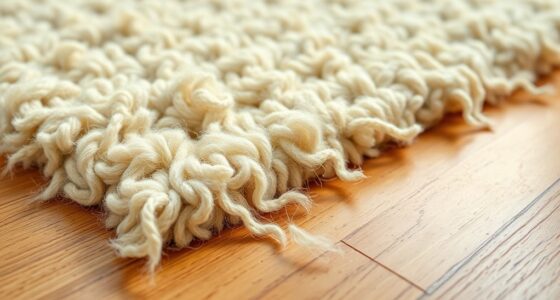
Have you ever stumbled over a rug glossary and felt unsure what all those terms mean? Don’t worry—you’re not alone. Rug terminology can seem overwhelming at first, but understanding some basics will help you navigate descriptions and make better purchasing decisions. One of the first things to grasp is the variety of fiber types used in rugs. Natural fibers like wool, silk, cotton, and jute each have unique qualities. Wool, for example, is durable, soft, and excellent for high-traffic areas, while silk offers a luxurious sheen and delicate texture suitable for decorative pieces. Cotton rugs tend to be lightweight and easy to clean, making them ideal for casual spaces. Jute and other plant-based fibers provide rustic, earthy looks but may be less resilient. Recognizing these fiber types helps you match a rug’s material to your lifestyle and aesthetic preferences.
Another essential aspect is understanding dyeing techniques, which influence a rug’s color, pattern, and overall appearance. Hand-dyeing, especially with natural dyes derived from plants, minerals, or insects, often results in subtle variations and a rich, organic look. This process can produce unique, one-of-a-kind pieces, emphasizing craftsmanship. On the other hand, machine-dyeing creates consistent colors across large batches, making it more cost-effective but sometimes less nuanced. There are also techniques like ikat or tie-dye that create patterns through resist-dyeing methods, adding character and complexity to the design. When you’re reading about a rug’s dyeing technique, it can tell you a lot about its quality, origin, and price point. Natural dyes tend to fade more gracefully over time, giving the rug a lovely vintage feel, whereas synthetic dyes might maintain their brightness longer but could lack the depth and warmth of natural coloration. Additionally, understanding the carbohydrate content of rug dyes can influence how well the colors age over time.
Understanding these terms isn’t just about knowing what’s written on the tag; it’s about visualizing what the rug will look and feel like in your space. Knowing the differences in fiber types guides you when considering durability and maintenance, while understanding dyeing techniques reveals the artistry behind each piece. When you see a description mentioning “hand-knotted wool with natural dyes,” you’ll have a clearer picture of its craftsmanship and aesthetic. Over time, becoming familiar with rug glossary terms makes shopping easier and more enjoyable. You’ll be able to distinguish between a well-made, heirloom-quality piece and something more mass-produced. So, next time you’re browsing rugs, remember that a little knowledge about fiber types and dyeing techniques will empower you to choose the perfect rug that matches your style, needs, and budget.
Frequently Asked Questions
How Often Should I Update My Rug Glossary?
You should update your rug glossary whenever you encounter new rug material terminology or knotting techniques. This keeps your knowledge current and helps you identify quality pieces more confidently. Regular updates, maybe every few months or after purchasing new rugs, guarantee you stay informed about industry trends and craftsmanship. Staying proactive means you’ll better understand the nuances of rug weaving, making your purchases smarter and your appreciation deeper.
Are Rug Glossaries Standardized Across Different Regions?
Think of rug glossaries as a patchwork quilt—regional terminology and cultural variations create unique patterns across regions. No, they’re not fully standardized; different areas use distinct terms for similar designs. This diversity adds richness to the language but can also be confusing. So, when exploring rugs, remember that understanding these regional nuances helps you appreciate the cultural tapestry woven into each piece, making your knowledge both deeper and more colorful.
Can Glossaries Help Identify Rug Age and Origin?
Yes, glossaries can help you identify a rug’s age and origin. By understanding antique identification terms and regional terminology, you can better recognize specific styles, weaving techniques, and materials unique to certain areas and periods. Using a well-referenced glossary, you’ll gain insights into the rug’s history, making it easier to determine its provenance and approximate age, which enhances your appreciation and confidence in rug collecting or appraisal.
How Do I Choose the Right Glossary for My Needs?
You choose the right glossary by considering your specific needs, like understanding material specifications or regional terminology. Look for one that covers the regions you’re interested in and offers clear, detailed definitions. Make certain it’s easy to navigate, with illustrations if possible. A good glossary helps you confidently identify rug details, so pick one that aligns with your knowledge level and the types of rugs you’re exploring.
Are There Digital Tools for Navigating Rug Glossaries?
Think of digital glossary apps and online rug dictionaries as your personal compass through a dense forest of terminology. I once used a digital glossary app to identify a rare design, saving me hours of research. These tools make steering through rug terminology easier—just search for terms on your device, and you get instant, clear explanations. They’re perfect for beginners keen to learn without flipping through bulky books or hunting for obscure definitions.
Conclusion
Don’t let rug jargon intimidate you. With this glossary, you’re already ahead of the game, understanding key terms and making confident choices. Some might think glossaries are overwhelming, but they’re simply tools to help you learn. Keep exploring, ask questions, and soon, you’ll navigate rug terminology with ease. Remember, everyone starts as a beginner—your knowledge will grow faster than you think. Happy rug hunting!