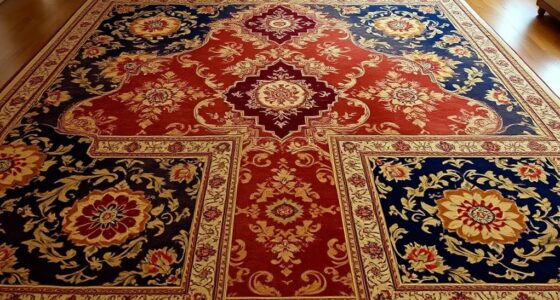
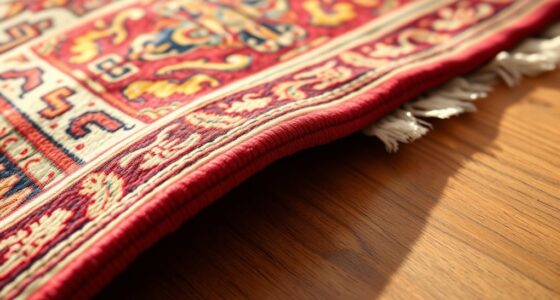
Kilim and flatweave rugs use traditional weaving techniques that create durable and striking designs, often featuring geometric or intricate patterns. They are crafted with natural or synthetic dyes, influencing their vibrant or earthy colors. These rugs serve versatile purposes, adding warmth and style to various spaces, from living rooms to entryways. Their flatwoven nature makes them easy to clean and portable, fitting both traditional and modern decor. Continue exploring to discover more about their craftsmanship and diverse uses.
Key Takeaways
- Kilim and flatweave rugs feature intricate geometric or abstract patterns created through specialized weaving techniques.
- Traditional dyeing methods use natural dyes, producing rich, earthy colors that age beautifully over time.
- These rugs are valued for their durability, lightweight construction, and ease of cleaning, making them suitable for high-traffic areas.
- Their versatile design allows them to serve as focal points, accent pieces, or functional accessories in various interior styles.
- Weaving patterns often tell cultural stories or symbolize traditions, adding aesthetic and cultural significance to their uses.
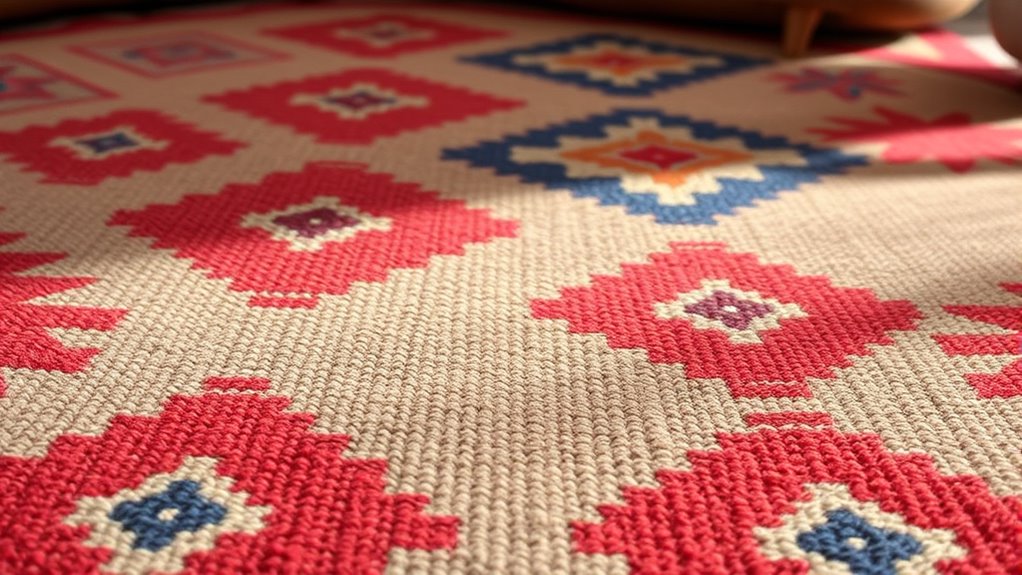
Kilim and flatweave rugs offer a striking blend of artistry and practicality that can transform any space. These rugs are celebrated for their intricate designs and durable construction, making them a popular choice for both decorative and functional purposes. When exploring these rugs, you’ll notice that their unique appeal largely comes from the weaving patterns and dyeing techniques used by artisans. Weaving patterns define the overall visual impact, as they can range from geometric motifs to more abstract designs, often telling stories or representing cultural symbols. Whether you prefer bold, symmetrical shapes or more intricate, detailed motifs, the weaving pattern is the foundation of the rug’s aesthetic and structural integrity.
Dyeing techniques play an essential role in creating the vibrant or subdued color schemes you see in these rugs. Traditional methods often involve natural dyes derived from plants, minerals, and insects, which offer rich, earthy tones that age beautifully over time. These dyes are applied through methods like bundle dying or resist dyeing, resulting in subtle variations and depth of color that add character to each piece. Some artisans also use modern synthetic dyes, which provide a wider range of colors and more consistent results, but many still value the authenticity and depth of natural dyes. The dyeing process not only influences the rug’s appearance but also impacts its durability and how it ages, making it a fundamental part of the craft. Additionally, understanding the state-specific tax laws related to these rugs can help buyers make informed decisions when purchasing or importing pieces.
As you consider using a kilim or flatweave rug, think about how the weaving patterns and dyeing techniques align with your interior style. These rugs are versatile; they can serve as focal points in living rooms, add texture to bedrooms, or bring warmth to entryways. Because they’re flatwoven, they don’t have a pile like traditional rugs, which makes them easier to clean and more suitable for high-traffic areas. Their lightweight nature also allows for easy placement and mobility, so you can switch up your decor as often as you like.
When shopping for one, pay attention to the craftsmanship behind the weaving patterns and the richness of the dyeing techniques. Authentic kilims and flatweaves display clear, precise motifs and vibrant, well-set colors that indicate skilled handiwork. Whether you prefer the rustic charm of natural dyes or the modern vibrancy of synthetic options, these rugs offer a beautiful combination of tradition and innovation. Ultimately, their artistry and practicality will elevate your space, adding both style and functionality for years to come.
Frequently Asked Questions
How Do I Clean and Maintain Kilim and Flatweave Rugs?
To keep your kilim and flatweave rugs looking great, start with regular vacuuming using gentle techniques to remove dirt and dust. For stain removal, act quickly by blotting with a clean cloth and mild detergent. Avoid harsh chemicals or soaking the rug, as this can damage the fibers. Instead, stick to gentle cleaning methods and routine vacuuming, which will help maintain your rug’s vibrant colors and intricate patterns.
Are Kilim and Flatweave Rugs Suitable for Outdoor Use?
Imagine a vibrant kilim or flatweave rug basking in a sunny garden—sounds appealing, right? While their intricate designs suit indoor spaces, their outdoor durability depends on material quality. Typically, these rugs are better suited for indoor use because they may not withstand weather elements like rain or sun exposure. If you want outdoor durability, choose rugs specifically designed with weather-resistant materials.
What Are the Common Materials Used in These Rugs?
You’ll find that kilim and flatweave rugs are commonly made from natural fibers like wool, cotton, and sometimes silk. Dyed wool is a popular material because it offers vibrant colors and durability. These rugs are crafted by weaving fibers tightly together, making them sturdy and flexible. Natural fibers provide breathability and resilience, ensuring your kilim or flatweave rug stays beautiful and functional for years to come.
How Can I Identify Authentic Kilim and Flatweave Rugs?
You might find that authentic kilims and flatweaves reveal themselves through their intricate rug weaving techniques and regional design patterns. Look closely at the symmetry and tightness of the weave—authentic pieces often showcase precise craftsmanship. Regional motifs and color palettes can also hint at their origin. When you see these details aligning with traditional weaving styles, you’re likely holding an authentic rug, reflecting a deep cultural heritage woven into every strand.
What Are the Best Ways to Prevent Fading Over Time?
To prevent fading over time, you should protect your rugs from direct sunlight, which causes sun damage and accelerates fading. Use window coverings or rotate your rugs regularly to evenly distribute exposure. Additionally, choose dyes that are dye-preserved when purchasing, and avoid harsh cleaning chemicals. Proper care and limited sunlight will help maintain vibrant colors and prolong the life of your kilim or flatweave rug.
Conclusion
Now that you know the techniques and uses of kilim and flatweave rugs, you can appreciate their beauty and versatility even more. These rugs aren’t just stylish; they’re practical, durable, and full of history. Remember, a good rug is like a good friend—something that’s there for you through thick and thin. So go ahead, choose one that speaks to your style, and make your space truly special. After all, beauty is in the details.