
AI is revolutionizing custom rug design by enabling you to generate innovative patterns faster and explore endless creative options. It acts as a collaborative partner, helping you experiment with bold ideas while reducing development time. However, ethical questions about originality and cultural authenticity arise, urging you to balance technological advances with respect for tradition. Exploring these opportunities and challenges will help you understand how AI can truly enhance your design process.
Key Takeaways
- AI accelerates custom rug design by enabling rapid creation, visualization, and experimentation with complex patterns and color schemes.
- It offers innovative design possibilities by analyzing trends and generating unique motifs beyond traditional human imagination.
- Ethical concerns include questions of originality, intellectual property rights, and potential cultural or craftsmanship dilution.
- Collaboration between humans and AI enhances creativity, allowing designers to refine ideas while maintaining artistic integrity.
- Responsible integration of AI ensures preservation of cultural authenticity and promotes a balanced approach to technological innovation.
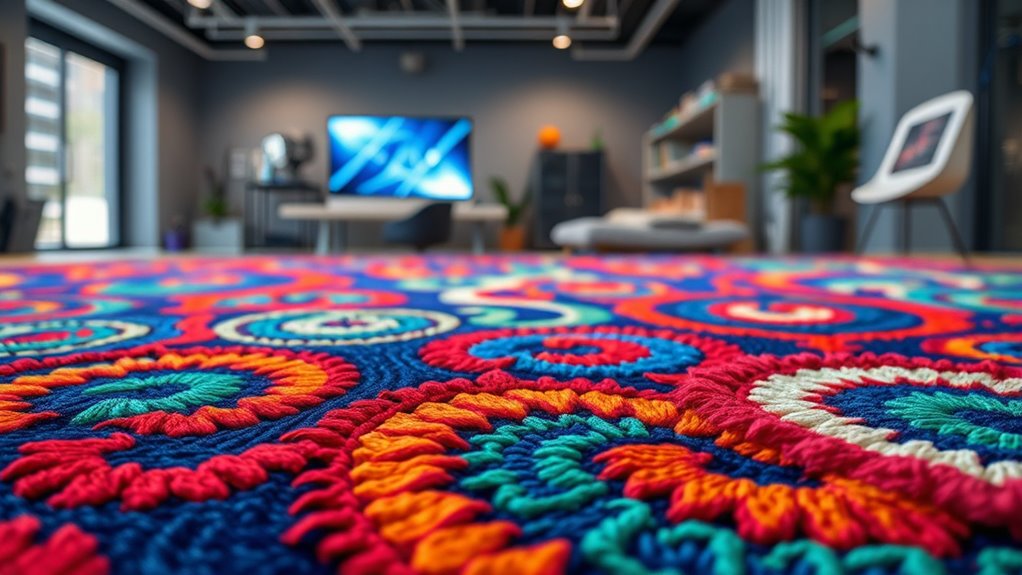
Have you ever wondered how artificial intelligence is transforming the way we create and design rugs? AI’s influence is reshaping every step of the process, from initial concept to finished product. One of the most exciting aspects is the rapid pace of algorithm innovation. These advanced algorithms analyze vast amounts of data—patterns, colors, textures, and cultural motifs—to generate unique design ideas that might never have been conceived by human designers alone. With each new iteration, AI becomes more adept at recognizing aesthetic trends and suggesting fresh combinations, pushing the boundaries of traditional rug design.
AI rapidly innovates rug design by analyzing data to generate unique, trend-setting ideas beyond human imagination.
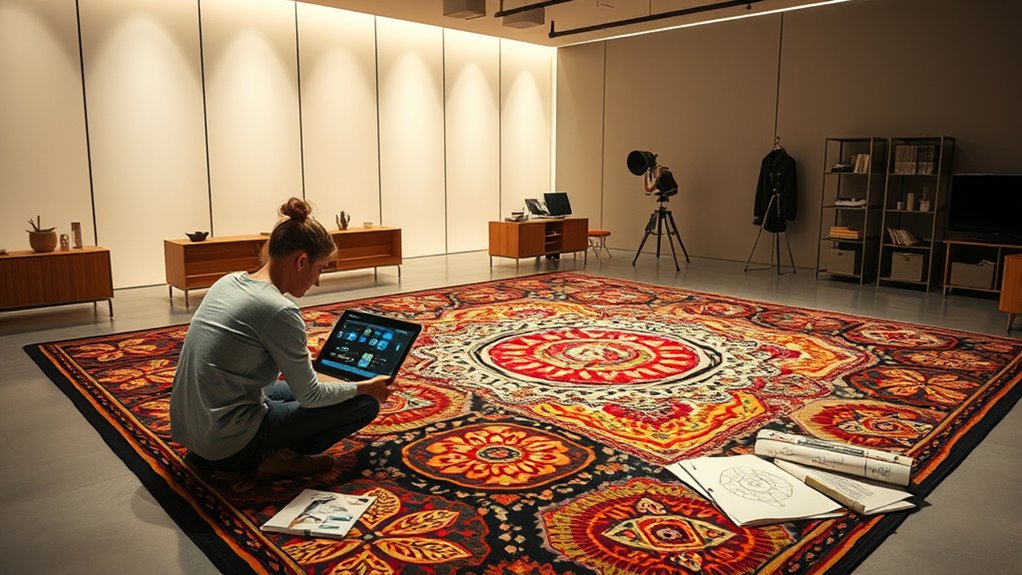
This technological leap doesn’t replace human creativity but enhances it through creative collaboration. You, as a designer, can leverage AI tools to experiment with complex patterns and color schemes effortlessly. Instead of starting from scratch, you input your ideas or preferences, and the AI offers multiple variations, sparking inspiration and expanding your creative horizon. It acts as a collaborative partner, helping you refine concepts and explore styles that align with your vision. The result is a more dynamic, efficient design process where imagination and machine intelligence work hand in hand, leading to truly innovative rugs that blend artistry with technology.
Moreover, AI-driven design platforms accelerate the development cycle. What once took weeks of manual sketching and revision can now be accomplished in days or hours. You can quickly visualize how different elements come together and make adjustments on the fly. This fast-paced iteration fosters a more experimental approach, encouraging you to explore bold ideas without the fear of wasting time or resources. Additionally, integrating Ford Tuning concepts into design workflows can inspire innovative stylistic elements and performance-inspired motifs, enriching the creative process. As a result, the creative collaboration between human insight and machine learning leads to distinctive, personalized rugs that reflect individual or brand identities more accurately.
However, embracing AI in rug design also raises ethical questions. When algorithms generate designs based on existing data, concerns about originality and intellectual property arise. You might wonder who owns the rights to AI-created patterns—the designer or the programmer? There’s also the risk that reliance on AI could stifle human craftsmanship or diminish cultural authenticity if not used thoughtfully. Ensuring transparency in how algorithms operate and how data is sourced becomes essential to maintaining ethical standards. As you incorporate AI into your creative process, it’s vital to balance technological innovation with respect for traditional techniques, cultural significance, and artistic integrity.
Frequently Asked Questions
How Does AI Influence Traditional Rug Craftsmanship?
AI influences traditional rug craftsmanship by enhancing cultural preservation and fostering artisan collaboration. You can use AI to digitize traditional patterns, ensuring they’re preserved for future generations. It also enables artisans to experiment with new designs and techniques, blending innovation with tradition. This collaboration allows you to maintain authentic craftsmanship while embracing modern technology, creating unique, culturally rich rugs that honor heritage and expand creative possibilities.
What Are the Intellectual Property Rights for Ai-Created Designs?
You should be aware that AI-created designs raise complex copyright concerns and patent issues. Since AI can generate unique patterns, it’s unclear who holds the rights—whether it’s the developer, user, or the AI itself. You need to navigate existing copyright laws carefully, ensuring you don’t infringe on others’ rights. Protecting your own AI-generated designs might involve patents, but the legal landscape is still evolving, so stay informed to avoid legal pitfalls.
Can Ai-Generated Rugs Reflect Cultural Authenticity?
AI-generated rugs can reflect cultural authenticity if you carefully incorporate cultural representation and traditional motifs. However, authenticity concerns arise if you rely solely on algorithms without understanding the cultural significance behind patterns. To create genuinely authentic designs, you need to balance AI’s capabilities with cultural knowledge, ensuring that your rugs honor and accurately represent the traditions they draw from. This approach helps maintain respect and authenticity in your designs.
How Do Consumers Perceive Ai-Designed Versus Handcrafted Rugs?
You might notice that consumers often trust handcrafted rugs more for authenticity, valuing the artisan’s touch, yet some appreciate AI-designed pieces for their unique, modern aesthetic. While AI rugs can impress with precision, others see handcrafted rugs as more genuine. Ultimately, consumer trust hinges on aesthetic preferences and perceived craftsmanship, creating a clear divide between the appeal of traditional art and innovative technology in rug design.
What Are the Environmental Impacts of Ai-Driven Rug Manufacturing?
You might not realize it, but AI-driven rug manufacturing can considerably reduce environmental impacts through sustainable sourcing and pollution reduction. By optimizing material use, AI minimizes waste, and smarter supply chain management ensures eco-friendly sourcing. Additionally, automated processes often cut energy consumption and emissions. These advancements help create beautiful, durable rugs while protecting the environment, making AI a promising tool for sustainable production that benefits both the planet and your home.
Conclusion
As you navigate the weaving loom of AI and rug design, you’ll find it’s like adding a splash of vibrant color to an already beautiful tapestry. These technologies open doors to endless creativity, turning your ideas into intricate masterpieces. But remember, with great power comes great responsibility—keep ethics woven into every thread. Embrace AI as your artistic partner, and together, you’ll craft rugs that tell stories as rich and textured as life itself.