To recognize abrash in hand-knotted rugs, look for subtle color shifts or shimmering lines running along the length of the rug. These variations often appear as irregular bands or streaks, indicating differences in dye batches or wool fibers. Abrash adds unique character and authenticity, revealing the craftsmanship behind each piece. Notice if colors change gently or suddenly, and understand that this natural variation enhances the rug’s beauty. Keep exploring to learn more about appreciating this artisan feature.
Key Takeaways
- Abrash appears as subtle, irregular color shifts along the rug’s length, indicating natural dyeing and hand-knotting craftsmanship.
- Look for gentle gradients or abrupt color changes that contrast with the overall tone of the rug.
- Variations often occur where knots are tighter or looser, highlighting the artisan’s handwork.
- Authentic rugs display organic, irregular color variations caused by natural fibers and dye batches, not defects.
- Appreciating abrash enhances understanding of the rug’s uniqueness, craftsmanship, and natural beauty.

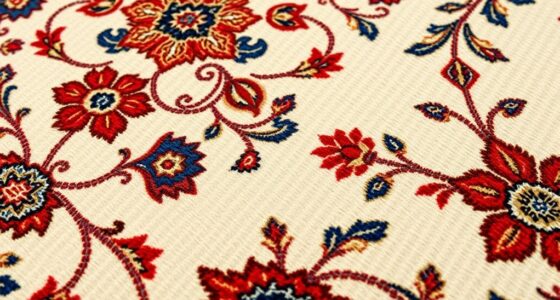
Have you ever noticed subtle color variations or shimmering lines on a finished rug? Those delicate shifts in hue and light aren’t flaws; they’re signs of the rug’s craftsmanship and natural beauty. This phenomenon, known as abrash, is a hallmark of hand-knotted rugs and adds a unique character that machine-made rugs simply can’t replicate. When inspecting a rug, the first thing to recognize is how the color shift occurs along the length of the piece. These variations often appear as irregular bands or streaks, subtly contrasting with the overall tone, and they’re caused by differences in the dyeing process or the wool’s natural fibers. Instead of seeing a flaw, you should appreciate abrash as a testament to the artisan’s skill and the rug’s authenticity. Additionally, understanding the home improvement process can help you care for and preserve the beauty of your rug over time.
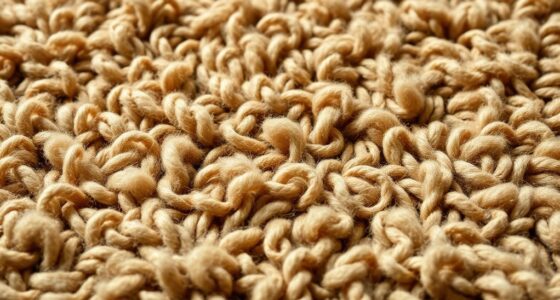
Understanding the weave pattern is essential when trying to identify abrash. Hand-knotting involves tying individual knots onto the warp threads, creating the intricate design you see on the surface. Variations in tension or dye batches during this process can result in slight differences in color. These variations are most noticeable along the weave pattern, especially where the knots are tighter or looser. In some sections, the pile may appear darker or lighter, reflecting the natural dye absorption and the wool’s fiber characteristics. As you examine the rug, pay attention to these subtle shifts—sometimes they form a gentle gradient, other times more abrupt changes. Recognizing these differences can help you distinguish authentic hand-knotted rugs from machine-made imitations, which tend to lack this organic variation.
Frequently Asked Questions
Can Abrash Indicate a Rug’s Age or Provenance?
Yes, abrash can indicate a rug’s age or provenance. As an age indicator, older rugs often display more pronounced and varied abrash due to natural dyeing methods and hand-spun wool. Provenance clues also emerge from specific color shifts, revealing regional dyeing techniques. By recognizing these variations, you can better assess a rug’s history, authenticity, and origin, helping you make more informed buying or collecting decisions.
How Does Abrash Affect a Rug’s Value?
Abrash can increase a rug’s value because those subtle color variations highlight the craftsmanship and add character. Your eye is drawn to the design contrast created by the natural color variation, which makes each rug unique. Collectors often appreciate this authentic detail, recognizing it as a sign of traditional hand-knotting. So, when you see a rug with beautiful abrash, know it enriches the piece’s visual appeal and worth.
Are There Specific Regions Known for Pronounced Abrash?
Think of regions like Persia and Anatolia as master painters, each with their unique palette. Their regional craftsmanship and dyeing techniques create pronounced abrash, much like brushstrokes revealing an artist’s hand. You’ll notice these vibrant color shifts in their rugs, showcasing the local traditions. Such regions celebrate the beauty of natural dye variations, making their rugs not just functional pieces but vivid works of art.
Can Abrash Be Artificially Created or Enhanced?
Yes, abrash can be artificially created or enhanced using artificial dyeing and color enhancement techniques. Skilled artisans may deliberately vary dye lots or use specific dyeing methods to produce intentional color shifts, mimicking natural abrash. Some rugs undergo post-weaving treatments to intensify color differences or create the appearance of abrash, giving the piece a more unique, aged, or rustic look.
How Should I Care for a Rug With Visible Abrash?
Imagine your rug’s warm, shifting hues like a sunset—embrace its unique abrash. To care for it, follow gentle cleaning guidelines, avoiding harsh chemicals that can dull the colors. Regularly vacuum without the beater bar, and rotate the rug to prevent uneven wear. Keep it away from direct sunlight to preserve its color variations, and seek professional help for deep cleaning or repairs. Your rug’s beauty deserves tender care.
Conclusion
Now that you know how to spot abrash, you can truly appreciate the dance of color shifts in every rug. Think of it as a sunset’s glow—each hue blending seamlessly, yet uniquely shifting with every glance. Embrace these beautiful variations, for they tell a story of craftsmanship and history. So, next time you admire a hand-knotted rug, see the vivid tapestry of colors whispering tales, inviting you to see beyond the surface and into its soul.