
Persian rugs have a rich history that dates back thousands of years in ancient Persia, where weaving was both a craft and a cultural symbol. Each rug reflects regional influences, motifs, and traditional techniques passed down through generations. From natural dyes to intricate knotting methods, these textiles symbolize artistry and heritage. Their designs evolved with history, and today, they fuse traditional craftsmanship with modern styles. Continuing will reveal more about their fascinating journey from ancient Persia to modern Iran.
Key Takeaways
- Persian rugs date back thousands of years, symbolizing cultural identity and artistic expression in ancient Persia.
- Traditional weaving methods and natural dyeing techniques have been passed down through generations.
- Regional styles and motifs evolved under influences from dynasties, trade routes, and cultural exchanges.
- Despite modern influences, craftsmanship and symbolism remain central to Persian rug-making.
- Today, Persian rugs continue as a blend of ancient traditions and contemporary innovation in Iran.
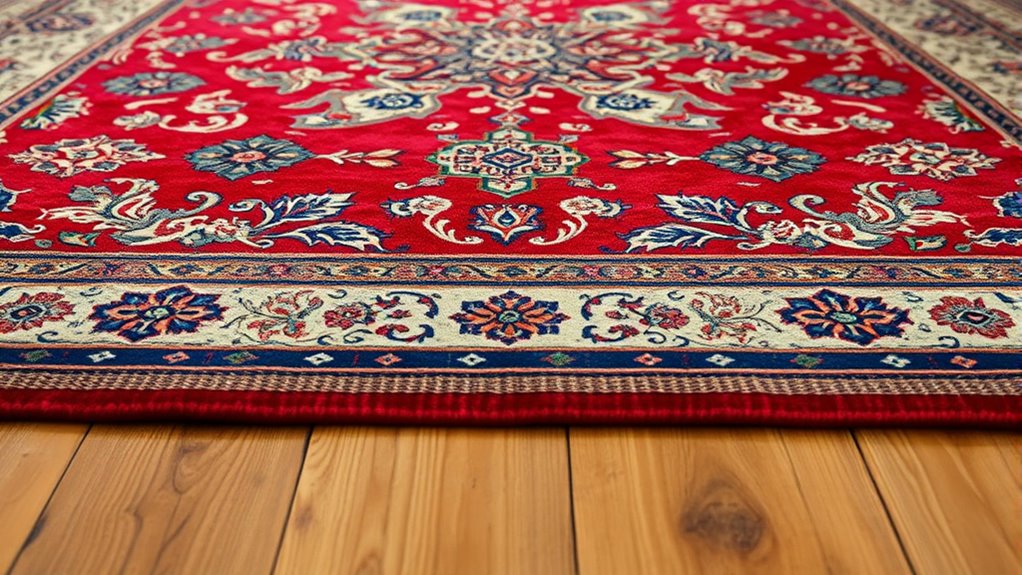
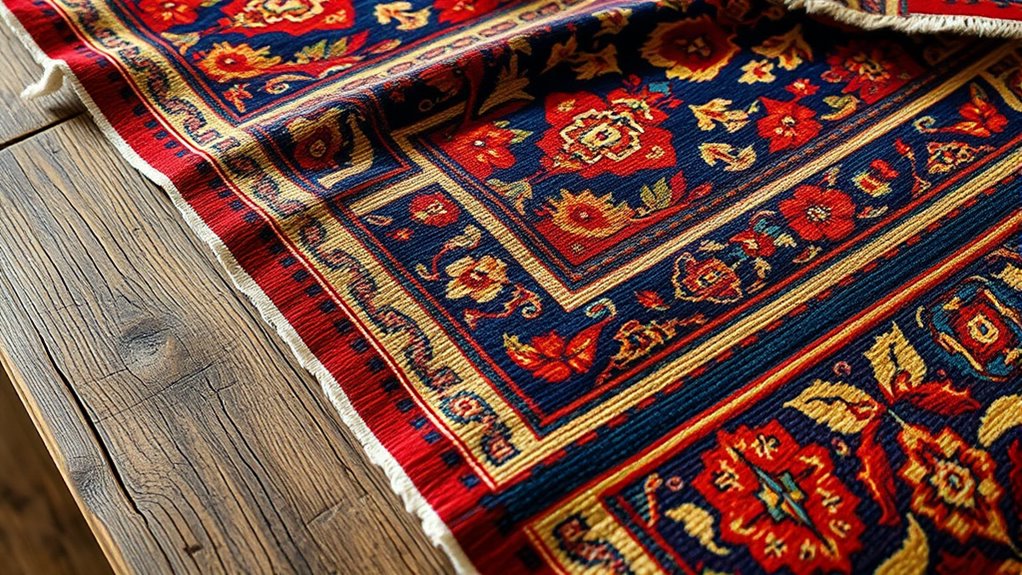
Have you ever wondered how Persian rugs have become symbols of artistry and tradition? The story begins thousands of years ago in ancient Persia, where weaving these intricate textiles was more than just a craft—it was a way of life. The mastery of weaving techniques has been passed down through generations, each adding their own touch to create unique patterns and designs. From simple, functional pieces to elaborate works of art, the weaving process involves meticulous craftsmanship. You might imagine artisans sitting at their looms, carefully knotting wool, silk, or cotton into detailed motifs that tell stories or symbolize cultural beliefs. These weaving techniques, such as symmetrical and asymmetrical knotting, determine the rug’s durability and appearance, giving each piece its distinct character. High-quality materials are essential for producing durable and vibrant Persian rugs, ensuring their lasting beauty over centuries. Dyeing methods also play an essential role in defining the beauty of Persian rugs. Traditionally, natural dyes sourced from plants, minerals, and insects provided vibrant, long-lasting colors. For example, madder root yielded rich reds, indigo produced deep blues, and pomegranate skins created warm oranges and browns. The process of dyeing fibers was an art in itself; artisans would carefully prepare and test each batch to guarantee the colors were both vivid and fast, resisting fading over time. This careful selection of dyeing techniques meant that every rug was a unique blend of colors, often reflecting regional influences or particular aesthetic preferences. Over centuries, these natural methods gave way to synthetic dyes, but many artisans still prefer traditional dyes for their depth and authenticity, preserving a critical part of Persian textile heritage. Throughout history, Persian rugs have served not only as functional items but as symbols of cultural identity and artistic expression. Their intricate designs often incorporate symbolic motifs, such as floral patterns, medallions, or geometric shapes, each carrying specific meanings. As Persian society evolved, so did the styles and techniques used in rug making, influenced by various dynasties, trade routes, and cultural exchanges. Despite the passage of time, the core craftsmanship—rooted in centuries-old weaving techniques and dyeing methods—remains central to Persian rug making today. Modern artisans continue to honor tradition while experimenting with new designs and materials, guaranteeing that these beautiful textiles retain their significance in both history and contemporary life. When you look at a Persian rug, you’re witnessing a centuries-old legacy of craftsmanship, culture, and artistry that continues to thrive in every knot and color.
Frequently Asked Questions
How Are Persian Rug Patterns Chosen Historically?
You see that Persian rug patterns are chosen based on their symbolic meanings and regional symbolism. Weaving communities select motifs that reflect their cultural beliefs, natural surroundings, and spiritual values. These designs often tell stories or convey blessings, with specific patterns representing different regions. By understanding these symbols, you can appreciate how each rug’s pattern connects to its cultural roots and regional identity, making each piece uniquely meaningful.
What Are the Traditional Dyes Used in Persian Rugs?
Think of traditional dyes as the palette of a master painter. You’ll find natural dyes like madder, indigo, pomegranate, and saffron, which give Persian rugs their rich, lasting colors. In contrast, synthetic dyes entered more recently, offering brighter and more uniform shades. You choose natural dyes for authenticity and depth, while synthetic dyes might appeal if you want vibrant, consistent hues that mimic tradition.
How Has Persian Rug Weaving Technology Evolved Over Centuries?
You see that Persian rug weaving technology has evolved considerably over centuries. You’ll notice improvements in weaving techniques, like the development of knotting styles such as the Persian (Senneh) and Turkish (Ghiordes) knots, which enhance durability and detail. Dyeing methods have also advanced, incorporating natural dyes with better colorfastness. These innovations allow you to appreciate the intricate craftsmanship and rich history woven into each rug, reflecting centuries of artistic progress.
Which Regions in Iran Are Famous for Specific Rug Styles?
You’ll notice that Tabriz, in Iran’s northwest, is famous for intricate floral patterns influenced by its mountainous climate, which fosters detailed designs. Kashan, with its arid climate and rich history, produces luxurious, silk-rich rugs symbolizing elegance. Isfahan’s rugs feature shimmering, symmetrical motifs reflecting Persian artistry, while Shiraz’s warm, sunny climate inspires bold, vibrant designs full of regional symbolism. Each region’s climate shapes its unique rug style and cultural expression.
How Do Modern Designers Incorporate Persian Motifs Today?
Modern designers incorporate Persian motifs into contemporary textile art by blending traditional patterns with innovative techniques. They fuse these motifs with modern aesthetics, creating a fresh look that respects cultural heritage. You might see traditional floral and geometric designs reimagined in bold colors or abstract forms, illustrating a fusion of traditional motifs. This approach keeps Persian rug artistry alive, making it relevant and appealing in today’s design scene.
Conclusion
As you explore the rich tapestry of Persian rugs, you’re walking through centuries of artistry and tradition woven into every knot. These rugs are more than just beautiful textiles; they’re living stories, echoing Persia’s soul through time. When you admire their intricate patterns, remember you’re holding a piece of history that’s as timeless as a river, flowing endlessly with culture and passion. Embrace these treasures, and let their beauty inspire your own story.