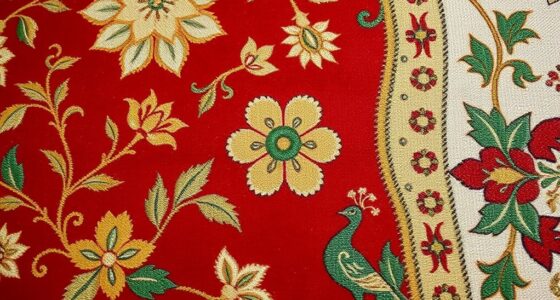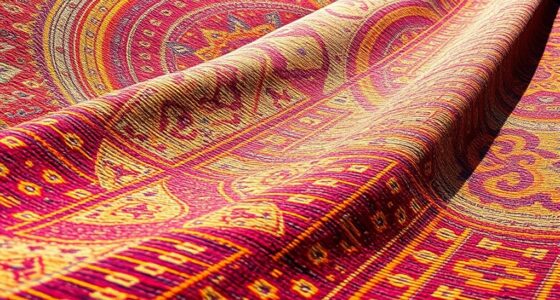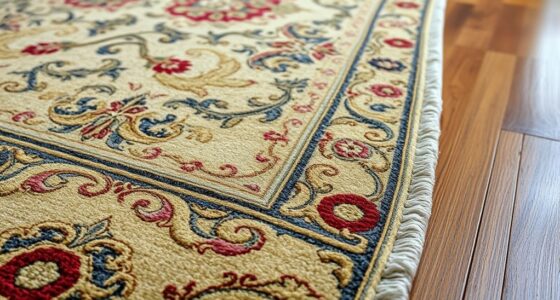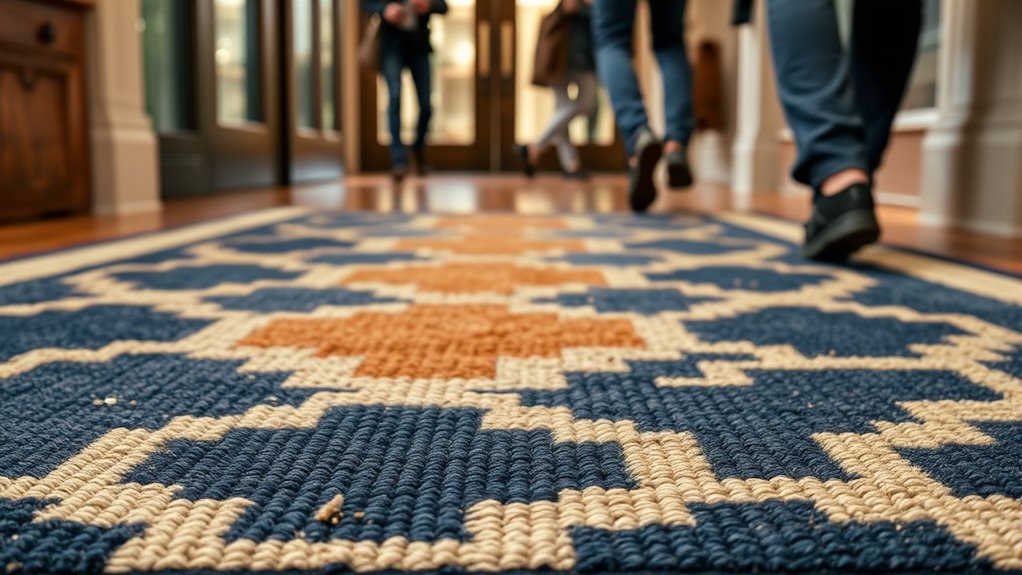

For high-traffic entryways, opt for durable rug weaves like dense wool or synthetic fibers, which resist crushing, staining, and wear. Low-pile rugs are easier to maintain, trap less dirt, and stay looking fresh longer. Berber or loop pile rugs add strength but can snag or trap debris. Combining sturdy materials with a pattern that hides dirt helps guarantee your rug stays attractive and functional. Keep exploring to discover more tips for choosing the perfect entryway rug.
Key Takeaways
- Opt for dense, tightly woven weaves like Berber or loop pile to resist crushing and maintain appearance over time.
- Choose low-pile rugs for easier cleaning, stain resistance, and durability in high-traffic areas.
- Reinforced weaves improve resistance to wear, extending the rug’s lifespan in busy entryways.
- Pattern diversity and contrasting textures help hide dirt, stains, and signs of wear effectively.
- Consider natural fiber blends or synthetic options for eco-friendliness, resilience, and low-maintenance performance.
Natural Fiber Weaves for Durability

Natural fiber weaves are an excellent choice for high-traffic entryways because they combine strength with sustainability. These rugs often use natural fiber blends, which enhance durability while maintaining eco-friendly qualities. You’ll find that many natural fibers are dyed with eco friendly dyes, reducing environmental impact without sacrificing vibrant colors. The inherent resilience of these fibers makes them suitable for busy areas, resisting wear and tear over time. Additionally, their eco-conscious production aligns with sustainable living goals, offering both practicality and peace of mind. When choosing a rug, look for natural fiber blends like jute, sisal, or hemp, as these materials provide a sturdy foundation for high-traffic zones. Their durability, combined with eco-friendly dyes, ensures your entryway stays fresh and resilient for years. Incorporating vertical storage solutions can further maximize space and keep entryways organized and clutter-free. Proper maintenance, such as regular vacuuming and prompt spot cleaning, can extend the lifespan of these durable natural fiber rugs, keeping them attractive despite frequent use.
Wool Rug Weaves and Their Resilience
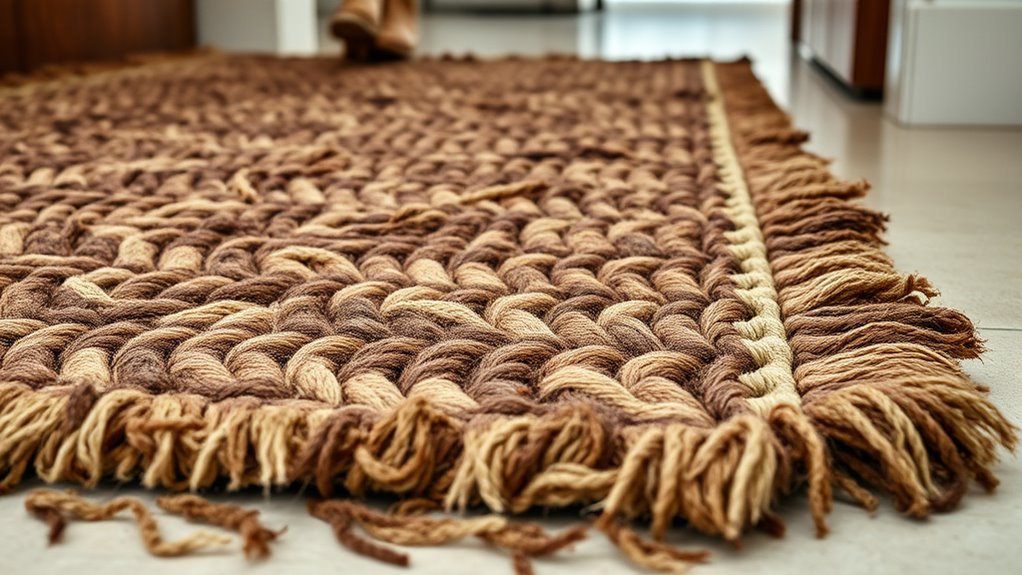
Wool fibers are naturally tough, making them an excellent choice for high-traffic areas. The way the rug is woven, with dense patterns and textured designs, can also boost its resilience. Additionally, durable fibers contribute significantly to the longevity of wool rugs. For added strength, some wool rugs feature reinforced weaves that further enhance their durability. These weaving techniques help the rug resist wear and tear and maintain their appearance over time. Proper maintenance and quality craftsmanship further ensure that wool rugs stand up to daily use and retain their lasting beauty.
Durability of Wool Fibers
When it comes to high-traffic entryways, choosing a rug that can withstand constant foot traffic is essential, and wool fibers excel in this regard. Wool’s natural resilience makes it highly durable, resisting crushing and crushing over time. Its elasticity helps the fibers bounce back after heavy use, maintaining the rug’s appearance longer. When considering color coordination, wool rugs often come in rich, fade-resistant dyes that hold up well against sunlight and wear. Budget considerations also favor wool, as its durability means you won’t need to replace the rug frequently, providing long-term savings. Plus, wool’s inherent stain resistance makes it easier to maintain, keeping your entryway looking fresh and inviting despite heavy traffic. Additionally, fiber resilience contributes to wool’s ability to maintain its shape and appearance over years of use. Wool’s natural insulating properties can also help in maintaining a comfortable environment in your entryway. Moreover, moisture absorption helps wool fibers resist mold and mildew in humid conditions, enhancing its suitability for entryways. Furthermore, the environmental benefits of wool, being a natural and biodegradable fiber, make it an eco-friendly choice for sustainable living. Overall, wool fibers offer the toughness and longevity needed for high-traffic entryways.
Patterns and Textures for Traffic
Choosing the right pattern and texture for your high-traffic entryway is crucial, as these elements influence both durability and appearance. Wool rug weaves with varied pattern diversity can better hide dirt and wear, maintaining a fresh look longer. Selecting patterns that complement your color coordination creates a cohesive aesthetic that withstands frequent foot traffic. Textured weaves like Berber or loop pile are resilient, offering added strength and resilience. To elevate your rug’s functionality and style, consider these factors:
- Opt for tightly woven patterns that resist crushing and flattening
- Use contrasting textures to mask dirt and stains effectively
- Incorporate pattern diversity for visual interest and disguise wear
- Match textures with your color scheme for a balanced, sophisticated look
- Choosing durable materials like wool ensures your rug remains resilient in high-traffic areas.
- Additionally, understanding rug weave construction can help you select options that maximize longevity and appearance.
These choices ensure your entryway remains attractive and durable over time.
Low-Pile vs. High-Pile Rugs in Entryways

When choosing between low-pile and high-pile rugs for your entryway, consider how durability and wear resistance will impact their longevity. You’ll also want to think about how easy they are to clean and maintain, especially in high-traffic areas. Additionally, the coat type of the rug can influence its ability to hide dirt and stains, making maintenance easier over time. For example, certain rug materials are more resistant to heavy foot traffic and can help extend the lifespan of your rug. Ultimately, weigh the comfort and aesthetic appeal to find the best fit for your space and style. For added protection and to preserve their appearance, selecting vetted rug materials that are resistant to heavy foot traffic can be beneficial, especially when choosing from options known for their durability.
Durability and Wear Resistance
Durability and wear resistance are key factors to contemplate when selecting entryway rugs, as high foot traffic can quickly damage less sturdy options. Low-pile rugs generally withstand constant use better, resisting color fading and maintaining their appearance longer. High-pile rugs offer softer comfort but tend to trap allergens and debris, making them less suitable for busy entryways. Consider these points:
- Low-pile rugs resist wear and maintain color vibrancy over time
- High-pile rugs may trap allergens, requiring more frequent cleaning
- Both types can suffer from fraying if not properly reinforced
- Material choice influences longevity, with nylon and wool offering superior durability
- Addressing traffic patterns and choosing appropriate weaves can extend your rug’s lifespan. Understanding family influences and how they impact your choice can also help in selecting a rug that suits your household needs. Additionally, selecting appropriate weaves that align with your lifestyle can further enhance durability and ease of maintenance.
- Incorporating rug backing can also improve a rug’s stability and longevity, especially in high-traffic areas.
Choosing the right weave depends on your traffic level and maintenance willingness, ensuring your entryway stays durable and inviting.
Ease of Cleaning and Maintenance
While low-pile rugs are generally easier to clean and maintain, high-pile rugs can pose more challenges in busy entryways. Low-pile options tend to resist stains better because dirt and moisture don’t penetrate as deeply, making vacuuming and spot cleaning more effective. They also maintain their appearance longer, thanks to superior colorfastness, which prevents fading from frequent cleaning or exposure to sunlight. High-pile rugs, on the other hand, trap more dirt and debris, requiring more frequent and careful cleaning. They can be more difficult to keep stain-free, especially if spills aren’t addressed immediately. Incorporating testing methodologies into cleaning routines can help evaluate the durability and stain resistance of different rug styles. If you want a rug that’s easier to care for in a high-traffic area, low-pile weaves are your best bet for simplicity and durability.
Comfort and Aesthetic Appeal
Choosing between low-pile and high-pile rugs in your entryway isn’t just about maintenance; it also impacts comfort and visual appeal. Low-pile rugs offer a sleek, modern look, making color coordination and traditional patterns stand out clearly. They feel firm underfoot, which suits high-traffic areas. High-pile rugs add plushness and softness, creating a cozy atmosphere that invites guests inward. They can also enhance the aesthetic with their texture and depth, complementing traditional patterns or bold color schemes. When selecting, consider how the rug’s pile height influences the overall ambiance of your space. Additionally, understanding the types of rug weaves can help you choose a weave that balances durability and style for high-traffic entryways. For a balance of comfort and style, opt for a rug that aligns with your décor’s colors and patterns while ensuring durability for high-traffic use.
Berber and Loop Pile Rugs: Strengths and Weaknesses
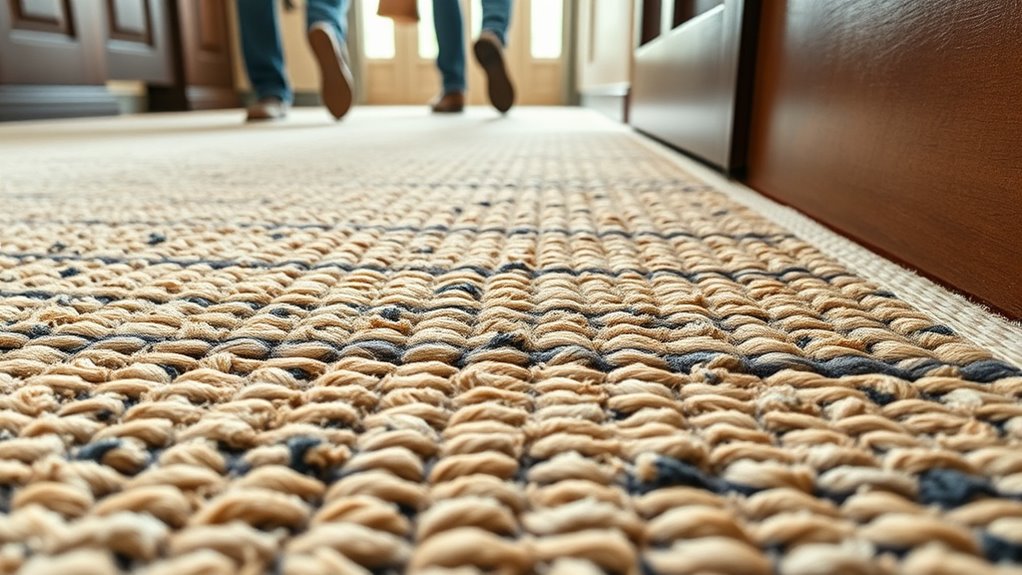
Berber and loop pile rugs are popular choices for high-traffic entryways due to their unique construction and appearance. Their tightly looped fibers make them durable, resisting crushing and wear. However, their dense loops can trap dirt, dust, and allergens, leading to allergen buildup if not cleaned regularly. Over time, exposure to sunlight and heavy foot traffic may cause color fading, diminishing their vibrant look. While their sturdy design handles frequent use well, the loops can snag or unravel if caught on sharp objects or rough shoes. This makes maintenance essential to preserve their appearance and longevity. Overall, these rugs excel in durability but require diligent cleaning and care to prevent issues like allergen buildup and color fading, ensuring they stay functional and attractive.
Synthetic Fibers and Their Practicality
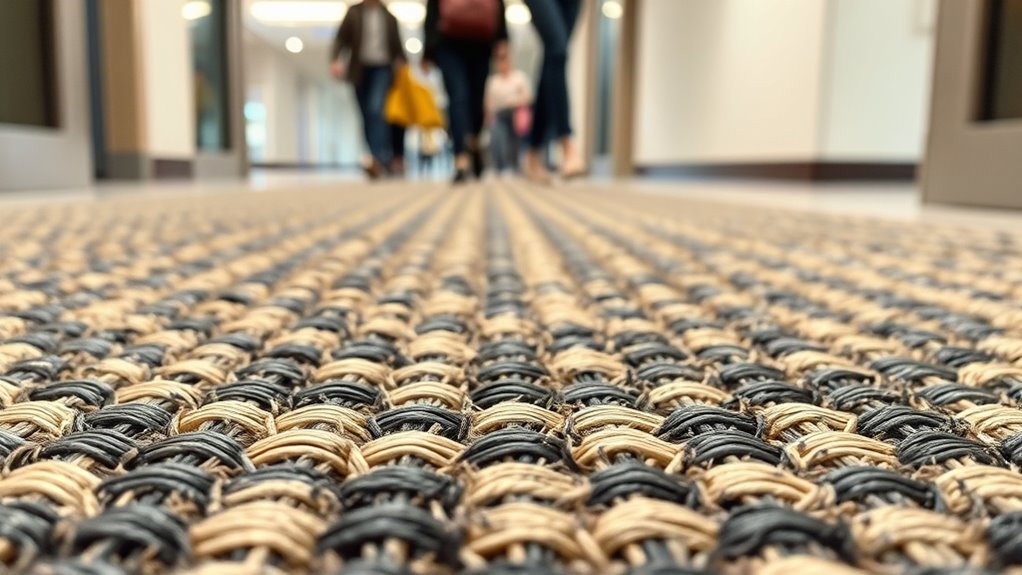
Synthetic fibers have become a popular alternative to natural materials for high-traffic entryway rugs, offering practical benefits that address some of the challenges posed by traditional options. Their synthetic durability ensures the rug withstands constant foot traffic without wearing down quickly, while fiber resilience helps the rug bounce back from crushing and flattening. These qualities make synthetic fibers ideal for busy entryways that require long-lasting performance. Additionally, synthetic fibers often resist stains, moisture, and fading, maintaining their appearance over time.
Synthetic fibers are durable, stain-resistant, and ideal for busy entryways needing long-lasting performance.
You’ll also benefit from:
- Easy maintenance and cleaning routines
- Cost-effective options compared to natural fibers
- Wide variety of textures and colors
- Enhanced resistance to mold and mildew
Braided and Plaited Rug Weaves
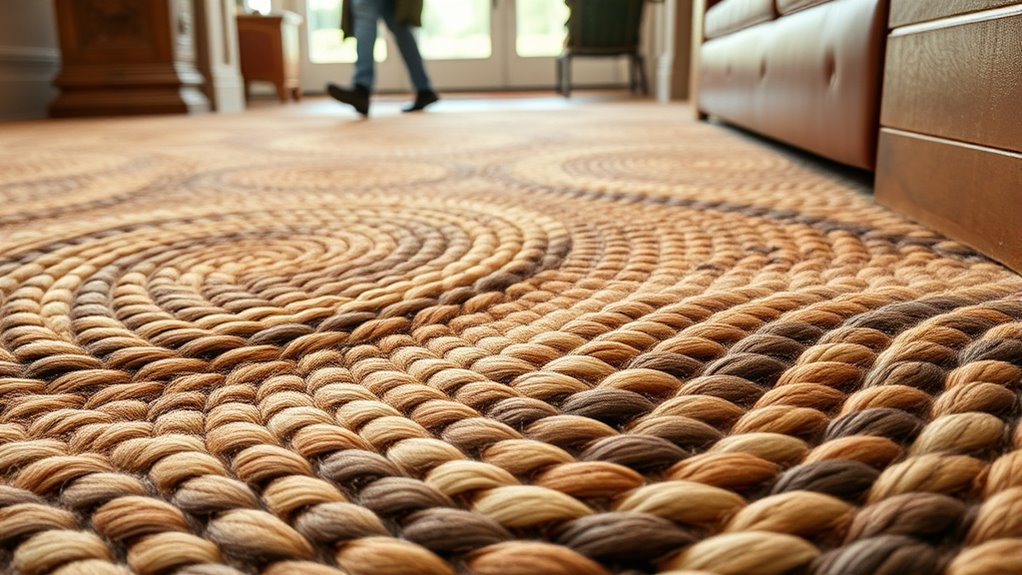
Have you noticed how braided and plaited rug weaves add both durability and visual interest to high-traffic entryways? These rugs typically feature intricate knot patterns and weaving techniques that strengthen their structure. Braided designs involve twisting three or more strands into a tight, resilient braid, making them highly resistant to wear. Plaited rugs often use similar techniques, interlacing strips of material to create a sturdy, textured surface. The knot patterns in these weaves distribute foot traffic evenly, reducing fraying and extending the rug’s lifespan. Plus, their handcrafted appearance adds a rustic, inviting charm to your entryway. With their resilience and appealing texture, braided and plaited weaves are excellent choices for areas that experience constant foot traffic.
Considerations for Easy Maintenance and Cleaning
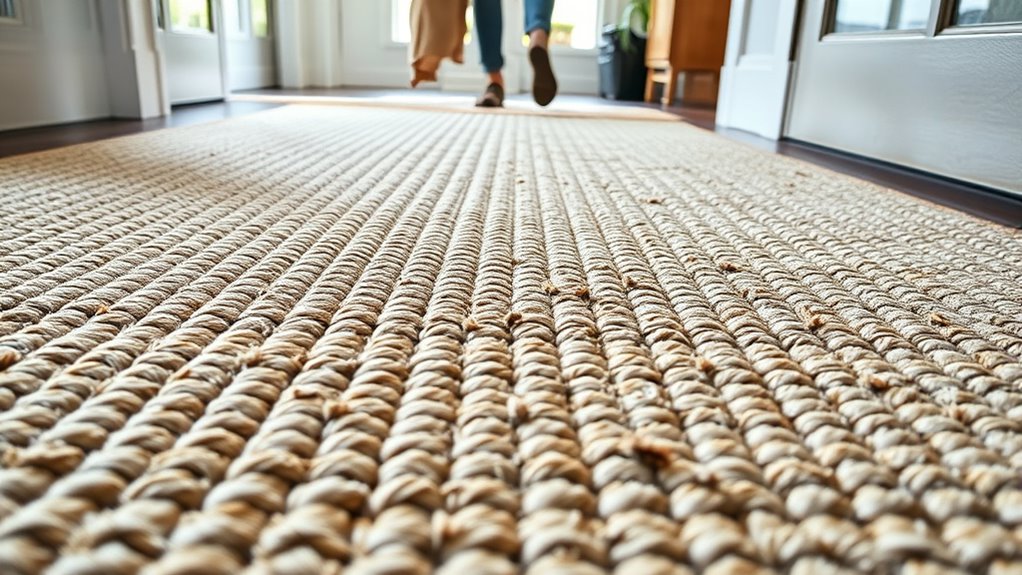
When choosing a high-traffic entryway rug, ease of maintenance and cleaning should be top priorities, as these areas are prone to dirt, mud, and frequent wear. You want a rug that can stand up to daily abuse while maintaining its appearance. Opt for durable materials like low-pile or tightly woven fibers that resist stains and can be easily vacuumed or spot cleaned. Consider how the rug’s color coordination fits your décor, making sure it hides dirt and stains effectively. Seasonal versatility is also key; choose neutral tones or adaptable patterns that transition seamlessly throughout the year.
- Select rugs with stain-resistant finishes or treatments
- Prioritize easy-to-clean materials like polypropylene or nylon
- Choose versatile designs that match various seasonal themes
- Make certain the rug’s backing is non-slip and easy to maintain
Combining Style and Functionality in Rug Selection

Balancing style and functionality in rug selection guarantees your entryway remains welcoming while handling foot traffic effectively. To achieve this, consider rugs that feature seasonal color schemes, which can refresh your space throughout the year and match different decor themes. Cultural rug patterns add visual interest and personality, blending tradition with modern appeal. Look for durable weaves like flatweaves or low-pile options that resist dirt and wear, making maintenance easier. Combining these elements ensures your rug complements your decor while serving its practical purpose. By choosing designs that reflect your style and fulfill functional needs, you create an inviting, resilient entryway that withstands daily use without sacrificing aesthetic appeal.
Frequently Asked Questions
Which Rug Weaves Best Resist Heavy Foot Traffic?
When selecting a rug, you want to contemplate durability considerations and aesthetic appeal. For heavy foot traffic, you should choose rug weaves like Berber, flatweave, or low-pile options, as they resist wear and tear better. These weaves maintain their look longer, even with frequent use. Your goal is to find a balance between style and strength, ensuring your rug stays attractive and durable over time in busy entryways.
How Do I Choose a Rug Weave for High-Moisture Entryways?
When choosing a rug weave for high-moisture entryways, prioritize practicality and protection. Durability considerations are key, so opt for tightly woven materials like flatweaves or synthetic fibers that resist water and wear. Maintenance tips include quick drying, regular cleaning, and avoiding excess moisture buildup. This careful choice guarantees your entryway remains clean, dry, and durable, making your space both functional and inviting.
Are Certain Rug Weaves Better for Allergy Sufferers?
If you’re concerned about allergies, look for allergy-friendly materials and hypoallergenic rug weaves. These are designed to reduce dust, pollen, and pet dander buildup, making them better for allergy sufferers. You should choose rugs with tightly woven fibers, like wool or synthetic options, that trap fewer allergens and are easier to clean. Regular vacuuming and professional cleaning also help maintain a healthier environment.
How Do Rug Weaves Impact Indoor Air Quality?
Rug weaves considerably impact indoor air quality by influencing airborne allergens and dust accumulation. Tightly woven rugs trap less dust and allergens, making them better for maintaining clean air, especially if you’re sensitive. Looser weaves tend to collect more dust and allergens, which can get into the air and worsen allergies or asthma. Choosing a dense, tightly woven rug helps reduce airborne allergens, keeping your indoor environment healthier.
What Are the Most Eco-Friendly Rug Weaving Options?
When exploring eco-friendly rug weaving options, you’re opening the door to sustainability. Opt for rugs crafted from sustainable materials like organic cotton, wool, or jute, which reduce environmental impact. Natural dyes, derived from plants and minerals, add vibrant color without harmful chemicals. These choices not only support eco-conscious practices but also create healthier indoor spaces, proving that beauty and sustainability can go hand in hand in your home décor.
Conclusion
Choosing the right rug weave for high-traffic entryways is like planting a sturdy tree in a busy garden — it needs to withstand constant activity while remaining beautiful. By selecting durable fibers, easy-to-clean designs, and styles that match your lifestyle, you create a welcoming entrance that endures every step. With the right weave, your entryway becomes a resilient anchor, standing strong against daily wear and tear while inviting guests to step inside with confidence.