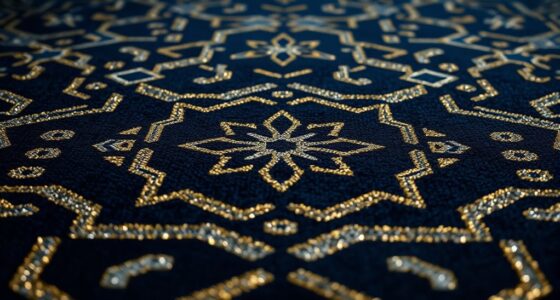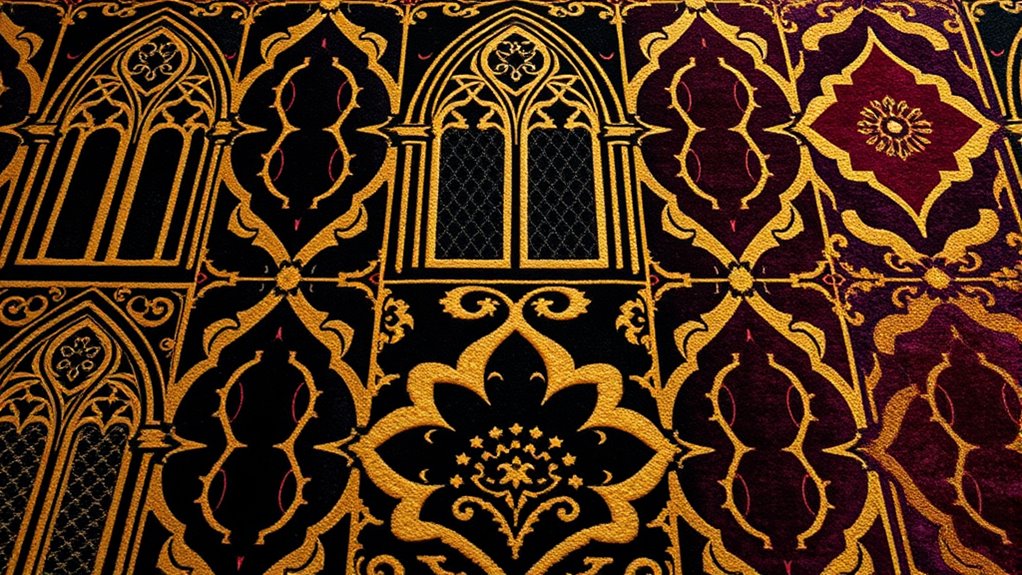

Gothic and Art Deco rug styles reflect rich history and craftsmanship, with Gothic designs featuring intricate symbols like pointed arches, religious motifs, and medieval themes that convey protection and faith. Art Deco rugs emphasize bold geometric patterns, symmetry, and metallic accents symbolizing progress and luxury. Both styles showcase artistic innovation—Gothic through detailed embroidery, and Art Deco through sleek, machine-like techniques. Exploring these styles offers insight into how past aesthetics influence modern textile art—more clues await if you continue exploring.
Key Takeaways
- Gothic rugs feature intricate symbolism like pointed arches and religious motifs, reflecting medieval spiritual and architectural themes.
- Art Deco rugs emphasize bold geometric patterns, symmetrical shapes, and metallic accents, symbolizing modernity and technological progress.
- Both styles serve as visual narratives, linking historical artistic values with contemporary aesthetics through their motifs and symbolism.
- Craftsmanship techniques such as detailed knotting, embroidery, and the use of metallic threads preserve the symbolic and artistic integrity of each style.
- These rug styles embody cultural and historical ideals—Gothic with spiritual grandeur, Art Deco with innovation and optimism—shaping their unique visual languages.

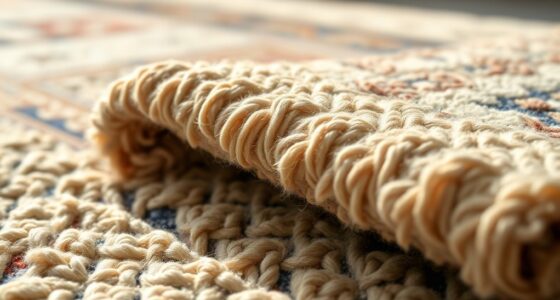
Have you ever wondered how historical design movements influence rug styles today? It’s fascinating to see how the rich symbolism and motifs from past eras continue to shape modern rug designs. When you look at Gothic and Art Deco rugs, you’re not just admiring their beauty—you’re exploring a visual language that tells stories from centuries ago. Gothic rugs often feature intricate symbolism and motifs, such as pointed arches, quatrefoils, and religious iconography, reflecting the spiritual and architectural grandeur of the Middle Ages. These designs aren’t random; they convey meaning, from protection and faith to power and authority. The craftsmanship techniques used in Gothic rugs are just as significant. Artisans employed detailed knotting and weaving methods, often incorporating metallic threads or elaborate embroidery, to create textured effects that add depth and richness. These techniques required exceptional skill, and they helped preserve the symbolism embedded in each piece. Additionally, the craftsmanship techniques in Gothic rugs demonstrate a high level of detail and artistry that continue to inspire modern textile work. Meanwhile, Art Deco rugs bring a different flavor, emphasizing bold geometric patterns and streamlined motifs that symbolize modernity and progress. You’ll notice how these rugs often feature symmetrical shapes, sunbursts, zigzags, and stylized floral elements—all designed to evoke a sense of luxury and innovation. The craftsmanship techniques in Art Deco pieces focus on precision and symmetry, with machine-made and handwoven methods blending to produce sleek, polished surfaces. The motifs themselves serve as visual shorthand for the era’s optimism, celebrating technological advancements and artistic experimentation. The use of contrasting colors and metallic accents in Art Deco rugs further accentuates their elegant, glamorous appeal, making them a reflection of the cultural shifts of the early 20th century. Understanding the craftsmanship techniques behind these styles helps you appreciate their enduring appeal. Gothic artisans mastered complex knotting and embroidery, often working with limited tools but remarkable patience. Their focus on detailed craftsmanship ensured the longevity of symbols and motifs that still resonate today. Conversely, Art Deco’s emphasis on symmetry and geometric precision showcases advancements in industrial techniques, allowing for more consistent production and affordability without sacrificing visual impact. By recognizing these craftsmanship techniques and the symbolism woven into each design, you gain a deeper respect for how these historical movements continue to influence contemporary rugs. They’re not just decorative pieces—they’re tangible links to cultural values, technological progress, and artistic innovation from the past. When you choose a Gothic or Art Deco rug, you’re embracing a piece of history that combines artistry, symbolism, and craftsmanship in a way that’s both timeless and relevant.
Frequently Asked Questions
How Did Gothic and Art Deco Rug Designs Influence Modern Interior Decor?
Gothic and Art Deco rug designs influence your modern interior decor through their use of medieval symbolism and striking geometric patterns. You’ll notice these elements add depth and visual interest, blending historical artistry with contemporary style. By incorporating such rugs, you create a space that feels both timeless and stylish, showcasing your appreciation for rich symbolism and bold patterns that elevate any room’s aesthetic.
What Materials Were Predominantly Used in Gothic and Art Deco Rugs?
You’ll find that Gothic and Art Deco rugs mainly used wool and silk, creating textures that are almost divine. You get a rich palette thanks to intricate dyeing methods like vegetable dyes and mineral-based pigments, which brought vivid colors to life. Textile techniques such as hand-knotting and weaving defined their craftsmanship, making these rugs not just functional but stunning works of art that have inspired modern decor.
Are Gothic and Art Deco Rug Styles Regionally Specific?
Yes, Gothic and Art Deco rug styles are regionally specific, reflecting local craftsmanship and cultural influences. Gothic rugs often showcase intricate designs from European regions, emphasizing medieval motifs, while Art Deco rugs highlight the stylistic evolution of the early 20th century with bold geometric patterns. You’ll find these styles adapt to regional materials and techniques, making each piece unique to its cultural origin and historical context.
How Can I Identify Authentic Gothic or Art Deco Rugs Today?
Think of spotting an authentic Gothic or Art Deco rug as finding a rare gem in a sea of fakes. You can identify genuine pieces by examining fiber authenticity—natural fibers like wool or silk often indicate quality. Look for craftsmanship indicators such as precise detailing, symmetrical patterns, and hand-knotted construction. Trust your senses; authentic rugs radiate history and skill, making them truly timeless treasures you can cherish.
What Are the Common Color Schemes in Gothic Versus Art Deco Rugs?
You’ll notice gothic rugs often feature dark, moody color palettes contrasted with deep reds, blacks, and rich jewel tones, emphasizing dramatic pattern symbolism. In contrast, art deco rugs highlight bold, vibrant hues like gold, black, and metallic accents, combined with geometric designs. The color palette contrasts reflect their distinct eras, with gothic’s somber tones and symbolism, while art deco’s lively, luxurious colors emphasize modern elegance and symmetry.
Conclusion
So, next time you choose a rug, remember you’re actually picking a piece of history—whether it’s the dramatic Gothic or the glamorous Art Deco. Who knew that beneath your feet lies centuries of craftsmanship and bold design? Ironically, while these styles once defined eras, today they just add a touch of timeless elegance to your space. So go ahead, walk all over history—literally—and make your home a stylish statement.