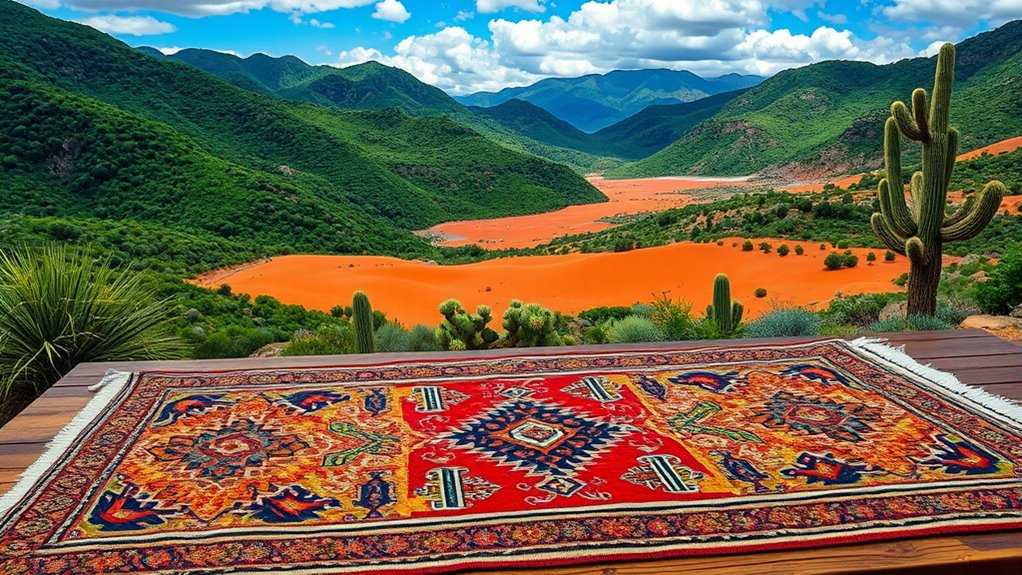

Your region’s geography shapes how your rug looks by influencing the materials used, techniques, and motifs. If you live near water, you might see silk or cotton incorporated in the designs, while sheep-rich areas prefer wool for warmth and tradition. The environment also affects patterns, with some symbols representing protection or spirituality. Exploring more will reveal how these regional influences weave together to create meaningful, distinctive rugs that tell their unique story.
Key Takeaways
- Regional resources dictate rug materials, such as wool in sheep-rich areas or silk near trade routes.
- Climate influences rug durability, texture, and the choice of weaving or knotting techniques.
- Proximity to rivers and trade routes affects the use of silk or cotton in regional rug designs.
- Environmental factors shape motifs symbolizing local flora, fauna, and spiritual beliefs.
- Geographic features inspire specific patterns and symbols that reflect cultural identity and environmental adaptation.
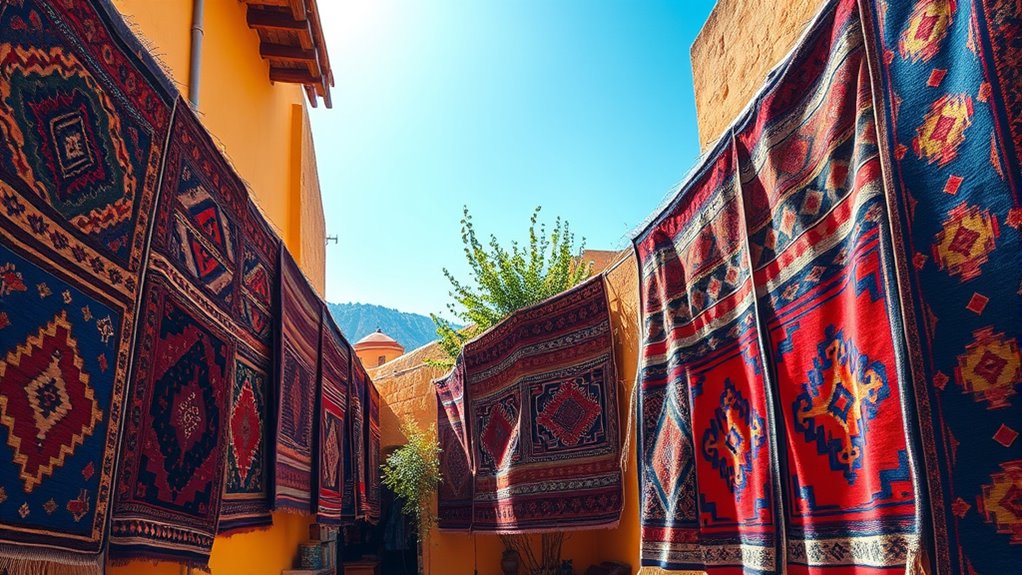
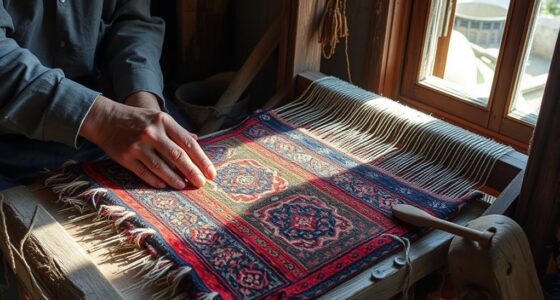
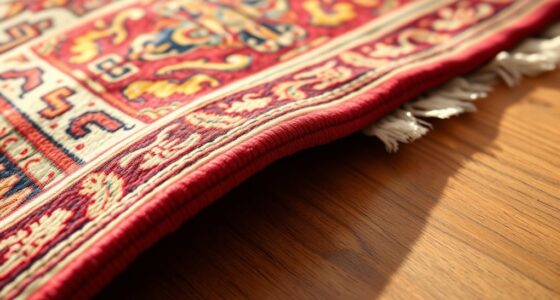
Have you ever wondered how regional influences shape the unique look of rugs around the world? It’s fascinating to see how the materials and techniques used in rug-making reflect the environment and culture of a specific area. When you examine a rug, you’re not just looking at its colors and patterns—you’re uncovering a story woven into every thread. Each region has its preferred materials, which influence how the rug is produced and how durable or vibrant it appears. For example, Persian rugs often utilize fine wool and silk, giving them a luxurious feel and intricate detail. In contrast, Turkish kilims are typically made with cotton, resulting in more straightforward, flat-weave designs. The techniques employed also vary, from knotting methods to weaving styles, which directly impact the rug’s texture and appearance.
Materials and techniques are deeply intertwined with the cultural significance of each region. In many cases, the choice of materials isn’t arbitrary; it’s rooted in tradition, climate, and available resources. For instance, regions with abundant sheep, like Persia or Central Asia, favor wool because it’s accessible, warm, and easy to work with. Meanwhile, areas near rivers or with access to trade routes might incorporate silk or cotton, reflecting both resource availability and cultural exchange. Techniques like knotting, weaving, or pile construction carry symbolic meanings or serve practical purposes. The Persian knot, often called the pile knot, creates detailed, dense designs that symbolize status and craftsmanship. Conversely, flat-weave kilims, common in Anatolia and North Africa, emphasize simplicity and function, often used as floor coverings or wall hangings.
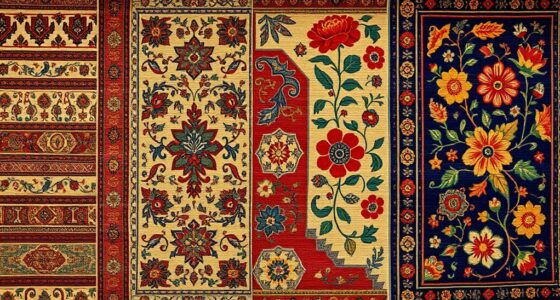
Cultural significance also influences the motifs and symbolism embedded in rug designs. Patterns might represent spiritual beliefs, historical events, or social status. For example, tribal rugs from Central Asia feature geometric shapes that symbolize protection or fertility, while Persian rugs often display floral motifs representing paradise or divine beauty. These designs are passed down through generations, maintaining cultural identity and heritage. The materials and techniques used, combined with symbolic motifs, create a visual language unique to each region. When you study these rugs, you’re witnessing a blend of environmental adaptation, artistic expression, and cultural storytelling. It’s this rich combination that makes regional rugs so enthralling—each one a tangible piece of history, shaped by geography and cultural significance.
Frequently Asked Questions
How Does Climate Affect Rug Dyeing Techniques Across Regions?
Climate influence markedly impacts rug dyeing techniques across regions. In hot, dry climates, artisans often use natural dyes from local plants, which resist fading in strong sunlight. Cooler, wetter areas might favor chemical dyes or different plant sources, ensuring vibrant colors. You’ll notice that natural dyes adapt to climate conditions, helping rugs withstand environmental factors. So, climate shapes the choice of dyes and methods, resulting in region-specific, durable, and beautiful designs.
What Role Do Local Materials Play in Regional Rug Textures?
Think of regional rug textures as a tapestry woven from local materials. You’ll notice natural fibers like wool, silk, or cotton shape the rug’s feel and durability. These materials bring unique texture variation, making each region’s rugs distinct. Your choice of local resources directly influences the rug’s softness, thickness, and overall tactile experience, turning simple fibers into a sensory journey that reflects the land’s character.
How Do Trade Routes Influence Regional Rug Design Elements?
Trade routes, especially at trade hubs, greatly influence regional rug design elements. As you explore these areas, you’ll notice that cultural exchanges introduce new motifs, colors, and techniques, enriching local styles. These hubs become melting pots where artisans adopt and adapt designs from different cultures, creating unique blends. This dynamic exchange guarantees that rug styles evolve continuously, reflecting a vibrant history of trade and cultural interaction.
Are There Specific Symbols Unique to Certain Geographic Areas?
Yes, you’ll find specific symbols unique to certain geographic areas. Cultural motifs and tribal symbols often represent local traditions, beliefs, and history. For example, Persian rugs feature floral patterns, while Navajo designs incorporate geometric tribal symbols. These symbols help identify the origin of a rug and reflect the cultural identity of the region, making each piece a unique expression of its geographic and cultural background.
How Has Globalization Impacted Traditional Regional Rug Styles?
Globalization has revolutionized traditional regional rug styles, transforming them faster than you can blink. You’re now part of a world where cultural preservation often battles modern adaptations, blending old-world charm with contemporary trends. While some fear the loss of authenticity, others embrace the creative fusion, making rugs more diverse and accessible. You get to experience a rich tapestry of influences, keeping regional artistry alive in a globalized world that’s constantly evolving.
Conclusion
As you’ve seen, geography shapes rug design just as much as tradition and artistry do. While a Persian rug’s intricate patterns evoke centuries of history, a contemporary Turkish piece might showcase bold colors and modern motifs. The contrast highlights how regions influence style, yet both reflect a shared human desire to create beauty from their surroundings. In the end, these rugs are both a reflection of place and a demonstration of timeless craftsmanship.