To document your rug’s story, start by gathering all available provenance records, tags, or labels. Photograph key features like motifs, knots, and colors with high resolution. Research the fibers, dyes, and weaving techniques to identify its origin and era. Consult experts or compare similar rugs to verify details. Keeping detailed notes and creating a thorough archive enhances its value and cultural significance. Continuing will reveal more tips to build a detailed provenance record that truly highlights your rug’s unique history.
Key Takeaways
- Gather all available documentation, labels, and provenance records related to the rug’s history.
- Conduct detailed visual analysis of fibers, dyes, weaving techniques, and motifs to identify origins.
- Take high-resolution photographs of key features, including color variations, knots, and craftsmanship details.
- Research similar rugs and consult textile experts or appraisers for accurate provenance insights.
- Create a comprehensive archive combining photographs, notes, and research to preserve the rug’s story for future reference.

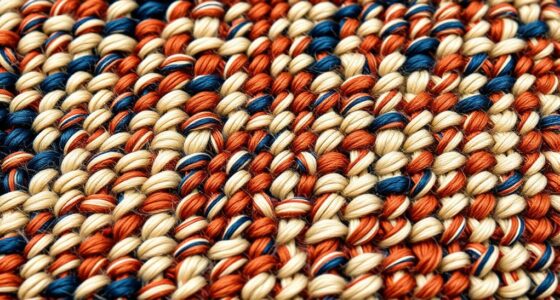
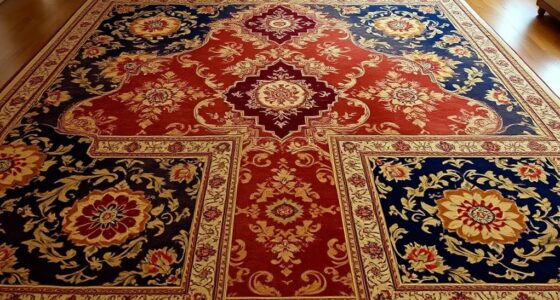
Have you ever wondered about the history behind a beautiful rug? Understanding its story begins long before you lay eyes on its intricate design. Every rug carries a unique narrative, woven through centuries of tradition, craftsmanship, and cultural significance. To truly appreciate this history, you need to document your rug’s provenance thoroughly, creating a detailed archive that captures its journey from origin to your home. This process involves researching its fiber dyeing methods and weaving techniques, which are key to identifying its cultural roots and craftsmanship style. For example, the type of fibers used—wool, silk, cotton—can reveal the region where it was made, while the dyeing process, whether natural or synthetic, offers clues about the time period and local resources. Fiber dyeing techniques, such as indigo dyeing in Central Asia or plant-based dyes in the Middle East, are often tied to specific regions, making them *essential* markers of origin. Similarly, understanding the weaving techniques—like flatweave, knotted pile, or brocade—helps you distinguish between different cultures and artisans’ methods. These techniques aren’t just about aesthetics; they reflect the traditions, skills, and materials available to the weavers. When documenting your rug’s story, start by gathering as much information as possible about its fiber dyeing and weaving styles. Look for any tags, labels, or provenance records that may have come with the piece. If none exist, research similar rugs from the same region or era to identify common characteristics. You can also consult experts or appraisers who specialize in textile history, as they can help decode subtle details that reveal its origins. Take photographs of the rug’s motifs, knots, and color variations, and note any irregularities or unique features that could indicate a specific weaving technique. Keep detailed notes about the colors, fibers, and craftsmanship details, and compare these observations with existing resources like museum collections or scholarly articles. Additionally, advances in projector technology have made it easier for collectors and enthusiasts to analyze intricate textile details with high-resolution imaging. Over time, this archive will become a valuable record of your rug’s history, helping you preserve its story for future generations. Not only will this deepen your appreciation for your piece, but it also adds provenance value should you decide to sell or display it. Ultimately, documenting your rug’s provenance transforms it from a beautiful object into a piece of history, woven with stories of culture, skill, and tradition. By paying attention to fiber dyeing and weaving techniques, you connect with the artisans behind the craft, ensuring their legacy endures through your careful record-keeping.
Frequently Asked Questions
How Can I Verify the Authenticity of My Rug’s History?
To verify your rug’s history, start by seeking expert appraisals from reputable antique rug specialists who can assess its craftsmanship, materials, and age. Research its origin and compare it with documented antique rug valuations. Look for authentic signatures, markings, or unique patterns that match known styles. Additionally, consult provenance records or previous ownership documentation if available. These steps help establish your rug’s story is genuine and accurate.
What Materials Are Best for Preserving Provenance Documents?
You should choose archival materials like acid-free paper, Mylar sleeves, and buffered storage boxes to preserve your provenance documents. These materials prevent deterioration and resist acids that can damage paper over time. Use preservation techniques such as storing documents in a cool, dry environment and keeping them away from direct sunlight. Properly handling documents with clean hands or gloves also helps maintain their condition and guarantees your provenance remains intact for years to come.
How Often Should I Update My Rug’s Provenance Archive?
Think of your rug’s provenance archive as a living tree that needs regular care. You should update it whenever you undertake maintenance, restoration techniques, or discover new details about your rug’s history. Establish a routine maintenance schedule—perhaps annually or after any significant event—to keep the story fresh and accurate. This way, your rug’s story stays vibrant, and its value grows, like a well-tended garden flourishing over time.
Can Digital Archives Replace Physical Documentation Effectively?
Digital archives can effectively substitute physical documentation if you prioritize secure digital storage and regular backups. They make it easier to organize, access, and share your rug’s provenance, but make certain you include authenticity verification methods like certified digital certificates. While digital records are convenient, keep physical copies as a backup to prevent data loss. Combining both ensures your rug’s story remains protected and easily verifiable over time.
What Are Common Mistakes to Avoid When Creating a Provenance Record?
Did you know that 60% of rug disputes stem from poor provenance records? To avoid common mistakes, guarantee your documentation is consistent, accurate, and complete. Don’t overlook the importance of clear ownership verification; vague details can create confusion later. Double-check dates, origins, and previous owners, and keep your records organized. Avoid gaps or discrepancies, as they can weaken your rug’s value and trustworthiness in future transactions.
Conclusion
By documenting your rug’s story, you’re not just preserving a piece of fabric—you’re safeguarding a legendary masterpiece that could outlast kingdoms and centuries. Your archive transforms your rug into a timeless relic, a treasure more valuable than gold and more powerful than history itself. With each detail you record, you’re creating a story so epic it could be told for generations, turning your humble rug into an immortal artifact of art and history.