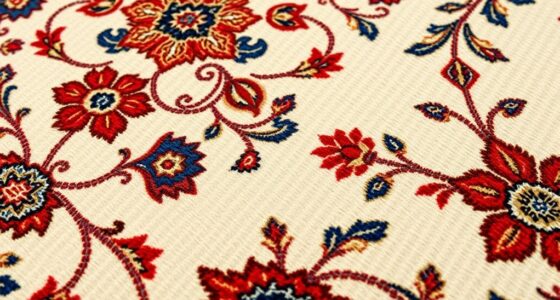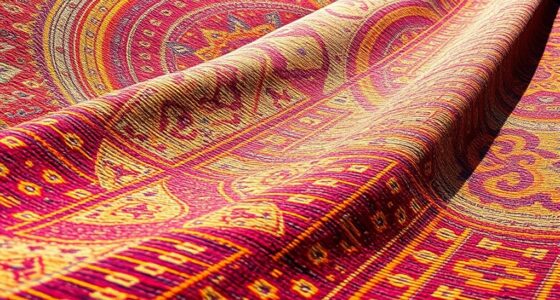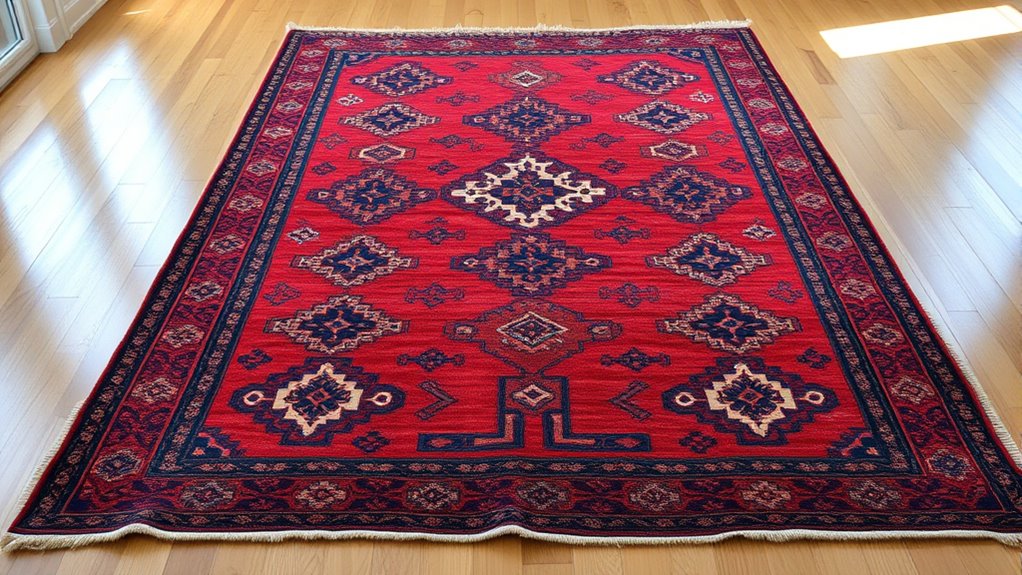

Antique Caucasian rugs are filled with symbols and stories that reflect the cultural beliefs, history, and artistry of their creators. You’ll notice motifs like geometric shapes, animals, and plants, each carrying specific meanings such as protection, fertility, or spiritual connection. Color choices like red and white are deliberate, adding layers of symbolism. By exploring these intricate designs, you gain insight into the traditions and values behind each piece, offering a fascinating glimpse into their rich cultural stories.
Key Takeaways
- Caucasian rugs feature motifs like geometric shapes and symbols representing protection, fertility, and spiritual beliefs.
- Each pattern and color choice encodes cultural stories, social values, and historical narratives of the region.
- Symbols such as diamonds, crosses, and rosettes reflect community identity, beliefs, and traditional symbolism.
- The intricate weaving techniques and layered designs demonstrate artisans’ mastery and serve as visual storytelling.
- These rugs preserve cultural heritage, embodying the history, spirituality, and artistry of their creators.

Have you ever wondered what makes antique Caucasian rugs so highly valued? The answer lies in their intricate craftsmanship and rich cultural stories woven into every thread. These rugs are not just decorative items; they are woven histories that offer a glimpse into the traditions and beliefs of the regions they come from. Central to their allure are the weaving techniques used by skilled artisans, techniques that have been passed down through generations. These methods involve meticulous knotting, precise color application, and layered patterns that create depth and texture. When you examine an antique Caucasian rug closely, you can see the complexity of the weaving techniques, which require patience and mastery. This craftsmanship results in a durable, high-quality piece that often features symmetrical designs and detailed borders, reflecting a high level of skill and artistry. Beyond the technical mastery, these weaving techniques serve as a canvas for cultural symbolism. Each motif, color, and pattern carries a specific meaning rooted in the weaver’s cultural background. For instance, certain geometric shapes might symbolize protection or fertility, while color choices—like reds for passion or whites for purity—are deliberate and meaningful. By understanding these symbols, you gain insight into the worldview and values of the communities that created these rugs. These cultural symbols are often embedded in the design in a way that makes each rug unique, telling a story or conveying a message that extends beyond mere decoration. When you study an antique Caucasian rug, you’re not just appreciating its beauty but also appreciating the stories and traditions it embodies. The weaving techniques and cultural symbolism work together to create a piece that’s both an art form and a cultural artifact. You can see how the artisans infused their work with meaning, turning everyday materials into expressions of identity and belief. Each knot and pattern becomes part of a language that communicates history, spirituality, and social values. The cultural symbolism embedded in these rugs enhances their significance, making each piece a meaningful artifact of heritage. The craftsmanship involved also ensures that these rugs have stood the test of time, maintaining their beauty and significance for decades or even centuries. When you own or admire an antique Caucasian rug, you’re holding onto a piece of history—crafted with skill, imbued with symbolism, and rich in stories. This combination of technical mastery and cultural storytelling is what makes these rugs so treasured, elevating them far beyond simple textiles and into the domain of meaningful art.
Frequently Asked Questions
How Do I Authenticate an Antique Caucasian Rug?
To authenticate an antique Caucasian rug, start by examining its knot density, which indicates quality and age. Conduct a dye analysis to verify natural dyes typical of the period. Look for consistent craftsmanship, traditional motifs, and signs of wear that match its age. Avoid overly perfect or modern features. Consulting an expert or appraiser who specializes in Caucasian rugs can further guarantee your rug’s authenticity.
What Are the Common Materials Used in These Rugs?
You’ll find that common materials in antique Caucasian rugs include high-quality wool fibers, which provide durability and softness. These rugs often feature natural dyes derived from plants, insects, and minerals, giving them vibrant, lasting colors. The wool is usually hand-spun, and the natural dyes guarantee the patterns stay rich and true over time. By examining these materials, you can better appreciate the craftsmanship and authenticity of the rug.
How Should I Clean and Preserve Antique Caucasian Rugs?
Properly preserving your antique Caucasian rug requires gentle cleaning and careful storage. You should regularly vacuum on a low setting to remove dust without damaging fibers. For deep cleaning, use a mild detergent and avoid harsh chemicals. Store it in a cool, dry, and dark place, rolling rather than folding to prevent creases. Follow these simple steps to safeguard its beauty, ensuring your cherished carpet remains a mesmerizing piece of history for years to come.
Are There Regional Differences in Design and Symbolism?
Yes, there are regional differences in design and symbolism in Caucasian rugs. You’ll notice distinct regional motifs reflecting local cultural influences, such as geometric patterns or specific color palettes. These variations help identify the rug’s origin and cultural background. By studying these regional styles, you can better appreciate the unique stories and traditions woven into each rug, making it a richer and more meaningful piece of art.
What Is the Typical Age Range of Authentic Caucasian Rugs?
Authentic Caucasian rugs typically range from 80 to 150 years old. To verify their age, you should focus on age verification through expert assessment and provenance research, which help confirm authenticity and origin. These methods guarantee you’re purchasing genuine pieces with historical significance. Keep in mind that well-maintained rugs from this period often display distinct regional designs and craftsmanship, making them valuable collectibles.
Conclusion
As you explore antique Caucasian rugs, you unseal a tapestry of stories woven into every knot, each symbol whispering secrets of ancient lands. These rugs are like time capsules, carrying the soul of their creators across generations. Embrace their rich history and let their intricate patterns be a window into a world where tradition and artistry dance together, turning your space into a living gallery of stories, waiting to be discovered beneath your feet.