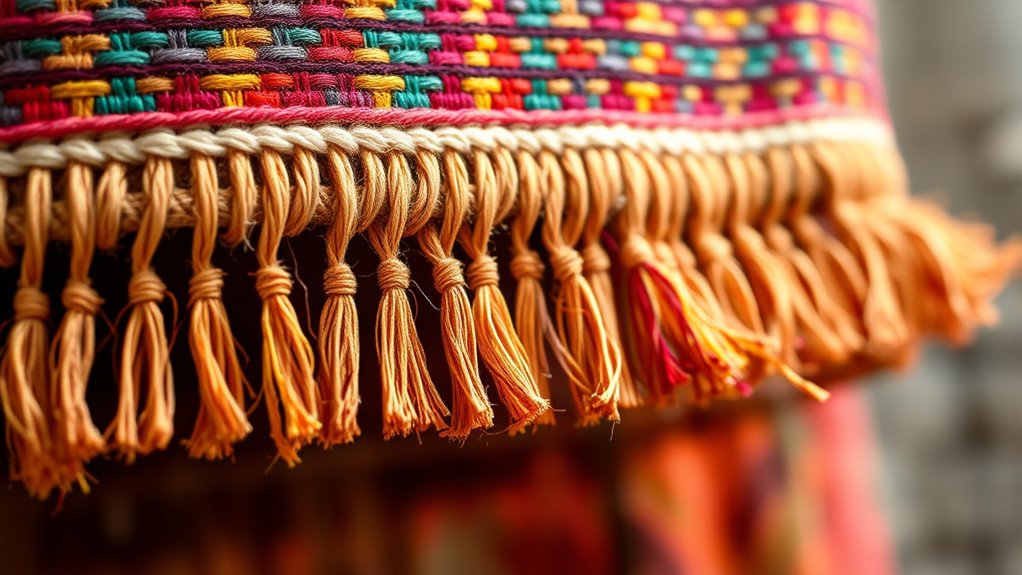

You value untrimmed fringes because they serve as clear signs of the textile’s original craftsmanship, cultural importance, and historical authenticity. These fringes reveal hand-tied knots, weaving techniques, and natural fibers, connecting you directly to the creator and their traditions. Preserving these details keeps the textile’s story alive and authentic. If you want to understand how these features deepen cultural appreciation and historical significance, there’s more to explore.
Key Takeaways
- Untrimmed fringes serve as authentic evidence of original craftsmanship and weaving techniques.
- They reflect cultural significance, indicating the textile’s role in ceremonies or social status.
- Preserving fringes maintains the textile’s historical integrity and connection to its cultural origins.
- Fringes showcase hand-tied knots and materials, revealing the skill and tradition of the artisan.
- They transform textiles into meaningful artifacts, preserving cultural heritage and authentic craftsmanship.

If you’re involved in textile collecting, you’ll notice that many enthusiasts prize untrimmed fringes for their authenticity and craftsmanship. These fringes serve as tangible evidence of a piece’s original design and cultural significance. When you examine untrimmed fringes, you get a glimpse of the textile’s true material authenticity. Unlike trimmed or altered pieces, untrimmed fringes reveal the original weaving techniques and the natural characteristics of the fibers used. This authenticity is essential because it preserves the textile’s historical integrity, offering a more genuine connection to its creators and cultural context. Collectors seek these details because they tell a story about the craftsmanship involved and the traditions from which the piece originated.
Untrimmed fringes reveal textile authenticity, craftsmanship, and cultural history, offering a genuine connection to the piece’s origins.
Preservation techniques also play an indispensable role in why collectors value untrimmed fringes. Proper preservation ensures that these delicate features remain intact over time, maintaining the textile’s authenticity and value. When you handle or display such textiles, understanding preservation techniques—like controlled humidity, light exposure limitations, and gentle cleaning—is imperative. These methods help prevent fraying, fiber deterioration, or loss of the fringe altogether, which would compromise the piece’s historical and aesthetic integrity. Collectors who prioritize preservation techniques recognize that the longevity of untrimmed fringes depends on careful stewardship, making them even more prized as authentic artifacts.
Moreover, untrimmed fringes often indicate the craftsperson’s skill and attention to detail. In many cultures, fringes weren’t simply decorative—they were integral to the textile’s function or symbolism. Leaving fringes untrimmed allows collectors to appreciate the full extent of the original work, including any hand-tied knots or specific weaving patterns. This unaltered state provides insight into the techniques and materials used, reinforcing the importance of material authenticity. It also underscores the cultural significance embedded in the textile, whether it’s a ceremonial piece, a form of social status, or a traditional craft passed down through generations.
Ultimately, many collectors see untrimmed fringes as authentic windows into the past. They value both the material authenticity and the preservation techniques that keep these features intact. These fringes connect you to a time, a place, and a community, making the textile not just an object but a vessel of cultural heritage. In this way, untrimmed fringes embody both craftsmanship and authenticity—elements that elevate a textile from mere fabric to a meaningful artifact worth preserving and cherishing.
handwoven textile with untrimmed fringes
As an affiliate, we earn on qualifying purchases.
As an affiliate, we earn on qualifying purchases.
Frequently Asked Questions
How Do Untrimmed Fringes Affect a Piece’s Overall Value?
Untrimmed fringes enhance a piece’s overall value by showcasing superior fringe craftsmanship, which reflects skill and authenticity. They also boost the aesthetic appeal, giving the item a richer, more intricate look that collectors prize. When fringes remain untrimmed, it signals quality and originality, making your piece more desirable and valuable in the eyes of collectors who appreciate craftsmanship and historical integrity.
Are Untrimmed Fringes More Fragile Than Trimmed Ones?
Untrimmed fringes are like delicate spider webs, making them more fragile than trimmed ones. Their fringe durability is lower because the exposed fibers are more prone to wear and tear, increasing textile fragility. You should handle untrimmed fringes carefully, as they can easily fray or break with rough handling. Trimming can help protect the fringe, but it also diminishes their authenticity and historical value.
What Types of Textiles Typically Feature Untrimmed Fringes?
You’ll find untrimmed fringes most often on traditional textiles like shawls, rugs, and garments that showcase intricate fringe designs. These textiles highlight unique patterns and craftsmanship, emphasizing the natural beauty of the textile material. The fringe design adds visual interest and cultural significance, making untrimmed fringes especially valued by collectors. They preserve the authentic appearance and intricate detailing, reflecting the textile’s original cultural context and craftsmanship.
Can Untrimmed Fringes Indicate a Piece’s Age or Origin?
Yes, untrimmed fringes can indicate a piece’s age or origin by showcasing authentic fringe craftsmanship. When you examine these fringes, you see how the textile was originally finished, revealing details about the techniques used. Untrimmed fringes often reflect the cultural and historical context of the piece, helping you verify textile authenticity and trace its origin. This makes them highly valuable to collectors seeking genuine, historically significant textiles.
How Should Collectors Preserve Untrimmed Fringes Properly?
You might think preserving untrimmed fringes is a breeze, but it actually takes careful fringe maintenance. To prevent fraying or damage, gently dust with a soft brush, avoid direct sunlight, and keep it in a stable environment. Use preservation techniques like proper storage in acid-free materials. Ironically, the easiest way to keep fringes pristine is to handle them as little as possible, respecting their delicate craftsmanship and historical value.

A Japanese Art Journey: A Curator's Memoir of Polka Dot Pumpkins, Paper Dolls and Woodblock Prints
As an affiliate, we earn on qualifying purchases.
As an affiliate, we earn on qualifying purchases.
Conclusion
As you hold a piece with its untrimmed fringes, you can almost feel the whispers of history woven into every delicate thread. The untouched edges tell stories of craftsmanship and cultural pride, inviting you to cherish its authenticity. With each uncut fringe, you’re not just holding an artifact—you’re experiencing a vibrant connection to the past’s rich traditions. It’s a timeless reminder that true beauty lies in preserving history’s intricate, unaltered details.
Preservation and Restoration Techniques for Ancient Egyptian Textiles (Advances in Religious and Cultural Studies)
As an affiliate, we earn on qualifying purchases.
As an affiliate, we earn on qualifying purchases.

Authentic Victorian Fashion Patterns: A Complete Lady's Wardrobe (Dover Fashion and Costumes)
As an affiliate, we earn on qualifying purchases.
As an affiliate, we earn on qualifying purchases.