
Rug investment funds and fractional ownership let you access high-value collectible rugs without needing to buy and store them outright. You can pool resources with others, owning a share of a valuable rug managed professionally. Digital records and NFTs help verify authenticity and track ownership, though market fluctuations can impact value. These innovative models make rug collecting more accessible and diverse. Keep exploring to discover how these new approaches could fit your investment goals.
Key Takeaways
- Fractional ownership allows multiple investors to share costs and benefits of high-value rugs, making collecting more accessible.
- Digital representations and NFT-based records enhance transparency, authenticity, and provenance tracking in rug investments.
- Rug investment funds pool resources to acquire, maintain, and insure valuable rugs, reducing individual financial and security burdens.
- Market volatility and NFT valuation fluctuations can impact rug asset values and liquidity for investors.
- Marketing strategies, including merchandise and branding, help expand awareness and engagement in new rug collecting and investment models.
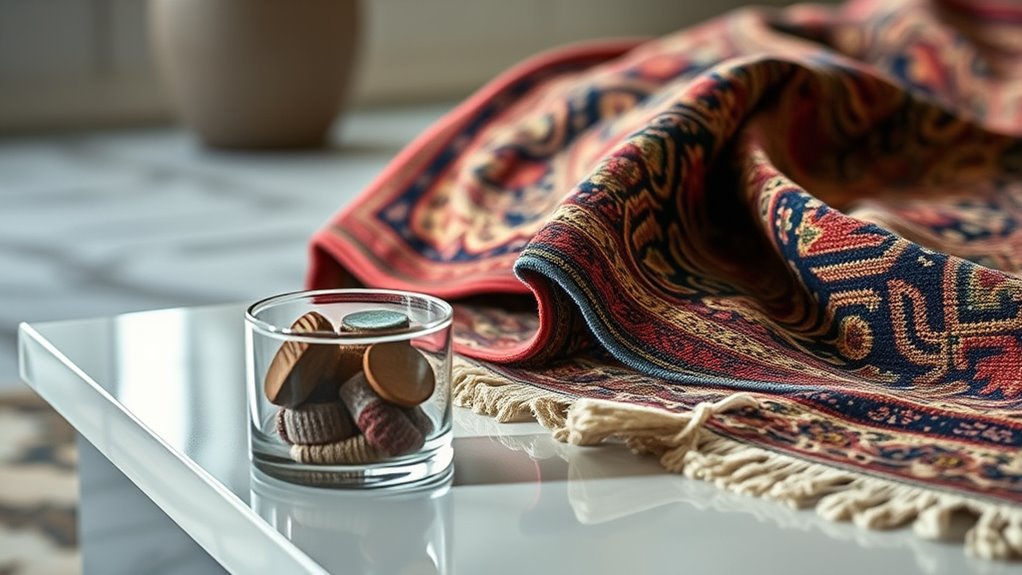
Rug investment funds and fractional ownership are transforming how people access the lucrative world of collectible rugs. Traditionally, owning rare or valuable rugs meant significant upfront costs and the challenge of storage and security. Now, with these new models, you can participate without the hurdles of full ownership. These platforms pool resources from multiple investors to buy and maintain high-value rugs, allowing you to own a share of a prized piece. This democratizes access, letting you diversify your investment portfolio without the need for deep pockets.
One key aspect that influences the value of these investments is NFT valuation. While rugs themselves aren’t NFTs, digital representations of ownership or provenance are increasingly used to verify authenticity and track ownership history. The NFT market adds a layer of transparency and security but also introduces complexity. NFT valuation can fluctuate rapidly, driven by trends, collector interest, and market sentiment. When you invest through fractional platforms, understanding NFT valuation becomes vital because it impacts your share’s worth and potential resale value. A well-verified digital record can provide confidence, but you must also stay aware of how volatile the NFT market can be.
NFT valuation impacts rug investment shares; digital ownership verification adds transparency but introduces market volatility and complexity.
Market volatility remains a significant factor in the collectible rug space, especially as these investments become more intertwined with digital assets. Rug prices can be stable for years but may experience sudden swings due to shifts in collector demand, economic conditions, or broader market trends. As an investor, you should be prepared for this volatility. Platforms that facilitate fractional ownership often provide transparency about valuation methods, but market fluctuations can still impact your investment’s worth unexpectedly. During times of heightened market volatility, rug prices may dip, and liquidity could become limited if many investors try to sell simultaneously.
Additionally, the use of tea accessories and merchandise in marketing and branding strategies by related industries illustrates how merchandise can enhance visibility and customer engagement. Despite these challenges, the appeal of rug investment funds and fractional ownership lies in their potential for diversification and accessibility. With less capital required upfront, you can spread your investments across multiple rugs, reducing risk. Plus, these models often include professional management, which helps maintain the rugs’ condition and authenticity, adding peace of mind. Still, it’s vital to stay informed about the factors influencing valuation, particularly NFT trends and market volatility, so you can make informed decisions. As the landscape evolves, you’re offered new ways to participate in a historic art form while steering through modern financial dynamics, making this an exciting frontier for collectors and investors alike.
Frequently Asked Questions
How Do Rug Investment Funds Differ From Traditional Art Funds?
Rug investment funds differ from traditional art funds by offering greater market transparency and a stronger connection to the collector community. You can easily access detailed information about rug valuations and ownership, making investments more transparent. Plus, these funds foster a sense of community among collectors, allowing you to share insights and build relationships. This modern approach makes rug investing more accessible, engaging, and transparent compared to conventional art fund models.
What Legal Considerations Exist for Fractional Rug Ownership?
You need to guarantee your fractional rug ownership complies with legal standards, focusing on ownership rights and legal compliance. It’s essential to clearly define ownership rights in legal documents, so each owner understands their stake. You should also verify local regulations on fractional ownership and asset sharing, consulting legal experts to avoid issues. This helps protect your investment, guarantees transparency, and keeps your ownership arrangements legally sound.
How Is the Value of a Rug Determined in These Models?
You determine a rug’s value through appraisal methods and market valuation. An appraiser examines factors like age, rarity, condition, and craftsmanship to assess worth. Market valuation compares similar rugs recently sold or listed, giving you a realistic idea of its current market value. Combining expert appraisal and recent sales data guarantees you accurately gauge the rug’s worth, which is essential in fractional ownership models to establish fair investment stakes.
What Are the Risks Associated With Fractional Rug Ownership?
Ever wondered if fractional rug ownership is risky? You face liquidity challenges and valuation uncertainties, making it hard to sell your share quickly or know its true worth. Market fluctuations can impact value, and if the rug’s condition deteriorates, your investment could lose value. These risks mean you should carefully consider whether you’re comfortable with potential difficulty in cashing out or uncertain valuations before diving in.
How Can Investors Liquidate Their Stake in a Rug Fund?
You can liquidate your stake in a rug fund through secondary markets, where investors buy and sell shares. Check if the fund offers a redemption process, allowing you to request a sell-back of your stake directly to the fund. Keep in mind, liquidity might be limited, and prices could fluctuate based on demand. Stay informed about the fund’s policies and market conditions to make timely and strategic decisions.
Conclusion
As you explore rug investment funds and fractional ownership, remember that the global market for collectible rugs has grown by over 20% annually in the past five years. This rapid expansion shows how innovative models are making rug collecting more accessible and lucrative. With these new approaches, you can diversify your portfolio and own a piece of history without the hefty price tag. Don’t miss out—these models are transforming how you can invest in timeless art.