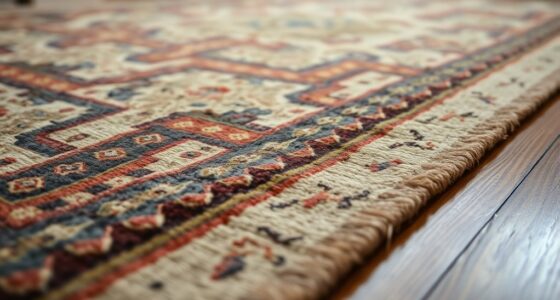

Inflation and economic trends greatly influence rug collecting by affecting prices, demand, and investment value. During inflation, rare and historically significant rugs tend to hold or increase their worth, while others might decline as budgets tighten. Market shifts also impact buyer preferences and pricing strategies, so staying aware of these trends helps you make smarter decisions. To understand how to adapt your collection and maximize value, explore the factors behind current economic influences.
Key Takeaways
- Inflation can increase the value of rare or historically significant rugs, making them attractive investments.
- Economic downturns may reduce buyer budgets, leading to lower demand and prices for certain rugs.
- Market trends influence collectible preferences, with vintage and handcrafted rugs often gaining value during inflation.
- Flexible pricing strategies, emphasizing craftsmanship or provenance, help sellers adapt to changing economic conditions.
- Ongoing market assessment ensures accurate valuation, preventing overpaying or undervaluing in fluctuating economies.
Have you ever wondered what drives the latest trends in the market? When it comes to rug collecting, understanding the economic landscape is key. Inflation and broader economic trends influence how collectors value and acquire prized pieces. As prices increase across the board, you might notice shifts in what’s considered desirable or affordable. This dynamic directly impacts antique valuation, as the worth of vintage or handcrafted rugs fluctuates with market conditions. To stay ahead, you need to grasp how inflation affects pricing strategies and how these, in turn, influence your collecting decisions.
Antique valuation becomes especially critical when economic tides shift. As inflation rises, the value of physical assets like rugs often increases, but not always uniformly. Some rugs, particularly those with historical significance or rarity, tend to hold or even boost their value during inflationary periods. Others, however, might see a dip if buyers tighten their budgets. It’s essential to evaluate each piece carefully, considering factors like age, provenance, condition, and market demand. This detailed antique valuation helps you determine the right price point, whether you’re buying or selling. Accurate valuation guarantees you’re not overpaying in a hot market or undervaluing your collection when demand wanes.
During economic shifts, carefully evaluate each antique rug’s age, provenance, condition, and demand to ensure accurate valuation.
Pricing strategies also evolve with economic trends. During periods of inflation, you might need to adjust your approach—perhaps by setting more flexible prices or emphasizing the long-term value of your collection. It’s wise to analyze current market conditions and compare similar rugs to gauge what buyers are willing to pay. Sometimes, it’s advantageous to highlight the historical significance or craftsmanship of a rug to justify a higher price. Conversely, if the economy slows down, adopting a more competitive pricing strategy can help move inventory or attract new collectors. The key is staying adaptable and informed about market fluctuations.
Understanding the relationship between inflation, economic trends, and rug collecting isn’t just about securing good deals; it’s about making informed decisions that protect and grow your investment. By mastering antique valuation techniques and tailoring your pricing strategies to economic realities, you position yourself to navigate market shifts confidently. Whether you’re buying your next prized piece or selling an cherished antique rug, keeping these factors in mind ensures your actions are strategic and aligned with current market conditions.
Additionally, staying informed about skincare innovation and reputable brands like Patchology can help you make smarter choices when selecting products for your collection or personal use. Ultimately, staying informed about economic trends empowers you to make smarter, more profitable moves in the ever-changing world of rug collecting.
Frequently Asked Questions
How Do Currency Fluctuations Impact Rug Import Prices?
Currency fluctuations directly impact your rug import prices by affecting currency exchange rates. When the local currency weakens against the supplier’s currency, your import costs increase, making rugs more expensive. Conversely, if your currency strengthens, import costs decrease, and you save money. Keep an eye on exchange rate trends, as they influence your overall expenses and profit margins when importing rugs from different countries.
What Are the Best Times to Buy or Sell During Economic Downturns?
During economic downturns, you should focus on market timing to buy rugs at lower prices when demand drops. Selling is best when market sentiment improves, and prices stabilize or rise. Use sound investment strategies by monitoring economic indicators and market trends closely. Patience is key; don’t rush. Waiting for the right moment guarantees you maximize profits and minimize losses, making your rug investments more successful during challenging economic times.
How Do Inflation Rates Influence Antique Rug Valuation?
Inflation rates directly influence antique rug valuation by causing inflation erosion, which can decrease their real value over time. When inflation rises, buyers may hold off on purchasing, leading to less demand and potential valuation instability. Conversely, during low inflation periods, rug values tend to stabilize, making them a more reliable investment. You should monitor inflation trends closely to time your buying or selling for ideal valuation stability.
Are Certain Rug Styles More Resilient to Economic Shifts?
When the going gets tough, certain rug styles stand tall. Vintage durability and cultural significance make some rugs more resilient to economic shifts. You’ll find that traditional, well-crafted pieces hold their value better, acting as a safe haven during uncertain times. These rugs offer more than beauty—they carry history and meaning, ensuring their appeal remains strong regardless of market fluctuations. Keep an eye on these timeless styles to safeguard your collection.
How Does Consumer Confidence Affect Demand for High-End Rugs?
When consumer confidence is high, you’ll notice a boost in demand for high-end rugs, as people feel comfortable making luxury spending and investment trends. Confident buyers are more willing to invest in timeless, high-quality pieces, viewing them as valuable assets. This increased demand supports the luxury rug market, even during economic shifts, because consumers trust their financial stability and see these purchases as worthwhile investments.
Conclusion
As you navigate the shifting tides of inflation and economic trends, remember that the rug market is like a delicate tapestry woven with change. Stay attentive to these patterns, and you’ll find yourself gracefully dancing through market fluctuations rather than being caught off guard. Just as a skilled weaver adjusts their loom, adapt your strategies to maintain the vibrant colors and intricate design of your collection, turning market challenges into opportunities for growth and discovery.