When collecting antique Caucasian rugs, you’ll notice key symbols like geometric motifs representing protection or fertility, often linked to specific tribes and regions. These designs tell stories and reveal cultural beliefs, connected through traditional knotting and weaving techniques using natural dyes from plants, minerals, and insects. The colors and motifs reflect the history, trade, and environment of their origins. Exploring these symbols helps you understand each piece’s unique story, and more fascinating details await as you explore further.
Key Takeaways
- Recognize regional knotting styles and motifs to identify the origin and authenticity of Caucasian rugs.
- Understand cultural symbols like protection or fertility motifs woven into designs for historical context.
- Analyze natural dye sources such as madder, indigo, and plant extracts to determine age and trade influences.
- Study weaving techniques and motifs to uncover regional traditions and cultural stories embedded in the rugs.
- Examine provenance indicators like dye materials and motif placement to trace a rug’s history and cultural significance.
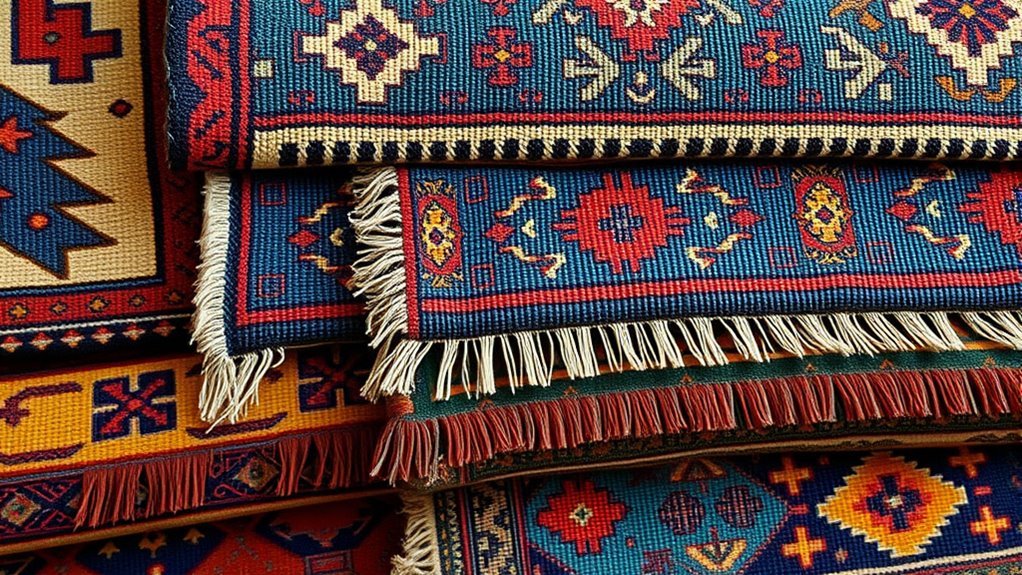
Have you ever wondered what makes antique Caucasian rugs so highly prized among collectors? It’s a combination of their intricate craftsmanship, vibrant colors, and rich cultural symbolism that sets them apart. One of the key factors contributing to their allure is the mastery of weaving techniques. These rugs are created using age-old methods passed down through generations, often involving knotting styles that vary between regions. For example, some Caucasian rugs employ symmetrical knots, which allow for detailed, tightly woven designs, while others use asymmetrical knots for a more open, textured look. These techniques require skill and patience, resulting in durable, highly detailed textiles that can last for centuries. As a collector, understanding these weaving methods helps you appreciate the craftsmanship behind each piece and recognize authenticity. Recognizing the cultural symbolism embedded in motifs can also reveal deeper insights into the origins and meaning behind each design.
Equally important are the dye sources used in creating the vibrant patterns. Many antique Caucasian rugs feature colors derived from natural dyes, which were locally sourced and processed using traditional methods. These dyes often come from plants, roots, minerals, and insects, each producing specific shades that are both vivid and lasting. For instance, the deep reds are frequently sourced from madder root, while the bright yellows might originate from various plant extracts. Blues could be obtained from indigo, and black shades from oak or walnut husks. Because these dyes were often handmade, each rug’s coloration is unique, contributing to its individuality and value. When evaluating a rug’s age and origin, examining the dye sources can provide clues about its provenance and authenticity. The natural dyes not only enhance visual appeal but also reflect the region’s environment and resources, adding historical significance to each piece.
Additionally, the combination of weaving techniques and dye sources reveals much about the cultural influences and trade patterns of the Caucasus region. Different tribes and villages had their distinct styles, motifs, and materials, which can help you trace a rug’s origin and understand its symbolic meanings. For example, certain geometric motifs may symbolize protection or fertility, and their placement on the rug could tell a story or convey beliefs. By studying these elements, you gain insight into the people who created the rugs and the historical context in which they were made. Collecting antique Caucasian rugs is more than acquiring beautiful textiles; it’s about connecting with a rich cultural history expressed through skillful weaving and naturally sourced dyes. Recognizing these nuances deepens your appreciation and ensures your collection reflects the true artistry behind these timeless pieces.
Top picks for "collect antique caucasian"
Open Amazon search results for this keyword.
As an affiliate, we earn on qualifying purchases.
Frequently Asked Questions
How Can I Verify the Authenticity of an Antique Caucasian Rug?
You can verify an antique Caucasian rug’s authenticity by conducting fiber analysis to confirm age-appropriate materials and craftsmanship. Additionally, review provenance documentation to trace its history and ownership, ensuring it’s genuine. Look for consistent weaving techniques, natural dyes, and traditional motifs. Combining these methods helps you confidently authenticate the rug, giving you peace of mind and protecting your investment.
What Are the Most Valuable Caucasian Rug Symbols?
You might stumble upon the most valuable Caucasian rug symbols through tribal motifs and intricate geometric patterns. These symbols often carry deep meanings, reflecting the weaver’s culture and beliefs. Look for bold, well-defined designs that showcase symbolic elements like stars, crosses, or animal motifs. When these symbols are rare or historically significant, they boost the rug’s value. Recognizing these patterns helps you appreciate their cultural richness and investment potential.
How Do Regional Differences Affect Rug Symbolism?
Regional differences markedly influence rug symbolism through unique regional motifs and cultural influences. You’ll notice distinct patterns, colors, and symbols that reflect local traditions and beliefs. For example, some regions emphasize geometric designs, while others incorporate floral or animal motifs. These regional motifs serve as cultural signatures, revealing the rug’s origin and the community’s values, making each piece a rich tapestry of local history and artistic expression.
What Maintenance Is Required to Preserve These Antique Rugs?
To preserve your antique Caucasian rug, you should regularly perform gentle rug cleaning techniques, like vacuuming with a soft brush attachment and avoiding harsh chemicals. Store it in a cool, dry place, using storage best practices like rolling it with acid-free paper and avoiding direct sunlight. Keep it away from moisture and pests, and consider professional conservation if needed. Proper care maintains its beauty and value over time.
Are There Specific Periods That Produce More Collectible Caucasian Rugs?
You’ll find that certain periods, like the late 19th and early 20th centuries, produce more collectible Caucasian rugs. During these times, artisans used traditional Historical weaving techniques and regional dye variations, making each piece uniquely valuable. Rugs from these periods often showcase intricate designs and vibrant colors, reflecting cultural heritage. Collectors prize these authentic, well-preserved examples, which offer both aesthetic appeal and historical significance.
Conclusion
Collecting antique Caucasian rugs is like uncovering a hidden tapestry of history and culture. Each symbol and weave tells a story, connecting you to generations past. As you hold these rugs, you’re holding a piece of the soul of the Caucasus, a vibrant mosaic of tradition and artistry. Let these rugs be your window into a world where craftsmanship and history dance together, turning your collection into a living, breathing masterpiece.