
To ship rugs internationally, you should package them properly by wrapping with protective materials and cushioning to prevent damage. Choose reliable carriers experienced with delicate items, and make certain to complete all customs paperwork accurately to avoid delays. Calculate your shipping costs and insurance needs carefully, and use tracking services to stay updated on your shipment’s progress. If you continue exploring, you’ll discover more essential tips to ensure your rug arrives safely and on time.
Key Takeaways
- Properly package rugs with protective covers, cushioning, and secure sealing to prevent damage during transit.
- Choose reliable carriers experienced with international shipping, considering transit time, handling, and insurance options.
- Prepare accurate customs documentation, including invoices and certificates of origin, to ensure smooth border clearance.
- Estimate shipping costs based on size, weight, destination, and insurance needs to manage expenses effectively.
- Use online tracking and maintain communication with carriers to monitor progress and address issues promptly.
Proper Rug Packaging Techniques

To guarantee your rug arrives safely at its destination, proper packaging is essential. Begin with rug wrapping, ensuring you use protective materials like plastic or specialized rug covers to shield it from dirt and moisture. Next, add cushioning materials such as bubble wrap, foam, or packing paper around the wrapped rug to absorb shocks and prevent damage during transit. Secure everything tightly with packing tape to keep the wrapping and cushioning in place. Avoid overstuffing or using excessive tape that could damage the rug’s fibers. Proper rug wrapping combined with effective cushioning creates a protective barrier, reducing the risk of tears, stains, or other damage. Additionally, understanding the proper packaging techniques can help ensure your rug maintains its quality throughout international shipping. This careful packaging ensures your rug stays pristine until it reaches its new home.
Selecting the Appropriate Shipping Carriers

Choosing the right shipping carrier is a key step in ensuring your rug arrives intact and on time. When selecting a carrier, consider their reliability, transit times, and reputation for handling fragile items. Carrier selection should align with your specific needs, such as destination, delivery speed, and budget. Don’t forget to evaluate their options for shipping insurance; this protects you against loss or damage during transit. Opting for a carrier that offers all-inclusive insurance gives you peace of mind, especially for valuable or delicate rugs. Comparing quotes and reviewing customer feedback helps you identify the most dependable option. Additionally, understanding the horsepower of electric dirt bikes can inform the choice of carriers experienced in handling heavy or oversized items. Ultimately, selecting a carrier with proven service and suitable insurance coverage minimizes risks and guarantees your rug reaches its destination safely.
Understanding Customs Regulations and Documentation
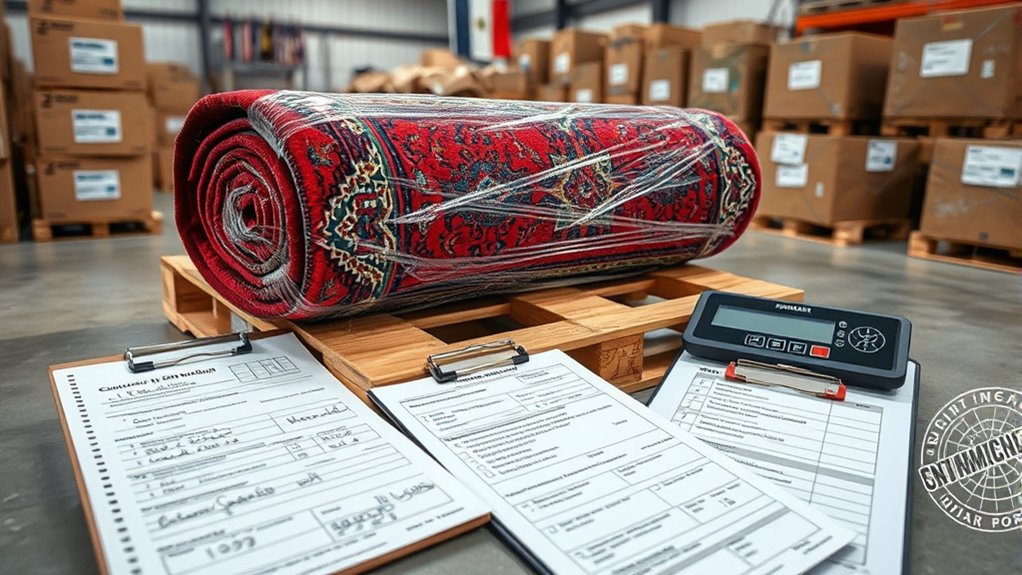
Understanding customs regulations and documentation is essential to guarantee your rug clears international borders smoothly. You need to accurately determine the correct customs classification for your rug, which affects the import duties you’ll pay and guarantees compliance with local laws. Proper documentation, such as commercial invoices and certificates of origin, is vital for smooth processing. Failing to properly classify your rug can lead to delays, additional fees, or even confiscation. Research the specific import duty rates for rugs in your destination country and include this information in your paperwork. Staying informed about customs requirements helps avoid surprises at border crossings and guarantees your shipment moves efficiently. By paying close attention to customs classification and documentation, you streamline the shipping process and reduce potential complications. Understanding customs regulations and documentation is crucial for ensuring a smooth international shipping experience.
Estimating Shipping Costs and Insurance Needs
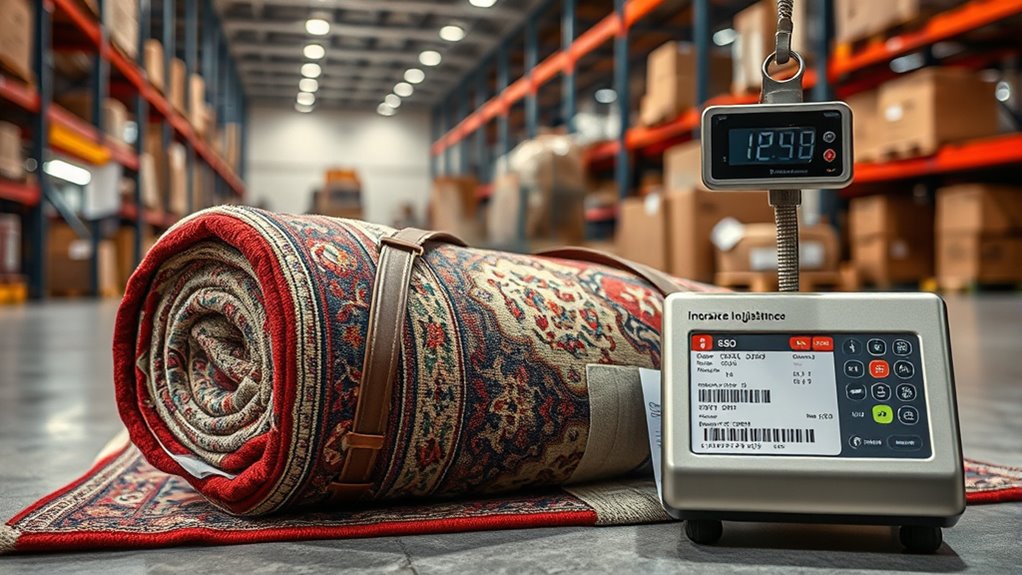
Estimating shipping costs and insurance needs is a crucial step in planning your international rug shipment. Proper cost estimation helps you budget accurately and avoid surprises, while evaluating insurance coverage ensures your valuable rug is protected. Consider factors like weight, dimensions, and destination country to determine shipping fees. Use the following table to visualize potential costs:
| Factor | Cost Estimation | Insurance Coverage |
|---|---|---|
| Rug size and weight | Based on dimensions and weight | Value of the rug for coverage |
| Destination country | Shipping zones and tariffs | Policy limits and deductibles |
| Shipping method | Air, sea, or land options | Additional coverage options |
Additionally, understanding shipping logistics can help streamline the process and reduce unforeseen expenses.
Tracking and Communicating During Transit
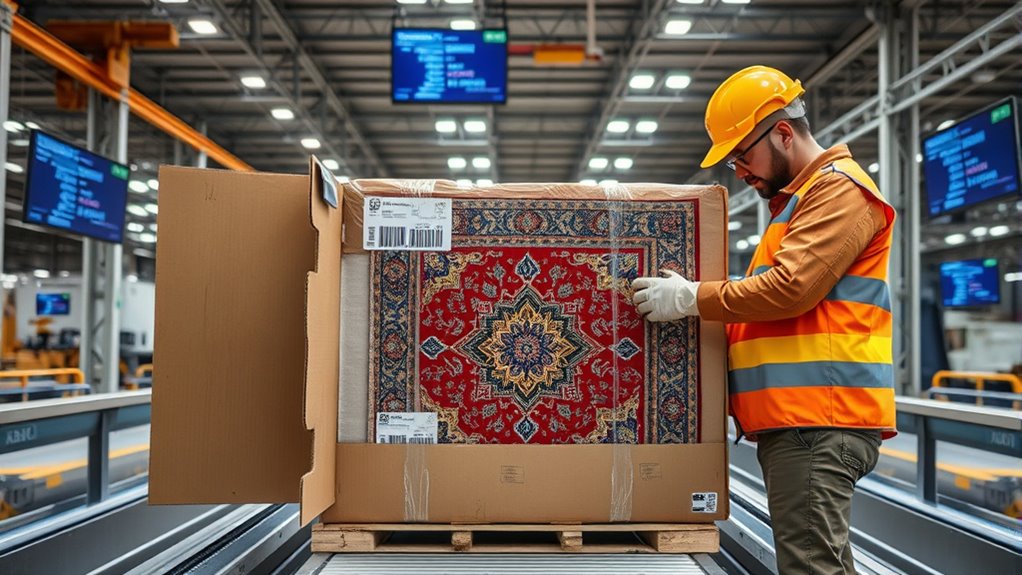
Once you’ve arranged your shipment details and secured insurance, staying informed about your rug’s progress becomes essential. Regular tracking updates provide real-time information on your shipment’s location and estimated delivery time. Be sure to use the communication protocols established with your carrier or freight forwarder to receive timely updates. Many companies offer online tracking portals; check them frequently to monitor your rug’s journey. If you notice any delays or issues, contact your shipping provider immediately for clarification and assistance. Maintaining clear communication ensures you stay informed and can respond quickly if problems arise. Staying proactive with tracking updates and adhering to communication protocols helps you manage expectations and ensures a smooth transit process for your valuable rug. Additionally, understanding timing and date standards helps you anticipate delivery schedules and plan accordingly.
Handling Damages and Returns Effectively

Have you prepared a plan for handling damages or issues that might occur during transit? Properly managing damages and returns starts with using high-quality packaging materials to protect rugs from tears, stains, or other damage. If a rug arrives damaged, respond promptly by inspecting and documenting the issue with photos. Offering rug cleaning options can help address minor stains or dirt, reducing the need for returns. Clearly communicate your return policy and streamline the process for customers, making it easy to report damages. Keep records of all communications and damages reported. Training your team on how to handle damaged rugs efficiently minimizes delays. Having a solid plan in place ensures you resolve issues quickly, maintaining customer trust and safeguarding your reputation in international shipping. Incorporating community engagement can also provide valuable feedback and support for improving your shipping practices.
Frequently Asked Questions
How Do Different Rug Materials Affect International Shipping Requirements?
When considering how rug materials affect international shipping requirements, you should focus on rug material considerations and shipping material compatibility. For example, natural fibers like wool or silk may require careful packaging to prevent damage from moisture or pests, while synthetic fibers are often more durable and less sensitive. You must guarantee your packaging aligns with your rug’s material, reducing risks during transit and meeting customs regulations.
Are There Eco-Friendly Packaging Options for Shipping Rugs Globally?
You can choose eco-friendly packaging options for shipping rugs globally by opting for sustainable packaging made from biodegradable materials. These options help reduce environmental impact while protecting your rug during transit. Look for biodegradable bubble wrap, recycled cardboard boxes, and natural fiber wraps. Not only do these choices support eco-conscious shipping practices, but they also appeal to environmentally aware customers, making your business more sustainable and responsible.
What Are the Common Delays in International Rug Shipments?
Like a boat caught in choppy waters, your international rug shipment can face delays. Common issues include customs clearance holdups, where paperwork or tariffs slow things down, and transit disruptions caused by weather or strikes. These hiccups can extend delivery times unexpectedly. To minimize delays, stay updated on customs regulations and choose reliable carriers. Preparation and flexibility help guarantee your rug reaches its destination smoothly, despite unforeseen obstacles.
How Can I Ensure My Rug Complies With Multiple Country Import Standards?
To guarantee your rug complies with multiple country import standards, you need to stay updated on customs documentation and import restrictions. Research each country’s regulations early and prepare accurate paperwork, including invoices and certificates of origin. Verify if there are specific restrictions or bans on certain materials. Consistently communicate with customs agents and freight forwarders to resolve any issues promptly, avoiding delays and ensuring smooth international shipping.
What Are the Best Practices for Handling Fragile or Antique Rugs During Transit?
When handling fragile or antique rugs during transit, you should use proper handling techniques to prevent damage. Always support the rug evenly, avoid dragging it, and lift it carefully. Use protective padding, such as bubble wrap or foam, to cushion the rug’s surface and edges. Secure the padding properly, ensuring it stays in place during transit. These steps help preserve your delicate rug and minimize the risk of damage.
Conclusion
So, now that you know the secrets to shipping rugs worldwide, remember—cutting corners might save a buck, but don’t be surprised when your rug arrives looking like a crumpled mess. Follow the best practices, invest a little more in quality packaging and insurance, and you’ll enjoy a smooth journey from your door to theirs. After all, a well-shipped rug is the only thing that can truly tie a room—and a shipping nightmare—together.