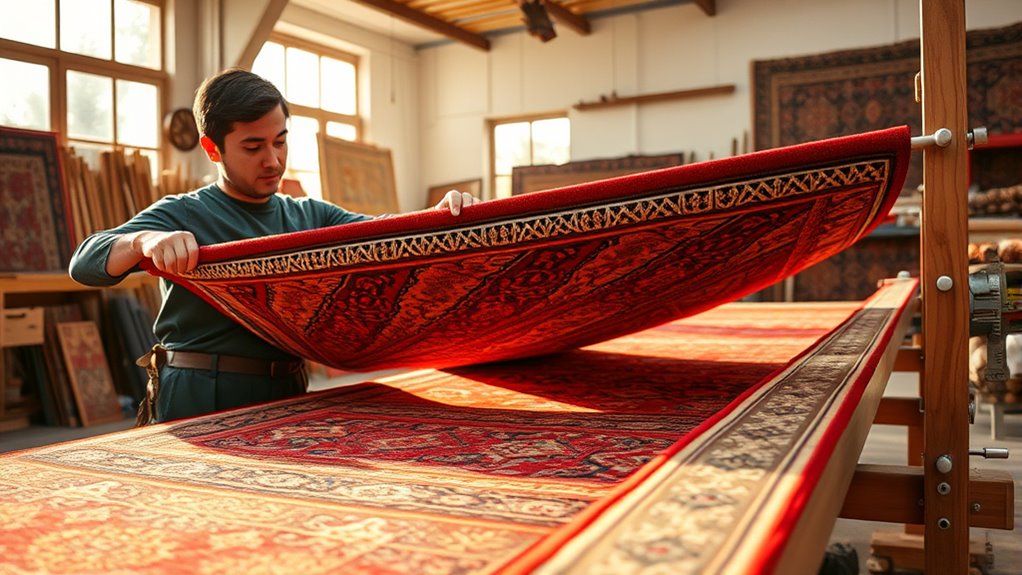

If your rug starts to develop wrinkles, buckles, or loose edges, it’s time to contemplate stretching it. These issues often happen due to heavy foot traffic, fiber deterioration, or improper installation, causing the rug to sag and look worn. Regular stretching restores its shape, improves appearance, and prevents further damage. If problems persist or are severe, seeking professional help is best. Keep exploring to learn simple techniques and tips for effective rug maintenance.
Key Takeaways
- Wrinkles, buckles, or loose edges indicate the need for rug stretching.
- Sagging or uneven surfaces reduce aesthetic appeal and signal maintenance is required.
- Regular stretching restores the rug’s shape, prolongs its lifespan, and prevents further damage.
- DIY stretching is suitable for minor issues; seek professionals for extensive or stubborn problems.
- Proper technique and timing ensure effective results and avoid damaging the rug.
Common Signs Indicating Your Rug Needs Stretching
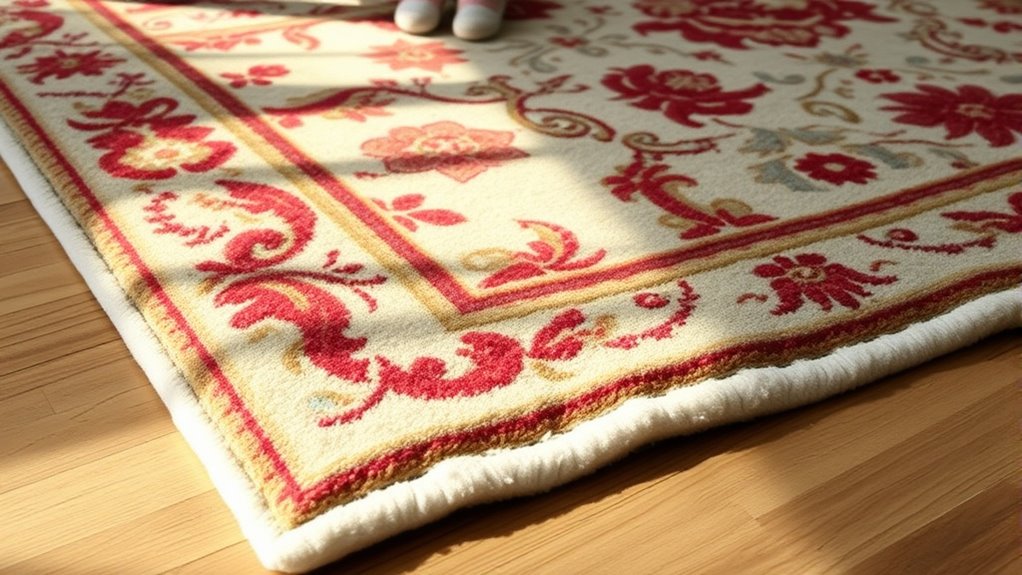
Over time, rugs can develop wrinkles, buckles, or loose edges that make them look uneven and worn. These signs often indicate your rug needs stretching to restore its shape. When you notice areas lifting or shifting, it’s a clear sign that the rug’s surface isn’t lying flat anymore. Addressing these issues through proper stretching improves area grooming, keeping your space tidy and polished. Not only does this enhance the aesthetic appeal, but it also prevents further damage. Loose edges and uneven surfaces can detract from your room’s overall look, making it appear outdated or poorly maintained. Recognizing these signs early allows you to maintain your rug’s beauty and longevity, ensuring your space remains inviting and visually appealing. Additionally, regular vacuuming helps preserve the rug’s fibers and prevent the need for more extensive restoration. Proper maintenance practices extend the life of your rug and keep it looking its best over time, including techniques like rug stretching when necessary.
Causes That Lead to Wrinkles and Sagging
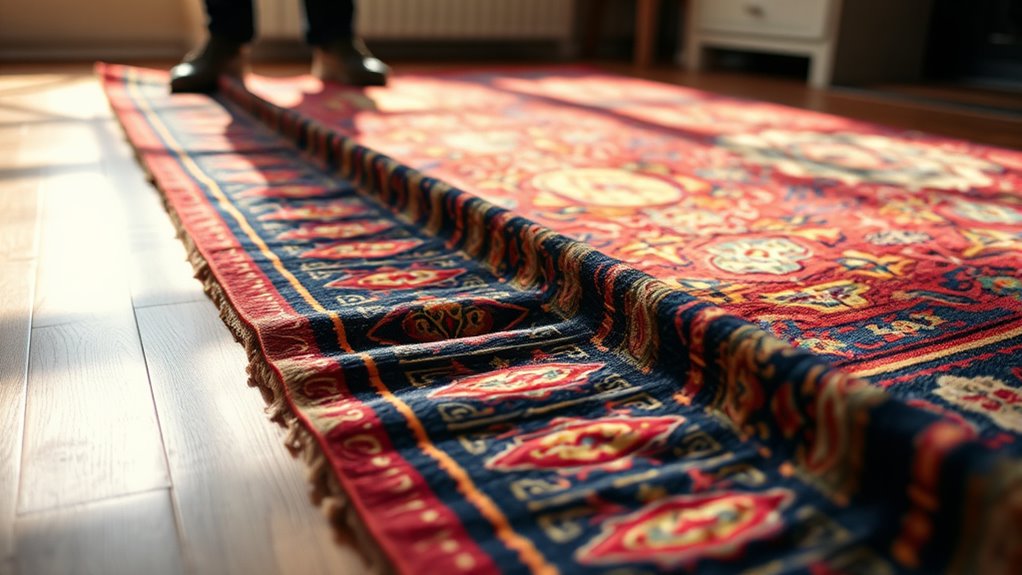
Several factors can cause your rug to develop wrinkles and sagging over time. One major cause is fiber deterioration, which weakens the rug’s structure, making it more prone to drooping. Improper installation also plays a significant role; if the rug isn’t stretched correctly or secured properly, it can gradually loosen and form wrinkles. Additionally, heavy foot traffic can wear down fibers unevenly, accelerating sagging. Keep an eye on these issues to prevent further damage: deterioration of fibers, which can compromise the integrity of the rug’s material and lead to sagging over time. Regular maintenance and understanding Gold IRA rollovers can help you address problems early and decide when rug stretching is necessary to restore your rug’s appearance and longevity. Proper installation and routine inspections are essential for extending the lifespan of your rug and avoiding costly repairs. Implementing preventative measures, such as using rug pads and rotating the rug periodically, can further help maintain its shape and prevent wrinkles.
Benefits of Regular Rug Maintenance and Stretching

Regular rug maintenance and stretching offer numerous benefits that keep your carpet looking fresh and extend its lifespan. By regularly caring for your rug, you help preserve the area’s overall appearance and prevent issues like wrinkles and sagging. Stretching restores the rug’s original shape, which enhances its aesthetic appeal and creates a cleaner, more polished look. Consistent upkeep also removes dirt, debris, and loose fibers that can wear down the fibers over time. This proactive approach reduces the need for costly repairs or replacements, saving you money. Furthermore, a well-maintained rug improves indoor air quality by minimizing dust accumulation. Additionally, understanding software quality assurance metrics can help you evaluate the effectiveness of your maintenance routine and identify areas for improvement. Additionally, understanding dog names can help you choose a fitting name for your pet, reflecting their personality and charm. Incorporating proper cleaning techniques can further prolong the life of your rug and maintain its vibrant appearance. Regularly inspecting your rug for fiber damage can help catch issues early before they worsen. Overall, regular maintenance and stretching keep your space inviting, boost its visual appeal, and ensure your rug remains a beautiful, durable feature in your home.
Proper Techniques for Effective Rug Stretching
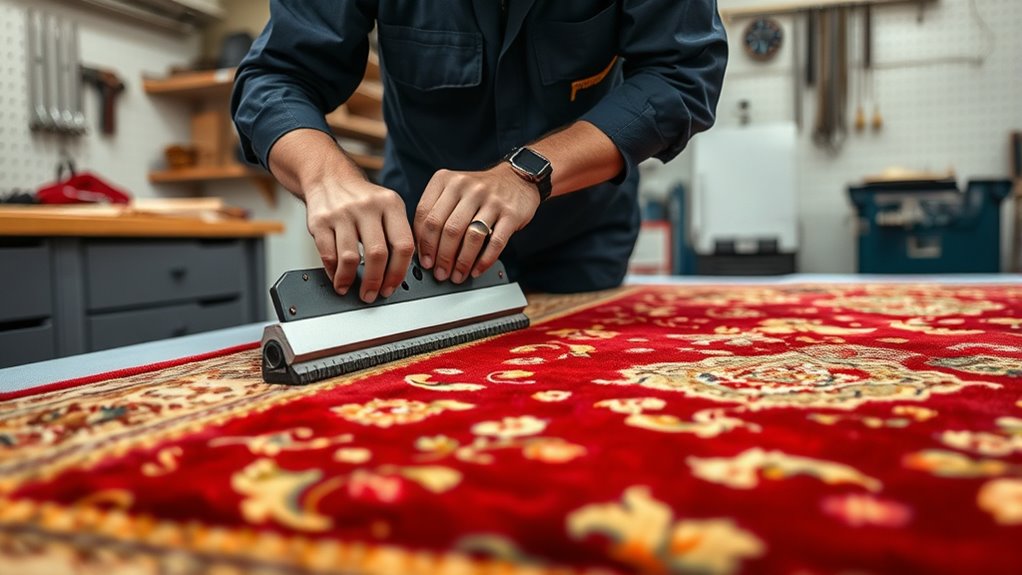
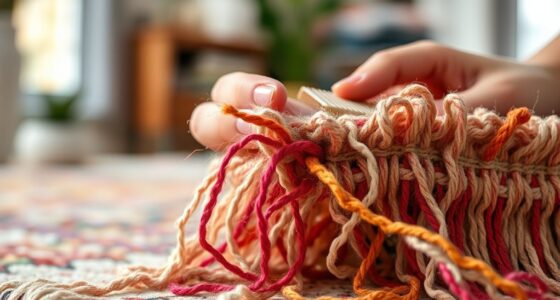
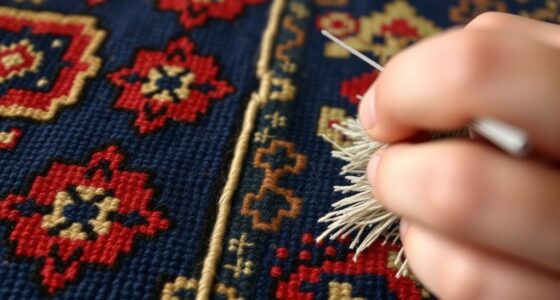
To achieve effective rug stretching, it’s essential to use proper techniques that guarantee a smooth and durable result. Start by preparing the area, ensuring it’s clean and free of debris to prevent snags. Use the right stretching tools, like a power stretcher or knee kicker, to apply even tension. Before stretching, mark the edges to guide your work and avoid overstretching. It is also important to consider the material choice, as different fabrics may respond differently to stretching techniques. Proper floating on water techniques can also be employed to relax fibers before stretching, making the process easier. Additionally, understanding the inspirational quotes about fatherhood and their insights can provide motivation and patience during the process of stretching delicate materials. Key techniques include:
- Secure the rug properly with tape or weights before stretching
- Work gradually, stretching small sections at a time
- Check for even tension to prevent puckering or uneven edges
Furthermore, being aware of the degradation of materials over time can help in choosing the best stretching approach for longevity. Focusing on proper area preparation and using appropriate stretching tools helps ensure a professional, long-lasting finish.
When to Seek Professional Help for Rug Stretching
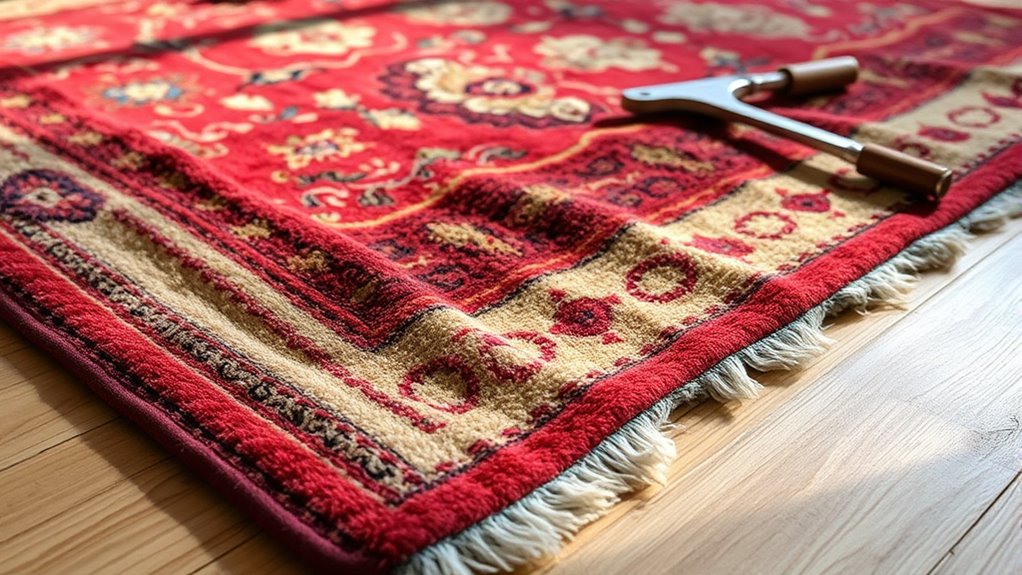
While DIY rug stretching can fix minor wrinkles or looseness, you should seek professional help if these issues persist despite your efforts, or if the damage is extensive. If your DIY tips, like adjusting rug padding or using a stretching tool, don’t resolve the problem, it’s time to call in experts. Professionals have specialized equipment and experience to handle stubborn wrinkles or large areas of looseness safely. They can also identify underlying issues, such as damaged or uneven padding, that DIY methods might miss. Trying to stretch a severely loosened or damaged rug yourself can cause more harm, so don’t hesitate to get professional assistance for long-lasting results and to protect your flooring investment. Additionally, consulting a specialist in rug care can ensure that the stretching process preserves the rug’s integrity and appearance. Being aware of damage assessment techniques can help determine whether professional intervention is needed. Moreover, understanding automated technology can assist in diagnosing the root causes of rug issues more accurately.
Frequently Asked Questions
How Often Should I Stretch My Rug to Maintain Its Condition?
You might wonder how often you should stretch your rug to keep it in top shape. Regular rug care includes stretching to prevent wrinkles and buckling, especially in high-traffic areas. Generally, aim for stretching every 6 to 12 months, or whenever you notice ripples or unevenness. Consistent stretching helps preserve your rug’s appearance and longevity, making it easier to maintain a neat, beautiful space.
Can Stretching Damage Delicate or Antique Rugs?
Stretching delicate or antique rugs can pose risks if not done carefully. The rug material and antique preservation needs are key; some fibers may weaken or tear if overstretched. If you decide to stretch, always use gentle methods or consult a professional. Improper stretching can damage fragile fibers, compromising the rug’s integrity and historical value. So, be cautious and prioritize expert advice for delicate or antique rugs.
What Tools Are Most Effective for DIY Rug Stretching?
If you want to DIY rug stretching, you’ll need effective tools like a power stretcher or a knee kicker, which are essential for proper tension. Basic DIY tools include a handheld rug paddle and a stretching pole, helping you apply even pressure. Use these with proper rug stretching techniques, such as working from the center outward, to avoid damage. These tools make the process manageable and help restore your rug’s shape safely.
How Long Does the Rug Stretching Process Typically Take?
The stretching duration for rug stretching varies based on the rug’s size and condition, but typically, the process timeline takes about 1 to 3 hours. During this time, you’ll work through the stretching steps methodically, allowing the rug to loosen and stretch properly. Keep in mind that patience is key; rushing can influence the results. Ultimately, the process ensures your rug regains its shape and looks fresh.
Are There Specific Signs That Indicate Immediate Rug Replacement Instead of Stretching?
If you notice signs of wear or significant rug deterioration, it’s often a sign you should substitute it rather than stretch it. Look for frayed edges, deep tears, or persistent stains that won’t come out. These issues indicate that stretching won’t restore your rug’s integrity or appearance. When damage is severe, replacing it is a better choice to ensure safety, comfort, and a fresh look in your space.
Conclusion
Think of your rug like a well-tuned guitar; with proper care and regular stretching, it stays harmonious and vibrant. Ignoring signs of wrinkles or sagging only lets the imperfections grow, dulling its beauty. By staying attentive and knowing when to stretch or call in a pro, you keep your space looking fresh and inviting. Remember, a well-maintained rug is a reflection of your care—like a masterpiece that continues to shine with every touch.