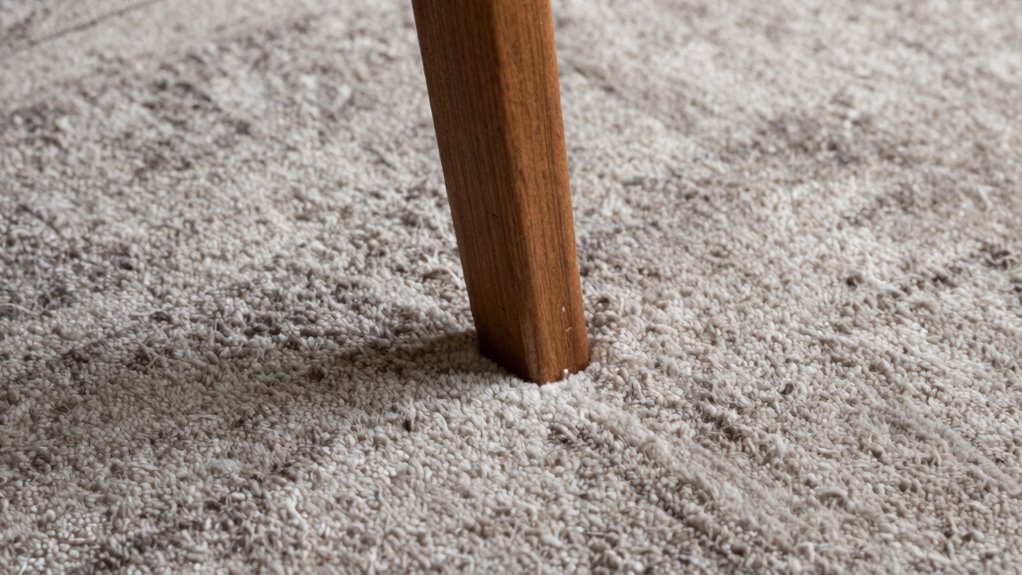
To prevent furniture dents on your rugs, place furniture pads or felt protectors under heavy furniture to distribute weight evenly. Regularly rearrange your furniture and rotate your rug to avoid prolonged pressure in one spot. Using a sturdy rug pad can also provide additional support and grip. Keep an eye on how your furniture interacts with your rug, and explore simple steps that can save you from costly repairs—details you’ll want to know for lasting rug beauty.
Key Takeaways
- Use furniture pads or felt pads under the legs of heavy furniture to distribute weight evenly.
- Regularly move or rotate furniture to prevent prolonged pressure on one rug area.
- Place non-slip rug pads beneath rugs to enhance stability and reduce furniture shifting.
- Avoid dragging furniture across rugs; lift and reposition to prevent tears and dents.
- Periodically check and replace worn pads to maintain effective protection against dents.
Why Furniture Dents on Rugs Happen and How They Affect Your Decor
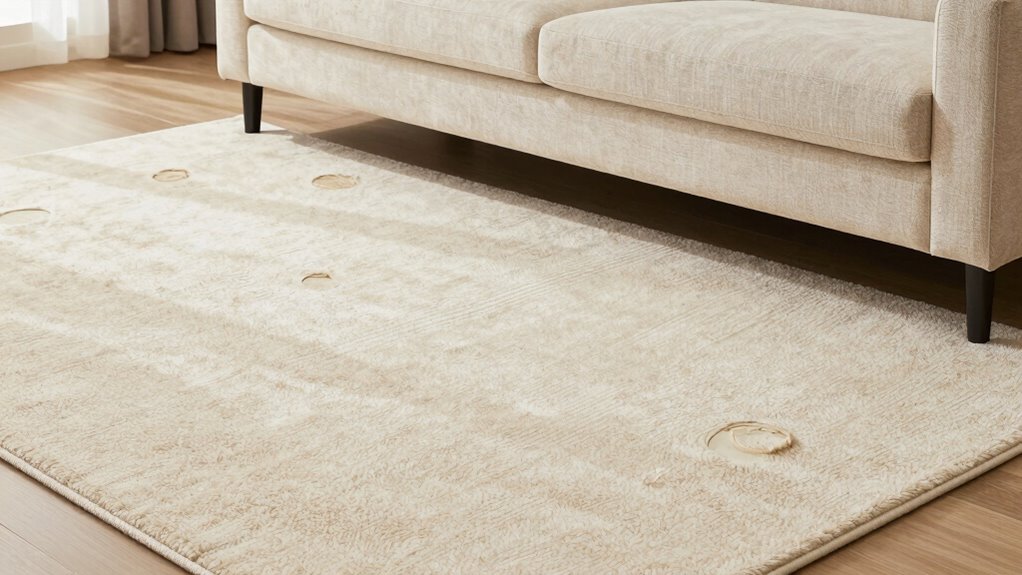
Furniture dents on rugs occur when heavy pieces press down on the fibers over time, compressing them into indentations. Your furniture placement plays a significant role in how quickly these dents form. Placing heavy furniture directly on delicate rug material, like wool or silk, makes dents more likely and more noticeable. The rug material determines how resilient it is to pressure; dense, durable fibers like nylon or polypropylene resist dents better than softer fibers. When furniture sits in one spot for extended periods, the fibers beneath it get compressed, disrupting the rug’s appearance and texture. Over time, these indentations can become permanent, affecting your decor’s overall aesthetic. Proper furniture placement and the use of protective pads can help prevent these dents from forming. Understanding how furniture placement interacts with rug material helps you protect your investment and maintain a fresh look.
The Easy Setup to Prevent Furniture Dents on Rugs
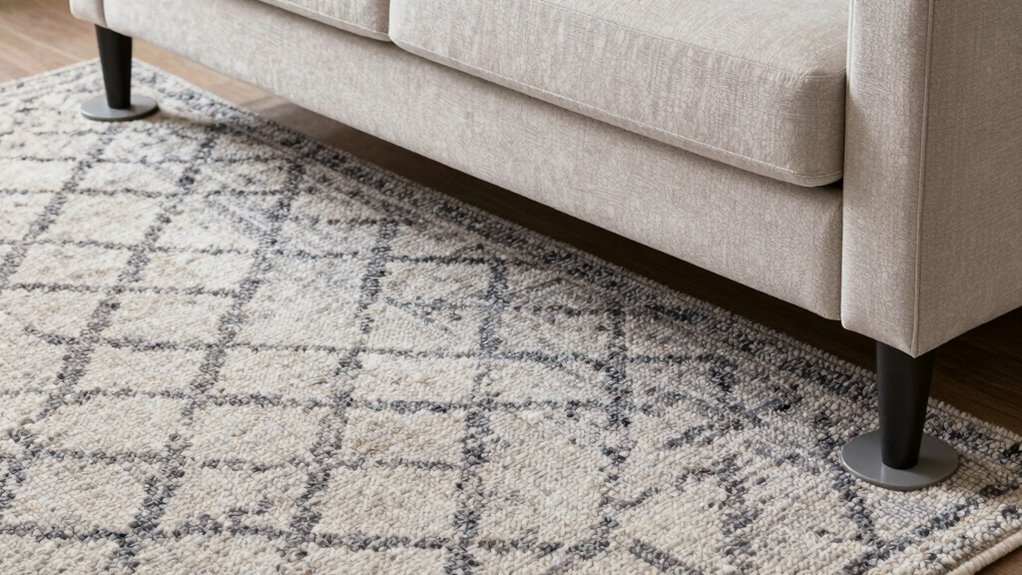
Preventing furniture dents on your rugs is simpler than you might think with just a few easy adjustments. The key is to use furniture pads underneath your pieces, especially on heavy or frequently moved furniture. Place these pads on the legs or bases of chairs, tables, and sofas to distribute weight evenly across the surface. When you’re choosing area rugs, opt for ones with a non-slip backing or add a rug pad to prevent slipping and reduce pressure points. Regularly shifting furniture positions also helps prevent permanent dents. This simple setup requires minimal effort but makes a significant difference in preserving your rugs’ appearance. Using energy-efficient materials for your rug pads can also contribute to a more sustainable home environment. With furniture pads and a little awareness, you can enjoy your decor without worrying about unsightly dents.
How to Protect Your Rugs With Simple, Step-By-Step Instructions
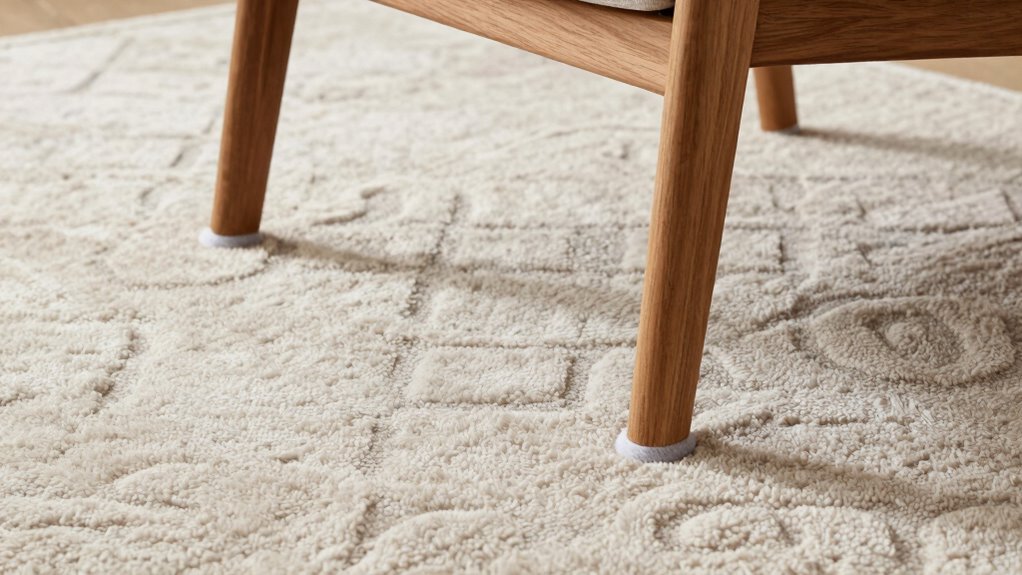
Protecting your rugs from dents and damage is straightforward if you follow a few simple steps. Start by placing furniture pads under all heavy furniture pieces on your area rugs. These pads distribute weight evenly, preventing indentations. Next, rearrange furniture regularly to avoid prolonged pressure on the same spot. Use felt pads or furniture coasters for added protection. Keep your rugs clean and vacuumed to maintain their integrity. Additionally, understanding truck bed accessories can help you better secure and protect your belongings and surrounding items. Here’s a quick overview:
| Step | Action | Benefit |
|---|---|---|
| Place furniture pads | Under heavy furniture | Prevents dents and damage |
| Rearrange furniture | Move furniture periodically | Avoids prolonged pressure |
| Use felt pads | Under furniture contact points | Adds extra protection |
| Maintain rugs | Regular cleaning and vacuuming | Preserves rug lifespan |
Follow these steps to keep your area rugs looking pristine.
Tips for Maintaining Your Rug and Furniture Protection Setup
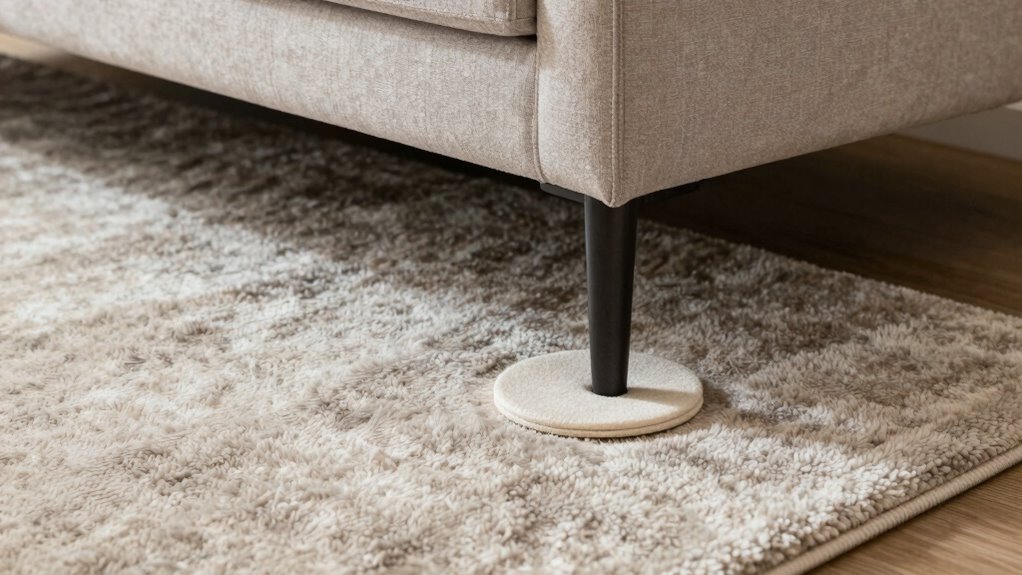
Once you’ve set up furniture pads and rearranged your pieces regularly, maintaining your rug and protection setup becomes an ongoing task. To keep your area rugs in good shape, regularly check furniture placement to ensure it’s balanced and not causing unnecessary pressure points. Rotate your rugs every few months to prevent uneven wear and dent formation. Keep furniture pads clean and replace them when they show signs of wear, ensuring they continue to protect your rug effectively. Avoid dragging furniture across the rug, which can cause tears or indentations. Also, re-evaluate your setup periodically, especially after moving furniture or redecorating, to guarantee your protection measures stay effective. Regular inspections and adjustments are essential to prevent dents and maintain your rug’s appearance. Consistent attention helps preserve your rug’s appearance and prevents dents caused by furniture.
Common Problems and When to Call a Professional
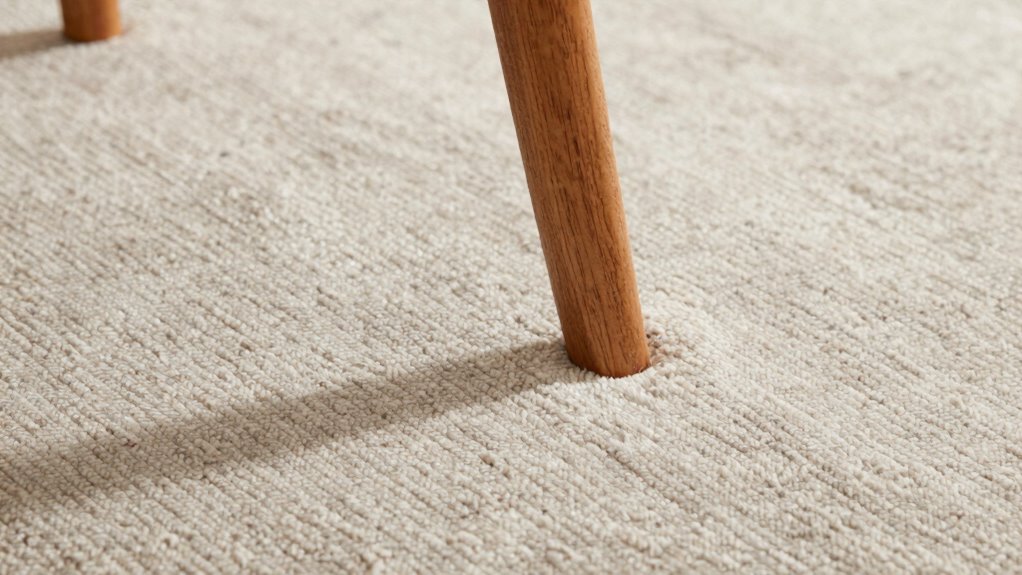
Despite your best efforts, some rug problems require professional attention. If dents from furniture are deep or stubborn, DIY solutions might not suffice. Attempting to fix severe dents or tears on your own can sometimes make the damage worse. In these cases, professional repair is your best option to restore your rug’s appearance and integrity. Additionally, if your rug has persistent stains, fraying edges, or extensive wear that DIY cleaning or patching can’t resolve, calling in an expert is wise. Professionals have specialized tools and techniques to handle difficult repairs safely and effectively. Recognizing when to seek professional help guarantees your rug gets the proper care it needs, preventing further damage and prolonging its lifespan. Total-cost clarity in repair options can help you make informed decisions about professional services versus DIY fixes.
Frequently Asked Questions
Can Certain Rug Materials Resist Furniture Dents Better Than Others?
Certain rug materials resist furniture dents better due to their fiber durability and how they interact with furniture material. Wool rugs, for example, are more resilient because of their dense fibers, while synthetic fibers like nylon also hold up well. You should consider these materials if you want to minimize dents, as their fiber durability and furniture material interactions help prevent the impression of heavy furniture over time.
How Often Should I Reposition Furniture to Prevent Dents?
A stitch in time saves nine, so you should reposition your furniture every 3 to 6 months. This furniture repositioning helps maintain your rug’s appearance and prevents dents from becoming permanent. Incorporate a regular rug maintenance schedule to check for indentations and shift furniture accordingly. Doing this consistently keeps your rug looking fresh and prevents damage, ensuring your space stays inviting and well-kept over time.
Are There Specific Furniture Types More Prone to Causing Dents?
Yes, certain furniture styles and fabric types are more prone to causing dents. Heavier pieces like leather or upholstered sofas and armchairs tend to leave more noticeable impressions on rugs. Pieces with solid wood legs or metal bases can also create dents, especially if they’re bulky or high. To prevent this, choose furniture with softer or padded legs and opt for lighter, more flexible fabrics to minimize pressure on your rugs.
What Are Eco-Friendly Options for Preventing Furniture Dents?
You can prevent furniture dents eco-friendly way by choosing recycled materials like cork or reclaimed wood, which naturally cushion your rug and are sustainable. Biodegradable options, such as plant-based felt pads, break down safely after disposal, reducing environmental impact. These eco-friendly solutions protect your rugs while supporting sustainability, proving that caring for your home doesn’t mean harming the planet. It’s a win-win for your space and the environment.
How Do Seasonal Changes Affect Rug and Furniture Dent Prevention?
Seasonal humidity and temperature fluctuations can impact your rug and furniture dent prevention efforts. As humidity drops in winter, rugs become more prone to dents from furniture weight due to drier air. Conversely, higher humidity in summer can cause rugs to expand slightly, reducing dents. To protect your rugs year-round, adjust humidity levels indoors, use furniture pads, and regularly rotate furniture to prevent permanent impressions caused by seasonal changes.
Conclusion
Now that you know the simple setup to prevent furniture dents, you can protect your rugs with confidence. Imagine your space as a canvas—every piece of furniture a brushstroke, not a mark of damage. With just a few easy steps, you’ll maintain the beauty and integrity of your decor. Don’t let dents dull your style—take action today, and keep your rugs looking fresh and flawless, like a masterpiece in the making.