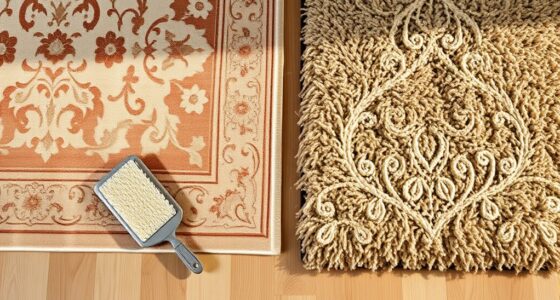
To safeguard your natural fiber rugs from moths, start by regularly inspecting for signs like larvae or webbing and keep the area clean. Use natural repellents such as cedarwood or lavender sachets, and vacuum frequently, especially along edges. Consider freezing delicate rugs for several days to kill hidden eggs, and store your rugs in airtight containers when not in use. Maintaining a tidy, well-ventilated environment reduces moth attraction—learn more tips to keep your rugs pest-free.
Key Takeaways
- Regularly inspect rugs for signs of larvae, webbing, or shed skins to catch infestations early.
- Use natural repellents like cedarwood or lavender sachets, refreshing them regularly for ongoing protection.
- Clean rugs thoroughly with gentle detergents and freeze small or delicate rugs to eliminate eggs and larvae without chemicals.
- Store rugs in airtight containers or garment bags when not in use, and rotate them to prevent moth establishment.
- Maintain a clean, clutter-free environment with good airflow and lighting to make spaces less attractive to moths.

Moths can quickly become a frustrating pest, especially when they damage clothing, fabrics, and stored foods. If you have natural fiber rugs, you know how vulnerable they can be to these tiny invaders. Protecting your investment involves more than just regular cleaning; it requires understanding how moths target natural fibers and implementing effective DIY moth remedies. Natural fiber protection is essential because moth larvae feast on materials like wool, silk, and cotton, which are common in many rugs. Since these fibers are organic and breathable, they attract moths seeking food sources and breeding grounds. To shield your rugs, start by thoroughly inspecting the area for signs of larvae, webbing, or shed skins. Once you identify an issue, you can take proactive steps to prevent further damage.
Protect your natural fiber rugs by inspecting for larvae and using DIY moth remedies to prevent damage.
DIY moth remedies are accessible and effective if used correctly. One of the simplest methods is to use natural repellents like cedarwood or lavender. These scents are unpleasant for moths but safe for humans and pets. You can hang cedar blocks or sachets filled with dried lavender near your rugs or place them directly underneath or on top of the fibers. Regularly replacing or refreshing these sachets keeps the scent strong enough to deter moths. Additionally, vacuuming your rugs frequently helps remove eggs, larvae, and dust mites, reducing the likelihood of an infestation. Be sure to empty the vacuum bag immediately afterward to prevent larvae from escaping back into your home.
Another effective DIY moth remedy involves cleaning and freezing. If you suspect moths, wash your rugs with a gentle, natural detergent, then thoroughly dry them. For smaller or delicate rugs, you can place them in a sealed plastic bag and freeze them for several days. Freezing kills any eggs or larvae hidden within the fibers without the use of chemicals. Afterward, allow the rug to return to room temperature before placing it back in its spot. Combining these remedies with proper storage practices—like keeping your rugs in airtight containers or garment bags—further minimizes the risk.
To enhance natural fiber protection, consider regularly rotating your rugs and keeping your home clean and clutter-free. Moths thrive in dark, undisturbed areas, so maintaining good airflow and light can make your space less inviting. Understanding the contrast ratio of your home’s lighting and environment can also contribute to reducing moth activity, as they prefer dark, undisturbed areas. By implementing these DIY moth remedies and understanding the importance of natural fiber protection, you’ll create a less hospitable environment for moths. This proactive approach helps preserve the beauty and integrity of your natural fiber rugs, ensuring they remain a stunning part of your home for years to come.
Frequently Asked Questions
Can Moths Lay Eggs on Synthetic Fiber Rugs?
Synthetic fiber rugs are less attractive to moths, so they rarely lay eggs there. However, if your synthetic rug has organic debris or stains, moths may still be attracted, leading to a potential rug infestation. You should regularly clean your synthetic rug and inspect for signs of moth activity. Proper maintenance helps prevent synthetic moths from making your rug a breeding ground and keeps your home pest-free.
Are Natural Repellents Effective Long-Term?
Natural repellents act like a gentle shield around your rugs, but their long-term effectiveness is often limited. You may see some initial protection, yet moths can adapt over time, reducing their power. To keep pests at bay, combine natural repellents with regular cleaning and proper storage. Relying solely on them is like trusting a fragile fortress—strong at first but vulnerable over time. Stay vigilant to protect your treasured rugs.
How Often Should I Inspect My Rugs for Moths?
You should inspect your rugs at least once a month to catch moths early. When doing so, consider storage tips like keeping rugs in a cool, dry environment, and check for signs of moth activity. Environmental factors like humidity and sunlight can affect moth presence, so maintain proper storage conditions. Regular inspections help you spot problems before they become infestations, ensuring your natural fiber rugs stay protected.
Do Moths Prefer Certain Colors or Patterns?
Moths are surprisingly attracted to certain colors and patterns, especially light shades like cream or beige, which mimic natural fibers they feed on. About 60% of moths show a preference for color attraction, making your light-colored rugs more vulnerable. Patterns with intricate designs can also influence their interest, as they resemble natural habitats. To minimize attraction, opt for darker, solid-colored rugs and keep patterns simple.
Can Professional Pest Control Harm My Rug’s Fibers?
Professional pest control methods are generally safe for your rug’s fibers when applied correctly by experienced technicians. They use targeted treatments that minimize the risk of damage, ensuring rug fiber safety. You should communicate your concerns beforehand, so they can choose the appropriate pest control solutions. Trusting experts helps protect your natural fiber rug while effectively eliminating moths and pests, keeping your space safe and pest-free.
Conclusion
So, despite all your efforts to keep moths at bay, it’s almost funny how a tiny pest can turn your beautiful fiber rug into a feast. But hey, at least your vigilance means you’re on top of it—until the next surprise invasion. Just remember, no matter how careful you are, moths love to test your patience. Keep up the prevention, and maybe one day, your rugs will stay moth-free—at least for a little while.