Maintaining proper humidity levels is essential for protecting your rugs from damage. Using a hygrometer helps you monitor indoor moisture, keeping it within the ideal 30-50% range. Fluctuations can cause mold, fading, or fiber brittleness, so managing humidity with humidifiers or dehumidifiers is key. Consistent climate control prolongs your rug’s life and preserves its beauty. Want to discover effective tools and tips to keep your rugs safe? Keep going to learn more.
Key Takeaways
- Proper humidity (30%-50%) prevents mold, mildew, and fiber damage in rugs.
- Hygrometers accurately monitor indoor moisture levels to maintain optimal conditions.
- Fluctuations outside ideal humidity can cause fiber brittleness or mold growth.
- Climate control systems like humidifiers and dehumidifiers help stabilize humidity based on hygrometer data.
- Active humidity management extends rug lifespan and preserves appearance and structural integrity.
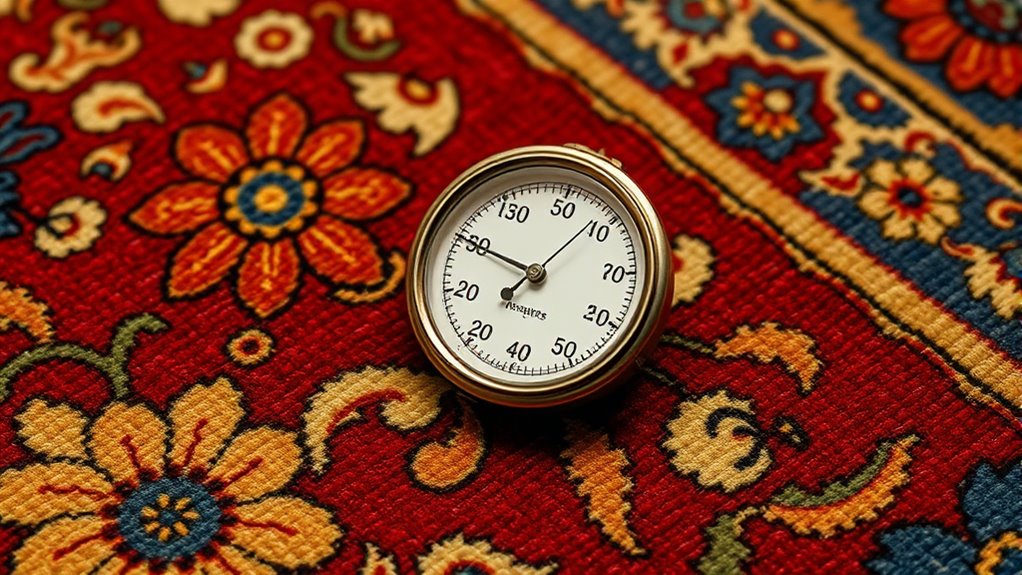
Maintaining proper humidity levels is vital for preserving your rug’s beauty and durability. When the air is too dry or too humid, it can cause fibers to weaken, fade, or develop mold and mildew. To keep your rug in prime condition, you need to monitor indoor air quality carefully. Using a hygrometer helps you measure the moisture level in your home’s environment, giving you the data needed to make adjustments. Securing the right humidity not only protects your rug but also creates a healthier living space. The key lies in maintaining a balanced indoor climate, which is where climate control systems come into play. These systems, including humidifiers and dehumidifiers, work together with your heating and cooling units to regulate indoor moisture levels effectively. By integrating these devices, you can prevent fluctuations that might harm your rug over time.
When your home’s humidity swings outside the recommended range—generally between 30% and 50%—your rug can suffer. Excess moisture encourages mold growth, which can stain or weaken fibers permanently. On the other hand, overly dry air causes fibers to become brittle and prone to cracking or fraying. With a hygrometer in hand, you can constantly monitor your indoor air quality, ensuring it remains stable. If your readings show high humidity, activating a dehumidifier helps extract excess moisture from the air. Conversely, if the air is too dry, a humidifier adds the necessary moisture to prevent fiber damage. These adjustments are vital because they provide a controlled environment that extends your rug’s lifespan.
Implementing climate control systems tailored to your home’s needs makes managing humidity straightforward. Modern systems can be programmed to respond automatically to changing conditions, maintaining consistent indoor air quality. This proactive approach minimizes the risk of damage caused by moisture variations. Plus, with accurate hygrometer readings, you can fine-tune your climate control systems for peak performance. It’s a smart way to protect your investment, especially if you have valuable or antique rugs. Regularly checking the hygrometer and maintaining your climate control systems ensures you’re always aware of your environment’s moisture levels. This vigilance helps preserve your rug’s appearance, texture, and structural integrity over the years, making your home not only more beautiful but also healthier.
Additionally, understanding humidity levels and their impact on materials can guide better preservation strategies. Ultimately, using a hygrometer and climate control systems together creates a stable environment that benefits both your rug and your indoor air quality. You’ll breathe easier knowing that your living space is optimized for comfort and longevity. By actively managing humidity levels, you prevent damage before it happens, saving yourself time, money, and the frustration of repairs or replacements. Maintaining these conditions isn’t just about protecting your rug; it’s about creating a healthier, more comfortable home environment for yourself and your loved ones.

TempPro TP50 Digital Hygrometer Indoor Thermometer Room Thermometer
- Wellness Indicator: Displays air condition levels
- High Accuracy & Fast Updates: ±2-3%RH and ±1°F, updates every 10 seconds
- Record Tracking: Displays high and low temperature and humidity
As an affiliate, we earn on qualifying purchases.
As an affiliate, we earn on qualifying purchases.
Frequently Asked Questions
How Often Should I Check My Rug’s Humidity Levels?
You should check your rug’s humidity levels weekly as part of your maintenance routines. Regular environmental monitoring helps prevent damage caused by excessive dryness or moisture. Use a hygrometer to get accurate readings and adjust your home’s humidity accordingly. Consistent checks ensure your rug remains in ideal condition, avoiding issues like mold, mildew, or fibers breaking down. Prioritize these routine checks to maintain your rug’s beauty and longevity effectively.
Can Hygrometers Measure Humidity Without Power?
You’re out of luck if you’re hoping for hygrometers to measure humidity without power. Most solar-powered hygrometers need sunlight, while battery-operated sensors require batteries to function. Think of it as trying to run a clock without winding it up—you just won’t get the time. To keep tabs on your rug’s humidity, verify your hygrometer has fresh batteries or is exposed to sunlight regularly.
Are Digital or Analog Hygrometers More Accurate for Rugs?
Digital hygrometers are generally more accurate for rug preservation because they provide precise readings and are easier to calibrate with built-in methods. Analog hygrometers, on the other hand, rely on mechanical parts and may need manual calibration using salt solutions or other methods. You should choose a digital model for consistent, reliable measurements, especially since accurate humidity levels are vital for protecting your rugs.
What Specific Humidity Range Is Ideal for Antique Rugs?
For antique rug preservation, aim for an ideal humidity range of 40-60%. This helps prevent mold, mildew, and fiber deterioration. You should regularly monitor humidity levels with a hygrometer, especially in fluctuating environments. Maintaining this range ensures your antique rugs stay in good condition, avoiding damage caused by excessive dryness or moisture. Consistent humidity control is key to preserving the beauty and longevity of your cherished antique rugs.
How Do Seasonal Changes Affect Rug Humidity Needs?
Seasonal fluctuation affects your rug’s humidity needs, so you should make humidity adjustments as the seasons change. In winter, lower humidity levels can cause your rug to dry out and crack, while in summer, increased humidity might lead to mold or mildew. To keep your antique rug safe year-round, monitor with a hygrometer and adjust humidity levels accordingly, maintaining a consistent environment despite seasonal shifts.
Conclusion
By monitoring humidity levels with a hygrometer, you can safeguard your rugs from damage caused by excess moisture or dryness. For example, a homeowner in a humid climate noticed mold forming on their antique rug. By using a hygrometer and adjusting the room’s humidity, they successfully preserved the rug’s beauty and value. Staying vigilant with humidity levels ensures your rugs stay vibrant and intact for years to come.