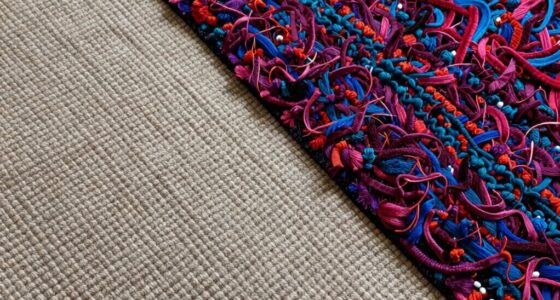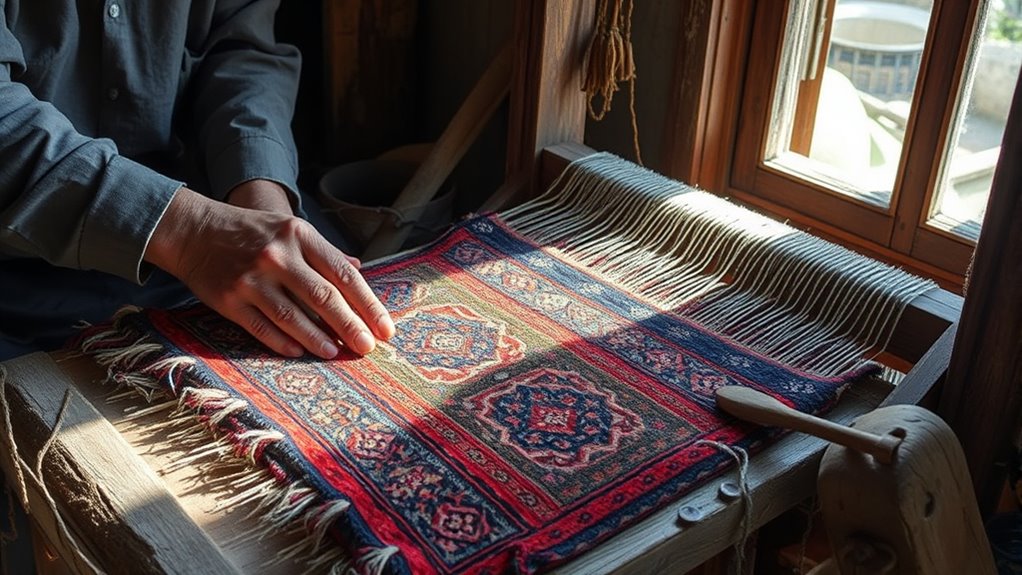

Rug weaving faces decline because mass-produced rugs flood markets, making handcrafted pieces less affordable and appealing. As younger generations shift away from traditional crafts, this art risks fading forever, taking valuable patterns and techniques with it. Efforts by artisans and organizations aim to keep these skills alive through workshops and market support. Supporting authentic, handmade rugs helps preserve cultural identity. If you want to learn more about how you can make a difference, keep exploring these efforts and their significance.

Get furniture and decor delivered free — and shop member deals
- Fast, free delivery on millions of items
- Access to Prime Big Deal Days deals on October 6–7
- Prime Video, Amazon Music and more included
Key Takeaways
- Industrialization and mass-produced rugs threaten the market for traditional handmade weaving.
- Younger generations migrating reduce the transmission of traditional patterns and techniques.
- Preservation efforts include workshops, market development, and community support to sustain artisans.
- Consumer awareness and purchasing authentic, handcrafted rugs help support and maintain traditional craft skills.
- Without active intervention, endangered rug weaving techniques risk fading into cultural memory.
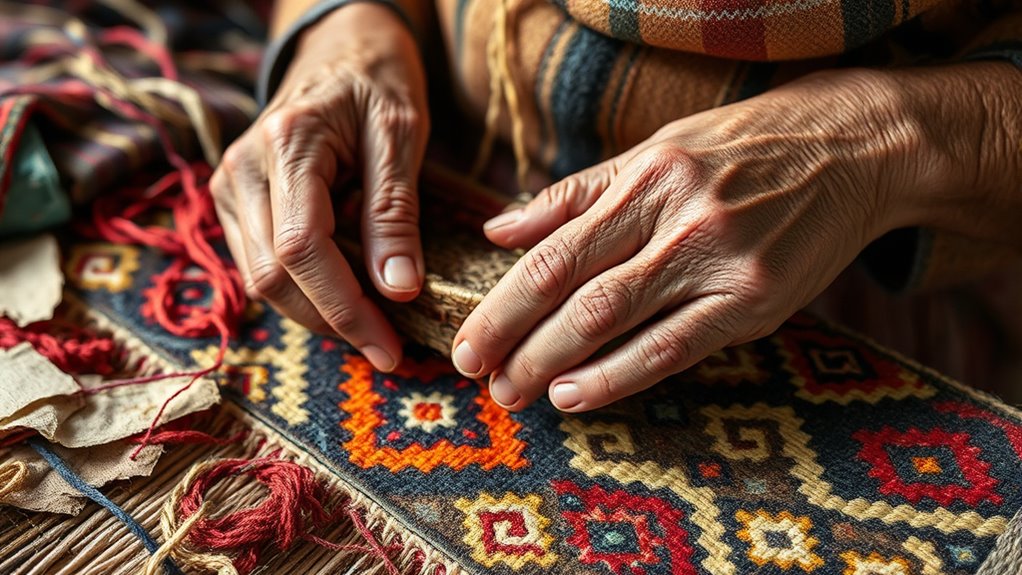
Rug weaving, a centuries-old craft that embodies cultural heritage and artisanal skill, is facing an uncertain future. You may have seen these intricate textiles in homes or museums, but the art behind them risks fading away if efforts aren’t made to preserve it. Central to this craft are traditional patterns and weaving techniques passed down through generations. These patterns are more than just decorations; they tell stories, symbolize beliefs, and connect communities to their history. When these patterns are lost, so too is a essential part of cultural identity. The weaving techniques used to create these rugs are equally important—they involve precise hand movements, specialized tools, and an understanding of materials that can’t easily be replaced by modern machinery. Yet, as industrialization advances and younger generations seek different careers, fewer people learn these skills firsthand.
You might think that modern technology could help preserve these techniques, but in reality, it often does the opposite. Mass-produced rugs flood markets, making authentic handmade pieces seem less appealing or affordable. As a result, artisans struggle to find markets for their work, and the knowledge of traditional patterns and weaving techniques risks slipping away with them. You may notice that many young artisans prefer to work in other industries or migrate to urban areas, leaving rural weaving communities behind. This migration erodes the continuity of craft traditions, which rely on daily practice and communal knowledge sharing. Without active efforts to keep these traditions alive, future generations might only see these rugs in photographs or museums, losing the tactile experience and cultural significance they hold.
To combat this decline, some organizations and artisans are working hard to revive interest in traditional patterns and weaving techniques. They teach workshops, promote handmade rugs, and develop markets that value craftsmanship. Still, these initiatives need support from wider communities, policymakers, and consumers who value authenticity over mass production. Your role could be essential—by choosing to buy handcrafted rugs rooted in traditional techniques and patterns, you help sustain the artisans and their cultural legacy. Preserving these skills isn’t just about keeping an art form alive; it’s about maintaining a connection to history, community, and identity. If we don’t act now, the rich tapestry of rug weaving, with its intricate designs and techniques, risks becoming just a memory rather than a living tradition.
Frequently Asked Questions
Which Countries Have the Most Endangered Rug Weaving Traditions?
You should know that countries like Iran, Afghanistan, and Turkey have the most endangered rug weaving traditions. These regions hold rich cultural heritage, but modern influences and economic challenges threaten artisanal preservation. By supporting local artisans and promoting traditional techniques, you can help safeguard these endangered crafts, ensuring that future generations continue to appreciate and learn the intricate artistry that defines their cultural identity.
How Can Individuals Support Endangered Rug Weaving Communities?
Think of supporting endangered rug weaving communities as planting seeds in a fragile garden. You can do this by prioritizing local artisan support, purchasing directly from weavers, and promoting their work. Participating in cultural exchange programs also bridges gaps, fostering understanding and appreciation. Your active involvement helps preserve these traditions, ensuring the vibrant art of rug weaving continues to thrive for future generations.
What Are Common Materials Used in Traditional Rug Weaving?
You’ll find traditional rug weaving often uses natural materials like wool, cotton, and silk, valued for their durability and vibrant dyeing potential. However, some artisans now experiment with synthetic fibers for affordability and longevity. Dye innovations also play a key role, allowing for brighter, more diverse colors. Supporting these crafts helps preserve the knowledge of working with these materials and encourages sustainable, culturally rich rug-making traditions.
How Has Modern Technology Impacted Traditional Rug Craftsmanship?
Modern technology has considerably impacted traditional rug craftsmanship by enabling digital innovation that streamlines design and production processes. You can now access online tutorials, sell your rugs globally, and showcase your work through social media platforms. This empowers artisans like you with new opportunities, helping preserve endangered techniques. However, it also challenges traditional methods, so balancing innovation with authenticity remains key to maintaining the cultural significance of your craft.
Are There Any International Efforts to Preserve Rug Weaving Techniques?
You’ll find numerous international efforts dedicated to preserving rug weaving techniques, with UNESCO recognizing many as Intangible Cultural Heritage. Around 50 craft techniques are actively protected through preservation methods like workshops and cultural exchanges. These initiatives aim to safeguard the cultural heritage of rug weaving, ensuring traditional skills are passed down for future generations. By supporting such programs, you help keep this vibrant art form alive and thriving worldwide.
Conclusion
If you don’t act now, you risk losing a craft that’s been passed down for generations—over 60% of traditional rug weaving techniques are endangered. By supporting artisans and preserving these skills, you help keep cultural heritage alive. Every rug you appreciate or buy can make a difference, ensuring these beautiful, intricate methods don’t vanish forever. Don’t wait—your involvement can help protect this vibrant tradition for future generations.
Fall Picks
fall essentials
As an affiliate, we earn on qualifying purchases.