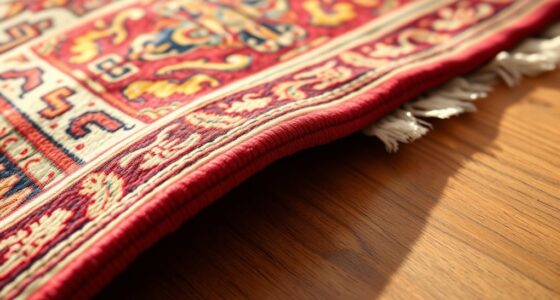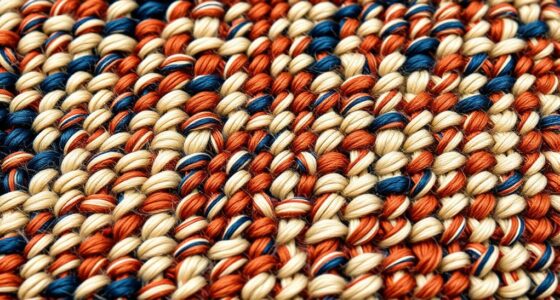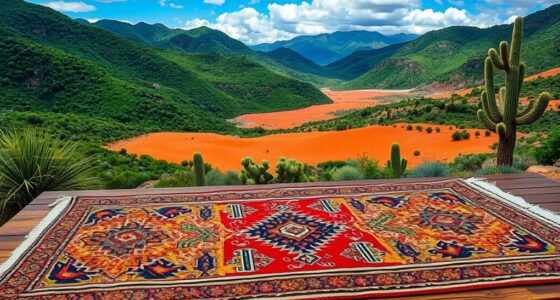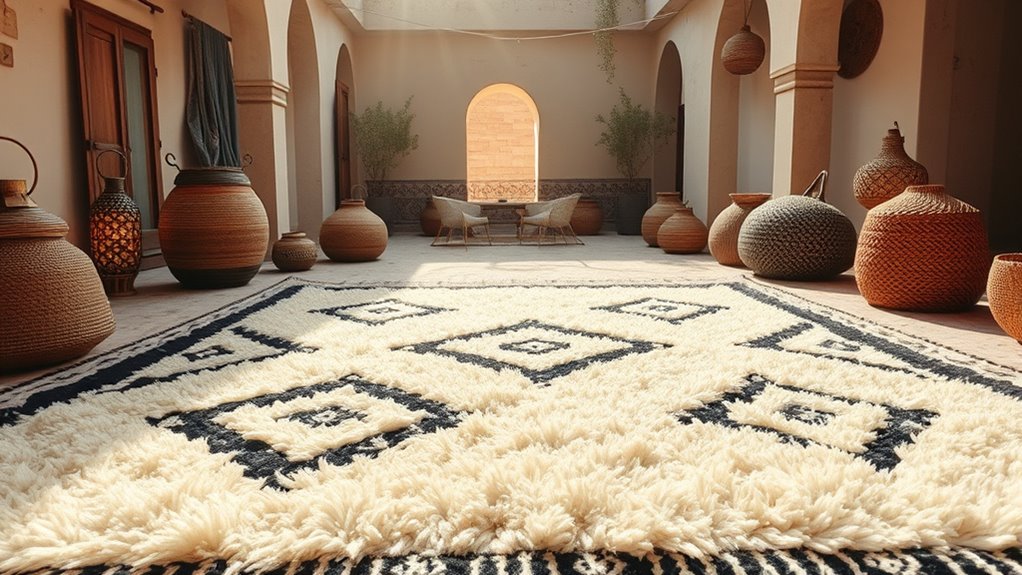
Exploring Moroccan rug traditions reveals a rich heritage of craftsmanship, from the iconic Beni Ourain geometric patterns to intricate Azilal designs. These rugs are hand-woven using age-old techniques like knotting and flat weaving, with natural dyes derived from local plants and minerals. Each piece carries symbolic meanings and cultural stories, reflecting their environment and artisans’ skills. If you keep exploring, you’ll discover the deep artistry and timeless beauty that make these textiles truly special.

Get furniture and decor delivered free with Prime
- Fast, free delivery on millions of items
- Prime Video, Amazon Music and more included
- Member-only deals all year
Key Takeaways
- Moroccan rugs feature unique hand-knotting and flat weaving techniques, creating durable, geometric patterns with cultural symbolism.
- Natural dyes from plants, minerals, and insects produce vibrant, earthy hues that age gracefully over time.
- Traditional dyeing methods and complex patterns incorporate subtle color variations, enhancing depth and character.
- Rug designs often reflect tribal stories, spiritual beliefs, and natural surroundings, embodying Morocco’s rich cultural heritage.
- Crafted with techniques perfected over generations, Moroccan rugs serve as timeless cultural artifacts and artisanal treasures.
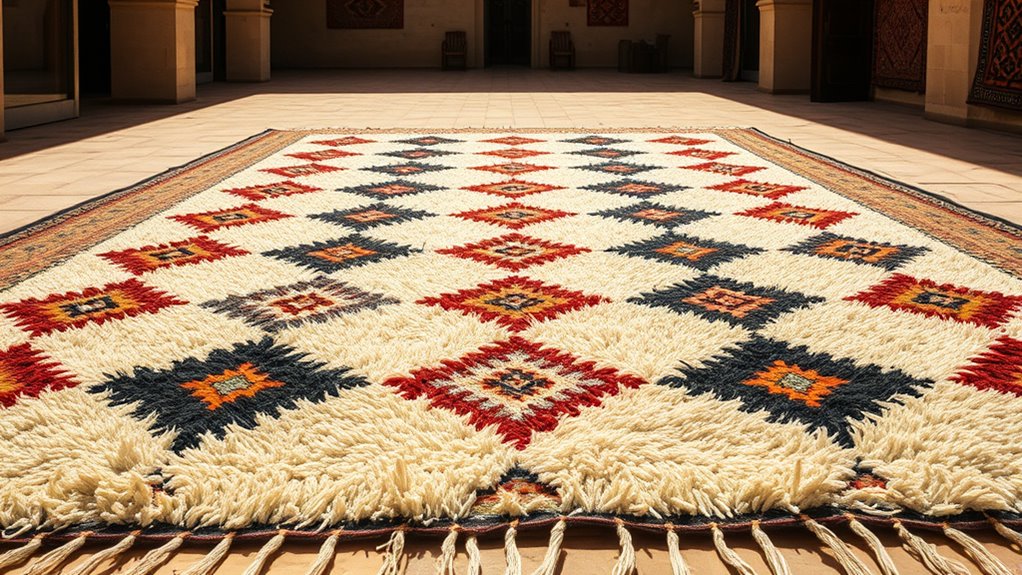
Have you ever wondered what makes Moroccan rugs so distinctive? It all comes down to their rich weaving techniques and dyeing methods, which reflect centuries of tradition and craftsmanship. When you examine a Moroccan rug, you’re looking at more than just a piece of textile; you’re witnessing a story woven into every knot and color. The weaving techniques used in Moroccan rug-making are intricate and purposeful. Artisans often employ hand-knotting or flat weaving, allowing for detailed geometric patterns that are unique to each tribe or region. These techniques require skill and patience, as each knot is carefully tied to create durable, textured surfaces that withstand time and wear. The artisans’ mastery ensures that every rug is not just decorative but also a functional piece meant to last for generations.
Dyeing methods are equally crucial in defining the character of Moroccan rugs. Traditional dyeing involves natural ingredients like plants, minerals, and insects, which produce vibrant, earthy hues that have remained unchanged for centuries. For example, to achieve the deep reds, artisans use madder roots, while indigo leaves create rich blues. These natural dyes are applied through a meticulous process that involves boiling, soaking, and layering, resulting in colors that are both vivid and harmonious with the environment. This natural dyeing process also means the colors tend to age gracefully, developing a charming patina over time. The artisans often combine different dyeing techniques, such as tie-dye or resist-dyeing, to create complex patterns and subtle color variations that add depth and character to each rug.
The combination of weaving techniques and dyeing methods gives Moroccan rugs their distinctive aesthetic. Whether it’s the plush, geometric Beni Ourain patterns or the bold, intricate designs of Azilal rugs, each piece showcases a deep respect for tradition. You’ll notice that the patterns often carry symbolic meanings, representing tribal stories, spiritual beliefs, or natural surroundings. The craftsmanship behind these textiles is a tribute to a culture that values artistry, community, and tradition. When you bring a Moroccan rug into your space, you’re not just adding a decorative element; you’re embracing a piece of Moroccan heritage, crafted with techniques that have been perfected over generations. Every knot and color tells a story, making these rugs truly timeless treasures.
Top picks for "explor moroccan tradition"
As an affiliate, we earn on qualifying purchases.
Frequently Asked Questions
What Materials Are Used in Authentic Beni Ourain Rugs?
Authentic Beni Ourain rugs are crafted using natural fibers like wool, which makes them soft and durable. You’ll find that the wool is typically sourced from local sheep, ensuring quality and authenticity. For vibrant patterns, artisans use natural dye sources such as plants, roots, and minerals, giving each rug its unique, earthy color palette. These materials reflect traditional craftsmanship, making each piece a genuine representation of Moroccan rug heritage.
How Do Moroccan Rug Weavers Preserve Traditional Patterns?
You preserve traditional Moroccan rug patterns by carefully maintaining cultural symbolism and authentic weaving techniques. You study and replicate classic motifs handed down through generations, ensuring each pattern reflects its cultural significance. Using traditional hand-weaving methods, you keep the intricate designs alive, passing on skills to new weavers. This dedication helps sustain the rich heritage and authenticity of Moroccan rugs, honoring their history with every stitch.
Are Moroccan Rugs Suitable for Modern Interior Design?
Moroccan rugs are perfect for modern interior design — who wouldn’t want a touch of ancient desert mystique in a minimalist space? Their bold patterns and cozy textures add warmth to contemporary styling, making your decor feel both fresh and timeless. So, don’t shy away from integrating these traditional pieces; they create a striking contrast that elevates any sleek, minimalist decor with a splash of culture and history.
What Is the Significance of Geometric Patterns in Moroccan Rugs?
You’ll find that geometric patterns in Moroccan rugs hold deep symbolism in patterns, reflecting cultural identity. These designs often represent protection, fertility, or spiritual beliefs, serving as a visual language passed down through generations. When you incorporate these rugs into your space, you connect with Moroccan traditions and history, making your decor more meaningful. The patterns aren’t just aesthetic—they tell stories about the people and their cultural values.
How Has the Export of Moroccan Rugs Influenced Local Communities?
You’re directly impacted by the export of Moroccan rugs, which boosts local communities through artisanal craftsmanship and cultural preservation. As demand grows, artisans gain better income and recognition, encouraging them to maintain traditional techniques and patterns. This global appreciation helps preserve Moroccan heritage, ensuring future generations continue these skilled practices. Your support and purchase contribute to sustaining these communities’ livelihoods and safeguarding their rich cultural legacy.
Conclusion
As you explore Moroccan rug traditions, you discover a world woven with wonder, wonder woven with stories, and stories sewn with soul. From the bold Beni Ourain designs to the vibrant varieties beyond, these textiles tell timeless tales of talent and tradition. So, embrace the beauty, bask in the boldness, and let these rugs redefine your space with their rich, radiant, and resonant roots. Your home becomes a hub of history and handcrafting harmony.
Halloween Picks
halloween
As an affiliate, we earn on qualifying purchases.